
Key Takeaways
A sound purchase starts with fitment and ends with clear documentation. Use the engine’s history, physical condition, test results, and written terms together rather than trusting any single clue.
- Match the engine code and configuration to your vehicle before judging condition.
- Verify mileage and service history with records where possible.
- Inspect for damage, leaks, and contamination, not just a clean exterior.
- Treat test results as useful evidence, interpreted alongside the engine’s history.
- Compare the full cost and written warranty and return terms before buying.
Confirm the engine fits your vehicle
A used engine can look promising and still be the wrong choice for your vehicle. Start with the vehicle’s exact specifications, then check the engine being offered against them before arranging an inspection or delivery. Car Parts Supplier connects customers with quality used, genuine, and aftermarket parts through a parts network, but fitment still needs to be confirmed for the specific vehicle and engine.
Match the engine code and specifications
The engine code is a more reliable starting point than a broad description such as make, model, or engine size. Compare it with your vehicle’s details and verify key specifications with manufacturer information or a qualified mechanic. These are the kinds of details worth lining up before you proceed:
| Detail to verify | Why it matters |
|---|---|
| Engine code | Identifies the particular engine version |
| Displacement and configuration | Helps distinguish related engine options |
| Mounting points | Affects physical installation |
| Transmission pairing | Can affect whether the combination is suitable |
A match across these details gives you a stronger basis for the next checks. If a listing uses a vague label or leaves out the code, ask for clarification rather than assuming that a similar name means a direct fit.
Check model-year and configuration differences
A vehicle name alone does not guarantee that engines from different model years are interchangeable. Manufacturers may change configurations during a production run, so check the year range and any relevant trim or market differences against your vehicle’s records. When in doubt, ask a mechanic or parts specialist to compare the candidate engine with the original unit before money changes hands.
Verify compatibility with your vehicle’s electronics and emissions system
Physical fit is only part of compatibility. Confirm that the engine’s sensors, wiring connections, and emissions-related equipment suit the vehicle’s existing setup, and ask whether any components need to be transferred. A mismatch can turn an otherwise suitable engine into a complicated installation, so resolve uncertainties before purchase rather than after delivery.
Research the engine’s history
History helps put the visible condition into context. Mileage is useful, but it cannot tell you how consistently an engine was maintained or what conditions it experienced. Ask for supporting information and compare the details across the donor vehicle, seller records, and the engine itself.
Ask for the donor vehicle’s VIN and mileage
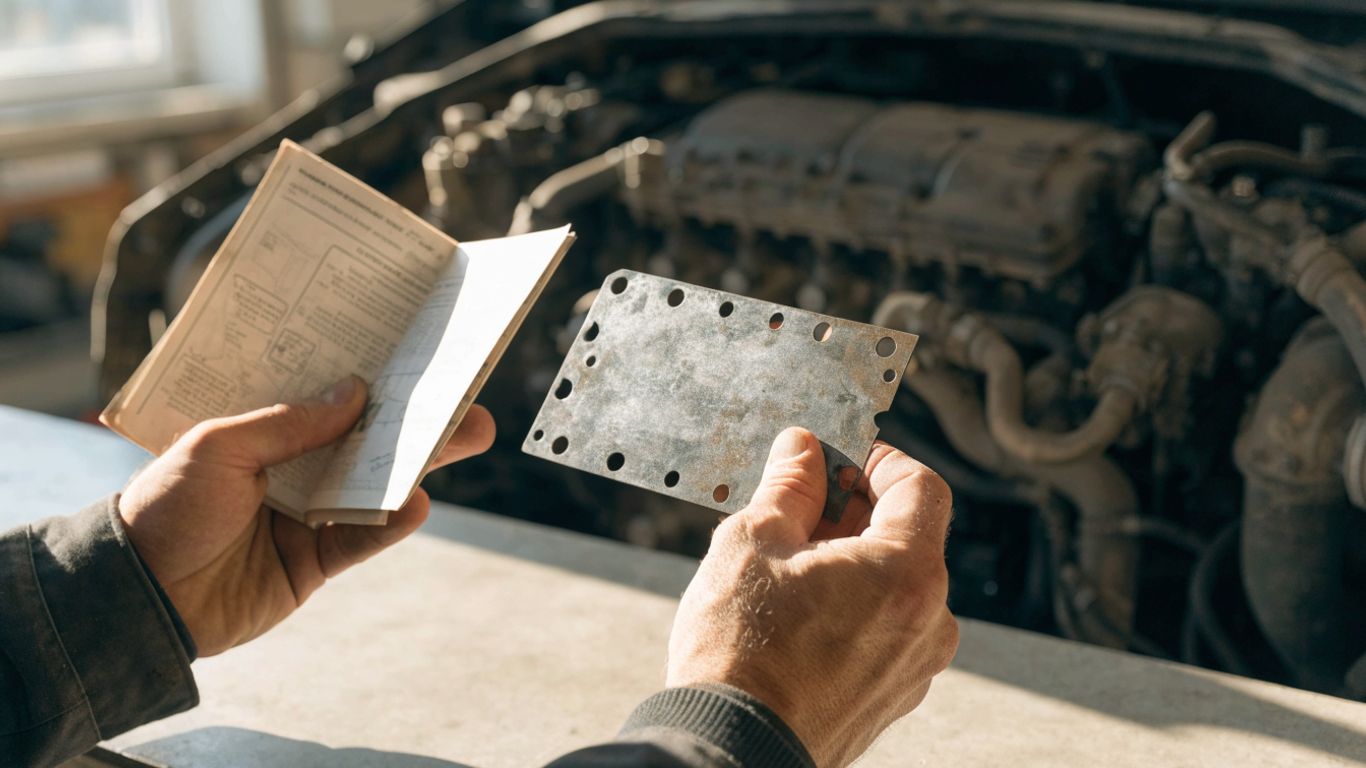
The donor vehicle’s VIN can help establish which vehicle the engine came from and whether its reported configuration makes sense. Ask for the mileage at the time of removal and clarify how that figure was obtained. Treat mileage as one piece of evidence, not a guarantee of remaining life; a documented, higher-mileage engine may be easier to assess than one with a lower figure and no supporting details.
Review maintenance and service records
Service records can reveal patterns that a quick inspection will miss. Look for dated entries that identify the vehicle and show routine maintenance or relevant repairs, and note any long gaps. Records do not prove that an engine is trouble-free, but they help you judge whether the seller’s description fits the documented history.
Look for signs of accidents, flooding, or extended storage
Ask about the donor vehicle’s circumstances and inspect the engine for clues that merit further questions. Impact damage near the engine bay, unusual corrosion, water marks, or signs of prolonged exposure may warrant a closer professional inspection. None of these clues alone establishes the engine’s full history, so use them to guide follow-up questions rather than jumping to a conclusion.
Inspect the engine’s condition
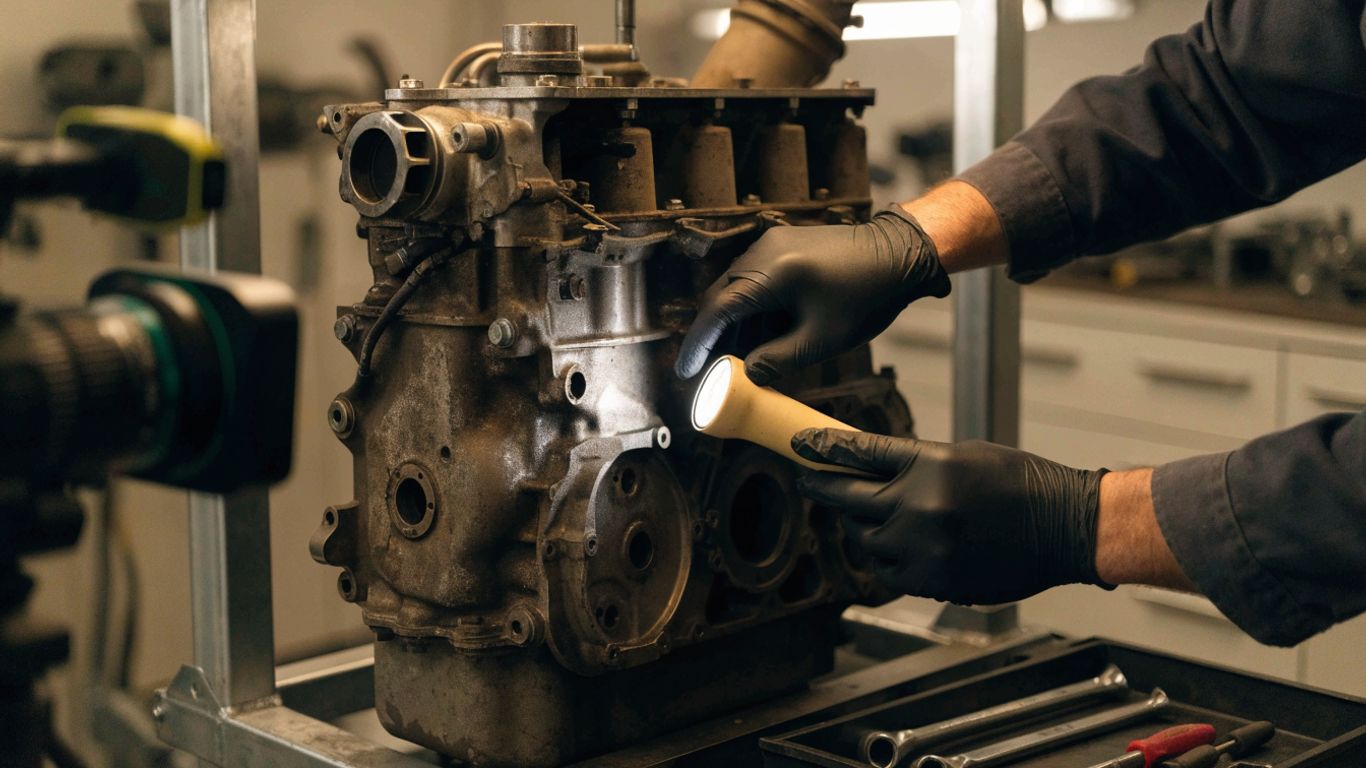
A careful visual inspection can uncover issues that photographs or a short description may not make obvious. If you can see the engine in person, use a light and take your time; if not, request close, well-lit images of the areas that matter. The aim is to spot evidence that needs an explanation and to judge whether the condition is consistent with the engine’s age and reported use.
Check for cracks, corrosion, and impact damage
Look over the block, cylinder head, brackets, and visible fittings for cracks, broken sections, heavy corrosion, or fresh marks that could indicate an impact. Inspect mounting points closely, since damage there may complicate installation. Surface grime is common on a used engine; structural damage or corrosion around important areas deserves a clear explanation and, where appropriate, an expert’s opinion.
Examine the oil, coolant, and external seals
Fluid condition and residue around seals can help you decide what to investigate next. Ask whether the engine has been drained, and avoid treating a clean exterior as proof that it has no leaks. If fluids are available to inspect, note unusual appearance or mixing, then have a mechanic interpret anything concerning alongside the engine’s history and test results.
Look for sludge, metal particles, and other contamination
Contamination may point to wear, poor maintenance, or another issue, but it needs context. If access is available, inspect under the oil cap and ask whether the oil or filter has been checked for debris. Metal particles, heavy sludge, or an unexplained residue should prompt more questions and may be a reason to pause until a qualified mechanic has assessed the engine.
Evaluate the seller and available evidence
The quality of the evidence matters as much as the confidence of the description. A careful seller should be able to explain what is known, distinguish verified details from estimates, and respond to reasonable questions. Car Parts Supplier serves customers across Melbourne, Sydney, Brisbane, and nationwide, with the stated aim of making it fast and affordable to find the right part; whichever seller you consider, assess the information for the specific engine in front of you.
Request clear photos and inspection details
Ask for current photographs that show the engine from several angles, including identification markings, mounting points, connectors, and any visible damage or leaks. If a detail is unclear, request a close-up rather than relying on a generic image. Inspection notes should identify what was checked and what could not be verified, which makes it easier to compare the seller’s account with your own questions.
Ask how the engine was tested before removal
A useful test description states what was done, when it was done, and whether the engine was running in the donor vehicle. Ask for the results in writing and clarify any limits—for example, whether the engine could only be visually inspected after removal. Answers to a few direct questions can show whether the available evidence is specific to this unit:
- Was the engine running before removal?
- Which checks were performed, and when?
- Are the results documented for this engine?
- Were any faults or unusual noises reported?
Clear answers do not eliminate risk, but they help separate documented evidence from assumptions. Keep the seller’s replies with the listing and other purchase records so the terms and description are easy to reference later.
Check the seller’s reputation and business policies
Read recent customer feedback with an eye for recurring themes, and confirm how the seller handles questions, disputes, and claims. Make sure you can identify the business and find its written policies before paying. A polished listing is not a substitute for clear terms, while a straightforward explanation of what is known—and what is not—can make the decision easier to assess.
Assess testing and performance
Test results can provide valuable evidence, but they are not a promise of future performance. Ask for the method, conditions, and recorded results, then consider whether they fit the engine’s mileage and service history. A mechanic can help interpret figures that look uncertain or inconsistent, particularly when you cannot hear or inspect the engine running yourself.
Review compression or leak-down test results
Request the results for each cylinder, along with the test method and date. A set of figures is more useful than a general statement that the engine “passed,” because it lets a mechanic look for uneven readings or other patterns. Ask what the tester considered acceptable and whether any cylinder showed a notable difference; the meaning depends on the engine and test conditions.
Ask about a cold-start or running test
If the engine could be run before removal, ask whether the seller has a cold-start video or other record of it operating. A cold start may provide clues about starting behavior, unusual noises, or smoke, but a short clip cannot reveal everything about internal condition. If no running test was possible, find out why and weigh that limitation against the remaining evidence.
Interpret test results alongside mileage and service history
No single test tells the whole story. A strong result should be considered with the engine’s mileage, maintenance records, visual condition, and any known faults. If the evidence conflicts—for example, encouraging test figures alongside unexplained contamination—pause and ask a mechanic to help reconcile it before committing.
Compare warranties, returns, and total cost
Price is only one part of the purchase decision. Warranty conditions, return rules, freight, and installation can change what looks affordable into a larger commitment. Car Parts Supplier describes its network as helping customers find parts fast and affordably across Australia; compare the complete costs and written terms for the particular engine rather than relying on a headline price.
Read the warranty terms and coverage limits
Read the warranty document before paying, not just a short summary in the listing. Check the coverage period, what components are included or excluded, and what steps you must follow if a problem occurs. Confirm whether installation requirements or other conditions apply, and ask for unclear terms in writing so there is a record of the answer.
Confirm the return window and restocking fees
Find out how many days you have to report a problem, what condition the engine must be in for a return, and who pays for freight. Ask whether a restocking fee applies and how the process works if the engine proves incompatible. These details can make a meaningful difference, particularly if the engine arrives after a delay or installation cannot begin immediately.
Factor in shipping, installation, and related-part costs
Build a realistic estimate before comparing options. Include the expenses that accompany the engine itself, not just the listed amount:
- Freight, delivery access, and any handling charges
- Removal of the old engine and installation labor
- Fluids, seals, or other related parts recommended by a mechanic
- Any diagnostic work or additional repairs needed for fitment
The full estimate gives you a fairer way to compare suitable engines. Keep a little room for costs that cannot be confirmed until inspection or installation, and avoid choosing an option solely because its initial price is lower.
Make a confident purchase decision
A confident decision does not require certainty about every unknown; it requires enough credible evidence to understand the remaining risk. Compare the candidate against your vehicle’s requirements, the records available, the inspection findings, and the written terms. If key details are missing, slow down and ask for them rather than allowing urgency to fill the gaps.
Compare the engine with other suitable options
Compare only engines that appear compatible with your vehicle, then weigh their documented history, condition, test evidence, warranty, and total cost. A simple side-by-side review can make trade-offs clearer: one option may have stronger records, another may have lower mileage, and a third may offer more suitable written terms. Consider the evidence as a whole rather than letting one attractive detail dominate.
Have a mechanic review the evidence before buying
A mechanic familiar with your vehicle can check compatibility and identify questions that are easy to overlook when buying remotely. Share the engine code, donor information, photos, test results, and seller terms, not just the listing summary. This review cannot remove every uncertainty, but it can help you avoid a preventable mismatch or an unsupported assumption.
Keep written records of the engine’s identity and condition
Save the listing, VIN or donor details, mileage statement, photographs, test results, and all written answers from the seller. Keep the invoice and warranty terms with them, including any specific agreement about returns or delivery. If a question comes up later, a clear record of what was represented and purchased is far more useful than relying on memory.
Conclusion
To identify a quality used engine, verify the fit first, then weigh its history, condition, test evidence, and seller terms together. Take time to resolve gaps, ask a mechanic when details are uncertain, and compare the full cost before making a commitment. The best choice is the one supported by clear evidence and suited to your vehicle—not simply the one with the lowest price.