
Thinking about giving your car a bit more pep? If you’re in Melbourne and looking to boost your ride’s performance, you’ve come to the right place. We’re going to talk about some of the key parts that can make a real difference. It’s not just about going faster, but also about how your engine runs and feels. Let’s get into what makes performance engines in Melbourne tick.
Key Takeaways
- Turbochargers force more air into the engine, giving it a big power boost.
- Intercoolers cool down the air from the turbo, making it denser for better performance.
- Performance headers and exhaust kits help the engine breathe better, improving power and sound.
- Air intake kits and throttle body spacers allow the engine to take in more air more easily.
- Performance chips, programmers, and custom engine builds offer ways to fine-tune or completely rebuild your engine for maximum power.
1. Turbocharger
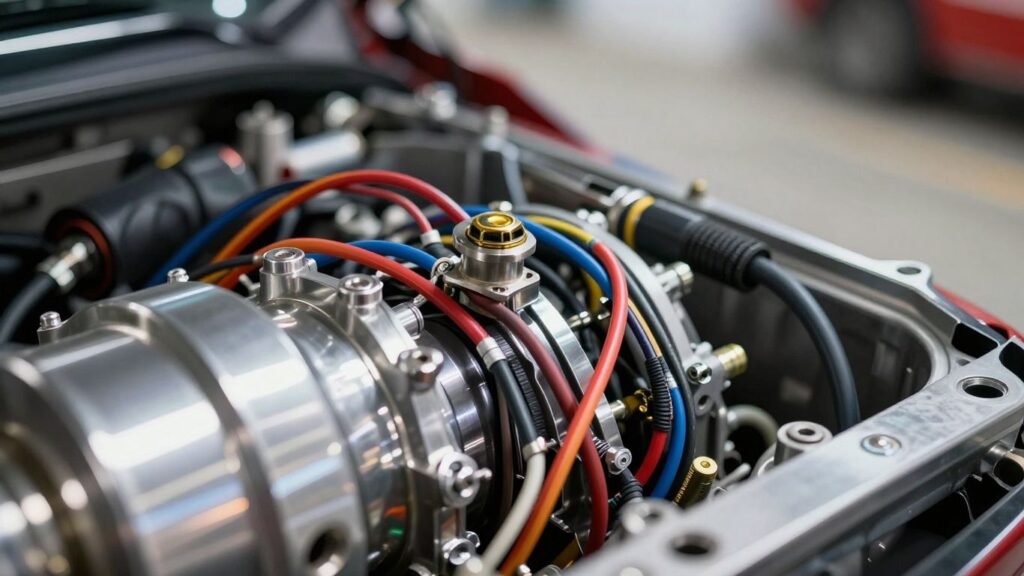
When you’re looking to get more power out of your car’s engine, a turbocharger is often one of the first things people think about. Basically, a turbocharger is a type of forced induction system. It uses the engine’s own exhaust gases to spin a turbine, which in turn spins a compressor. This compressor then forces more air into the engine’s cylinders than it could draw in naturally.
More air means more fuel can be burned, which translates directly to more power. It’s like giving your engine a bigger set of lungs. This can make a noticeable difference in acceleration and overall performance, especially on smaller engines that might otherwise feel a bit sluggish.
There are a few key components to a turbo system:
- Turbine: This is spun by the hot exhaust gases leaving the engine. It’s usually made of a special alloy to handle the high temperatures.
- Compressor: Connected to the turbine by a shaft, this part sucks in fresh air, compresses it, and pushes it into the engine’s intake manifold.
- Wastegate: This is a valve that controls how much exhaust gas goes through the turbine. It prevents the turbo from spinning too fast and creating too much boost, which could damage the engine.
- Intercooler: While not part of the turbo itself, it’s almost always used with one. The compressor heats up the air as it compresses it. An intercooler cools this air down before it enters the engine. Cooler air is denser, meaning it has more oxygen, which further helps with power.
Installing a turbocharger can be a complex job, and it’s not just a simple bolt-on for most cars. You often need to consider supporting modifications like fuel system upgrades, exhaust changes, and engine management tuning to make sure everything works together safely and effectively. It’s a popular upgrade for those wanting a significant performance boost.
2. Intercoolers
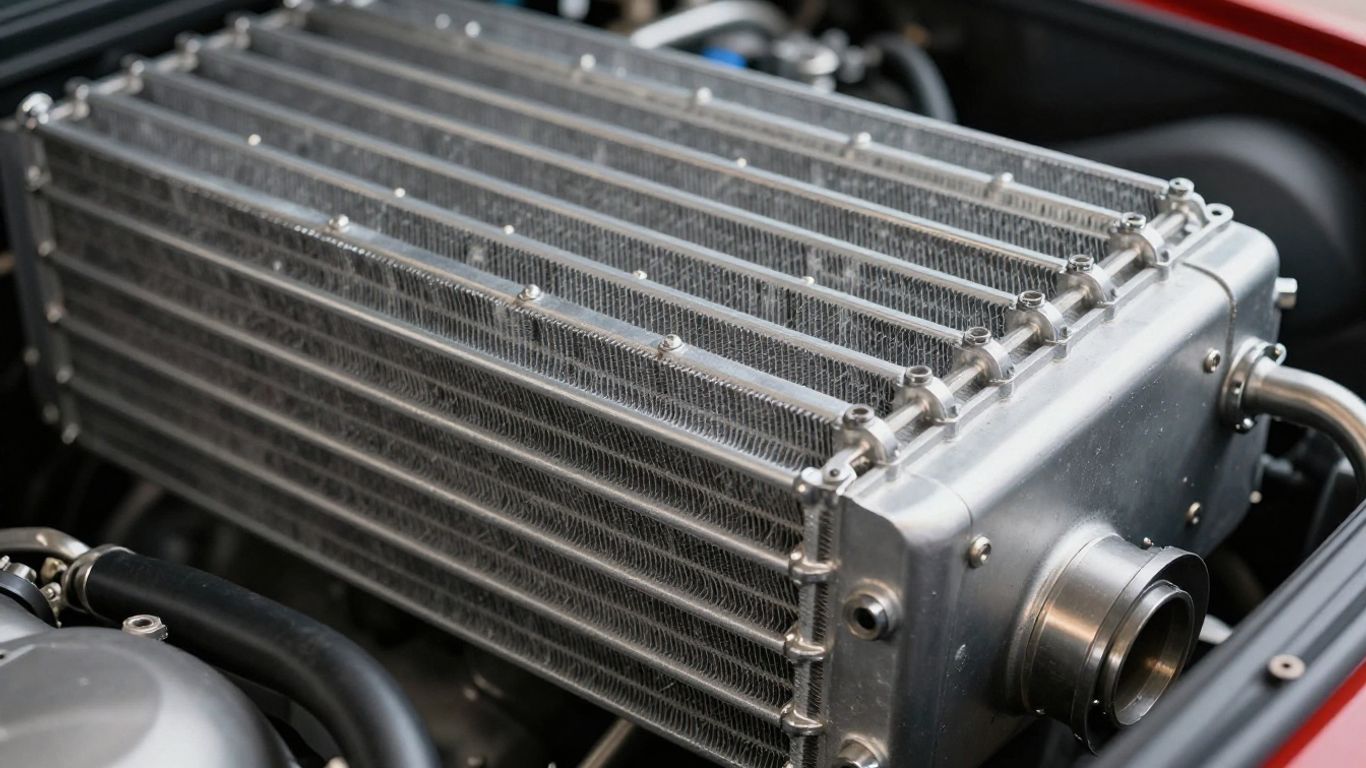
When you push your engine harder, it makes more heat. That’s just how physics works. This extra heat can actually make your engine less efficient and powerful. That’s where intercoolers come in. Think of an intercooler as a radiator for the air going into your engine. It takes the hot, compressed air from the turbocharger (or supercharger) and cools it down before it enters the engine cylinders.
Why does this matter? Cooler air is denser air. Denser air means more oxygen molecules can fit into the same space in your cylinders. More oxygen allows you to burn more fuel, which translates directly into more power. It’s a simple concept with a big impact on performance.
There are two main types of intercoolers you’ll see:
- Air-to-Air Intercoolers: These are the most common. They use ambient air flowing over a finned heat exchanger to cool the charge air. They’re generally easier to install and maintain.
- Air-to-Water (or Liquid) Intercoolers: These use a separate coolant circuit to cool the charge air. They can be more compact and sometimes more effective in certain applications, but they add complexity with pumps and radiators.
Choosing the right intercooler depends on your specific setup, how much power you’re aiming for, and your budget. A bigger, more efficient intercooler can make a noticeable difference, especially if you’ve upgraded your turbo or are running higher boost pressures. It helps keep your engine running cooler and more consistently, preventing power loss on hot days or during extended hard driving.
Upgrading your intercooler is a smart move if you’re serious about getting the most out of a turbocharged or supercharged engine. It’s not just about adding power; it’s about making that power reliably and efficiently.
3. Performance Headers
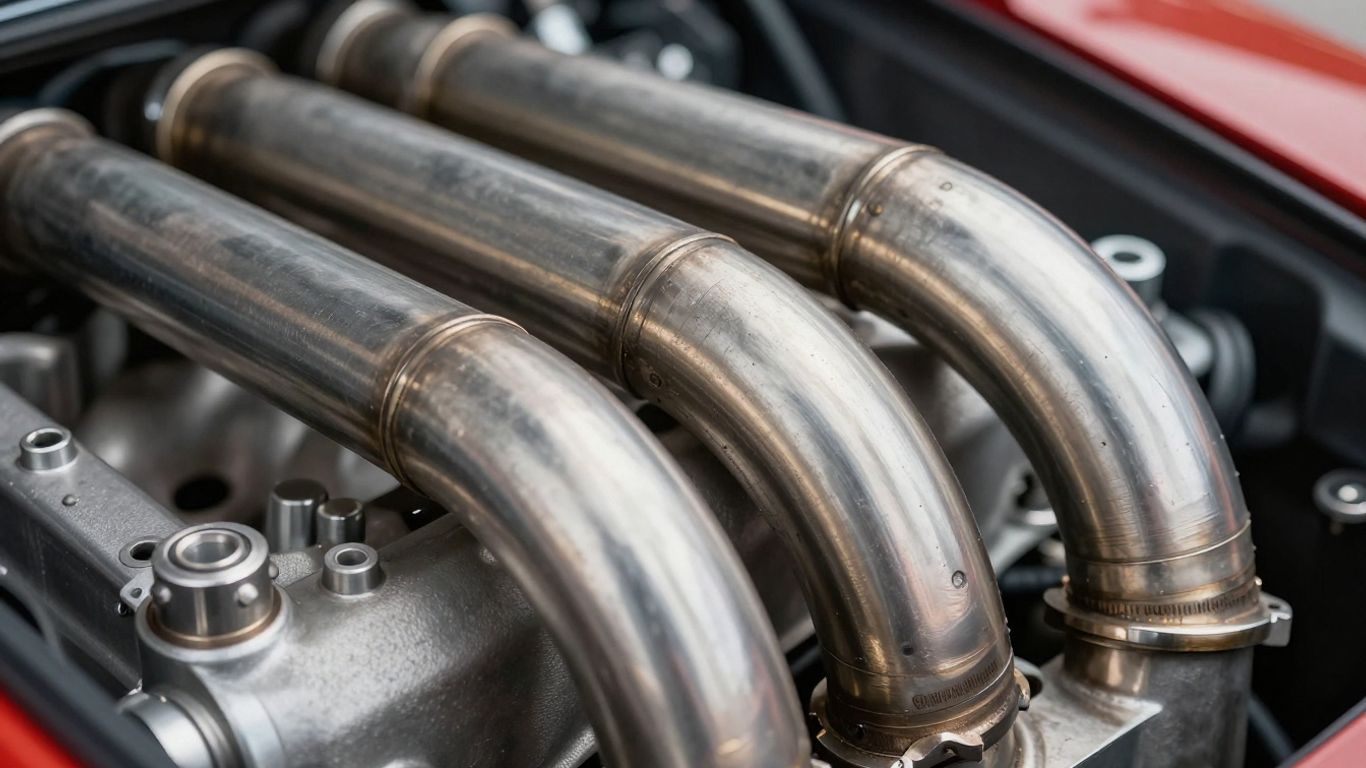
When you’re looking to get more out of your engine, swapping out the stock exhaust manifold for a set of performance headers is a pretty common step. Think of your engine’s exhaust ports – they’re where the burnt gases leave. The stock manifold is usually designed to keep things quiet and cheap to make, not necessarily to let those gases escape as quickly as possible. That’s where headers come in.
Performance headers are designed to give each cylinder its own dedicated pipe, at least for a little while, before they merge. This setup helps to reduce back pressure and allows exhaust gases to flow out more freely. Better exhaust flow means your engine can breathe easier, which can lead to noticeable gains in horsepower and torque. It’s not just about raw power, though; a good set of headers can also improve your engine’s throttle response and even give your car a sportier sound.
There are a few main types of headers you’ll see:
- Shorty Headers: These are generally easier to install and often fit within the stock exhaust system’s routing. They offer a moderate performance improvement.
- Tri-Y Headers: These collect exhaust gases in two stages, merging four pipes into two, then those two into one. They tend to offer a good balance of low-end and mid-range torque.
- 4-1 Headers (or Equal Length Headers): These merge all four pipes into a single collector as quickly as possible. They are usually best for high-RPM power gains.
Choosing the right header depends a lot on what you want to do with your car. Are you mostly driving around town, or are you hitting the track? The material also matters – stainless steel is popular because it holds up well and resists rust.
Installing headers can sometimes be a bit tricky, especially on older cars or if you’re not used to working on them. You might need to lift the car, deal with tight spaces, and potentially replace other exhaust components to get the full benefit. It’s definitely a job where taking your time pays off, and if you’re unsure, getting a professional to do it is a good idea.
4. Exhaust System Kits
When you’re looking to get more out of your engine, don’t forget about the exhaust. A good exhaust system kit can make a surprising difference in how your car performs and sounds. It’s not just about making noise, though that’s part of the fun for some. A well-designed system helps your engine breathe easier, which means it can make more power.
Think of your engine like your lungs. If you’re trying to run, you need to take in a lot of air and exhale quickly. An exhaust system that’s too restrictive is like trying to run with your mouth and nose partly blocked. It makes it harder for the engine to push out exhaust gases, which can create backpressure. Too much backpressure can hurt performance.
Here’s what a good exhaust kit typically includes and why it matters:
- Performance Headers: These replace your stock exhaust manifolds. They’re designed to collect exhaust gases from each cylinder more efficiently and merge them into the rest of the exhaust system. Better flow here means less resistance right from the start.
- Mid-Pipes and Catalytic Converters: Depending on your kit and local laws, this section might include high-flow catalytic converters or a straight pipe. The goal is to reduce restriction while still meeting emissions standards if needed.
- Muffler and Resonator: The muffler is what quiets things down, but performance mufflers are designed to do this with less restriction than stock ones. Resonators can help tune the exhaust note, getting rid of unwanted raspiness.
- Tailpipes: The final section that directs the exhaust out the back. Diameter and routing are important here for flow and sound.
Upgrading your exhaust system is a solid way to improve your engine’s efficiency and power output. It’s a component that works hand-in-hand with other performance upgrades, like intake and tuning, to really let your engine perform at its best. Plus, that deeper, more aggressive exhaust note? That’s a nice bonus.
Choosing the right exhaust kit is key. You want something that balances performance gains with a sound you can live with every day. Too loud can be a headache, and too quiet might mean you’re not getting the full benefit. It’s about finding that sweet spot for your specific car and what you want to achieve.
5. Air Intake Kits
When you’re looking to get more out of your engine, one of the first things people often look at is the air intake. It makes sense, right? Your engine needs air to run, so giving it more air should make it run better. And usually, it does.
A good performance air intake kit replaces the stock airbox and filter with something that lets air flow more freely into the engine. Think of it like giving your engine a bigger straw to drink through. The stock systems are often designed more for quiet operation and filtering out every tiny speck of dust, which can restrict airflow a bit.
So, what’s in a typical kit?
- High-flow air filter: These are usually made of cotton gauze or a synthetic material that lets more air pass through than a standard paper filter.
- Intake tubing: This is the pipe that connects the filter to the engine’s throttle body. Performance kits often use smoother, larger diameter tubing, sometimes made of materials like aluminum or plastic, to reduce turbulence and increase airflow.
- Heat shield (sometimes): Some kits include a shield to keep hot air from the engine bay away from the intake filter. Cooler air is denser, which means more oxygen for combustion, leading to better performance.
- Mounting hardware: All the bits and pieces needed to bolt it all up.
When you install one of these, you might notice a few things. The engine might sound a bit more aggressive, especially under acceleration. You could also feel a slight bump in power and torque, and maybe even a small improvement in fuel economy, though that last one really depends on how you drive.
It’s not just about slapping on a new filter. The whole system works together. The shape of the tubing, the filter’s design, and how it’s shielded from engine heat all play a part in how much of a difference you’ll actually feel. Getting the right kit for your specific car model is pretty important if you want to see real gains.
While you can buy universal kits, it’s usually best to get one designed for your car’s make and model. This way, you know it’s going to fit right and be optimized for your engine’s needs. It’s a pretty straightforward upgrade that can make a noticeable difference in how your car feels on the road.
6. Throttle Body Spacers
You might have seen throttle body spacers advertised, and they’re pretty simple devices. Basically, they’re a small plate that goes between your throttle body and the intake manifold. The idea is to create a bit more space, which some folks claim can help mix the air and fuel better before it enters the engine.
They’re generally inexpensive and easy to install yourself. For many cars, it’s a bolt-on job that doesn’t take too long. You’re essentially adding a spacer to increase the volume of the intake runner slightly.
Here’s a quick look at what they aim to do:
- Improved Air/Fuel Mixture: The extra space can help create a more turbulent swirl, which might lead to a more uniform mix of air and fuel. This could, in theory, help with combustion.
- Slight Torque Increase: Some manufacturers suggest a small bump in low-end torque. This is often attributed to the improved mixture and airflow.
- Better Throttle Response: A more consistent air-fuel delivery might make the engine feel a bit more responsive when you press the gas pedal.
It’s worth noting that the actual gains from a throttle body spacer can vary a lot depending on your specific vehicle and other modifications you might have. For some cars, the difference is barely noticeable, while others might see a small, but welcome, improvement. It’s not usually a massive power adder, but it’s a simple modification that some people like to add to their setup.
When considering a throttle body spacer, it’s wise to manage your expectations. While they can offer a subtle improvement in certain areas, they are not a magic bullet for significant horsepower gains. Think of it as a small piece of a larger performance puzzle.
7. Performance Chips
So, you’re looking to give your car a bit more pep without tearing into the engine itself? Performance chips, sometimes called ECU chips or tuning boxes, are a popular way to do just that. They’re essentially small electronic devices that plug into your car’s computer system, usually the Engine Control Unit (ECU), to tweak its settings. Think of it like giving your car’s brain a little nudge in the right direction for more power or better fuel efficiency.
These chips work by altering the signals that the ECU receives and sends out. This can affect things like fuel injection timing, boost pressure in turbocharged cars, and ignition timing. The goal is to optimize these parameters for performance, often resulting in noticeable gains in horsepower and torque. Some people also find they get a bit of a boost in fuel economy, though this can depend heavily on how you drive after the chip is installed.
Here’s a quick rundown of what they generally do:
- Adjust Fuel Mapping: Changes how much fuel is injected and when, aiming for a more efficient or powerful burn.
- Modify Ignition Timing: Fine-tunes when the spark plug fires to get the most out of the fuel.
- Increase Turbo Boost (if applicable): For turbocharged engines, chips can often tell the turbo to produce more boost pressure.
- Alter Throttle Response: Can make the accelerator pedal feel more sensitive, giving a quicker initial reaction.
It’s important to remember that not all chips are created equal. Some are designed for specific car models and engine types, while others are more generic. Getting the right chip for your specific vehicle is key to seeing good results and avoiding potential issues. It’s also a good idea to talk to a professional about what you’re hoping to achieve. They can help you choose a chip that aligns with your goals and ensure it’s installed correctly. While they offer a relatively simple way to get more out of your engine, it’s always best to approach modifications with a bit of research and expert advice.
While performance chips can offer a noticeable boost, they’re not a magic bullet. The gains you see will vary a lot depending on your car’s make, model, and existing condition. For some vehicles, the difference might be dramatic, while for others, it could be more subtle. It’s also worth considering that pushing your engine harder might mean more frequent maintenance down the line.
8. Performance Programmers
Performance programmers are pretty neat gadgets that plug into your car’s computer, usually through the OBD-II port. Think of them as a way to talk directly to your engine’s brain and tell it to work a bit harder, or maybe more efficiently. They can tweak things like fuel delivery, ignition timing, and boost pressure on turbocharged cars. The main goal is to unlock hidden power that the factory settings might be holding back.
It’s not just about raw horsepower, though. Some programmers can also help improve your car’s fuel economy, which is a nice bonus. They come in different flavors, too. Some are simple handheld devices you use once to upload a new tune, and others let you adjust settings on the fly. It really depends on what you’re looking to get out of your car.
Here’s a quick look at what they can do:
- Adjust Fuel Maps: Fine-tune how much fuel the engine gets at different RPMs and loads.
- Modify Ignition Timing: Change when the spark plug fires to optimize power and efficiency.
- Control Boost Pressure: For turbocharged cars, this lets you increase the amount of air forced into the engine.
- Improve Throttle Response: Make your car feel more immediate when you press the gas pedal.
When you’re looking at programmers, it’s a good idea to see what kind of gains people are reporting for your specific car model. Some can give you a noticeable bump in horsepower, maybe around 10-25% on average, depending on the car and the programmer. Just remember, these changes can affect your car’s warranty, so it’s something to consider before you dive in.
9. Engine Packages
Looking to give your car a serious power boost without going the full custom route? Engine packages are a fantastic middle ground. These are pre-designed combinations of performance parts, often including things like upgraded camshafts, cylinder heads, intake manifolds, and sometimes even forced induction components, all engineered to work together. The goal is to provide a significant performance increase with a more straightforward installation than a completely bespoke build.
Think of it like a curated menu for your engine. Instead of picking individual dishes, you’re choosing a well-balanced meal designed for optimal flavor – or in this case, optimal horsepower and torque. These packages are usually developed by performance shops or manufacturers who have done the R&D to ensure compatibility and maximum gains.
Here’s what you might find in a typical performance engine package:
- Camshafts: These control valve timing and lift, a key factor in how an engine breathes.
- Cylinder Heads: Often ported and polished for better airflow, or sometimes entirely new, higher-flow heads.
- Intake Manifold: Designed to deliver more air-fuel mixture to the cylinders.
- Exhaust Headers: To help spent gases exit the engine more efficiently.
- Tuning: Usually, a package will include a custom tune or a programmer to make sure all the new hardware works harmoniously with the engine’s computer.
When considering an engine package, it’s smart to think about what you want to achieve. Are you aiming for more grunt for street driving, better track performance, or a bit of both? The right package will depend on your car, your driving style, and your budget. It’s always a good idea to talk to a specialist in Melbourne to see which packages are best suited for your specific vehicle and performance goals. They can help you understand the expected power gains and installation process.
10. Custom Engine Builds
When you want your car to truly stand out, nothing beats a custom engine build. These projects aren’t about picking something off the shelf – it’s a process built around your goals, your car, and the way you want to drive. A custom engine build gives you the power, sound, and reliability that standard engines just can’t match.
Here’s what goes into a top-tier custom engine project in Melbourne:
- Personalized planning: Specialists sit down with you to understand how you use your car—street, drag, circuit, or something in between—and come up with a plan from scratch.
- High-quality parts: Only well-known brands and proven performance parts go into these engines, so you know you’re getting the real deal.
- Precision assembly: Each component gets extra attention, whether it’s balancing, blueprinting, or special machine work.
To give you an idea of what locals are asking for, check this out:
| Build Focus | Typical Power (HP) | Common Cars |
|---|---|---|
| Street/Weekend | 350 – 600 | Holden Commodore, Ford Falcon |
| Drag Racing | 600 – 1,500+ | American Muscle, Turbo Imports |
| Circuit Track Use | 400 – 800 | BMW M-series, Nissan GT-R |
There’s something special about firing up an engine you helped design, hearing the first start, and knowing it’s unique to you. That moment makes all the planning and wrench-turning worth it.
Custom builds also mean there’s always someone around to answer your questions if things break, or if you want to upgrade later. In Melbourne, the shops working on these projects have a proven record—engine dyno sessions to fine-tune the setup, partnerships with leading brands, and a bunch of happy customers who just keep coming back for more. If you’re ready for a driving experience that’s made for you and only you, a custom build is where you start.
Ready to Hit the Gas?
So, you’ve seen what Melbourne has to offer when it comes to making your car faster and more exciting. Whether you’re looking for a full engine build or just a few tweaks to get more out of your current setup, there are plenty of shops ready to help. Don’t just sit there dreaming about that extra horsepower. Get out there, talk to the experts, and get your ride tuned up. Your car will thank you for it, and honestly, so will you.