
Key Takeaways
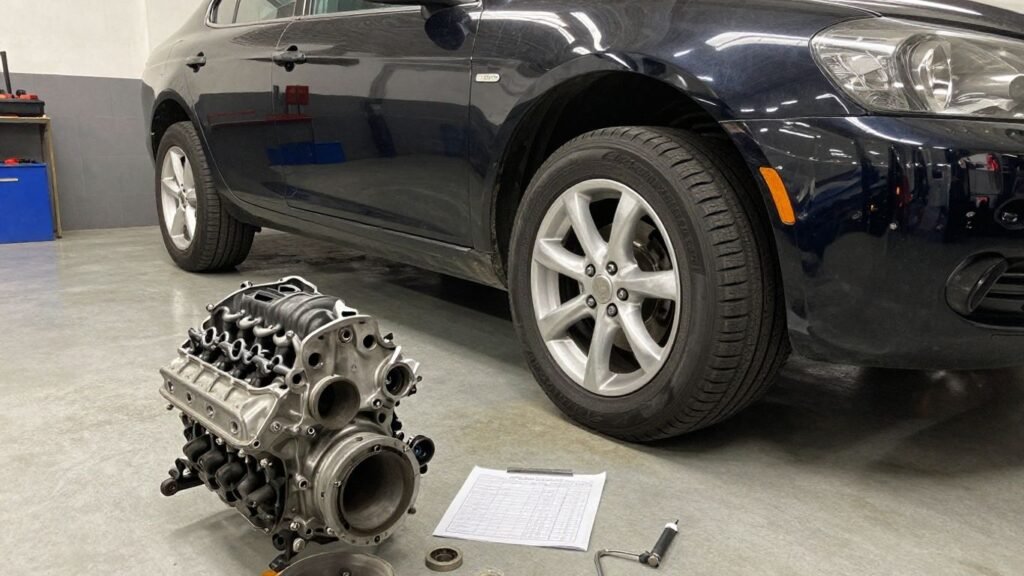
A careful comparison can help you save money on engine replacement without turning a lower price into a reliability problem. The best decision considers the whole vehicle, not just the engine sitting on the estimate.
- Compare replacement with rebuilding and major repairs before committing.
- Price the engine, labor, related parts, fees, and possible surprises together.
- Verify engine compatibility, mileage, warranty terms, and return policies.
- Get detailed estimates and judge repair shops by value, not price alone.
- Keep up with break-in, maintenance, and documentation after installation.
Determine whether engine replacement is the best financial choice
An engine failure does not automatically make replacement the right answer. Start by comparing the cost of several repair paths with what the vehicle is realistically worth today. The condition of the transmission, body, suspension, and interior matters just as much as the failed engine. A sound decision is based on the car’s remaining usefulness, not the emotional pull of keeping it.
Compare replacement, rebuilding, and major repairs
A replacement usually removes the failed engine and substitutes another unit, while a rebuild keeps the original block and renews damaged internal parts. Major repairs may be enough when the problem is limited to a component such as a head gasket, timing system, or cylinder head. Ask the mechanic to explain what failed and what evidence supports that diagnosis before choosing among them.
A rebuild can preserve a familiar engine, but its final cost depends on what inspection reveals after disassembly. A replacement may offer a more predictable schedule, though the unit’s condition and warranty still deserve close review. Compare the likely total cost, downtime, warranty, and expected service life rather than focusing on the initial parts price.
Estimate the vehicle’s current market value
Check several current listings for vehicles with similar age, mileage, trim, and condition. A private-sale estimate and a trade-in estimate can differ substantially, so use both as rough reference points rather than treating either as a guaranteed payout. Also subtract known problems that a buyer would notice, including worn tires, rust, warning lights, or a weak transmission.
The repair does not need to be cheaper than the car’s market value in every case. A replacement can still make sense when the vehicle is dependable otherwise, inexpensive to insure, and familiar to you. Still, a large repair bill on a car with low resale value deserves a particularly careful second opinion.
Consider the car’s age, mileage, and remaining life
Age and mileage help estimate how many other expensive repairs may arrive soon. Look through maintenance records and consider whether the vehicle has been driven gently, serviced regularly, and kept free of structural damage. A high-mileage car with a healthy transmission and clean body may be a better candidate than a newer car that has been neglected.
Think in terms of the next few years, not only the next few weeks. If replacing the engine lets you avoid a costly loan and the rest of the car can reasonably serve for years, the arithmetic may favor repair. If several major systems are already near the end of their useful lives, the engine may only be the first bill in a chain.
Identify signs that replacement may not be worthwhile
Be cautious when the vehicle has severe rust, flood damage, a failing transmission, extensive electrical faults, or serious suspension and brake problems. Multiple warning signs can turn an apparently affordable engine job into a broader restoration project. Ask the shop for a written condition report covering major systems before ordering an engine.
Also reconsider the repair if the diagnosis is uncertain or the replacement unit has vague history. A bargain engine that cannot be verified may create a second failure and another installation charge. Reliable savings come from reducing risk, not merely accepting the lowest number.
Understand the costs that make up an engine replacement
The engine itself is only one line on the final invoice. Labor, fluids, seals, belts, hoses, programming, taxes, and disposal can all affect the total. Request an estimate that separates parts from labor and identifies assumptions, exclusions, and possible additional work. That detail makes competing estimates easier to compare fairly.
Compare new, remanufactured, used, and rebuilt engines
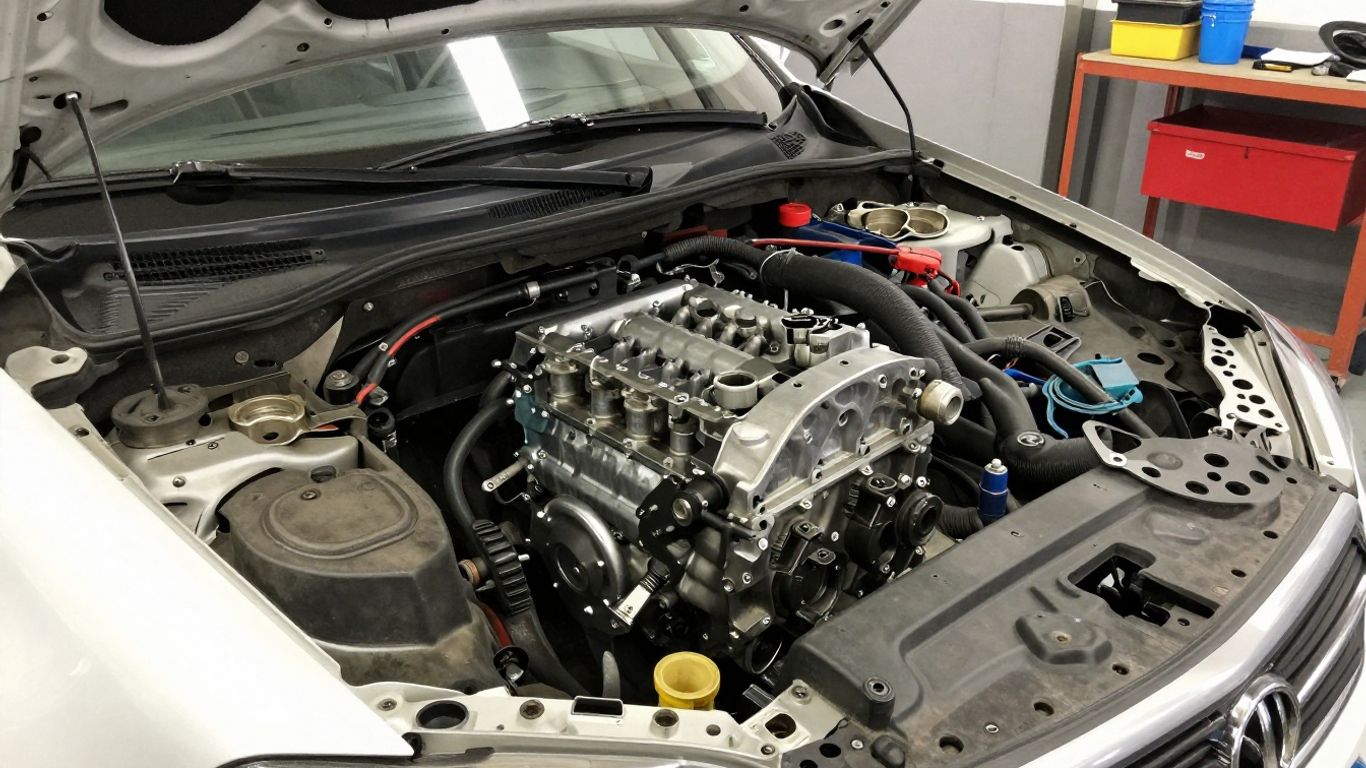
A new engine generally offers the least uncertain history, but it may cost more than the vehicle justifies. Used engines can be less expensive, while remanufactured and rebuilt units occupy different points on the price and assurance spectrum. The terminology is not interchangeable, so ask what inspection, machining, and replacement of internal parts each option includes.
Do not judge an engine by price alone. A unit with documented testing, a useful warranty, and clear compatibility may cost more initially but reduce the chance of paying for removal and installation twice. Ask for a written description of what arrives with the engine and what must be transferred from the old one.
Account for labor rates and installation time
Labor depends on the vehicle’s design, engine accessibility, rust, accessories, and the amount of transferring or troubleshooting required. Two shops may quote different hours because they use different procedures or include different tasks. A written labor estimate should state the hourly rate, expected hours, and whether diagnostic or road-test time is included.
Installation time also affects transportation costs and lost work. Ask when the shop expects to receive the engine, start the job, and finish it. A realistic schedule is more useful than a confident promise that leaves you paying for an extended rental.
Budget for fluids, gaskets, belts, hoses, and related parts
Some parts are inexpensive individually but costly to reach once the engine is installed. A shop may recommend replacing accessible wear items while the area is open, but you should understand which recommendations are essential and which are optional. The goal is not to replace everything automatically; it is to avoid paying substantial labor later for a predictable failure.
Common estimate items may include:
- Engine oil and coolant needed for startup and service.
- Gaskets, seals, and filters disturbed during installation.
- Belts, hoses, clamps, and tensioners showing age or damage.
- Spark plugs or other service parts appropriate for the replacement unit.
After the list, ask the mechanic to connect each item to evidence such as visible wear, leakage, service interval, or manufacturer guidance. That conversation helps separate sensible prevention from unnecessary add-ons.
Plan for taxes, disposal fees, warranties, and unexpected repairs
A quote can look attractive before sales tax, core charges, fluid disposal, shipping, or warranty-related fees are added. Ask whether the old engine must be returned and whether the warranty covers parts only or also labor to remove and reinstall a failed unit. Clarify the process and deadline for reporting a problem.
Set aside a contingency amount for damaged connectors, seized fasteners, cracked mounts, or related faults discovered during disassembly. No estimate can predict every condition hidden inside an older vehicle. A transparent shop will explain how it handles such discoveries instead of quietly expanding the bill.
Find a dependable engine at a lower price
Lowering the parts cost is often the most visible way to save money, but sourcing requires discipline. A compatible engine with traceable history is more valuable than an anonymous unit that is merely cheap. Gather the vehicle identification number, engine code, transmission details, and exact model year before contacting suppliers.
Evaluate used engines from salvage yards and recyclers
Used engines may come from vehicles that were damaged elsewhere while their powertrains remained usable. Ask about recorded mileage, the donor vehicle, testing performed, compression or leak-down information when available, and how the engine was stored. Photos and a written condition description are useful, but they do not replace clear terms.
Confirm whether accessories, sensors, manifolds, wiring, and the oil pan are included. Sometimes the replacement is a long block and your existing external parts must be transferred. That can change both labor and compatibility, so the contents of the shipment should appear on the invoice.
Compare remanufactured engines with rebuilt options
A remanufactured engine is commonly processed to a defined standard, while “rebuilt” can describe a range of work depending on the supplier. Ask which measurements are checked, which components are replaced, and whether the finished unit is tested. The label matters less than the documented process behind it.
Compare warranty length, coverage, and exclusions alongside the purchase price. A unit with a stronger warranty may be the better value if it limits your exposure to another parts bill. Make sure the warranty’s installation requirements are practical for the shop you plan to use.
Verify mileage, compatibility, and engine identification numbers
Match the engine identification number and code to the vehicle before purchase, not after delivery. Similar engines can differ in emissions equipment, sensors, wiring, computer communication, mounts, or calibration. Give the supplier complete vehicle information and have the repair shop confirm fitment independently.
Mileage should be supported by records when possible. If the supplier cannot explain where the engine came from or how its mileage was established, treat that uncertainty as a cost risk. Keep photographs and paperwork showing the identification numbers at delivery.
Review warranty coverage, return policies, and supplier reputation
Read the warranty before paying, including labor limits, required maintenance, approved installers, and exclusions for overheating or contaminated fluids. Return policies may impose inspection fees, shipping charges, or short reporting windows. Those details can matter more than a modest difference in the listed price.
Look for a supplier with consistent documentation and a clear process for resolving defects. Ask your mechanic whether the supplier’s requirements are workable and whether the shop has installed similar units. Reliability is easier to protect when the seller and installer communicate clearly.
Reduce installation and labor expenses
Labor is a major part of an engine replacement, but cutting it carelessly can create a larger bill later. Seek estimates that describe the same scope of work, the same engine type, and the same included parts. Then compare the people, process, and warranty behind each number.
Get written estimates from multiple repair shops
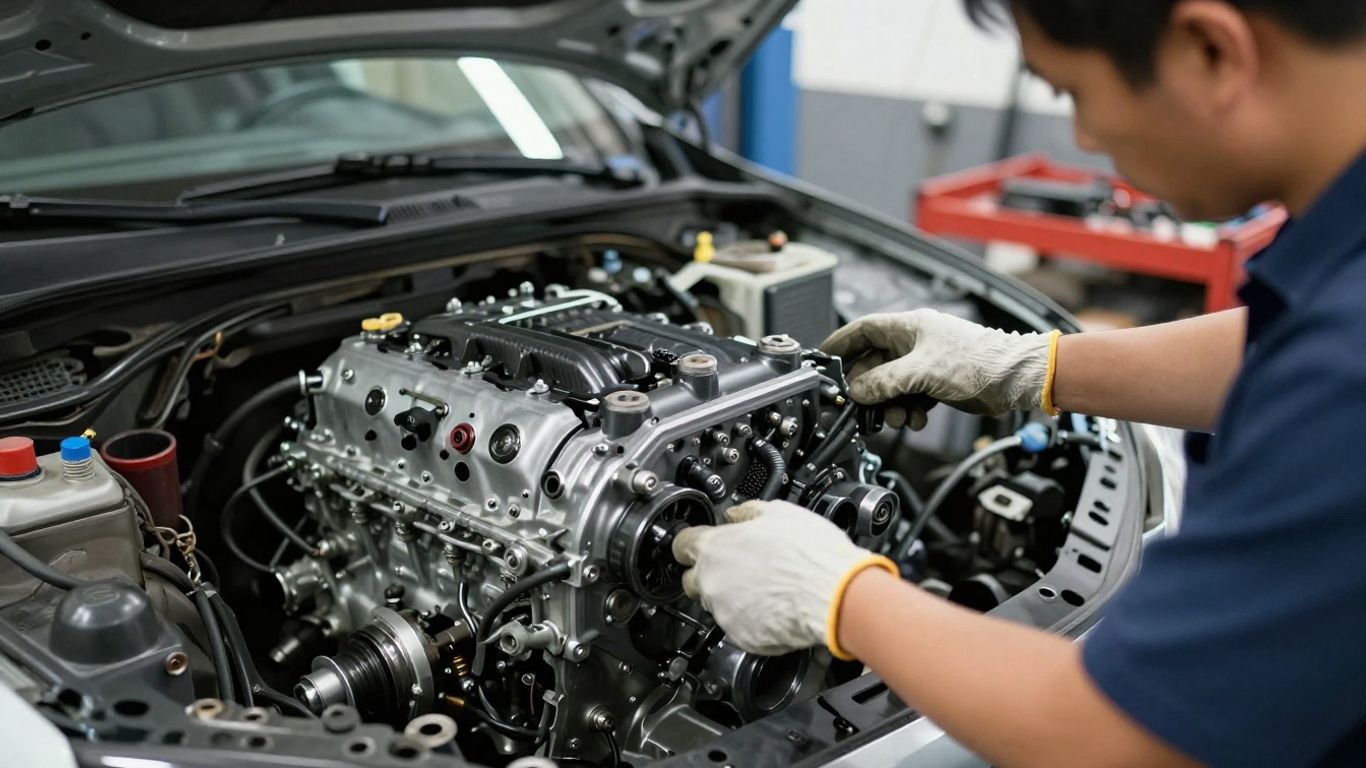
Request at least several itemized estimates from reputable shops. Each should identify the engine source, labor hours, hourly rate, fluids, transferred parts, testing, warranty, and taxes or fees. Without that detail, a lower quote may simply omit work that another shop included.
Give every shop the same information and ask each one to identify assumptions. A quote that explains possible changes is often more useful than one that promises an unrealistically fixed total. Keep the estimates so you can compare revisions if the diagnosis changes.
Compare independent mechanics with dealership service departments
Dealership technicians may have direct familiarity with a vehicle line, factory procedures, and diagnostic equipment. Independent shops may offer different labor rates or more flexibility in sourcing parts. Neither category is automatically the better choice; experience with your specific engine and a clear warranty should carry more weight.
Ask who will perform the work, how the replacement will be verified, and what post-installation testing is included. Check licensing, reviews, and references where available. A shop that can explain its process plainly is easier to hold accountable.
Ask which parts can be reused safely
Some accessories and brackets may be reusable if they pass inspection, while others should be replaced because they are worn, contaminated, or difficult to access later. Ask the mechanic to distinguish tested reusable parts from parts being reused only to lower the quote. That distinction protects reliability without forcing unnecessary replacement.
Reuse should also account for the replacement engine’s configuration. A sensor or intake component may physically fit yet be unsuitable for the vehicle’s control system. Have the shop document what transfers and why.
Avoid choosing a shop based on the lowest quote alone
The cheapest estimate may exclude diagnosis, break-in service, calibration, warranty labor, or related maintenance. It may also rely on an engine with less documentation. Compare the complete risk-adjusted cost, including what happens if the unit arrives damaged or fails shortly afterward.
A good final estimate should leave room for defined contingencies without giving the shop unlimited authority. Confirm the approval process, payment schedule, and warranty contact before work starts. Saving money is useful only when the repair remains dependable.
Prevent hidden costs during the replacement
An engine does not operate in isolation. A failing cooling system can damage the replacement, and a worn drivetrain can make the car feel unreliable even after the engine runs well. A broader inspection before installation helps reveal costs that are easier to address while access is available.
Inspect the transmission, cooling system, and drivetrain
Ask the shop to inspect the transmission for slipping, leaks, delayed engagement, or abnormal noise. The radiator, water pump, fans, hoses, and thermostat also deserve attention because overheating is a common threat to an otherwise healthy engine. Driveshafts, axles, mounts, and differential components can add symptoms that are mistakenly blamed on the replacement.
The inspection does not mean every questionable part must be replaced immediately. It gives you a clearer picture of whether the vehicle can support the investment. Prioritize defects that threaten safety, reliability, or the new engine’s survival.
Replace wear items that are difficult to access later
Some maintenance items are inexpensive when the engine is out but labor-intensive once everything is assembled. Discuss seals, rear-access components, mounts, belts, hoses, and other wear items based on condition and service history. The right choice depends on the vehicle and the engine package, so avoid a blanket parts list.
Ask for photographs or measurements when a recommendation is not obvious. A small preventive repair can be sensible, but it should still be tied to evidence. This keeps convenience from becoming an excuse for unnecessary spending.
Confirm software, sensors, and emissions-system requirements
Modern vehicles may require inspection of sensors, wiring, computer communication, and emissions-related equipment when an engine is changed. Confirm whether the replacement matches the vehicle’s calibration and emissions configuration. A mechanical fit is not enough if warning lights, drivability problems, or inspection failures follow.
Have the shop explain any programming or diagnostic work before ordering the engine. It should identify which components are included, which are transferred, and which may need testing or replacement. Early clarification prevents an inexpensive-looking engine from becoming an expensive compatibility project.
Request approval before additional work begins
Agree on a dollar threshold and a contact method for extra work before the vehicle is disassembled. Ask the shop to pause and provide photographs, findings, and a revised estimate when it discovers a problem outside the original scope. Written approval protects both sides from disputes.
There are exceptions for immediate safety issues, but those should be defined in advance. Keep copies of approvals and revised estimates with the original paperwork. A controlled process makes surprises manageable even when the final bill changes.
Protect your investment after the engine is installed
The first weeks after installation deserve as much care as the purchasing decision. Follow the installer’s instructions rather than assuming every replacement engine has the same break-in requirements. Watch the vehicle closely, keep records, and report concerns while warranty coverage is easiest to establish.
Follow the break-in procedure and maintenance schedule
Ask for written break-in instructions, including limits on speed, load, towing, and idling if applicable. Confirm when the first oil and filter change is due and whether the supplier requires specific service for warranty coverage. Gentle, attentive driving during the initial period can also help you notice problems early.
Do not postpone scheduled inspections because the engine feels normal. A short follow-up visit can identify seepage, loose connections, or unusual readings before they become major failures. Keep the service interval visible on your calendar.
Use the correct oil, coolant, and replacement filters
Use fluids that meet the vehicle and engine manufacturer’s specifications. The wrong viscosity, coolant type, or filter can affect lubrication, temperature control, or warranty eligibility. Ask the installer to record the products used at delivery.
Check fluid levels as instructed and never mix products casually. If the level drops, find the cause rather than repeatedly topping it off. Small leaks are cheaper to diagnose before they become overheating or low-oil events.
Keep service records for warranty and resale value
Save the purchase invoice, engine identification information, warranty terms, installation estimate, approvals, and maintenance receipts. Record dates, mileage, fluids, and any inspection results. Organized documentation helps demonstrate proper care if a warranty issue arises.
Those records can also reassure a future buyer that the replacement was not an improvised repair. A documented engine may support the vehicle’s value better than an undocumented one, even when the market does not return the full repair cost.
Watch for leaks, overheating, warning lights, and unusual noises
Pay attention to oil or coolant on the ground, rising temperature, warning lights, smoke, hard starting, vibration, or new sounds. Stop driving when a serious warning appears and contact the installer promptly. Continuing to operate a vehicle with an overheating or low-oil condition can turn a small issue into major damage.
Describe when the symptom occurs and take a photograph or short recording when safe. Do not erase diagnostic codes or authorize unrelated repairs before the warranty provider or installer has a chance to inspect the problem. Fast, accurate reporting gives you the best chance of protecting the investment.
Conclusion
To save money on engine replacement without sacrificing reliability, compare the whole vehicle, price every part of the job, verify the engine and warranty, and choose an installer for documented value rather than the lowest quote. Careful follow-up after installation completes the savings strategy by protecting the engine you paid to install.