Key Takeaways
Choosing a replacement engine is less about finding the lowest advertised price and more about confirming fit, condition, and total cost.
- Diagnose the original failure before deciding between repair and replacement.
- Match the replacement by vehicle details, engine code, VIN, and part numbers.
- Compare new, used, remanufactured, rebuilt, long-block, and complete engines carefully.
- Add labor, shipping, fluids, hardware, programming, and possible core charges to the budget.
- Read the warranty and prepare the vehicle properly before installation.
Start with your vehicle’s engine needs
An engine replacement can restore a dependable car, but it is a major mechanical and financial decision. Before comparing listings, establish why the current engine failed, what the vehicle is worth, and how long you expect to keep it. This engine buying guide for car owners begins with those practical questions because they shape every choice that follows.
Decide whether replacement or repair makes more sense
A cracked block, severe internal damage, or a seized engine may make replacement more sensible than rebuilding the existing unit. Smaller problems, such as an external leak or a failed accessory, may be repairable without removing the engine. Ask for a written diagnosis that separates internal damage from bolt-on parts and electrical faults.
The car’s age and overall condition matter just as much as the engine estimate. If the transmission, suspension, body, or electronics also need expensive work, compare the complete repair plan with the vehicle’s likely value and your alternatives. A replacement makes the strongest financial sense when the rest of the car is solid enough to justify the investment.
Identify the symptoms and cause of engine failure
Do not treat the failed engine as an isolated component. Overheating, oil starvation, contaminated coolant, a broken timing component, detonation, and neglected maintenance can all cause serious damage. Finding the original cause helps prevent the replacement engine from suffering the same fate.
Have the shop document warning signs such as low oil pressure, coolant loss, unusual smoke, metal in the oil, or abnormal compression. Scan for stored diagnostic codes and inspect related systems, including cooling, lubrication, fuel delivery, and ignition. The failure’s root cause matters because a new engine cannot correct a blocked radiator or a faulty fuel system by itself.
Set a realistic budget for the complete project
The quoted engine price is only one line in the project. Labor can vary with access, vehicle layout, rust, wiring complexity, and the number of components transferred from the old engine. A careful estimate should also include diagnosis, shop supplies, fluids, gaskets, seals, hardware, disposal, and possible programming.
Request an itemized quote before authorizing the work. Leave room for discoveries after removal, such as damaged mounts, brittle hoses, worn belts, or a failing clutch. A modest contingency fund is usually easier to manage than stopping the job halfway through installation.
Consider your driving habits and long-term ownership plans
Your daily use should influence the replacement choice. A commuter that covers long highway distances has different priorities from a vehicle used for towing, short trips, winter driving, or occasional recreation. Consider expected mileage, fuel requirements, maintenance tolerance, and whether originality or performance matters to you.
Also decide whether this is a short-term repair or a long-term ownership plan. Spending more on documented condition and supporting parts may be reasonable if you intend to keep the car for many years. If you plan to sell soon, avoid upgrades that add cost without improving fit, reliability, or buyer confidence.
Match the engine to your car
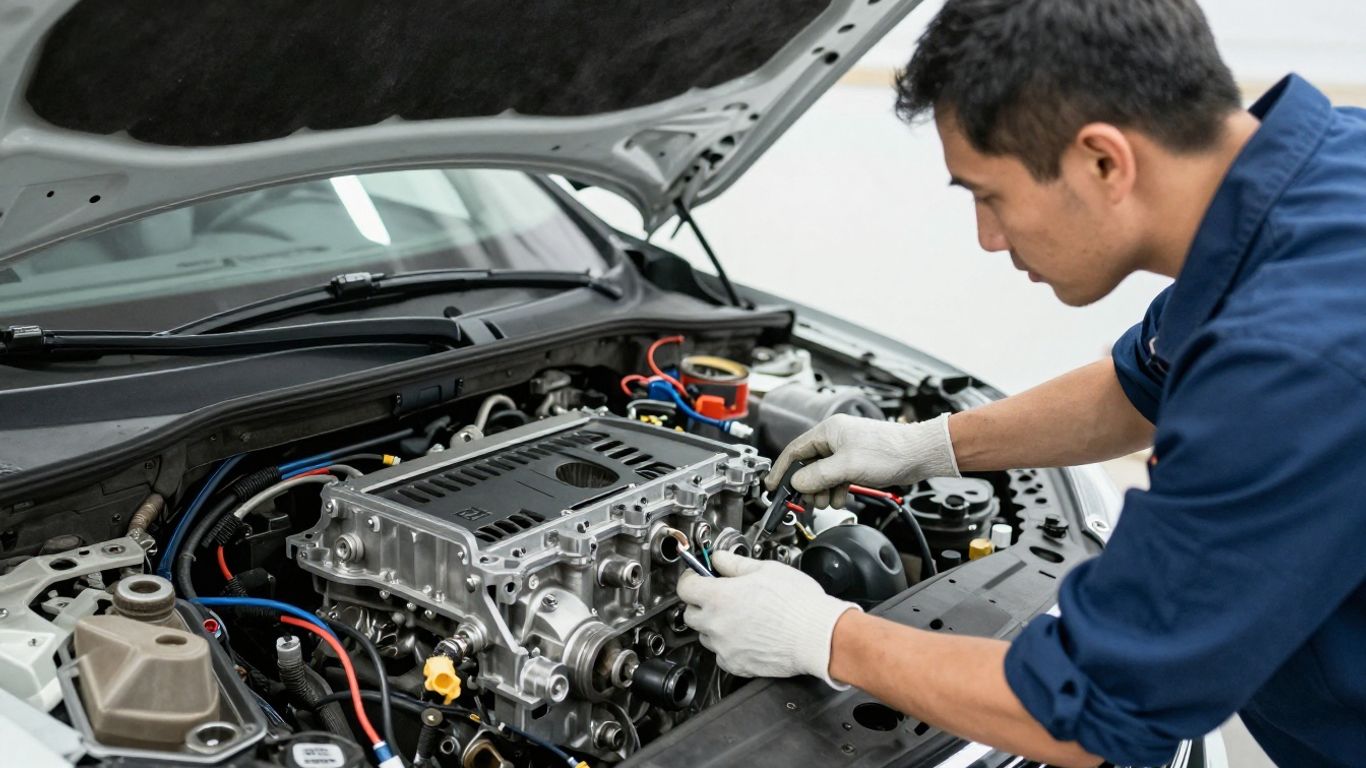
Compatibility is the point at which many apparently good deals fail. Two engines can share a displacement and outward appearance while differing in sensors, wiring, mounts, emissions equipment, or computer controls. Verify the vehicle details from several sources rather than relying on a listing title alone.
Verify the year, make, model, and trim
Start with the exact model year, body style, trim, and factory engine option. Midyear changes and special packages can affect mounts, intake systems, exhaust routing, cooling connections, and control modules. A listing that says an engine fits a broad model range still needs to be checked against your specific vehicle.
Use the registration or title for the basic identity, then confirm the information on the vehicle itself. Record whether it has front-wheel drive, rear-wheel drive, or all-wheel drive, along with any factory performance or emissions package. These details narrow the search before you spend time comparing condition and price.
Confirm the engine code and configuration
The engine code is often more useful than the vehicle name. It can identify differences in displacement, cylinder head design, fuel system, valve timing, sensors, and computer calibration. Record the code from the engine, service records, or a reliable vehicle information source, and compare it with the replacement documentation.
Check configuration details such as cylinder count, aspiration, fuel type, ignition arrangement, and accessory layout. If the replacement uses a different configuration, determine whether the change is a supported direct fit or a larger swap requiring custom parts and calibration. For a normal replacement, matching the original configuration usually reduces risk.
Check VIN and OEM part numbers
The VIN can help confirm the factory build and resolve ambiguity between similar powertrains. OEM part numbers are equally valuable for brackets, sensors, manifolds, control units, and other attached components. Give both the VIN and the original engine information to the seller or installer before purchase.
Do not assume that a part number ending in a different suffix is interchangeable. Ask what the suffix change means and whether it reflects a revision, regional specification, or completely different application. Written confirmation is preferable to a casual assurance over the phone.
Account for transmission, drivetrain, and emissions compatibility
An engine may physically bolt into the bay and still fail to work with the vehicle’s transmission or drivetrain. Compare bellhousing patterns, flexplate or flywheel requirements, mounts, crank sensors, wiring connectors, exhaust connections, and accessory clearances. Automatic and manual applications may require different external parts even when the long block is similar.
Emissions equipment deserves special attention in the United States. Catalysts, oxygen sensors, evaporative controls, exhaust manifolds, and engine computers must work together and comply with the vehicle’s applicable requirements. Confirm the needed configuration before shipping, since correcting an incompatible emissions setup can erase any initial savings.
Compare your engine purchase options
Replacement engines generally fall into several condition and completeness categories. New units may offer the clearest history, while used units can lower the purchase price; remanufactured and rebuilt units sit between those extremes depending on the work performed. The right option depends on budget, availability, warranty terms, and how much uncertainty you are willing to accept.
New engines and their advantages
A new engine is built with new major components or supplied as a new factory unit, depending on the source and product description. It may offer predictable condition and strong documentation, but it is often the most expensive route. Confirm exactly what “new” includes rather than assuming every external component is included.
New does not automatically mean plug-and-play. You may still need to transfer accessories, sensors, manifolds, wiring, or the oil pan from the original engine. Verify the scope of supply and warranty before comparing its price with other options.
Used engines and salvage-yard considerations
A used engine is typically removed from another vehicle and sold based on its prior service history and condition. It can be a practical choice for an older car or a repair where keeping costs controlled matters. The tradeoff is less certainty about internal wear, maintenance, and the conditions under which the engine operated.
Ask where the unit came from, why the donor vehicle was dismantled, how mileage was documented, and what testing was performed. Flood damage, long storage, overheating, and neglected oil changes are important risks. A lower odometer reading is useful only when it can be supported by credible records.
Remanufactured and rebuilt engines
A remanufactured engine is generally restored to defined specifications using inspected and replaced components, while a rebuilt engine may involve a narrower set of repairs. Terminology varies by seller, so ask for the actual machining, inspection, and replacement procedures. The label alone does not tell you the quality of the work.
Compare the warranty, testing records, machine-shop practices, and list of replaced parts. Also ask whether the unit is supplied as a long block or with external components attached. A properly documented unit can reduce uncertainty, but only when the seller explains what was done and what remains your responsibility.
Long-block, complete, and crate engine differences
A long block commonly includes the main internal assembly and cylinder heads, while a complete engine may include more external components. A crate engine is a shipping format or packaged engine product, not a guarantee that every accessory needed for your vehicle is included. Always compare the contents line by line.
This simple comparison can prevent expensive surprises:
| Engine type | Usually includes | Common buyer responsibility |
|---|---|---|
| Long block | Core internal assembly and cylinder heads | Transfer accessories, sensors, manifolds, and covers |
| Complete engine | More attached external components | Confirm vehicle-specific wiring and calibration |
| Crate engine | Packaged engine supplied for a stated application | Verify mounts, drivetrain fit, and required supporting parts |
The distinctions are useful only when tied to the seller’s written parts list. Ask for photographs or a detailed inventory when the listing uses broad terms such as “complete,” then compare that list with the components on your vehicle.
Evaluate specifications and condition
Once compatibility is established, compare the engines on measurable details rather than appearance. Displacement and advertised power are only part of the picture; mileage, service history, testing, storage, and included components can matter more to a replacement buyer. Keep the original engine’s specifications beside each candidate listing.
Compare displacement, power, and torque
Match displacement and configuration first unless you are deliberately planning a documented engine swap. Power and torque figures can differ because of intake, exhaust, software, compression, fuel, or emissions equipment. A higher output figure is not automatically an advantage if it creates compatibility or legal problems.
Check the operating range and intended use as well. For a daily driver, predictable drivability and serviceability may be more valuable than a small increase in peak output. Make sure the transmission, cooling system, fuel system, and control module can support any specification change.
Check mileage, service history, and operating conditions
Mileage is a useful clue, not a complete health report. A high-mileage engine with regular oil changes and documented maintenance may be a safer purchase than a lower-mileage unit with unknown storage or donor history. Ask how the mileage was obtained and whether the engine was tested while installed.
Find out whether the donor vehicle operated in severe heat, heavy traffic, dusty conditions, or frequent towing. Ask about oil consumption, overheating, and the length of time the engine was stored after removal. These details help you judge wear that a basic visual inspection cannot reveal.
Inspect compression, leaks, and internal wear
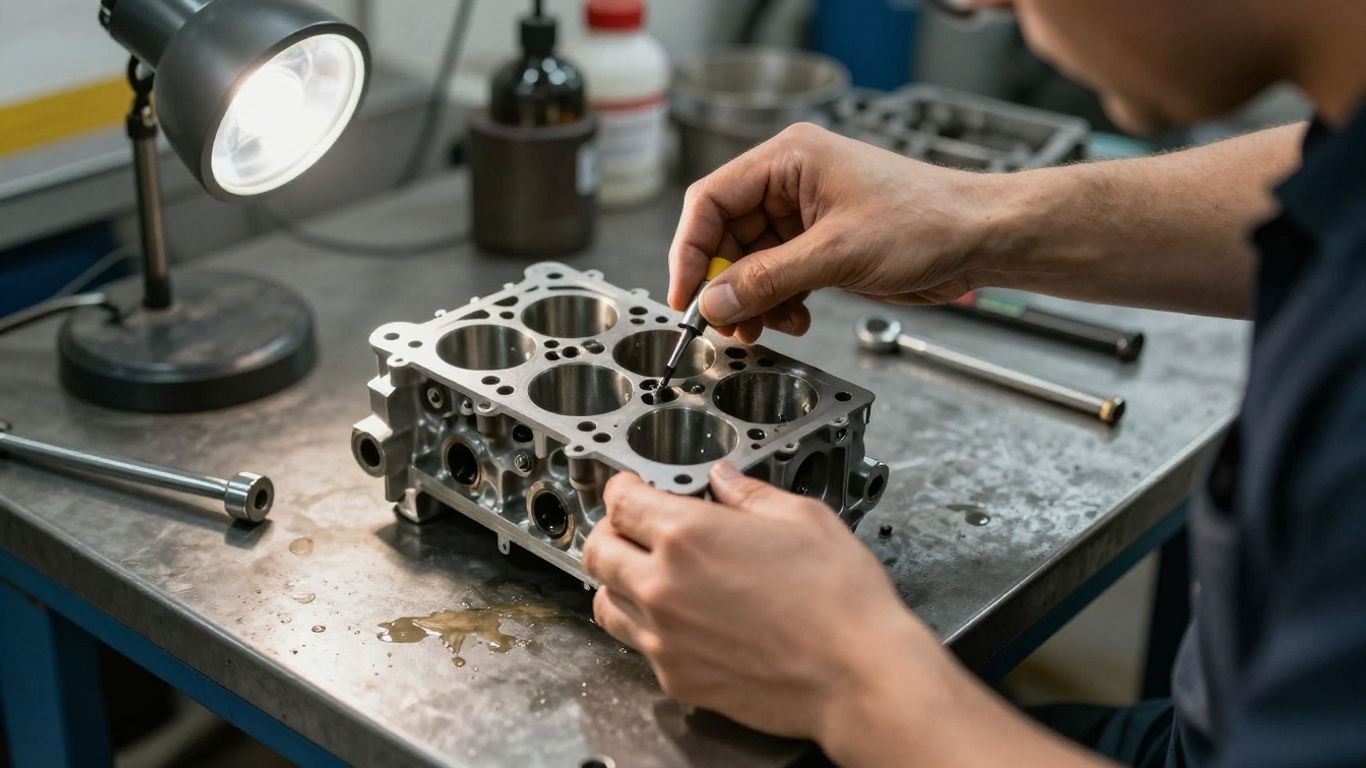
Request test results when available, including compression or leak-down readings, oil-pressure information, and evidence of startup testing. Look for oil or coolant contamination, damaged sealing surfaces, corrosion, cracked housings, and excessive sludge. A clean exterior is helpful, but it cannot prove the condition of internal bearings, rings, or cylinder walls.
If possible, have an experienced technician inspect the engine before installation. The cost of a pre-purchase inspection is small compared with removing and reinstalling an unsuitable unit. It is also a good time to identify parts that should be replaced while the engine is accessible.
Look for included components and missing accessories
External parts often determine whether an engine replacement stays within budget. Confirm whether the unit includes the intake, exhaust manifolds, throttle body, injectors, alternator, starter, air-conditioning compressor, sensors, flywheel, flexplate, oil pan, and timing components. Do not assume that parts visible in a photograph are included in the sale.
Make a transfer list from the old engine and compare it with the seller’s inventory. Common omissions are not necessarily deal breakers, but they should be priced before purchase. Knowing what must move over also helps the installer plan the work accurately.
Calculate the true replacement cost
The cheapest engine listing is rarely the same as the cheapest completed repair. Total cost includes the unit, labor, preparation, consumables, transportation, programming, and the work needed to correct related problems. Build the estimate before committing so a low upfront price does not hide a larger final bill.
Compare the engine price with labor charges
Labor depends on the vehicle, engine accessibility, shop rate, and whether the replacement arrives complete or partially assembled. Ask whether the quoted hours include removal, transfer of accessories, cleaning, installation, initial testing, and diagnosis of post-installation problems. A low engine price may require more labor if many components must be swapped.
Obtain at least one detailed estimate from the intended installer, even if you plan to buy the engine elsewhere. Confirm who handles defective parts, additional labor, and delays caused by incorrect fitment. Clear responsibility matters when the seller and installer are separate businesses.
Budget for fluids, gaskets, seals, and hardware
Fresh fluids and new sealing materials are ordinary parts of a careful installation. Plan for engine oil, coolant, filters, gaskets, seals, hoses, belts, clamps, spark plugs or glow plugs, and one-time-use fasteners where applicable. Some of these items may be inexpensive individually but add up quickly.
Ask the technician which maintenance items are easiest to replace while the engine is out. Preventive work can be more economical at that stage than paying for another disassembly later. Separate essential installation parts from optional upgrades so the estimate remains clear.
Factor in towing, shipping, and core charges
A replacement engine may need freight delivery, residential lift-gate service, or pickup at a commercial address. Include towing for the disabled vehicle and any storage fees caused by shipping delays. Some sellers also charge a refundable core deposit until the old engine is returned.
Ask about packaging, inspection on delivery, damage reporting, and the deadline for returning the core. Photograph the shipment before opening it and document visible damage immediately. These simple steps can help preserve your position if the unit arrives damaged or incomplete.
Estimate tuning, programming, and emissions-related costs
Modern vehicles may need computer programming, immobilizer procedures, relearn routines, or diagnostic checks after installation. The exact work depends on the vehicle and the replacement configuration. Ask the installer whether these services are included in the labor quote or billed separately.
Emissions-related work can include transferring compliant equipment, resolving sensor faults, and completing required readiness checks. Do not assume that an engine that physically fits will pass inspection without the correct controls and calibration. Price those requirements before purchase, especially when the replacement differs from the original configuration.
Protect your purchase and plan the installation
A good engine can still become a poor purchase if the paperwork is vague or the installation is rushed. Review the seller’s terms, choose an installer who understands the vehicle, and prepare the car before the replacement arrives. Planning protects both the investment and the time your vehicle spends off the road.
Review warranty coverage and return conditions
Read the warranty before paying, including its duration, mileage limits, covered parts, labor exclusions, and maintenance requirements. Check whether the warranty begins on the purchase date or installation date. Some warranties require professional installation, documented fluids, or specific break-in procedures.
Return conditions deserve equal attention. Confirm who pays shipping, how quickly a defect must be reported, whether the core must be returned, and whether disassembly voids coverage. Keep invoices, test results, photographs, and maintenance records in one place.
Choose a reputable seller or engine supplier
Look for a supplier that provides a verifiable application match, written condition details, a clear parts list, and reachable support. Reviews can reveal patterns, but they should not replace questions about testing, donor history, warranty handling, and returns. A seller who avoids basic specifications is creating unnecessary risk.
Give the supplier the VIN, engine code, vehicle details, and installer’s parts requirements before ordering. Ask for confirmation in writing. That record is useful if the delivered unit differs from the agreed application.
Prepare the vehicle before installation
Preparation should address the systems that may have contributed to the original failure. Clean or repair the cooling system, inspect wiring and grounds, check the fuel system, and verify that the transmission and mounts are ready. Replace contaminated fluids and damaged lines rather than connecting them to the replacement and hoping for the best.
A short preparation checklist keeps the handoff organized:
- Record the original engine code and attached component locations.
- Photograph connectors, hoses, brackets, and routing before removal.
- Confirm the replacement parts list against the installer’s estimate.
- Inspect cooling, lubrication, fuel, and electrical systems.
After these checks, the technician can transfer only the parts that are known to be suitable. That reduces confusion during installation and makes it easier to identify any remaining issue during the first startup.
Follow startup, break-in, and maintenance requirements
The first startup should follow the engine supplier’s instructions and the vehicle manufacturer’s service procedures. Verify fluid levels, prime the lubrication system when required, inspect for leaks, and monitor warning lights, temperature, oil pressure, and unusual noise. Do not treat a brief idle without symptoms as proof that the job is complete.
Follow any specified break-in limits and return for a post-installation inspection. Change fluids or filters at the recommended intervals, scan for codes, and keep every receipt. Careful early maintenance creates a useful record and gives small problems less time to become expensive ones.
Conclusion
The right replacement engine is the one that fits the vehicle, suits the way you use it, and remains affordable after labor and installation costs are included. Verify the engine code and documentation, compare condition as carefully as price, and protect the purchase with clear warranty terms and a prepared installation plan.