
Key Takeaways
Finding a suitable replacement starts with accurate vehicle details and a clear diagnosis. Compare condition, fit, total cost, and supplier terms before committing to a part.
- Use your VIN and the old part’s number to narrow the search.
- Compare new, used, and reconditioned options with expected lifespan in mind.
- Check compatibility against the exact vehicle variant, not just the model name.
- Confirm a supplier’s testing, returns, warranty, price, and delivery details.
- Keep purchase records and verify the repair before disposing of the old part.
Identify the part your vehicle needs
A careful search for car parts Sydney wide starts with knowing what has failed and what your vehicle requires. Similar-looking components can differ in connectors, dimensions, or specifications, so a broad description may not be enough. Gather the details before contacting suppliers, and treat a mechanic’s diagnosis as useful context rather than a substitute for checking fit. A few minutes of preparation can prevent a costly mismatch.
Use your VIN, make, model, and year
Start with the vehicle identification number (VIN), then note the make, model, year, and—if available—the build month. The VIN can help a supplier narrow down the vehicle, while make and model details provide a useful cross-check. When requesting a quote, give all of this information together rather than relying on a model name alone. That gives the supplier a clearer starting point for checking available options.
Check the part number and specifications
If the part is accessible, look for a printed, stamped, or molded number and record any letters or suffixes exactly. Specifications such as dimensions, connector shape, or mounting points can matter as much as the main number, especially when a manufacturer revised a component over time. Share clear photos if the supplier asks for them, but don’t use a photo as the only basis for ordering. A matching part number is a useful clue, not a guarantee that every variation will fit.
Compare the old part with the replacement
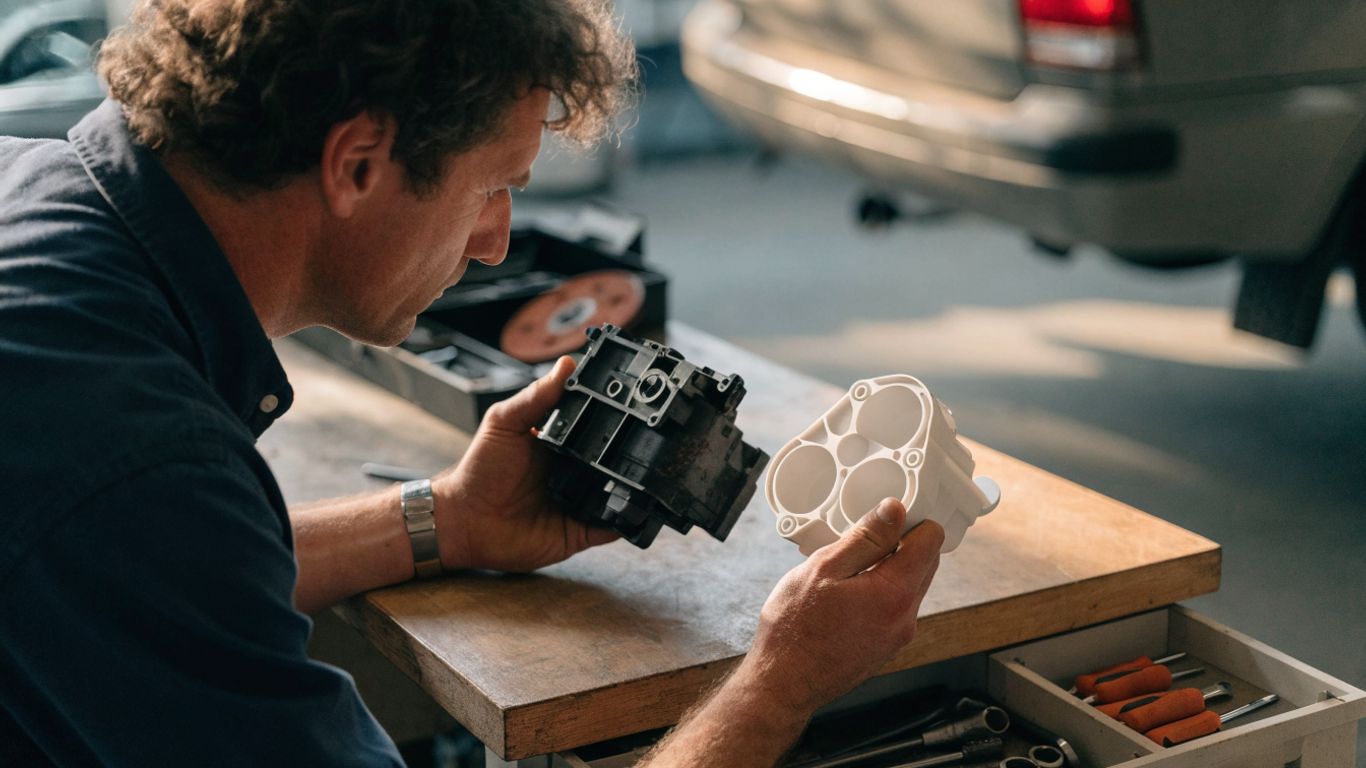
When practical, compare the replacement with the removed part before installation. Check its shape, fixing points, connectors, and any included brackets or sensors against what came off the vehicle. A mismatch can be subtle, so take your time and ask the supplier to confirm any difference you cannot explain. This visual check is particularly helpful when part numbers are missing or difficult to read.
Ask a mechanic to confirm uncertain diagnoses
A symptom does not always point to one failed component. A warning light, noise, or poor performance may have several possible causes, and replacing the first suspected part can add cost without resolving the problem. If diagnosis is uncertain, ask a qualified mechanic to inspect the vehicle and identify what should be replaced. You can then use the confirmed diagnosis to guide the parts search.
Choose between new, used, and reconditioned parts
The right condition depends on the component, your budget, how long you expect to keep the vehicle, and how it will be used. A low purchase price may be less attractive if the part has limited remaining life or a difficult return process. Conversely, a newer component is not automatically the best value for every older vehicle. Compare the options on their terms, and ask suppliers to describe the actual condition being offered.
Weigh cost against expected lifespan
Look beyond the initial price and consider how the part’s condition affects its likely service life. New parts may suit repairs where reliability matters most, while a used component could be a practical choice if its condition and history are clear. Reconditioned options vary by part and by the work carried out, so ask what was inspected or replaced. This simple comparison can make the trade-offs easier to see:
| Option | What to clarify | Useful consideration |
|---|---|---|
| New | Brand, specification, and included items | Price versus the expected service life |
| Used | Condition, testing, and any known history | Suitability for the vehicle and intended use |
| Reconditioned | Work completed and components replaced | Warranty terms and the scope of the work |
The table is a starting point, not a ranking. Ask for specific details about the part in front of you, then compare like with like before choosing.
Consider used parts for older vehicles
For an older vehicle, a used part may offer a sensible balance when a new replacement is costly, hard to find, or not necessary for the repair. Check that the supplier can identify the donor vehicle or otherwise explain how the part was sourced and assessed. ASV Used Parts describes recycled parts backed by testing and quality control; still, ask about the particular item’s condition and any applicable terms. The decision should come down to evidence about the component, not its label alone.
Check warranties on reconditioned components
A reconditioned component may have had inspection or repair work, but the exact scope can differ. Ask what was checked, what was replaced, whether the part was tested after the work, and how long any warranty lasts. ASV Reconditioning specializes in reconditioning engines and transmissions, according to its published description. For any supplier, check whether the warranty covers the part only or also addresses labor, removal, and refitting.
Know when a new part is the safer choice
A new part may be the more reassuring option when the component is critical to safe operation, when its prior history is unknown, or when the difference in price is reasonable for the added confidence. Follow the vehicle manufacturer’s service guidance and your mechanic’s recommendation for safety-related repairs. If you choose a used or reconditioned alternative, get clear information about testing and warranty coverage before purchase. The best choice is the one that fits the vehicle and the repair, with risks you understand.
Confirm the part fits your vehicle
Fitment can hinge on details that are easy to overlook, including a model update or a different engine configuration. Before ordering, give the supplier the same vehicle information you used to identify the part and ask them to confirm compatibility for the exact variant. A part described as suitable for a model range may still not suit every vehicle within it. Keep the confirmation with your quote or order records.
Verify compatibility with the exact model variant
Check the full model designation, including any body style or variant name shown in the vehicle documents. If the part is listed for several versions, ask which versions it fits and what information supports that match. Where possible, have the supplier cross-check the VIN and part number together. A clear answer is more useful than a general assurance that it should fit.
Check engine, trim, and production-year differences
Vehicles can change during a model run, and two cars registered in the same year may have been built at different times. Engine type, trim, transmission, and production date can all affect which component is correct. Mention any relevant differences when asking for a match, and ask the supplier to flag uncertainty rather than guess. This extra check is worthwhile for parts with specific connectors or mounting arrangements.
Confirm whether the part is genuine or aftermarket
Ask whether the part is genuine, aftermarket, used, or reconditioned, and request the maker or product details where available. ASV’s New Parts division is described as importing and distributing aftermarket brands sourced from original equipment manufacturers. That description alone does not establish that a particular item fits your vehicle, so verify the exact specification and application with the supplier. Choose based on compatibility, quality information, warranty, and price.
Ask about fitment support before ordering
Before paying, ask what information the supplier needs to check fitment and how they handle a part that proves incompatible. Get the answer in writing if possible, especially when the item is special-order or carries a restocking fee. If your mechanic is installing it, you can also share the part details with them beforehand. A short conversation now can prevent delays once the vehicle is apart.
Assess suppliers across Sydney
A useful supplier does more than quote a price: they should be able to identify what is being sold and explain its condition and terms. When you are comparing car parts Sydney wide, consider whether the business can answer vehicle-specific questions clearly and provide a reliable way to follow up. Online listings can be a starting point, but they may not show all the details that matter. Ask direct questions and notice whether the answers are specific.

Look for vehicle-specific parts expertise
Some parts require more context than a simple name or photo can provide. Ask whether the supplier regularly handles your vehicle’s make or the type of component you need, and share the VIN and part details. Their response should help you understand what they can verify and what remains uncertain. Clear limits are more reassuring than an unsupported promise of a perfect match.
Check reviews and business contact details
Look for recent, detailed customer feedback and compare it with the supplier’s own terms. Confirm that the business provides usable contact information and a clear process for questions about orders, delivery, or returns. A reachable supplier is especially valuable if fitment or condition needs to be discussed after a part arrives. Reviews are one signal among several, not a substitute for checking the item and policies yourself.
Ask how parts are tested and graded
For used or reconditioned parts, ask what inspection or testing has been done and how the supplier describes condition. If the part has visible wear, request photographs or a description of the areas that matter to the repair. You can also ask whether components shown in a listing are included in the sale. Specific answers make it easier to compare offers fairly.
Confirm return policies and warranty terms
Read the policy before ordering, not after a problem occurs. Check the return window, any conditions on packaging or installation, and whether return freight or restocking fees apply. Warranty terms should identify what is covered and how to make a claim. Keep a copy of the listing or written quote so you can refer back to the original description.
Compare prices and delivery options
The cheapest listing may not be the least expensive option once delivery, installation, and return costs are included. Ask suppliers to quote the same part specification and condition so you are not comparing unlike offers. Timing matters too: a low-priced part that arrives after a repair appointment could create extra inconvenience. A complete comparison should cover price, availability, and the practical route from supplier to vehicle.
Request a complete quote, including fees
Ask for the total price and confirm whether it includes taxes, delivery, packaging, or any other charges. For a used or reconditioned item, make sure the quote describes the condition and includes the warranty or return terms you discussed. If the supplier offers different versions, request a separate price for each one. Written details make it easier to spot differences before you decide.
Compare pickup, courier, and shipping timeframes
Find out where the item is located and what collection or delivery options are available. Confirm the estimated dispatch and arrival dates, as well as whether a bulky or fragile component needs special handling. A delivery estimate is not always a guaranteed arrival date, so leave room for delays if the repair is time-sensitive. Choose the option that fits your schedule and the part’s size.
Check availability before making plans
Confirm that the specific item is in stock and available to sell, rather than relying on a general listing or an outdated search result. If it needs to be transferred or sourced, ask how long that process may take and whether the supplier will update you if timing changes. Hold off on booking installation until you know the part can arrive in time. This is a small step that can save a wasted trip or appointment.
Factor in installation and return costs
A fair comparison includes the cost of fitting the part and what happens if it is wrong or faulty. Some repairs require specialist tools or additional components, so ask your mechanic for an estimate before buying. Also check whether removing an installed part affects return eligibility. Those details can shift which offer represents better value overall.
Prepare for purchase and installation
Once you have chosen a part, make the handoff to the installer straightforward. Confirm what is being supplied, retain the seller’s written terms, and agree on what will happen if the component does not fit or perform as expected. For a complex repair, the mechanic may want to inspect the part before installation. Good records help everyone work from the same information.
Confirm the part condition and included components
Before payment or collection, check the condition against the supplier’s description and confirm which related items are included. A listing may show brackets, sensors, or accessories that are not part of the sale, so ask rather than assume. If possible, inspect the part for damage and compare key features with the original. Resolve any discrepancy before it is fitted.
Keep receipts and warranty documentation
Save the receipt, quote, listing, warranty terms, and any messages confirming fitment or condition. Note the date of purchase and the vehicle the part is intended for. If a warranty claim or return becomes necessary, these records can help clarify what was agreed. Keep digital copies somewhere you can find them later.
Arrange professional installation when needed
Some components are straightforward to replace, while others call for diagnostic equipment, specialized tools, or safety procedures. Ask a mechanic whether the job is suitable for DIY work and whether related parts or calibration may be needed. If a professional is doing the repair, confirm they are comfortable installing the part you have sourced. Their guidance can help avoid damaging a new component during fitting.
Test the repair and keep the old part until confirmed
After installation, follow the mechanic’s advice on checking the repair and monitoring the vehicle. Keep the old component until the replacement has been confirmed to work, unless safe handling or disposal requires otherwise. If a warning light, leak, noise, or other symptom remains, contact the installer promptly rather than assuming the part itself is the only issue. A final check closes the loop between diagnosis and purchase.
Conclusion
A good parts search is a sequence of small checks: identify the component, verify fit, compare condition and total cost, then confirm the supplier’s terms. With accurate vehicle details and a little patience, you can make a more informed choice and give the repair a better chance of going smoothly.