

Key Takeaways
Choosing American V8 engine parts Australia requires more than finding a familiar brand or attractive price. Engine identification, vehicle compatibility, installation quality, and local compliance all matter.
- Confirm the engine family, generation, and measurements before ordering.
- Match internal and supporting parts to the vehicle’s intended use.
- Compare landed costs rather than overseas shelf prices alone.
- Check Australian emissions, noise, inspection, and approval requirements.
- Allow time and budget for careful setup, testing, and maintenance.
Understanding American V8 engine platforms
American V8 engines share a broad layout, but the details that control parts compatibility vary considerably. A classic small-block, a later overhead-cam engine, and a modern electronically managed V8 may all need completely different components. Start with the engine platform rather than the vehicle badge, then verify the exact generation. That approach prevents many expensive ordering mistakes.
Popular Chevrolet small-block and LS engine families
Chevrolet small-block engines appear in many older performance, touring, and custom applications, while LS-family engines brought newer architecture and electronics into a wide range of builds. Similar-looking components are not automatically interchangeable between generations. Check bore, stroke, deck height, cylinder-head pattern, accessory arrangement, and engine-management requirements. The vehicle’s model year is useful background, but the engine’s actual casting and specification are more reliable.
Ford Windsor, Cleveland, and Coyote engines
Ford Windsor and Cleveland engines differ in head design, intake arrangement, and valvetrain details, even when installed in vehicles with similar dimensions. Coyote engines add a modern overhead-cam layout and more complex control systems. Parts listings should therefore be read by engine family and generation, not simply by “Ford V8.” Clearance around the firewall, steering, accessories, and exhaust can also change when one platform replaces another.
Mopar small-block and Hemi applications
Mopar small-block applications include several families with distinct head, intake, distributor, and accessory requirements. Hemi engines likewise span generations that should not be treated as one universal fit. Identify the block, heads, timing arrangement, and front accessory drive before selecting parts. A complete engine specification sheet is especially useful when the V8 has been rebuilt or swapped.
Identifying your engine before ordering parts
Begin with the engine number, casting marks, cylinder-head identifiers, and any invoices from previous work. Photograph the block, intake, front cover, oil pan, and accessory brackets, then compare those details with the supplier’s fitment information. Measure critical features when the listing is unclear. Fitment comes before price, because a cheap component that needs returning can quickly become the expensive option.
Choosing the right American V8 engine parts
The right parts form a system rather than a collection of isolated upgrades. A camshaft affects valve springs, pushrods, compression, and tuning; a larger intake may expose limitations in fuel delivery or cooling. Decide whether the car is a daily driver, weekend cruiser, track vehicle, or tow rig before choosing specifications. That use case should guide both the headline components and the supporting hardware.
Internal engine components and rotating assemblies
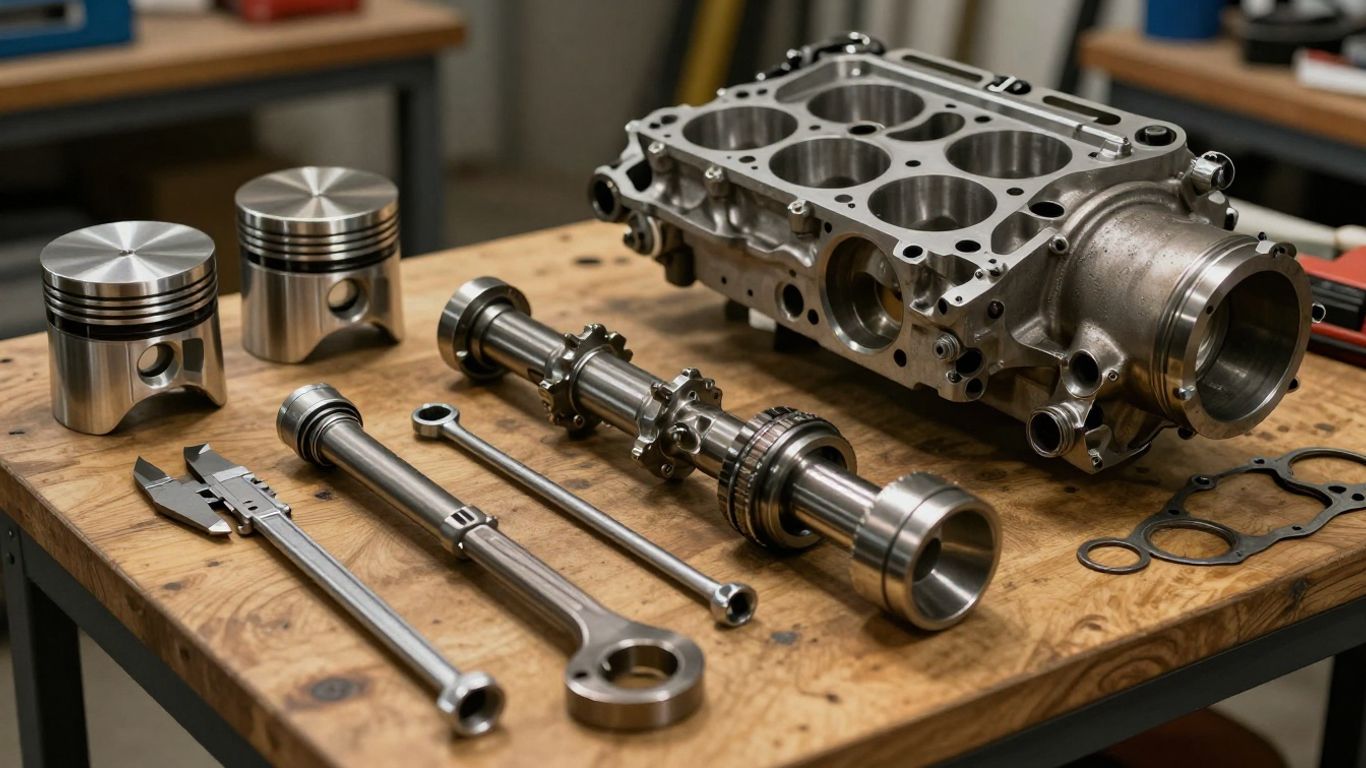
Pistons, rings, bearings, rods, and crankshafts must be selected as a matched rotating assembly. Confirm the bore, stroke, compression ratio, crank journal sizes, balance method, and intended rpm range. A machine shop should inspect the block and measure the crank rather than relying on assumptions from a previous build. Even a mostly stock rebuild may require oversize bearings or pistons after inspection.
Cylinder heads, camshafts, and valvetrain parts
Cylinder heads and camshafts determine much of an engine’s breathing character, but their specifications must work together. Check valve diameter, chamber volume, spring pressure, retainer clearance, rocker geometry, pushrod length, and piston-to-valve clearance. The cam’s advertised duration alone does not tell you whether it suits the vehicle. A moderate combination with stable valvetrain control is often more useful on the road than a highly aggressive specification.
Intake, fuel, and ignition upgrades
Intake manifolds, throttle bodies, carburetors, injectors, pumps, distributors, coils, and engine controllers should be considered together. Fuel capacity and pressure must suit the engine’s demand, while ignition control needs to match the chosen management system. Confirm connector styles and sensor requirements on electronic engines. Tuning is part of the upgrade, not a later detail to be left until the first drive.
Cooling, lubrication, and accessory systems
Radiators, fans, oil pumps, filters, sumps, water pumps, brackets, and belts are easy to overlook when attention is focused on horsepower. Check hose positions, fan clearance, oil-pan crossmember clearance, and the direction of accessory rotation. In a converted vehicle, accessory placement may matter as much as the component’s internal specification. Supporting systems are what make a performance build usable in traffic.
Matching parts for street, track, and towing use
A street engine needs manners, cold-start behavior, low-speed torque, and serviceability. A track engine may prioritize airflow, rpm capability, and sustained oil control, while a tow vehicle needs cooling capacity and predictable torque. Use the intended duty cycle to narrow the choices before comparing manufacturers. This avoids paying for specifications that add noise, tuning difficulty, or maintenance without helping the vehicle’s real purpose.
Finding reliable American V8 engine parts in Australia
Sourcing parts locally can simplify returns, advice, and delivery, while importing may provide access to a wider range of specialist components. Neither path is automatically cheaper. Availability changes, and a part that looks inexpensive overseas can become costly after freight, tax, exchange-rate movement, and delays. Keep a written comparison for the complete order rather than judging one item at a time.
Australian performance retailers and specialist suppliers
Australian specialist retailers may offer useful fitment knowledge for local vehicles, conversions, and workshop practices. Ask whether the item is physically in stock, on backorder, or available only through a future shipment. Confirm the warranty process before paying, particularly for heavy or delicate components. A supplier who asks for engine details is generally giving more useful guidance than one who treats every V8 listing as universal.
Importing parts from the United States
Direct importing can work well for unusual components, but the buyer carries more responsibility for specifications and returns. Read the manufacturer’s application notes, inspect the full contents of a kit, and ask how damaged freight is handled. Heavy parts such as blocks, heads, and rotating assemblies need careful packaging and realistic freight estimates. Allow extra time for customs processing and communication across time zones.
Comparing availability, lead times, and shipping costs
Price comparisons are meaningful only when the products, included hardware, and delivery terms are equivalent. A simple worksheet helps separate the variables before the order is placed.
| Cost or timing factor | What to check | Why it matters |
|---|---|---|
| Stock status | In stock, backordered, or special order | Prevents an incomplete build waiting on one item |
| Freight | Weight, dimensions, insurance, and delivery method | Large engine parts can change the final price substantially |
| Taxes and duties | GST treatment and any applicable import charges | Overseas checkout totals may not be the landed total |
| Returns | Time limits, restocking fees, and return freight | Incorrect fitment can erase an apparent saving |
After adding those factors, compare the complete delivered order and its expected arrival date. A locally available part may justify a modest premium when it keeps a vehicle off the stands for less time.
Checking supplier reputation and product authenticity
Look for clear specifications, consistent part numbers, and sensible answers to technical questions. Be cautious when photographs, packaging, or descriptions do not match the stated manufacturer. Keep receipts and serial or batch information where supplied. Reviews can reveal communication and packing problems, but they should supplement—not replace—technical verification.
Making sure parts fit your engine and vehicle
Fitment has two sides: whether a component suits the engine, and whether the assembled engine suits the vehicle. Headers may clear the cylinder heads but contact steering or chassis components. A radiator may have enough capacity but lack the right hose positions or mounting points. Treat the whole installation as a three-dimensional measurement exercise.
Confirming dimensions, specifications, and compatibility
Record the dimensions that affect installation, including bolt patterns, flange thickness, port shapes, shaft lengths, mounting points, and clearance zones. Compare those measurements with the supplier’s technical drawing rather than a generic catalog title. Ask about included gaskets, fasteners, sensors, brackets, and adapters. Missing small hardware can delay a complete build just as effectively as a major incompatible part.
Understanding generation-specific differences
Engine families often change across generations in ways that are not obvious from the name. Differences may include crank position sensors, reluctor wheels, head-bolt sizes, timing covers, intake ports, oil-pan rails, and accessory drives. A listing that says “fits V8” is not enough evidence. Record the exact year, engine code, and major hardware configuration before accepting a compatibility statement.
Accounting for right-hand-drive conversions
Right-hand-drive conversions can create clearance issues around steering shafts, brake boosters, pedals, wiring, and exhaust manifolds. The engine may fit the bay while its accessories or headers do not. Photograph the engine bay and measure the available space before ordering components with fixed routing. Local workshop experience can be valuable for identifying interference that a US-market application guide does not address.
Using engine numbers, casting codes, and measurements
Casting codes can narrow an engine’s identity, but they should be checked against the complete build. A replacement block, aftermarket head, or previous machining operation may mean the original code no longer describes every part. Keep a simple record with photographs, measurements, and known modifications. That file becomes useful for future service and for explaining the build to an inspector or technician.
Avoiding common fitment and ordering mistakes
Many problems begin with assumptions: trusting a vehicle year, overlooking manual-versus-automatic differences, or ordering a complete-looking kit without checking its contents. Before checkout, verify the engine, transmission, accessory drive, fuel system, steering layout, and intended use. Then confirm whether the part is for a bare component or a complete assembly. Taking a few minutes to read the fine print is cheaper than repacking a heavy return.
Budgeting for American V8 engine parts
A V8 project budget should include the parts that make the main upgrade function safely. The visible price of a cylinder head or rotating assembly is only one line in the total. Machine work, gaskets, fluids, fasteners, tuning, and unexpected repairs can all appear after disassembly. A realistic allowance makes it easier to choose quality where it matters without stopping halfway through the build.
Estimating purchase prices and landed costs
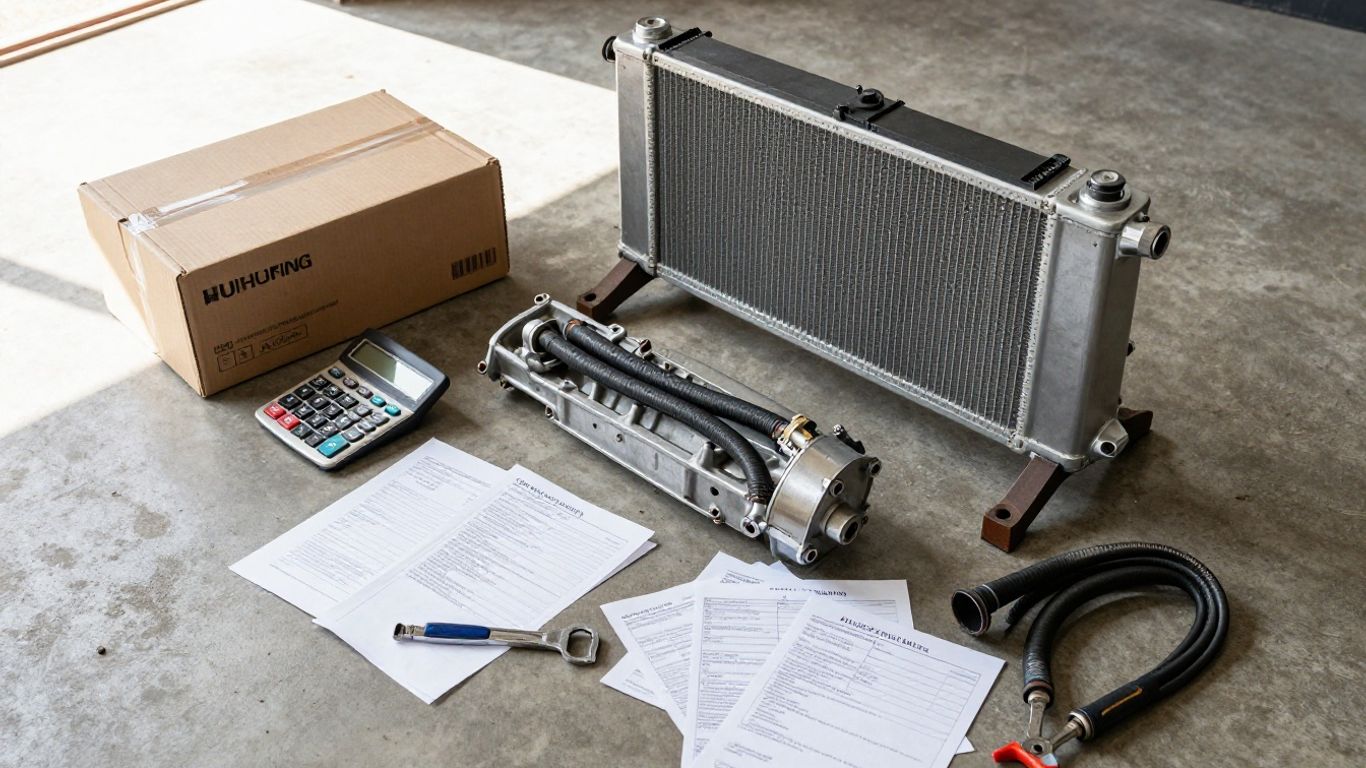
Start with a list of every required component and separate essential items from optional upgrades. Add delivery, taxes, currency conversion, and workshop costs before comparing packages. Heavy parts deserve special attention because their shipping can be disproportionate to their purchase price. Also check whether a kit includes bearings, rings, gaskets, springs, bolts, sensors, or other parts that would otherwise be purchased separately.
Factoring in freight, GST, and import duties
Overseas orders may involve GST and import charges according to the applicable Australian rules and the shipment’s value and classification. Freight can also vary with dimensional weight, insurance, and whether the parcel contains hazardous or restricted materials. Confirm the current treatment with the relevant authorities, carrier, or customs broker. Do not build a budget around an overseas checkout figure that excludes these costs.
Balancing premium brands with cost-effective alternatives
A premium part is not automatically the best choice, and an inexpensive part is not automatically poor. Compare material, testing, warranty, dimensional consistency, and technical support for the specific application. Spend more on components where failure could damage the engine or create a safety issue. For less critical items, a reputable alternative may leave more budget for machining and calibration.
Planning for supporting parts and installation expenses
Allow for machine-shop inspection, cleaning, balancing, gaskets, seals, fluids, fasteners, specialty tools, and dyno or road tuning. Installation can reveal worn mounts, damaged threads, tired wiring, or a cooling system that needs attention. A practical reserve is better than assuming every old component will survive a new performance level. The finished cost should include the time required to test and correct the setup.
Australian compliance and registration considerations
Engine modifications are not judged only by whether the vehicle runs well. Australian requirements can vary by state or territory, vehicle age, modification type, and registration pathway. Emissions, noise, braking, steering, fuel-system safety, and structural changes may all be relevant. Check the applicable authority before buying parts, especially for an engine swap or substantial power increase.
Emissions and noise requirements
A performance component may change emissions behavior or exhaust noise even when the engine remains mechanically reliable. Catalytic converters, evaporative controls, crankcase ventilation, mufflers, and engine-management systems may need to remain functional. Do not assume that a part acceptable for a competition vehicle is acceptable for public-road registration. Confirm requirements for the vehicle’s jurisdiction and build date.
Vehicle modification and engineering approval rules
Some modifications require inspection or certification by an approved engineer. This may include engine swaps, altered mounts, forced induction, fuel-system changes, exhaust work, or significant brake and suspension changes. Keep the build plan, component specifications, and installation records together. Early advice can prevent buying parts that later conflict with the approval pathway.
Roadworthy inspection expectations
Inspectors may examine leaks, secure mounting, hose and wiring routing, exhaust condition, belt guards, cooling-system integrity, and general workmanship. A vehicle that starts and idles smoothly can still fail on unsafe installation details. Check the relevant inspection checklist before the final assembly. Correcting visible problems before inspection is usually simpler than explaining them afterward.
Documentation for imported components and completed builds
Retain invoices, packing slips, part numbers, certificates, engineering documents, and photographs of major work. These records help establish what was fitted and may support warranty, insurance, resale, or registration discussions. Label unusual components and record tuning settings where practical. Good documentation also makes future maintenance less dependent on memory.
Installing and setting up performance components
Installation quality determines whether a well-chosen component delivers reliable service. Clean assembly, accurate measurement, correct torque, and careful adjustment matter more than rushing to the first start. Use the component manufacturer’s instructions alongside the engine’s service information. If the work exceeds your tools or experience, involve a qualified engine builder or technician.
Preparing the engine and workshop for installation
Clean the work area, organize fasteners, protect machined surfaces, and confirm that measuring tools are in calibration. Wash and inspect new parts where the instructions require it, since machining residue can damage bearings and oil pumps. Lay out the full assembly before applying sealant or torque. A written checklist helps separate completed checks from assumptions.
Measuring clearances and checking tolerances
Measure bearing clearance, ring gap, piston-to-wall clearance, deck height, valve-to-piston clearance, and fastener engagement as applicable to the build. Do not copy measurements from a similar engine because machining history changes the result. Record each value and compare it with the relevant specification. If a result is outside the intended range, stop and resolve it before final assembly.
Setting valve timing, ignition, and fuel systems
Degree the camshaft when required, verify timing marks, and check that the ignition reference agrees with the engine-management system. Prime the oiling system before starting and confirm fuel pressure, leak-free connections, throttle operation, and sensor signals. Initial calibration should be conservative until the engine has been checked under load. An orderly setup makes later diagnosis much easier.
Breaking in rebuilt or upgraded engines
Follow the camshaft, ring, and engine-builder break-in procedure rather than relying on a generic routine. Watch oil pressure, coolant temperature, fuel pressure, charging voltage, and unusual sounds from the first start. Vary operating conditions as directed and inspect fluids and filters afterward. The early service can reveal assembly debris or a small leak before it becomes major damage.
Diagnosing problems after installation
Separate mechanical, electrical, fuel, and cooling symptoms instead of changing several parts at once. Check simple causes first: vacuum leaks, loose grounds, incorrect firing order, sensor connectors, air in the cooling system, and timing references. Scan electronically managed engines for fault information and verify readings with independent tests. A written symptom-and-test log prevents repeated guesses.
Maintaining an American V8 in Australian conditions
Australian heat, dust, long distances, and stop-start traffic can place extra demand on cooling, oil, batteries, belts, and hoses. Maintenance should reflect how the vehicle is used, not only the calendar. A weekend car that sits for months has different risks from a daily driver or tow vehicle. Regular inspection is the least expensive form of performance insurance.
Selecting suitable oils, coolants, and service parts
Choose oil viscosity and specification according to bearing clearances, climate, operating temperature, and the engine builder’s guidance. Use compatible coolant and distilled or demineralized water where appropriate, while avoiding unverified mixtures. Filters, belts, hoses, spark plugs, and ignition leads should suit the engine’s actual configuration. Keep notes on brands, quantities, and service dates so changes are repeatable.
Managing heat in hot climates and traffic
Check radiator condition, fan control, shrouding, airflow, thermostat operation, and the pressure-cap rating before adding more elaborate hardware. Exhaust heat near steering, wiring, or brake components deserves attention in a converted vehicle. Do not mask overheating with a richer tune or a higher-temperature warning threshold. Find the cause and verify the repair under the same conditions that created the problem.
Sourcing replacement parts for long-term ownership
Keep a list of part numbers for filters, belts, sensors, gaskets, ignition components, and other service items. For unusual engines, ordering common wear parts before they are urgently needed can reduce downtime. Store spare components sensibly and protect rubber parts from heat and sunlight. The more accurately the engine is documented, the easier future sourcing becomes.
Building a practical maintenance schedule
Use shorter inspection intervals when the engine sees dust, towing, track use, or repeated heat soak. A useful routine includes checking fluid levels and leaks, inspecting belts and hoses, reading spark plugs when appropriate, and reviewing temperature and oil-pressure behavior. Change fluids based on condition and duty cycle as well as time. Small deviations noticed early are far easier to correct than a failed component on a long trip.
Conclusion
A successful American V8 project in Australia comes from matching the engine platform, vehicle layout, intended use, budget, and legal requirements before ordering parts. Verify every critical dimension, allow for landed and installation costs, and treat setup and maintenance as part of the build rather than afterthoughts. With careful records and measured decisions, sourcing American V8 engine parts Australia can become a manageable, rewarding process instead of a series of costly surprises.