
Key Takeaways
Choosing the right European car engine specialist is less about finding the lowest quote and more about finding accurate diagnosis, relevant experience, and clear workmanship standards.
- Look for training and experience with your exact vehicle.
- Expect computer diagnostics to be supported by mechanical testing.
- Ask what caused the failure, not only which part needs replacement.
- Compare estimates by parts, labor, options, and warranty terms.
- Choose a shop that communicates clearly and documents its work.
Understand what a European car engine specialist does
A European car engine specialist works with the design choices, service procedures, and diagnostic systems common to vehicles from European manufacturers. The title alone, however, does not prove a shop is well suited to your car. You still need to establish whether its technicians understand your engine family and can explain their findings. A good specialist combines technical familiarity with careful, methodical repair work.
How European engines differ from other vehicles
European engines often use compact packaging, turbocharging, direct fuel injection, variable valve timing, and closely managed emissions systems. These arrangements can improve performance and efficiency, but they may leave less room for casual troubleshooting. Service intervals, fluid specifications, reset procedures, and component access can also differ substantially between engines that appear similar from the outside.
That does not mean every European vehicle is unusually fragile. It does mean that a technician should consult the correct service information rather than rely on assumptions based on a different engine or model year.
Common engine problems specialists diagnose
A specialist may investigate warning lights, rough running, oil or coolant loss, hard starting, overheating, unusual sounds, poor acceleration, or increased fuel consumption. Those symptoms can come from several systems at once, so replacing the most obvious part is not always a sound diagnosis. The inspection should connect the complaint with test results and a plausible mechanical cause.
Ask whether the shop has found a confirmed fault, a likely fault that needs further testing, or only a symptom. That distinction helps you understand both the urgency and the uncertainty of the proposed repair.
When specialist expertise is more valuable than a general repair shop
General repair shops can be perfectly capable of routine work, but specialist experience becomes more valuable when the problem involves brand-specific software, unusual engine architecture, complicated timing systems, or a recurring fault that has resisted earlier repairs. It is also useful when a vehicle has a detailed service history that needs to be interpreted carefully.
For a simple oil change, location and convenience may carry more weight. For an intermittent drivability problem or major engine failure, the quality of the diagnostic process is usually more important than saving a small amount on the initial inspection.
European brands and systems that require specialized knowledge
Different manufacturers use different naming conventions, diagnostic procedures, service schedules, and component designs. Even within one brand, engines can change significantly between generations. A credible European car engine specialist should be comfortable discussing your exact model, engine code when relevant, mileage, and maintenance history.
The word “specialist” should lead to specific answers. Ask which similar vehicles the technician has serviced recently and which tools or information sources will be used for your diagnosis. Vague confidence is less useful than a clear description of the planned work.
Check the specialist’s qualifications and experience
Qualifications provide a starting point, while hands-on experience shows how that knowledge is applied. Ask who will diagnose the vehicle, who will perform the repair, and whether the shop keeps records of inspections and completed work. A professional answer should be straightforward rather than defensive.
Experience also has a practical side: a technician who regularly sees similar engines may recognize patterns without skipping the necessary tests. That combination of familiarity and verification can reduce wasted time.
Training, certifications, and technical knowledge
Ask about formal automotive training, continuing education, and certifications relevant to engine repair and diagnostics. You do not need to judge every credential yourself. Instead, look for evidence that the staff keeps up with changing engine controls, electronic systems, service procedures, and safety requirements.
A shop should also be willing to explain its limits. Referring a highly unusual machining or programming task to an appropriate specialist is better than accepting work without the necessary competence.
Experience with your specific make and model
Relevant experience is more useful when it matches your vehicle closely. Ask about the same model generation, engine type, and approximate mileage range, particularly if your concern involves timing components, turbocharging, cooling, or oil consumption.
A technician who has repaired related vehicles may still need to research your particular configuration. That is normal. What matters is whether the shop checks the details before making a recommendation.
Access to factory-level diagnostic equipment
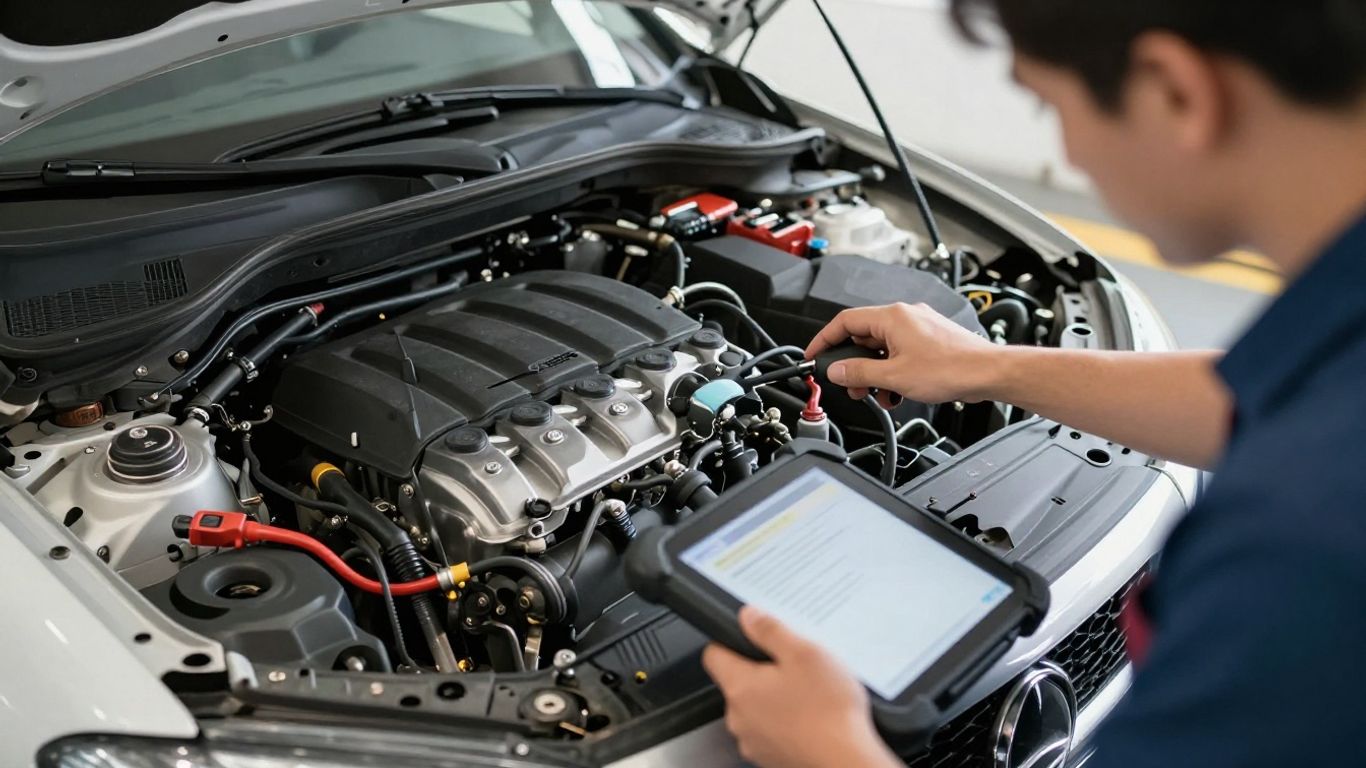
Modern engine diagnosis may require manufacturer-level scan functions, software access, wiring information, and data interpretation. Ask what diagnostic equipment the shop uses and whether it can read the systems involved in your complaint. A scan tool can reveal stored information, but the technician must still understand what the data means.
Factory-level access is not a substitute for mechanical skill. It is one part of a larger process that should include visual inspection, measurements, and road testing where appropriate.
Reviews, referrals, and proven repair results
Reviews can reveal patterns in communication, estimate accuracy, timeliness, and follow-up. Read them with some restraint: a single enthusiastic or angry account cannot establish technical quality. Personal referrals are more useful when the vehicle and repair were comparable to yours.
Ask the shop whether it can describe similar completed repairs without disclosing private customer information. A careful explanation of the problem, testing, and repair is more persuasive than a broad claim that every customer leaves satisfied.
Evaluate the diagnostic process
Diagnosis is where a repair relationship either becomes clear or starts to feel uncertain. Before authorizing major work, find out what the technician has inspected, what has been ruled out, and what remains unconfirmed. A written explanation makes it easier to compare advice from different shops.
The goal is not to demand certainty before any testing has happened. The goal is to make sure each recommended test has a reason and that each repair recommendation follows from evidence.
Why accurate diagnosis matters before repairs
Engine symptoms overlap. A misfire, for example, might involve ignition, fuel delivery, air measurement, compression, timing, or wiring. Replacing parts in sequence can become expensive, and an incorrect repair may conceal the original problem.
Accurate diagnosis saves avoidable expense by narrowing the repair to the actual cause. It also helps the technician identify related damage before a vehicle leaves the shop.
Computer diagnostics and mechanical testing
Electronic scans are useful for retrieving fault codes, viewing live data, and checking system behavior. They should be paired with mechanical testing when the complaint could involve compression, vacuum, oil pressure, cooling pressure, timing, or physical wear.
A sensible process might include a visual inspection, a scan, targeted measurements, and confirmation of the suspected fault. The exact sequence depends on the symptoms, but the shop should be able to explain why each step is being taken.
Identifying underlying causes instead of symptoms
Replacing a failed component may solve the immediate fault while leaving the condition that damaged it. For instance, a cooling-system failure can create overheating, but the technician may also need to check for resulting engine damage. Likewise, a new sensor may not resolve a warning if the wiring or the system it monitors is the true problem.
The repair conversation should therefore include cause, consequence, and confirmation. Ask what evidence supports the diagnosis and how the shop will verify the vehicle after the repair.
Questions to ask about inspection findings
A few direct questions can make a technical conversation much easier. Ask the technician to separate confirmed findings from recommendations based on mileage or visible wear. You can also request photographs, test readings, or an explanation in plain language.
Useful questions include:
- What test produced this finding?
- What other causes were considered?
- Is the vehicle safe and driveable right now?
- What could happen if this repair is delayed?
The answers should help you decide without pressure. If the explanation changes repeatedly or relies only on vague warnings, pause before approving extensive work.
Compare engine repair and maintenance services
Not every shop offers the same level of engine service. Some focus on maintenance and diagnosis, while others also handle internal repairs, machining coordination, replacement engines, or performance-related work. Comparing the actual scope of service prevents confusion when a problem grows more complicated.
Your choice should match the job. A shop that is excellent at routine maintenance may not be the right place for a full rebuild unless it can clearly explain who performs each stage.
Routine servicing and preventative maintenance
Routine service may include oil and filter changes, fluid inspections, spark plug replacement, belt inspections, and checks of hoses, seals, and cooling components. The correct schedule depends on the vehicle, engine, use, and service information rather than a universal mileage rule.
Ask whether the shop will distinguish required maintenance from optional recommendations. A useful maintenance plan protects the engine without turning every visit into an open-ended list of sales items.
Timing belts, chains, and cooling systems
Timing belts and chains keep the engine’s internal movement synchronized, and failures can cause serious damage on some engines. Replacement decisions should account for the manufacturer’s interval, age, mileage, visible condition, tensioners, guides, and related components.
Cooling-system work deserves similar care. The technician should look beyond a low coolant level and check for leaks, pressure problems, thermostat concerns, fan operation, and signs of overheating. The estimate should make clear which parts are failed and which are being replaced as related preventive work.
Turbochargers, fuel systems, and emissions components
Turbochargers and modern fuel systems require clean procedures, correct pressures, and careful diagnosis. Emissions components can also affect drivability, warning lights, and inspection results. A fault code identifies a condition detected by a control system; it does not always identify the part that must be replaced.
Ask whether the technician has checked air leaks, wiring, fluid contamination, fuel quality, and related control components where relevant. This broader view helps prevent an expensive component from being installed simply because it appeared near the symptom.
Engine rebuilding, replacement, and performance upgrades
A major engine decision usually involves repair, rebuilding, replacement, or retirement of the vehicle. Each option has different costs, time frames, risks, and warranty implications. The shop should explain what is included, what is being reused, and which outside machine work or suppliers are involved.
Performance upgrades require the same discipline as repairs. Discuss compatibility, cooling, fueling, emissions compliance, drivability, and the effect on longevity before approving changes. A specialist should be willing to say when an idea is unsuitable for the vehicle.
Understand repair estimates and warranties
A written estimate turns a complicated engine problem into a set of decisions. It should tell you what the shop knows, what it proposes, and what could change after disassembly. Do not treat the first number as a final promise when the engine has not yet been opened.
Clear estimates also make it easier to compare shops fairly. The cheapest total may exclude testing, necessary related parts, or a meaningful warranty.
What a detailed estimate should include
Look for the diagnosed condition, recommended repair, parts, labor, diagnostic charges, taxes or fees, expected completion time, and any assumptions. If further disassembly may reveal hidden damage, that possibility should be stated before work begins.
The estimate should also identify whether the repair is essential, recommended soon, or optional. That classification gives you room to prioritize rather than approve everything at once.
Comparing parts, labor, and repair options
Two estimates can differ because they describe different repairs. One may address only the failed component, while another includes related parts, fluid replacement, testing, and follow-up adjustments. Ask each shop to explain the difference before comparing totals.
A useful comparison looks at the diagnostic reasoning, labor plan, parts quality, expected service life, and warranty—not just the hourly rate. Written details reduce misunderstandings when the work is underway.
OEM, aftermarket, and remanufactured components
Original-equipment, aftermarket, and remanufactured parts can all be appropriate in different circumstances. Their quality, availability, specifications, and warranty terms vary. Ask who makes the part, whether it meets the required specification, and whether the estimate includes a new or rebuilt component.
For internal engine work, the description should be especially precise. “Rebuilt engine” can mean different things depending on the supplier and the components replaced, so request a written scope rather than relying on the label alone.
Warranty coverage and guarantees on completed work
Ask what the warranty covers, how long it lasts, whether mileage limits apply, and who handles a claim. Clarify whether parts and labor are both included, as well as any exclusions for maintenance, misuse, modifications, or outside repairs.
A warranty cannot compensate for poor communication or an unclear diagnosis, but it does show whether the shop is prepared to stand behind defined work. Keep the estimate, invoice, test results, and maintenance records together.
Choose a specialist you can trust
Trust is built through small, observable habits. The shop should listen to the complaint, explain the plan, protect the vehicle, and give you a record of what happened. You should not have to decode every technical term to know what you are authorizing.
Pay attention to how the staff handles uncertainty. Honest technicians can explain what is known, what is suspected, and what must be checked next.
Clean facilities, transparent communication, and documentation
A clean, organized facility does not guarantee perfect repairs, but it suggests that the shop takes process seriously. Look for orderly work areas, secure vehicle storage, appropriate equipment, and a service counter that can produce written records.
Communication matters just as much. You should receive updates when findings change, approval before additional work, and an invoice that matches the authorized repair. Photos and test readings can be especially helpful for complex engine work.
Safety, environmental, and manufacturer requirements
Engine repairs involve hot surfaces, pressurized systems, fuels, oils, coolants, and emissions-related components. A responsible shop follows safe handling and disposal procedures and uses the correct service information for the vehicle. It should also explain any requirements that affect warranty, inspection, or legal road use.
These practices protect more than the engine. They protect the people working on the vehicle, other drivers, and the environment around the facility.
Warning signs of poor-quality engine repair
Be cautious when a shop offers a major diagnosis without testing, refuses to explain parts or labor, pressures you to authorize work immediately, or changes the price without approval. Repeatedly unresolved repairs and missing invoices are also reasons to reconsider the relationship.
Another warning sign is certainty that arrives too early. A confident answer is useful only when it is supported by inspection findings and a plan to confirm the result.
Building a long-term maintenance relationship
Once you find a capable European car engine specialist, keep a consistent record of services, parts, fluids, symptoms, and mileage. Share that history at each visit and mention changes in starting, noise, temperature, or performance before they become larger problems.
A good long-term relationship should feel collaborative. The shop learns the vehicle’s history, while you learn its maintenance needs and receive better context for future decisions.
Conclusion
The right European car engine specialist will not simply name a part and hand you a price; they will connect your symptoms to evidence, explain practical repair choices, and document the work. Compare experience, diagnostic habits, service scope, estimates, and warranty terms, then choose the shop that gives you confidence without pressure.