
Key Takeaways
Holden engine reconditioning can restore a worn engine when the block and major components remain suitable for machining and reuse. The right decision depends on measured damage, the vehicle’s value, the repair scope, and the specialist carrying out the work.
- Reconditioning involves dismantling, cleaning, measuring, machining, replacing worn parts, and testing.
- Smoke, overheating, low compression, noise, and oil consumption can signal serious engine wear.
- A detailed inspection is needed before anyone can price the work accurately.
- A partial repair may cost less initially, but a full reconditioning can address related wear together.
- Careful running-in and regular servicing help protect the rebuilt engine.
What Holden engine reconditioning involves
Holden engine reconditioning is the process of restoring an engine’s usable components and replacing parts that no longer meet service requirements. It is more involved than repairing one visible fault, but it does not always mean replacing every component. The engine is assessed as a complete system so the proposed work matches its actual condition.
The result depends on accurate measurements and appropriate machining, not simply on fitting a collection of new parts. A reputable specialist should explain what can be reused, what must be repaired, and what needs replacement before the final scope is approved.
Reconditioning versus rebuilding and replacing an engine
Reconditioning and rebuilding are often used interchangeably, although workshops may use the terms differently. Both can involve removing the engine, stripping it down, checking internal parts, machining worn surfaces, and renewing seals and other components. Replacing the engine means installing another unit, which may reduce workshop time but can make the history and condition of the replacement harder to assess.
The practical choice comes down to damage, availability, budget, and how important the original engine is to the vehicle. Reconditioning your existing engine can also make sense when its core components are sound and the required machining is predictable.
Common Holden engine components that require attention
Wear is rarely limited to one part after an engine has covered substantial mileage or suffered a lubrication or overheating problem. Cylinder bores, pistons, rings, bearings, valves, guides, seals, gaskets, and timing components may all need inspection. The oil pump and cooling system also deserve attention because a renewed bottom end can be damaged quickly if oil pressure or temperature control remains poor.
A technician will separate serviceable components from parts that are outside the workshop’s reuse limits. That distinction is central to a durable result and prevents apparently inexpensive work from leaving an old underlying fault in place.
How technicians assess engine condition
Assessment usually begins with the vehicle’s symptoms, service history, fault codes, fluid condition, compression, and leak-down results where appropriate. Once dismantled, the engine can be cleaned and measured more precisely. The crankshaft journals, cylinder bores, deck surfaces, head flatness, valve seats, and connecting rods all need to be compared with suitable specifications.
Measured condition guides the repair more reliably than mileage or appearance alone. A clean-looking component may still be worn, while a used part may be reusable after inspection and machining.
When reconditioning is a practical alternative
Reconditioning is often practical when the vehicle is structurally sound, replacement engines are uncertain or unavailable, and the owner wants to keep the car. It may also suit a well-maintained vehicle with a known service history. The economics are less favorable when extensive damage affects the block, crankshaft, cylinder head, and accessories at the same time.
Ask for a written inspection outcome before making the decision. It should distinguish confirmed work from possible extra work discovered during dismantling, since that distinction affects both the budget and the risk.
Signs your Holden engine may need reconditioning
Engine symptoms can develop slowly, and none of them proves that a full reconditioning is required on its own. Smoke may come from several sources, while overheating can damage components beyond the original cooling fault. A proper diagnosis should identify the cause before major work is authorized.
Pay attention to changes in oil use, temperature, starting, idle quality, engine noise, and performance. A pattern across several symptoms is more concerning than one isolated event.
Excessive oil consumption and blue exhaust smoke
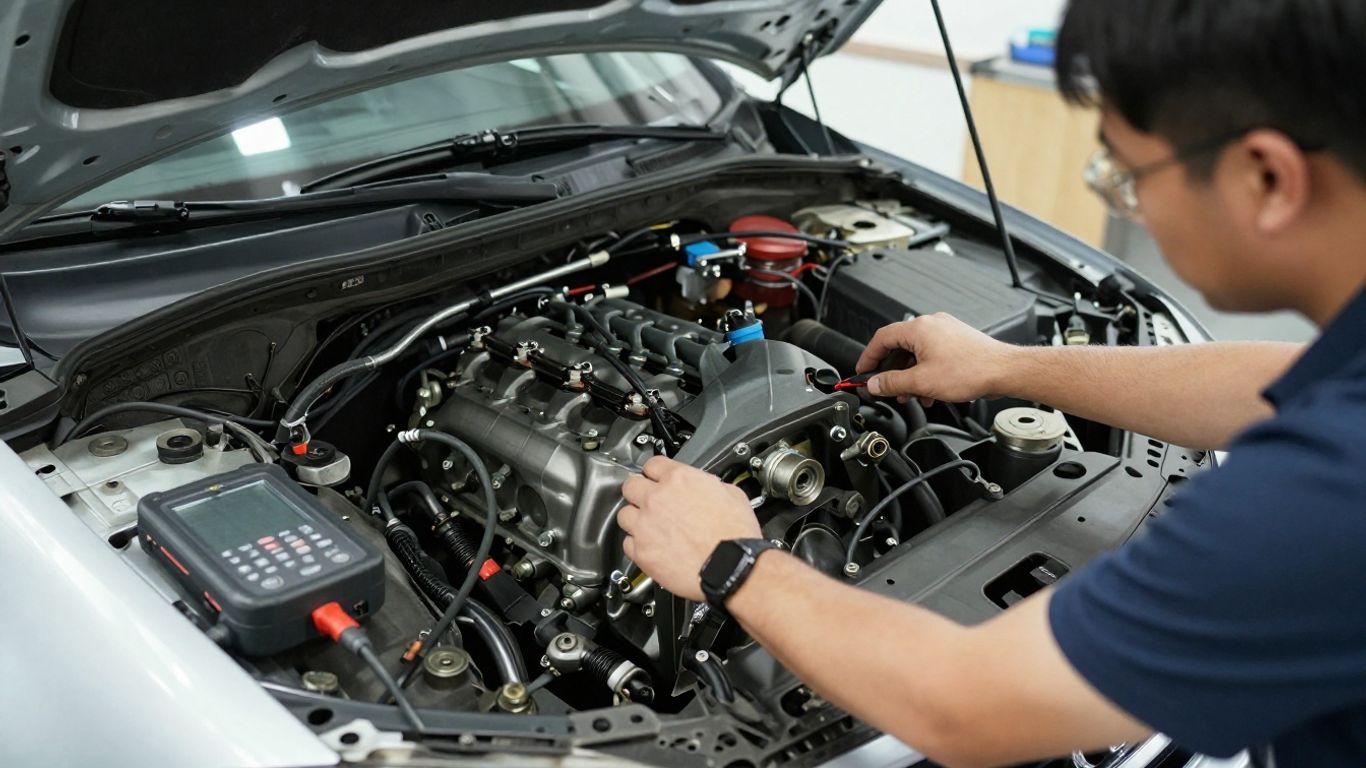
Blue smoke commonly indicates that oil is entering the combustion process, although the route may involve piston rings, cylinder wear, valve guides, or seals. Rising oil consumption can also reflect leaks outside the engine, so the first step is to locate the source rather than assume internal wear.
A specialist may check crankcase ventilation, compression, leak-down performance, and the condition of the intake and exhaust systems. Persistent smoke accompanied by low compression or heavy crankcase pressure makes internal inspection more likely.
Overheating, coolant loss, and white smoke
Repeated overheating can distort a cylinder head, damage a head gasket, and affect the block or pistons. Coolant loss without an obvious external leak deserves prompt investigation, especially when the engine develops a sweet-smelling exhaust, bubbles in the cooling system, or milky contamination in the oil.
White smoke is not always evidence of a failed head gasket, particularly during a cold start. However, continuing smoke, coolant loss, and unstable temperature should be treated as a connected diagnostic problem rather than separate minor issues.
Low compression, rough running, and power loss
Low compression can result from worn rings, damaged pistons, leaking valves, a head-gasket fault, or valve timing problems. When it affects one or more cylinders, the engine may start poorly, idle unevenly, misfire, use more fuel, or feel noticeably weaker under load.
Compression testing is useful, but the readings need context. Comparing cylinders and following up with leak-down testing can help show whether pressure is escaping through the valves, rings, or head-gasket area.
Unusual knocking, tapping, or timing-chain noise
A deep knock that changes with engine speed may point to connecting-rod or main-bearing wear, while a sharper tapping sound can involve valve-train components. Timing-chain noise may arise from a worn chain, guides, tensioner, or inadequate oil pressure. Sound alone cannot identify the failed part, but a new persistent noise should not be ignored.
Driving on a noisy engine can turn a repairable fault into major crankshaft or block damage. Stop using the vehicle if the noise is severe, suddenly worsens, or appears alongside low oil pressure.
Warning signs that require immediate inspection
Some symptoms justify switching the engine off and arranging an inspection rather than driving home. These include a flashing oil-pressure warning, rapid overheating, heavy smoke, severe knocking, or coolant and oil mixing. Continuing to run an engine in that state can increase both the damage and the eventual repair cost.
When seeking help, describe when the symptom appears, how quickly it developed, and whether any warning lights are active. Those details can help the technician plan the first diagnostic checks.
The Holden engine reconditioning process
A proper reconditioning job follows a sequence, but the exact parts list is not known until the engine has been opened and measured. The workshop should keep a record of findings and discuss significant changes to the original estimate. That process gives the owner a clearer basis for approving additional work.
Cleaning and machining are not cosmetic steps. They create the surfaces and clearances needed for renewed components to operate correctly, while final testing helps identify problems before installation.
Engine removal and complete disassembly
The engine is removed with its relevant connections, accessories, wiring, exhaust, intake, and cooling-system components documented or labeled. It is then drained and dismantled methodically so that damage patterns and part locations are not lost. Fasteners and components should be organized for inspection rather than discarded without review.
Complete disassembly matters because hidden wear cannot be judged reliably while the engine remains assembled. It also gives the workshop a chance to identify contamination, previous repairs, and damage caused by the original failure.
Cleaning, measuring, and inspecting internal components
Parts are cleaned to remove oil, carbon, sludge, and debris before measurements are taken. The block, head, crankshaft, rods, pistons, and valve-train components are checked for wear, cracks, distortion, and damage. Measurements are compared with applicable specifications and the workshop’s reuse criteria.
This is the stage where the initial estimate may change. A component that looked acceptable from the outside may need machining or replacement, while another may be reused after it passes inspection.
Machining the block, cylinder head, and crankshaft
Machining may include honing or boring cylinder bores, resurfacing the block or head, grinding or polishing crankshaft journals, and restoring valve-seat areas. The work must be based on measurements so that finished clearances remain correct. Excessive machining without a suitable parts plan can create compatibility problems.
The specialist should explain which surfaces will be machined and why. Clear documentation makes it easier to understand the difference between essential corrective work and optional preparation.
Replacing worn seals, bearings, pistons, and rings
Replacement parts are selected after the measured condition of the engine is known. Bearings need to match the crankshaft and housing clearances, while pistons and rings must suit the finished cylinder bores. Seals and gaskets should be renewed wherever removal or age makes reuse unreliable.
Not every engine needs the same parts package. A careful workshop avoids applying a generic list without checking the actual engine, its previous repairs, and the intended use of the vehicle.
Reassembling and testing the reconditioned engine
During assembly, cleanliness, lubrication, torque procedures, and component alignment all matter. The completed engine may be checked for leaks, oil pressure, compression, cooling performance, and abnormal noise before or after installation, depending on workshop practice. Ancillary systems should also be inspected so they do not undermine the repaired engine.
The handover should include any running-in instructions, fluid recommendations, warranty terms, and an explanation of work completed. Those details are part of the repair, not paperwork to be dealt with later.
Holden engine components that influence the result
An engine’s durability after reconditioning depends on the relationship between its major assemblies. A sound cylinder head cannot compensate for badly worn bores, and new bearings cannot correct a cooling system that still allows overheating. The inspection therefore needs to consider the engine as a group of connected systems.
The owner should ask which components are included in the quoted scope and which are being carried over. That conversation is especially useful when the engine has experienced oil starvation, overheating, or a major failure.
Cylinder head condition and valve-train repairs
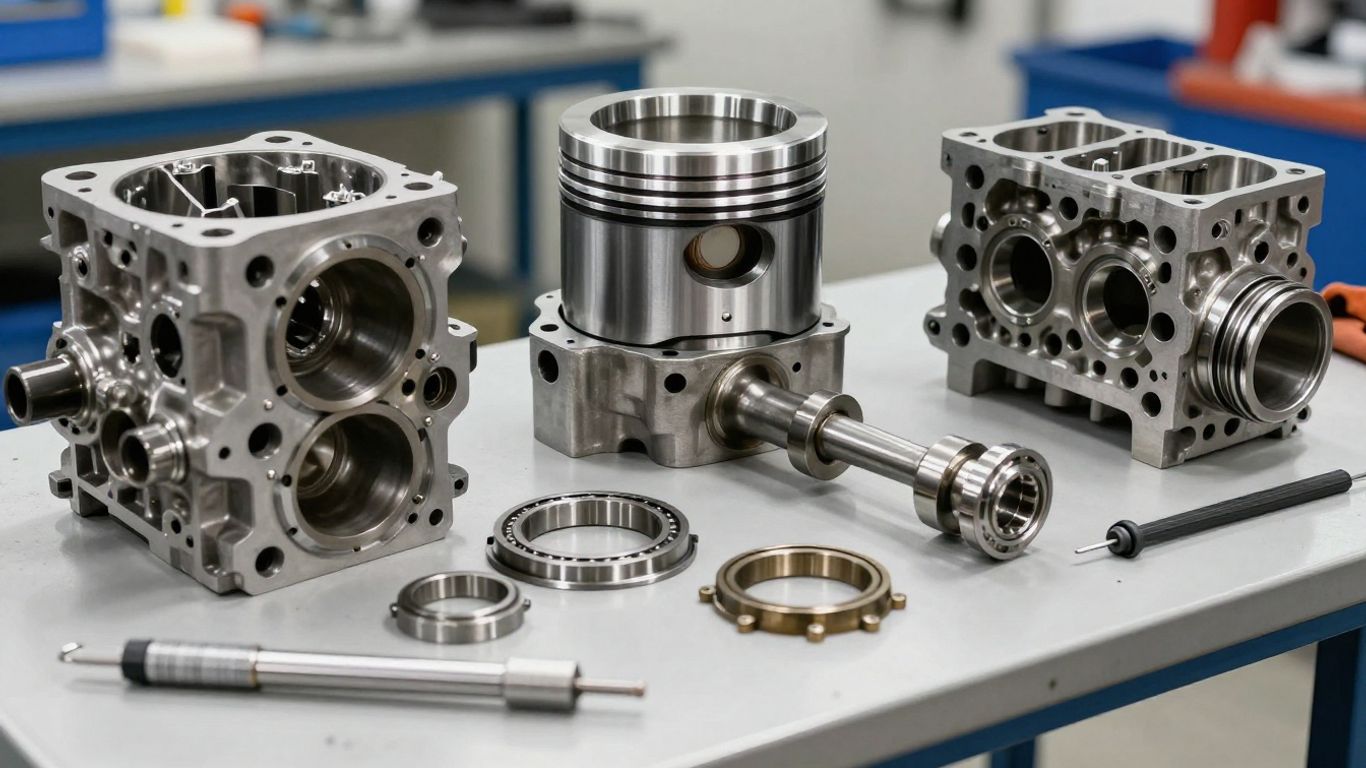
The cylinder head controls airflow and seals the combustion chambers, so flatness, cracks, valves, guides, springs, seats, and cam-related surfaces may all affect the outcome. Pressure testing can help identify problems that are not visible during a basic inspection. A head that needs resurfacing may also require valve work to restore sealing.
Valve-train wear can cause poor compression, tapping noises, rough running, and loss of power. Its condition should be assessed alongside the rest of the engine rather than treated as an unrelated top-end issue.
Pistons, rings, cylinder bores, and compression
Pistons and rings must work with cylinder bores that have the correct size, finish, and shape. Wear, scoring, cracks, ring-land damage, and excessive bore taper can all affect oil control and compression. In some cases, honing is sufficient; in others, boring and replacement pistons are required.
The finished clearances and ring fit are crucial. A new ring set cannot compensate for a bore that remains outside acceptable limits, and a polished-looking bore does not necessarily mean it is ready for assembly.
Crankshaft, connecting rods, and main bearings
The crankshaft and connecting rods carry substantial loads, so journal condition, alignment, bearing clearances, and rod integrity need careful checking. Oil starvation can score journals and damage bearing surfaces, while contamination can accelerate wear throughout the bottom end.
Machining the crankshaft may be possible if damage remains within allowable limits. If it does not, the specialist should explain the available options before assembly proceeds, because the crankshaft decision can change the cost significantly.
Timing components, oil pumps, and cooling systems
Timing chains, guides, tensioners, gears, and related components influence valve timing and can create severe damage if they fail. The oil pump affects lubrication, while the radiator, thermostat, water pump, hoses, and cooling passages help control temperature. Renewing the core engine without checking these systems leaves a preventable risk.
The inspection should identify whether each item is being replaced, tested, cleaned, or reused. A written scope avoids confusion when an accessory is not included in the basic engine price.
Gaskets, seals, and external engine accessories
Gaskets and seals prevent oil, coolant, and combustion gases from crossing between systems. External accessories such as the alternator, starter, compressor, sensors, mounts, and fuel or ignition components may not be part of the internal reconditioning work, but their condition can affect installation and drivability.
It is sensible to inspect accessible accessories while the engine is out. That does not mean replacing everything automatically; it means making an informed choice while labor access is easier.
How much Holden engine reconditioning costs
There is no dependable single price for Holden engine reconditioning because engines arrive with different faults, histories, and levels of wear. Labor, machining, parts, removal and installation, testing, fluids, and unexpected damage can all affect the final figure. A low initial quote may cover only a narrow scope.
The most useful estimate is itemized and explains what is included. It should also show how additional work will be approved if dismantling reveals damage that could not reasonably be identified beforehand.
Factors that determine the total price
The main cost drivers include the engine type, accessibility in the vehicle, extent of damage, machining required, parts selected, and whether accessories need attention. A seized engine or one damaged by overheating may need more work than an engine with gradual ring and seal wear. Local labor rates and workshop capacity also influence the total.
Ask whether the estimate includes engine removal, installation, fluids, filters, cooling-system repairs, and post-repair testing. Exclusions can matter as much as the headline price.
Comparing a partial repair with a full reconditioning
A partial repair may suit a clearly isolated fault, such as a limited top-end issue with good compression and healthy bottom-end measurements. Full reconditioning is broader and may be more appropriate when wear is spread across several assemblies. The cheaper option is not necessarily cheaper if it requires removing the engine again later.
The decision should reflect evidence from testing. A specialist who can show why a limited repair is reasonable is offering a more useful choice than one who simply recommends the largest possible job.
Additional costs for machining and replacement parts
Machining charges can include block preparation, cylinder work, crankshaft grinding, head resurfacing, pressure testing, valve-seat work, and balancing where required. Parts costs vary according to the engine, the selected quality level, and whether standard or oversize components are needed after machining.
A quote should separate known costs from allowances. This makes it easier to compare proposals without mistaking an incomplete estimate for a cheaper one.
Exchange engines versus rebuilding your existing engine
An exchange engine is supplied in place of the customer’s old unit, subject to the supplier’s process and availability. Rebuilding the existing engine allows its specific condition and history to guide the work, but it may take longer if machining or parts sourcing is required. An exchange option can be attractive when downtime matters, while an existing-engine rebuild may suit owners who want the original unit retained.
Check what the exchange price includes, what must be returned, and how warranty coverage applies. The condition of the supplied engine and the scope of its reconditioning should be clear before approval.
How to evaluate quotes from engine specialists
Compare quotes by scope, not just by total. A useful comparison asks whether each proposal covers the same inspections, machining, replacement parts, installation work, testing, and warranty. The following questions help expose gaps without making the process unnecessarily complicated:
- Is engine removal and refitting included?
- Which machining operations and replacement parts are specified?
- What findings would trigger an extra charge?
- What testing is completed before handover?
- How long does the workmanship and parts warranty last?
Once the answers are written down, the apparent price difference is easier to interpret. A transparent quote may cost more at first while carrying less uncertainty.
Choosing a Holden engine reconditioning specialist
The workshop you choose affects diagnosis, machining accuracy, assembly quality, communication, and aftercare. Look for a specialist who is willing to explain the inspection findings in plain language. You should feel able to ask what is being done and why without being rushed into a decision.
Experience matters, but so does process. A workshop that measures carefully, documents its work, and provides clear warranty terms gives you more useful protection than one that relies only on broad promises.
Experience with your Holden model and engine type
Ask whether the technician regularly works with your model, engine family, and configuration. Familiarity can help with known access issues, parts identification, common failure patterns, and suitable machine-work decisions. It should not replace measurement, but it can make diagnosis and planning more efficient.
Provide the vehicle identification details, service history, symptoms, and any previous repairs. Accurate information at the beginning gives the specialist a better starting point.
Workshop equipment, machining standards, and testing
A capable workshop should be able to clean, measure, machine, and inspect the components relevant to the job, either in-house or through a clearly identified machining partner. Ask how the block, head, crankshaft, rods, and finished clearances are checked. The answer should describe a process rather than rely on vague claims about modern equipment.
Testing after assembly is equally important. Oil pressure, compression, leaks, temperature control, and abnormal noise are practical areas to discuss before the work begins.
Warranty coverage and workmanship guarantees
Warranty terms should state the covered work, duration, exclusions, owner responsibilities, and the process for reporting a problem. Ask whether parts and labor are treated separately and whether servicing must follow specified intervals. A warranty is useful only when its conditions are understandable and realistic.
Keep invoices, test results, and service records after the repair. They may be needed for a warranty assessment and will help with future maintenance.
Questions to ask before approving the work
Before signing off, ask for the diagnosis, proposed scope, estimate range, expected timing, and likely causes of any additional cost. Also ask whether the old parts will be available for inspection and how the engine will be tested before handover. These questions establish expectations while changes are still manageable.
You can ask the specialist to mark each item as inspect, reuse, machine, or replace. That simple distinction often makes a technical proposal much easier to follow.
How reviews and recommendations support your decision
Reviews and personal recommendations can reveal how a workshop communicates, handles delays, and responds when an issue appears after delivery. They are useful supporting evidence, not a substitute for checking the written scope and warranty. Give more weight to detailed accounts that describe the type of work performed.
A good conversation with the workshop should still be possible even when a recommendation is strong. Your vehicle’s engine, damage, and intended use may differ from another customer’s.
Maintaining a reconditioned Holden engine
A reconditioned engine needs sensible care from its first start. The workshop’s instructions should take priority because running-in requirements can vary with the parts and machining used. Keep the initial service schedule visible and record every fluid and filter change.
Maintenance cannot correct poor assembly, but it can prevent avoidable wear and reveal a developing problem early. Small changes in temperature, oil use, starting, or noise are worth recording rather than dismissing.
Following the correct running-in procedure
Follow the specialist’s instructions for initial driving, engine speed, load, and the first oil change. Avoid prolonged idling, harsh acceleration, towing, or sustained high-speed operation if the workshop advises against it. The first period allows rings and other moving surfaces to settle under controlled conditions.
If the engine develops unusual noise, overheating, smoke, or a warning light during running-in, stop and contact the workshop. Do not assume every new symptom is normal.
Using the recommended oil, coolant, and filters
Use the oil grade, coolant type, filters, and service products specified for the engine and the reconditioning work. Incorrect fluids can affect lubrication, seals, corrosion protection, or temperature control. Check levels on a level surface and follow the recommended checking intervals.
Avoid mixing coolant types or adding additives unless the workshop or vehicle documentation specifically allows it. Consistency makes fluid condition easier to monitor.
Monitoring temperature, oil pressure, and fluid levels
A driver should pay attention to the temperature gauge, oil-pressure warning, coolant level, oil level, and visible leaks. A warning light, rising temperature, or sudden fluid loss calls for prompt action. Continuing to drive can convert a small leak or sensor issue into major engine damage.
Look beneath the vehicle after servicing and during the early ownership period. Fresh drips, stains, or new smells are useful clues for an inspection.
Staying on schedule with servicing and inspections
Keep to the workshop’s first-service interval and then follow the vehicle’s ongoing maintenance schedule. Regular oil and filter changes, cooling-system checks, belt or chain inspections, and diagnostic attention help preserve the work already completed. Service records also make it easier to identify changes over time.
Have emerging symptoms checked early. A small oil leak or cooling fault is generally easier to address before it affects internal engine components.
Habits that can shorten the engine’s service life
Repeated cold starts followed by immediate hard acceleration, ignoring warning lights, running with low oil, carrying on through overheating, and postponing basic servicing can all increase wear. Poor-quality fuel or unsuitable fluids may create additional problems depending on the engine and its operating conditions.
Use the vehicle within its intended limits and respond to symptoms promptly. Long engine life is usually the result of consistent ordinary care rather than one dramatic maintenance action.
Conclusion
A successful Holden engine reconditioning job begins with accurate diagnosis and ends with disciplined maintenance. Compare the measured condition of the engine with the cost and risk of alternatives, choose a specialist who explains the scope clearly, and keep the running-in and servicing requirements in writing. That approach gives you the best chance of restoring dependable performance without being surprised by the work involved.