

Key Takeaways
Audi engine sourcing is safest when compatibility, condition, total cost, and installation requirements are considered together.
- Confirm the Audi model, generation, VIN, and engine code before requesting prices.
- Compare used, rebuilt, remanufactured, and replacement options on more than purchase price.
- Ask for service history, inspection results, warranty terms, and return conditions in writing.
- Check transmission, drivetrain, emissions, ECU, wiring, and accessory compatibility.
- Plan the installation, coding, testing, and break-in process before the engine arrives.
Understanding your Audi engine replacement needs
A failed engine creates pressure to buy quickly, but rushing can turn a repair into a costly mismatch. Start by establishing exactly what is fitted to the vehicle and why replacement is being considered. A careful Audi engine sourcing process separates a confirmed mechanical need from a diagnosis based only on symptoms.
The right choice may be a complete used engine, a rebuilt unit, or a repair to the engine already in the car. Your budget, vehicle condition, availability of parts, and expected ownership period all matter. The goal is not simply to find an engine that fits physically; it is to find one that can be installed and supported sensibly.
Identifying your Audi model, generation, and engine code
Record the model year, model name, generation, body style, drive configuration, and engine code before contacting suppliers. Similar-looking vehicles can use different engines, and even the same displacement may appear with different revisions or equipment. The VIN is a useful starting point, but it should be checked against the engine label, vehicle records, and a technician’s inspection.
Photograph the existing engine bay and note attached equipment such as the intake, turbocharger, alternator, starter, sensors, and emissions hardware. Those details help a supplier explain whether the listing is a long block, a complete assembly, or an engine that requires parts from your original unit.
Comparing replacement, used, rebuilt, and remanufactured engines
These descriptions are not interchangeable. A used engine normally comes from another vehicle and may retain its original internal components, while a rebuilt engine has been disassembled and repaired to a stated scope. A remanufactured engine is generally restored according to a defined process, but the exact work varies by supplier, so the label alone is not enough.
Ask what is included, what was measured, and which parts were replaced. A lower-priced used unit may make sense for an older vehicle, while a rebuilt or remanufactured option can offer more documented work at a higher initial cost. Compare the evidence behind each option rather than assuming the category guarantees a particular condition.
Evaluating symptoms before sourcing a replacement
Blue smoke, low compression, oil consumption, overheating, unusual noise, and loss of power can point to serious internal damage, but they can also come from supporting systems. A failed turbocharger, cooling component, fuel system, timing component, or sensor may imitate an engine failure. Have the vehicle scanned and inspected before authorizing a replacement.
Request written diagnostic findings, including fault codes, compression readings, leak-down results where appropriate, oil condition, and cooling-system observations. This record gives the supplier and installer a clearer target and may reveal that only a component-level repair is needed.
Confirming whether repair or replacement is more cost-effective
Compare the likely repair bill with the fully installed cost of a replacement engine. Include machine work, specialist labor, ancillary parts, fluids, programming, transport, and the possibility of discovering additional damage once the engine is removed. A familiar engine with a documented failure may still be the better investment if its surrounding systems are healthy.
Conversely, extensive internal damage combined with high mileage or neglected maintenance can make replacement more practical. The cheapest engine is rarely the cheapest project when installation delays, incompatible parts, and warranty disputes are added to the calculation.
Finding reliable Audi engine suppliers
Supplier quality is as important as engine quality because the seller controls much of the information you receive before purchase. A useful supplier should be able to discuss identification, condition, included parts, delivery, and warranty limits without vague answers. Treat the conversation as part of the inspection process.
Do not rely on polished listing photos alone. Compare the supplier’s documentation, response to technical questions, and willingness to confirm details in writing. The strongest choice is usually the one that makes the transaction understandable, not merely the one with the lowest advertised price.
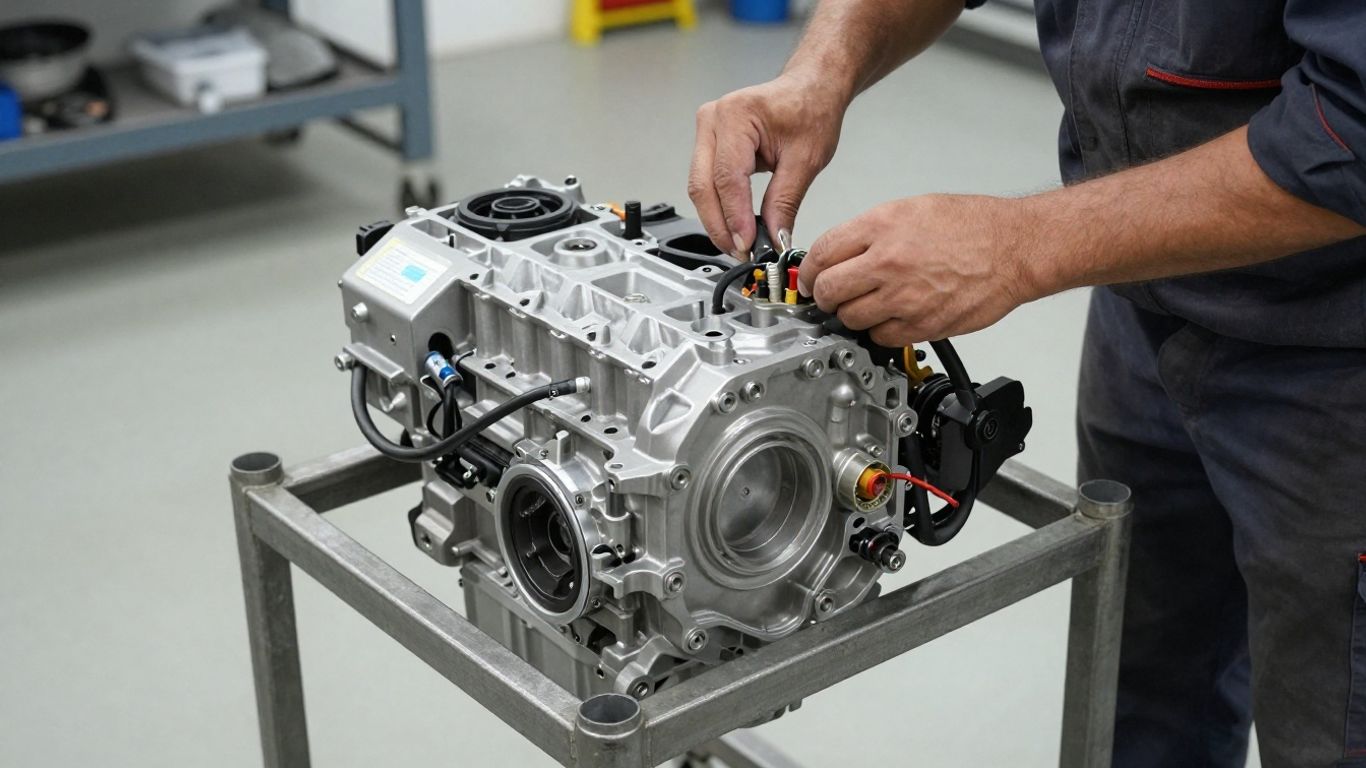
Comparing dealerships, specialist dismantlers, and independent suppliers
A dealership may offer direct access to new or manufacturer-supplied parts, along with established ordering and service procedures. A specialist dismantler may provide a tested engine from a donor vehicle and useful vehicle-history information. An independent supplier can offer broader sourcing and pricing, but the quality of documentation and after-sale support must be assessed carefully.
Ask each type of seller the same questions: Where did the engine come from? What identification is recorded? What testing was completed? Is the price for a complete engine or a partial assembly? Consistent questions make differences easier to compare.
Checking supplier experience with Audi engines
Experience should be demonstrated through precise answers rather than broad claims. A knowledgeable seller will ask for the VIN, engine code, transmission details, and intended vehicle before confirming compatibility. They should also explain which accessories transfer from the original engine and which are included with the replacement.
Look for clear invoices, inspection records, and a process for resolving technical discrepancies. A supplier that cannot explain its own listing may not be prepared to help when an installation reveals a missing sensor, bracket, or connector.
Reviewing warranties, returns, and buyer protections
Read the warranty before paying, including its duration, mileage limit, covered components, exclusions, labor policy, and claim procedure. Some warranties require professional installation, oil and filter replacement, documented maintenance, or pre-authorization before a claim is considered. These conditions can be reasonable, but they need to be understood in advance.
Return policies deserve the same attention. Confirm who pays return freight, whether a restocking fee applies, how long you have to report a problem, and what happens if the engine arrives damaged. A verbal promise is difficult to rely on once the engine has been installed.
Verifying supplier contact details and business credentials
Confirm the legal business name, physical address, working phone number, email domain, and payment details. Search for consistent business information across invoices, website pages, and public records where available. Be cautious when the seller will not provide a written quote or insists on payment methods that offer little recourse.
Before ordering, request a document listing the engine code, mileage, included components, price, shipping terms, warranty, and return process. This simple record reduces confusion between a sales description and the unit actually promised.
Matching an engine to your Audi
Physical fit is only one part of compatibility. An engine can bolt into the bay and still require substantial changes to electronics, accessories, software, emissions equipment, or drivetrain components. Matching should therefore be confirmed at vehicle level, not inferred from engine size or model name alone.
Give the supplier and technician the same vehicle information so that both are working from one specification. If their answers differ, pause the order until the discrepancy is resolved. That small delay is usually cheaper than arranging a second shipment or adapting an unsuitable engine.
Using the VIN and engine code for accurate compatibility
Use the VIN to identify the vehicle configuration and the engine code to identify the power unit. Ask for both to appear on the quote or order confirmation, along with the donor engine’s identification where available. A part number, casting mark, or photographic confirmation can provide another useful cross-check.
Do not accept “same size” as proof of compatibility. Engine revisions can differ in mounting points, sensors, internal components, control systems, and emissions equipment. The installer should confirm the final match before removal of the original engine.
Checking transmission, drivetrain, and emissions-system differences
Transmission type, front- or all-wheel drive, and market-specific emissions equipment can change the required configuration. The replacement may need to work with a particular bellhousing arrangement, flywheel, transfer system, exhaust layout, or emissions package. These details are especially important when the donor vehicle differs from yours in body style or market.
Ask which parts will be transferred from the original engine and whether those parts are known to be serviceable. Confirming this early prevents a seemingly complete engine from becoming an incomplete project after delivery.
Confirming ECU, wiring, and accessory compatibility
The ECU, wiring harness, sensors, throttle equipment, fuel system, turbocharger, alternator, starter, air-conditioning compressor, and other accessories may not be identical across revisions. Some installations use the replacement long block with original vehicle electronics and accessories; others require additional parts or programming.
Have the technician create a compatibility list before purchase. It should identify included components, retained components, replacement components, and any expected coding or adaptation. This list also helps establish a realistic labor estimate.
Avoiding problems with imported or cross-market engines
An engine from another country or market may carry a different emissions configuration, software calibration, connector arrangement, or accessory package. Shipping and documentation can also be more complicated, while local warranty enforcement may be limited. Imported does not automatically mean unsuitable, but it does mean more verification is needed.
Request clear donor information and photographs of identification marks. Confirm that the proposed engine can meet local registration and emissions requirements, and ask who handles a return if the unit does not match the agreed specification.
Assessing the condition and history of a used engine
A used engine is a record of how another vehicle was driven, maintained, damaged, and stored. Mileage is useful, but it is only one clue. A higher-mileage unit with consistent service records may be a safer choice than a lower-mileage engine with no traceable history.
Ask for evidence that matches the exact engine being offered. Generic photographs, broad inventory statements, and unverified mileage should not be treated as equivalent to donor records and inspection results. The more expensive the installation, the more valuable this evidence becomes.
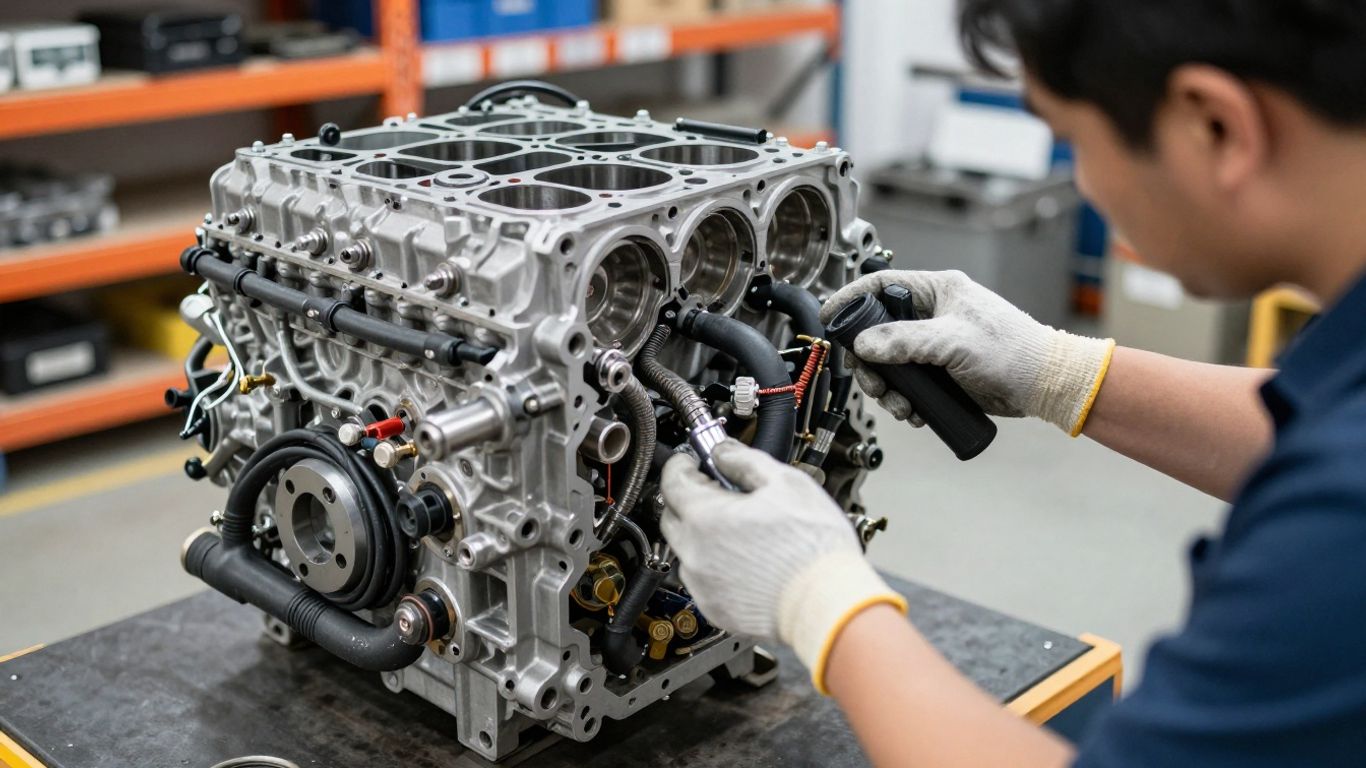
Reviewing mileage, service records, and vehicle history
Request the donor vehicle’s mileage, maintenance records, accident information, reason for dismantling, and date of removal. If the engine came from a collision vehicle, ask whether the engine was running before dismantling and whether impact damage affected the oil pan, mounts, cooling system, or accessories.
Service records can reveal regular oil changes, previous timing work, overheating, or repeated warning-light issues. Treat missing records as uncertainty rather than proof of neglect, and price that uncertainty into the decision.
Understanding compression tests and inspection reports
Compression readings can show whether cylinders are producing broadly consistent pressure, but the testing method and engine condition at the time matter. Ask whether the test was performed on a cold or warm engine, which equipment was used, and whether the readings are recorded for each cylinder. A leak-down test may provide additional information about where pressure is escaping.
Inspection reports should also describe oil contamination, coolant presence, crankshaft movement, visible damage, and the condition of external components. Numbers are useful only when accompanied by enough context to interpret them.
Checking for common Audi engine faults
Research the known failure patterns for your particular engine code, not just the model name. Depending on the unit, areas for review may include timing components, oil consumption, cooling systems, turbocharging hardware, carbon deposits, seals, and auxiliary components. The relevant concern varies by engine family and maintenance history.
Ask whether the inspection specifically addressed those areas. A general statement that an engine was “tested” is less useful than a report explaining what was tested and what remains unverified.
Asking whether the engine has been stored and preserved correctly
Storage affects an engine that has been removed from service. Ask how long it has been stored, whether openings were sealed, whether fluids were drained or replaced, and how the unit was protected from moisture. Long storage does not automatically ruin an engine, but it can create additional preparation work.
Before installation, the technician should inspect accessible seals and openings and follow the supplier’s preparation instructions. If storage conditions are unknown, allow time and budget for a more cautious inspection rather than treating the engine as ready to run.
Comparing Audi engine sourcing costs
The advertised engine price is only the first line of the project. Shipping, taxes, core charges, installation, fluids, filters, seals, programming, and unexpected parts can change the total considerably. A good comparison uses the same scope for every quote.
Ask suppliers to separate the engine price from delivery and optional components. Then ask the installer for a written estimate based on the exact engine configuration. This makes an apparently inexpensive listing easier to evaluate honestly.
Calculating the purchase price beyond the advertised listing
Determine whether the listing includes a complete engine, long block, intake and exhaust equipment, injectors, sensors, wiring, brackets, and accessories. Also check whether a refundable core charge applies and whether the seller requires the old engine to be returned in a particular condition.
The quote should identify the engine code, stated mileage, test information, included parts, warranty, and delivery terms. If any of these are absent, the advertised number is not yet a meaningful comparison.
Factoring in shipping, taxes, installation, and fluids
A replacement engine may require freight delivery to a commercial address, lift-gate service, residential delivery, or special handling. Add applicable taxes, shop supplies, oil, coolant, filters, gaskets, seals, belts, fasteners, and refrigerant-related work where relevant. Installation labor can vary sharply depending on access and how many components must be transferred.
A practical budget also includes diagnostic time and post-installation checks. These costs are easier to manage when identified before the order rather than discovered while the vehicle is already dismantled.
Comparing warranty coverage with upfront savings
A longer or clearer warranty may justify a higher purchase price, particularly when engine removal and installation are expensive. Compare covered parts, labor reimbursement, claim deadlines, required maintenance, and exclusions instead of comparing only the number of months or miles.
A cheaper engine with narrow coverage can leave you carrying most of the risk. On the other hand, a costly warranty is not automatically valuable if its requirements are unclear or its claim process is impractical. Read the actual terms and ask specific questions.
Recognizing unusually low prices and hidden risks
A price far below comparable listings deserves investigation. It may reflect high mileage, incomplete equipment, unknown history, a short warranty, export-only terms, damage, or a unit that has not been tested. None of those factors proves the engine is unusable, but each changes the risk calculation.
Ask what explains the difference and request the answer in writing. When a seller cannot account for a low price, the saving may simply be the cost of uncertainty passed to the buyer.
Protecting your purchase before installation
Protection begins when the order is placed and continues until the engine has been inspected and tested. Keep the listing, quote, payment record, messages, photographs, and shipping documents together. These materials provide a clear timeline if the delivered engine differs from the agreed unit.
Tell the installer about the warranty conditions before work begins. Some requirements must be documented during installation, and missing that step can make a later claim harder. Good recordkeeping is not excessive here; it is part of managing a high-value mechanical purchase.
Confirming the warranty terms in writing
Ask for the complete warranty document, not only a summary in an advertisement. Confirm the start date, mileage limit, covered internal parts, labor coverage, exclusions, maintenance requirements, approval process, and contact method. Clarify whether modifications, tuning, overheating, incorrect installation, or transferred ownership affect coverage.
Have the technician review any installation conditions that could affect eligibility. If the warranty requires specific fluids, filters, seals, or break-in steps, include those requirements in the work order.
Inspecting the engine immediately after delivery
Inspect the crate and engine before signing for delivery when possible. Look for crushed packaging, leaks, broken connectors, bent brackets, cracked housings, missing plugs, and identification marks that do not match the order. Photograph every side of the package and engine, including damage that seems minor.
Do not assume that installing the engine is the first step. The technician should verify the condition and completeness of the unit while a return or damage claim is still possible.
Documenting damage, missing parts, and discrepancies
Write down discrepancies on the delivery receipt and notify the supplier promptly through the required channel. Include the order number, engine identification, photographs, delivery date, and a concise description of the issue. Avoid discarding packaging until the supplier confirms it is no longer needed.
Keep copies of all communication and ask for a written resolution. A record made before installation is far stronger than an argument raised after parts have been transferred and the vehicle no longer runs.
Following required installation and break-in procedures
Use the supplier’s written preparation and installation requirements alongside the vehicle’s service information. Replace required fluids and filters, prime the lubrication system where appropriate, inspect accessible seals, and confirm that transferred components are suitable. The technician should also record initial readings and any warning codes.
Break-in procedures vary by engine and supplier. Follow the stated instructions rather than relying on a generic routine, and keep receipts for required maintenance. Those records can protect both the engine and the warranty.
Planning the replacement and installation process
Engine replacement is a coordinated job involving the supplier, technician, vehicle owner, and sometimes a programming specialist. Planning reduces the time the car spends disassembled and makes it easier to identify responsibility if something goes wrong. It also prevents a replacement engine from arriving before the shop has the parts, tools, or information needed to install it.
Agree on the scope of work before delivery. Include expected labor, transferred components, new parts, coding, testing, disposal of the old engine, and the process for handling an unexpected problem. A written plan creates useful boundaries without pretending every repair can be predicted perfectly.
Choosing a qualified Audi technician
Choose a technician who can demonstrate experience with the vehicle’s engine family and electronic systems. Ask whether the shop has the diagnostic equipment, lifting equipment, service information, and programming access required for the specific vehicle. Experience with general engine swaps does not necessarily cover every vehicle-level adaptation.
Provide the technician with the supplier’s inspection report and warranty requirements before work starts. This allows the shop to identify conflicts early and document the condition of the replacement during installation.
Identifying parts worth replacing during installation
Access is often the main reason to replace service items during an engine change. Depending on the engine and its condition, the technician may recommend seals, gaskets, filters, fluids, belts, timing components, hoses, mounts, spark plugs, or hard-to-reach sensors. The recommendation should be based on inspection, service interval, and warranty requirements.
Avoid replacing every component automatically, but do not ignore inexpensive parts that would require major disassembly later. Ask for a prioritized list separating required work, prudent preventive work, and optional improvements.
Coordinating engine coding, adaptation, and software updates
A replacement engine may require electronic checks, adaptation procedures, fault-code clearing, or software work after installation. The exact requirements depend on the vehicle, engine configuration, control modules, and components transferred from the original unit. Confirm who will perform the work and whether it is included in the estimate.
The vehicle should not be released simply because it starts. The technician should verify communication between relevant modules, review live data, and confirm that no unresolved compatibility or emissions faults remain.
Testing the vehicle after the replacement is complete
Testing should begin with fluid-level checks, leak inspection, initial fault scanning, and a controlled startup. The technician can then monitor temperature, oil pressure where applicable, charging, idle quality, noises, smoke, and warning lights before a road test. A gradual road test allows problems to be identified without immediately placing the engine under heavy load.
After the road test, inspect again for leaks and rescan the vehicle. Record the mileage, test results, installed engine identification, and any follow-up service due. That final record closes the loop between sourcing, installation, and future maintenance.
Conclusion
Successful Audi engine sourcing is less about finding the first available listing and more about verifying identity, condition, cost, protection, and installation readiness as one connected process. With the VIN and engine code confirmed, a documented supplier, clear warranty terms, and a qualified technician involved early, you can make a replacement decision with far less uncertainty.