
Key Takeaways
The right Ford Ranger engine and gearbox combination depends on generation, market, drivetrain, and factory specification. Careful identification and diagnosis can prevent an expensive mismatch or an unnecessary replacement.
- Confirm the engine and transmission codes before ordering parts.
- Use the VIN to verify the original factory specification.
- Treat smoke, overheating, slipping, and fluid leaks as inspection clues.
- Check wiring, mounts, control modules, and driveline parts during replacement.
- Price the complete repair, including labor, programming, fluids, and related parts.
Ford Ranger engine and gearbox combinations by generation
The Ford Ranger has been sold with different engines and transmissions across regions and model years. The T6 generation, introduced in 2011, brought a more globally shared platform, but it did not make every powertrain interchangeable. A truck that looks nearly identical can still have meaningful differences underneath.
How the T6 platform changed the available powertrains
The T6 platform consolidated much of the Ranger range onto a common global architecture from 2011 onward. It was offered in rear-wheel-drive and four-wheel-drive layouts, with single-cab, extended-cab, and double-cab body styles in various markets. Later revisions updated the body and powertrain choices, so “T6 Ranger” is a useful starting point, not a complete identification.
A replacement decision should therefore begin with the exact generation and production market. The same platform name does not guarantee that an engine, gearbox, wiring harness, or electronic control unit will connect and operate without changes.
Common diesel and petrol engine options
Depending on market and year, Rangers have used diesel four-cylinder engines, larger diesel engines, and turbocharged petrol engines. Common examples in global-market trucks include 2.2-liter and 3.2-liter diesel options, while later versions include a 2.0-liter twin-turbo diesel. North American models use different petrol powertrains, which makes importing parts or buying a used engine especially sensitive to specification.
Engine displacement alone is not enough. Turbo arrangement, emissions equipment, fuel system, sensors, engine management software, and accessory locations can all affect whether a supposedly similar engine is a practical replacement.
Manual and automatic gearbox pairings
Manual and automatic transmissions have both been paired with Ranger engines, but the pairing varies by market, trim, drivetrain, and production year. A six-speed manual or automatic may appear across several versions while still using different bellhousing details, calibration, transfer-case arrangements, or internal components.
Before treating a gearbox as interchangeable, compare its identification tag and original application. Also confirm whether the replacement is intended for rear-wheel drive or four-wheel drive, since output shafts and transfer-case interfaces may differ.
Why model year and market affect compatibility
Model year changes can bring revised electronics, emissions controls, cooling systems, and transmission programming. Market requirements can change the engine family, fuel system, exhaust equipment, and available body styles even when the vehicle carries the same Ranger name.
The safest approach is to match the complete specification rather than shop by appearance or displacement. A parts supplier or specialist can use the VIN, engine code, transmission code, and build information to check the application before money changes hands.
How to identify your Ford Ranger engine and gearbox
Correct identification is the foundation of any engine or transmission repair. Start with the vehicle itself, then confirm the information against factory records and parts data. Photographs, casting numbers, and a seller’s description are useful clues, but none should replace a VIN-based check.
Finding the engine code and transmission code
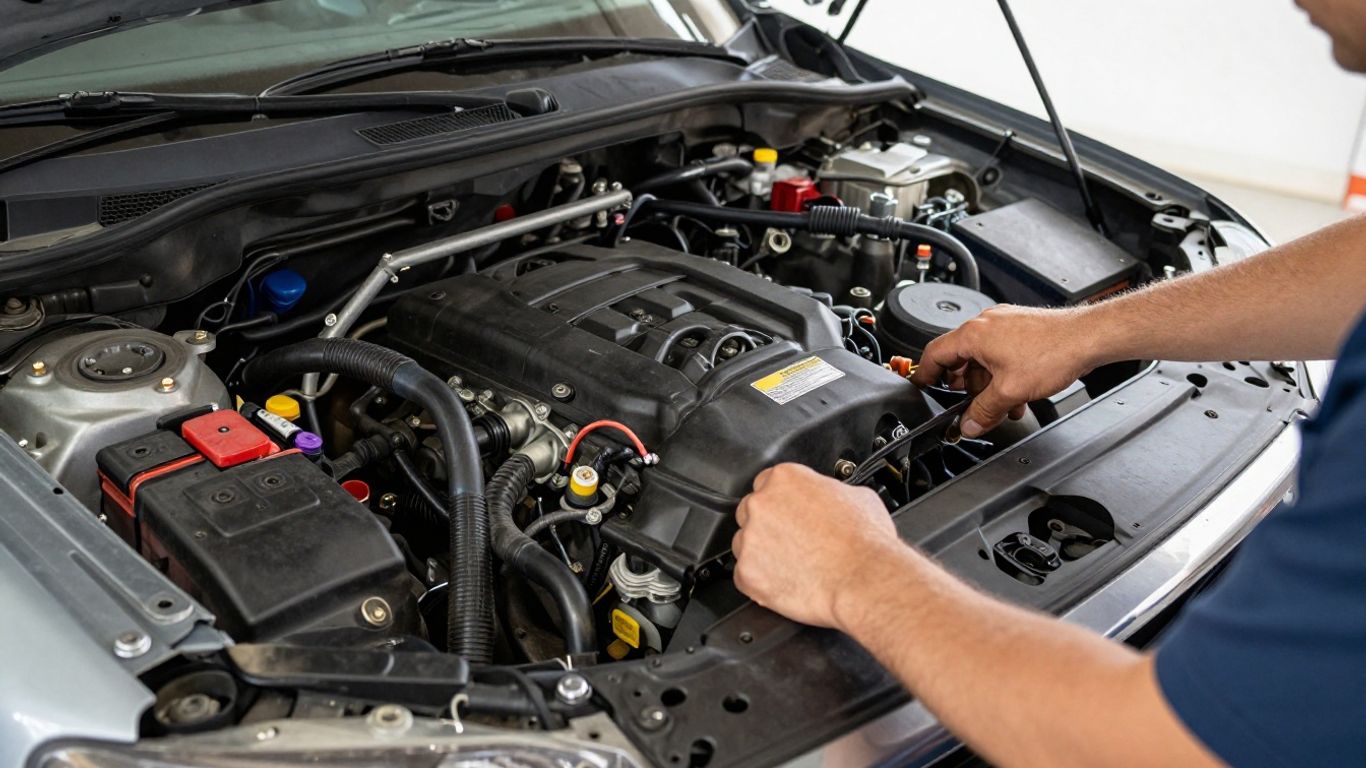
The engine code may appear on a label, identification plate, service record, or stamped area on the engine, depending on the year and market. The transmission may have a casing tag, stamped identifier, or label that is easier to read after cleaning away oil and road grime.
Record every character carefully, including suffixes. A small letter or number can identify a different calibration, gearset, housing, or production revision. If the marking is difficult to read, take several close photographs before removing components.
Using the VIN to confirm factory specifications
The VIN provides the most reliable starting point for confirming how the truck left the factory. It can help identify the build year, plant, engine family, body style, drivetrain, and original transmission specification, although the amount of information available varies by market and database.
Ask for a factory build record or parts-system lookup when ordering a replacement. This is particularly important when the current engine or gearbox may already have been changed, because the VIN describes the truck’s original configuration, not necessarily what is installed today.
Checking drivetrain, cab, and body-style differences
Drivetrain and body configuration can affect more than suspension and exterior parts. Four-wheel-drive trucks may use a transfer case and different propeller-shaft arrangements, while cab and wheelbase differences can alter mounts, exhaust routing, wiring lengths, and transmission crossmembers.
Inspect the truck’s axle configuration, wheelbase, cab style, and transmission controls before comparing replacement units. A gearbox that fits the bellhousing may still create problems at the crossmember, shifter, driveshaft, or transfer case.
Matching identification numbers to replacement parts
Use the engine and transmission codes together with the VIN when checking a used or remanufactured unit. Compare sensors, turbochargers, manifolds, oil pans, starter locations, mounts, and control-module connections rather than assuming the long block or gearbox casing tells the whole story.
A written compatibility check is worth obtaining before purchase. It should identify what is included, what must be transferred from the original unit, and whether programming or software configuration will be required after installation.
Ford Ranger engine problems to watch for
Engine symptoms rarely point to one component immediately. Overheating, smoke, poor starting, unusual noises, and warning lights should be treated as evidence that needs testing. Continuing to drive while a basic fault develops can turn a repairable issue into major internal damage.
Symptoms of overheating, low oil pressure, and worn components
An engine running hot may have a cooling-system leak, restricted radiator, failed thermostat, water-pump problem, fan fault, or combustion issue. Low oil pressure can result from low oil level, a blocked pickup, a worn pump, bearing wear, or inaccurate sensor information. The warning light should never be dismissed simply because the engine still sounds normal.
Blue smoke can suggest oil entering the combustion or exhaust system, while white smoke may indicate coolant or unburned fuel depending on when it appears. Knocking, ticking, rumbling, and a change in oil pressure all justify testing before the vehicle is used for towing or long-distance travel.
Common diesel issues involving turbochargers and injectors
Diesel Rangers can develop symptoms such as hesitation, reduced power, hard starting, excessive smoke, or a rising engine-oil level. Possible causes include a split intercooler hose, turbocharger wear, injector trouble, fuel contamination, or a problem with exhaust-gas equipment. These symptoms overlap, so replacing the turbocharger without testing the fuel and air systems can waste money.
A proper inspection checks boost hoses, intake connections, air filtration, fuel pressure, injector correction data, and the condition of the engine oil. Fuel quality and filtration matter because contamination can damage precision injector components and spread debris through the system.
Warning signs of timing chain or belt problems
Rattling during startup, difficult starting, misfires, uneven idle, or a sudden loss of power can indicate a timing-system problem. Depending on the engine, the timing system may use a chain or belt, and the service requirements are not the same. A noisy tensioner or guide can become a much larger failure if ignored.
Do not diagnose timing faults by sound alone. Verify crankshaft and camshaft synchronization, inspect the relevant components, and follow the engine-specific procedure for setting timing. If the timing has jumped, avoid repeated cranking until internal damage has been assessed.
How diagnostic trouble codes support a proper inspection
Diagnostic trouble codes help narrow the inspection, but they do not identify a failed part automatically. A boost-pressure code, injector code, or transmission communication code may result from a sensor, wiring fault, air leak, low voltage, or a genuine mechanical problem.
Read stored, pending, and history codes, then record freeze-frame data where available. Combine that information with live readings, a visual inspection, fluid checks, and a road test. Codes are clues, not verdicts, and clearing them before documenting the fault can remove useful evidence.
Ford Ranger gearbox problems and symptoms
A gearbox complaint can originate in the clutch, hydraulics, electronics, transfer case, driveshaft, differential, or engine mounts. The timing of the symptom matters: note whether it occurs when selecting a gear, accelerating, cruising, reversing, or changing from drive to coast. Fluid condition and service history often add important context.
Recognizing clutch, shift, and gear-selection faults
A manual Ranger that is difficult to select into gear may have clutch drag, hydraulic trouble, a worn clutch, damaged synchronizers, or a shifter problem. Clutch slip usually appears as rising engine speed without matching road speed, especially under load or in a higher gear. A heavy pedal, engagement near the top of travel, or judder can provide additional clues.
For a shift complaint, check the clutch hydraulic system and linkage before condemning the gearbox. If the issue affects one gear consistently, internal wear becomes more likely; if every gear is difficult with the engine running but easier when stopped, clutch release deserves close attention.
Signs of automatic transmission slipping or harsh shifting
An automatic transmission that flares between gears, delays engagement, shudders, or shifts harshly may have incorrect fluid level, degraded fluid, solenoid trouble, sensor faults, hydraulic wear, or internal clutch damage. A warning light or stored code can help, but a normal scan does not prove that the transmission is healthy.
Compare behavior when cold and warm, and note whether the symptom appears during light throttle, full acceleration, towing, or downhill changes. Do not add unidentified additives or use the wrong fluid to mask a shift problem; those choices can complicate diagnosis and create further damage.
Diagnosing noises, vibrations, and fluid leaks
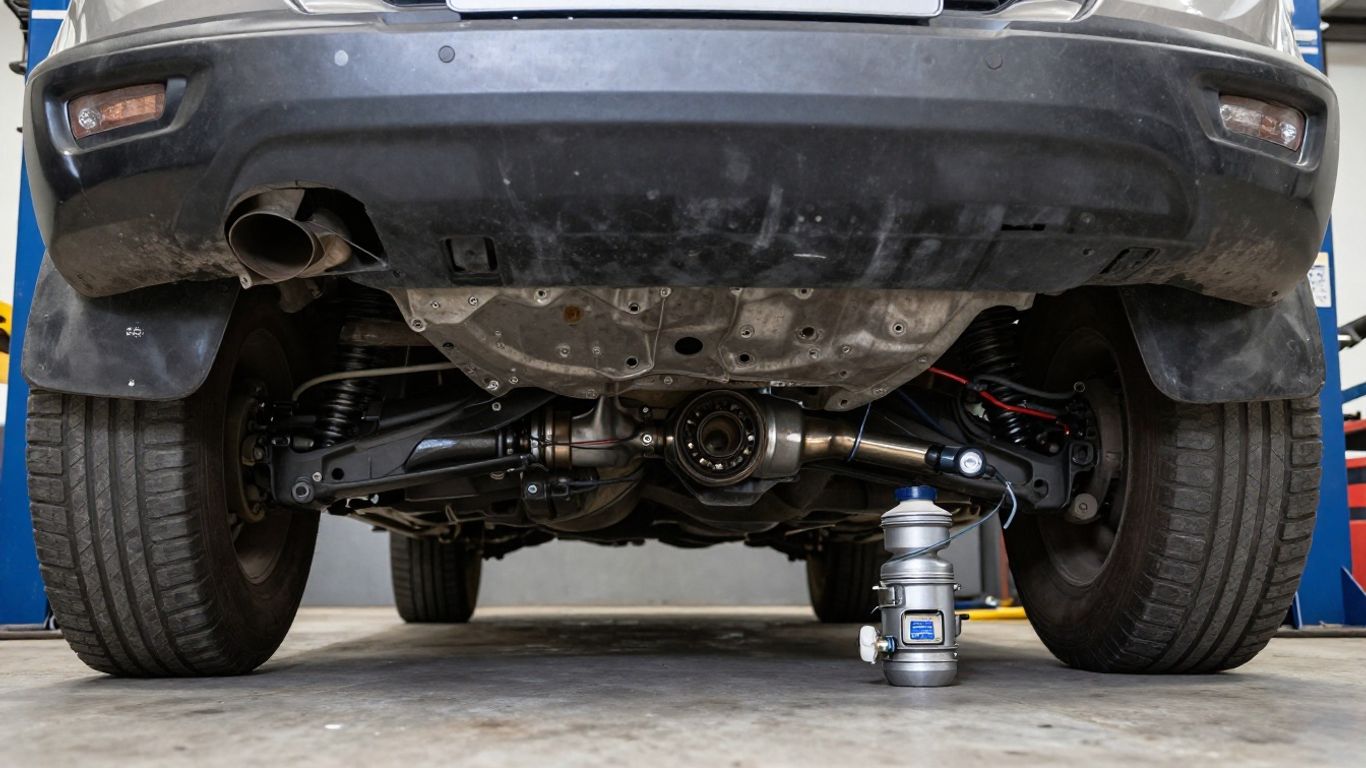
A whining noise that changes with road speed may come from the gearbox, transfer case, differential, wheel bearings, or tires. A vibration tied to engine speed points in a different direction from one tied to vehicle speed. Fluid color, smell, location, and the rate of loss can also help distinguish a seal leak from a larger casing or cooler problem.
Inspect the transmission pan or casing, cooler lines, axle seals, transfer case, and driveshaft area. Clean the suspected area, drive briefly, and reinspect rather than guessing from an old oil stain. Metal on a drain plug or in a fluid sample warrants further investigation.
When a gearbox fault may actually come from the driveline
Clunks on take-up, shudder under load, and vibration during acceleration can be caused by worn universal joints, carrier bearings, differential backlash, damaged mounts, or propeller-shaft issues. Four-wheel-drive components add another group of possible sources, especially when symptoms change between drive modes.
A workshop should isolate the noise with a controlled road test and lift inspection. Replacing a gearbox will not cure a worn driveshaft or differential, so the complete driveline should be checked before a major transmission decision is approved.
Maintaining the Ford Ranger engine and gearbox
Routine maintenance protects both the engine and the gearbox, but the correct schedule depends on use. Towing, dust, deep water, short trips, and frequent low-speed work place different demands on fluids, filters, cooling, and seals. Keep invoices and record the exact products used, not just the date of service.
Choosing the correct oil, coolant, and transmission fluid
Use the specification listed for the exact engine and transmission, including the required viscosity, approval, and fluid type. Engine oil that meets only a similar viscosity may not provide the additive package or emissions-system compatibility required by that engine. Transmission fluid is equally specific, particularly for automatic units with electronically controlled shift behavior.
Coolant should be compatible with the vehicle’s specification and mixed correctly with suitable water. Avoid mixing unknown fluids when the system is being repaired; drain, flush, and refill according to the applicable service procedure when contamination or an incorrect product is suspected.
Following service intervals for different driving conditions
Normal mileage intervals may not suit a truck used for dusty work, repeated short trips, heavy towing, or deep-water crossings. Severe use can justify more frequent checks of engine oil, air and fuel filters, transmission fluid, differential oil, hoses, and underbody breathers.
A practical maintenance routine includes these checks between major services:
- Look for new oil, coolant, fuel, and transmission-fluid leaks.
- Check fluid levels on a level surface using the correct procedure.
- Inspect air, fuel, and cabin filters when operating conditions are dusty.
- Examine hoses, wiring, mounts, and driveshaft joints for damage.
These simple observations do not replace scheduled servicing, but they can reveal a developing fault early. A short note about towing weight, terrain, and trip type also helps a technician tailor advice to the truck’s real workload.
Protecting the powertrain during towing and off-road use
Towing increases heat and load in the engine, transmission, cooling system, brakes, and driveline. Use the correct tow rating and loading arrangement, allow the vehicle to warm properly, and monitor for temperature changes, unusual shift behavior, or loss of power. After water or mud exposure, inspect the underside and fluid condition rather than assuming the seals prevented entry.
Off-road driving can also damage wiring, breathers, hoses, and mounts. Clean mud from cooling surfaces and check for impact damage after difficult routes. Early attention is cheaper than allowing contaminated fluid or a loose mount to affect other components.
Preventing damage from neglected filters, seals, and mounts
A restricted air filter can reduce performance and increase turbocharger strain, while a neglected fuel filter can allow contamination toward the injection system. Leaking seals lower fluid levels and can contaminate clutches or belts. Worn engine and gearbox mounts may create vibration and place stress on exhaust, wiring, and driveline connections.
During each service, ask for the condition of these supporting parts to be documented. They are easy to overlook when attention is fixed on the engine or gearbox itself, yet they often determine whether a repair remains reliable.
Replacing or repairing the engine and gearbox
A failed powertrain is not automatically a replacement job. The best choice depends on the failure, vehicle condition, parts availability, warranty, and the quality of the repair facility. Begin with a confirmed diagnosis and a written scope of work rather than comparing headline prices for an engine or gearbox alone.
Deciding between rebuilding, repairing, and replacing
A repair may make sense when the fault is limited to an accessible component, such as a sensor, seal, clutch, cooler line, hose, or external actuator. Rebuilding can be appropriate when the core casing and major hard parts are usable and the shop can document its inspection and machining standards. Replacement may be more sensible when internal damage is extensive or a tested unit is available with a clear warranty.
Ask what caused the original failure and what will be checked before installation. A replacement turbocharger, for example, will not solve an underlying oil-supply problem, and a replacement gearbox will not correct a driveline fault.
Checking compatibility before buying a used powertrain
Confirm the donor vehicle’s year, market, engine code, transmission code, drivetrain, and body configuration. Ask for mileage, compression or operating-test information where available, the reason for removal, and details of included accessories. A bare engine, complete engine, and ready-to-install assembly are different products.
Also verify whether the original sensors, injectors, turbocharger, flywheel, clutch, torque converter, transfer case, mounts, and wiring must be transferred. Compatibility should be established in writing before the unit is shipped or installed.
Inspecting engine and gearbox mounts, wiring, and control modules
A powertrain swap involves more than lifting one unit out and another in. Inspect mounts and brackets for cracks, compare wiring connectors and harness routing, and check that sensors and actuators match the vehicle’s control system. Ground straps and battery voltage deserve attention because low voltage can create misleading communication and shift faults.
Control modules may require configuration, initialization, or programming after installation. Confirm this requirement in advance, along with who will perform it and whether the repair estimate includes diagnostic time. Mechanical fit is only one part of a successful replacement.
Estimating labor, parts, and programming costs
A realistic estimate includes removal, installation, fluids, filters, seals, gaskets, fasteners, mounts, clutch or torque-converter work, diagnostic testing, and any required programming. It should also allow for seized fasteners, damaged wiring, contaminated systems, or a cooling-system flush if the failure spread debris.
Request separate prices for the powertrain, ancillary parts, labor, and warranty. The cheapest quoted unit may become the most expensive option if it arrives incomplete or needs extensive reconditioning before it can be used.
Buying a used Ford Ranger with engine or gearbox concerns
A discounted Ranger can be worthwhile when the fault is understood and the repair has been priced accurately. It can also become an expensive project when the seller describes several symptoms as one minor issue without supporting evidence. Approach the purchase as a diagnosis first and a negotiation second.
Reviewing service history and previous repairs
Look for consistent oil and filter changes, transmission servicing where specified, cooling-system work, timing-system records, and evidence of towing or commercial use. Invoices are more useful than a handwritten list because they show parts, dates, mileage, and the nature of earlier repairs.
Pay close attention to repeated repairs for overheating, warning lights, fluid loss, injector faults, or harsh shifting. A pattern may indicate that the original cause was never resolved, even if individual parts have already been replaced.
Performing a cold start and road test
Arrange to see the truck with the engine fully cold. Watch how quickly it starts, whether the idle settles, and whether smoke or rattling appears during the first moments of operation. A warm engine can hide hard-starting, battery, glow-system, lubrication, and timing symptoms.
During the road test, use gentle and firm acceleration, reverse, low-speed turns, and steady cruising. Test each available drive mode carefully and listen for changes under load, on overrun, and during gear selection. Do not treat a short, quiet drive as proof that a complex powertrain is sound.
Checking for smoke, leaks, warning lights, and abnormal shifts
Inspect the engine bay, transmission casing, cooler lines, transfer case, differentials, and underside for fresh leaks. Check the exhaust during startup and acceleration, and make sure warning lights illuminate during the key-on self-check before going out after the engine starts.
An independent scan can reveal pending codes and monitor data that a dashboard inspection misses. Look for delayed engagement, flare, shudder, clutch slip, or a clunk when changing direction. These observations help turn a vague concern into a repair estimate.
Knowing when a low purchase price is not worth the risk
Walk away when the seller will not allow a cold inspection, refuses an independent examination, or cannot explain major warning lights and fluid loss. Be cautious when the truck has several unrelated symptoms, an altered powertrain, missing identification numbers, or evidence of severe overheating.
Add the likely repair, transport, diagnostics, registration, fluids, and contingency fund to the purchase price. If that total approaches the cost of a comparable truck with a documented history, the bargain has probably disappeared.
Conclusion
Choosing or repairing a Ford Ranger engine and gearbox requires more than matching a year or displacement. Confirm the codes and VIN, diagnose symptoms systematically, inspect the supporting driveline and electronics, and price the complete job before committing. That measured process reduces compatibility surprises and gives a used truck or replacement powertrain a much better chance of delivering dependable service.