
Key Takeaways
Choosing among Land Rover engine specialists is easier when you focus on diagnosis, documented experience, transparent pricing, and the quality of the proposed repair.
- Insist on testing and a clear explanation before approving major engine work.
- Compare repair, rebuilding, and replacement according to the engine’s condition.
- Ask about parts, labor, warranty coverage, and possible additional costs.
- Look for technicians familiar with your exact model and engine type.
- Keep complete records and follow a preventive maintenance plan afterward.
Understand what Land Rover engine specialists do
Land Rover engine specialists handle more than the removal and installation of an engine. Their work usually begins with identifying the cause of a fault, separating a repairable problem from internal damage, and explaining the available options. A good workshop also understands how the engine interacts with cooling, fuel, ignition, emissions, and electronic control systems. That broader view matters because an engine symptom is not always caused by the engine itself.
Engine diagnostics and fault-code analysis
A specialist should begin with a methodical inspection rather than guessing from a warning light alone. Fault codes can point toward a system that needs attention, but they still need to be checked against symptoms, live data, wiring, fluid levels, and mechanical tests. The technician should explain what the codes mean, which tests were performed, and what evidence supports the diagnosis.
A useful diagnostic report distinguishes confirmed faults from possibilities. It may include compression results, leak-down findings, cooling-system checks, oil-pressure readings, or observations from a road test. That level of detail gives you something concrete to compare if you seek a second opinion.
Repairs for common Land Rover engine problems
Engine specialists may be asked to address timing components, oil or coolant leaks, head-gasket concerns, fuel delivery problems, damaged sensors, misfires, or overheating. The exact repair depends on the model, engine, service history, and extent of the damage. A careful technician will look for the underlying cause instead of replacing the most obvious failed part and sending the vehicle back out.
Ask whether the proposed work includes related inspections. For example, a repair involving overheating should consider the cooling system, while a misfire diagnosis may require attention to ignition, fuel, compression, and air metering. The root cause matters because an isolated parts swap can leave the original problem unresolved.
Engine rebuilding and replacement services
When internal wear or major damage is present, the realistic choices may include rebuilding the existing engine, installing a remanufactured unit, or fitting a used replacement. These are not interchangeable services. Rebuilding involves inspecting and renewing components, while replacement depends heavily on the donor or supplied unit’s identity, condition, and compatibility.
Before work begins, ask what is included in the quoted service. Clarify whether ancillary components, seals, fluids, programming, removal of contamination, and post-installation testing are covered. The more precisely the scope is written, the less room there is for disagreement later.
Model-specific knowledge across Land Rover vehicles
A specialist should ask for the vehicle identification number, model year, engine designation, mileage, and maintenance history before recommending a major solution. Similar-looking vehicles can use different engines, control systems, cooling layouts, or mounting arrangements. Those differences affect diagnosis, parts selection, labor time, and the final testing procedure.
Model familiarity is also useful when interpreting a symptom in context. A technician who regularly sees the same platform may recognize patterns, but should still verify the suspected fault on your individual vehicle. Experience should support testing, not replace it.
Identify the signs of a serious engine problem
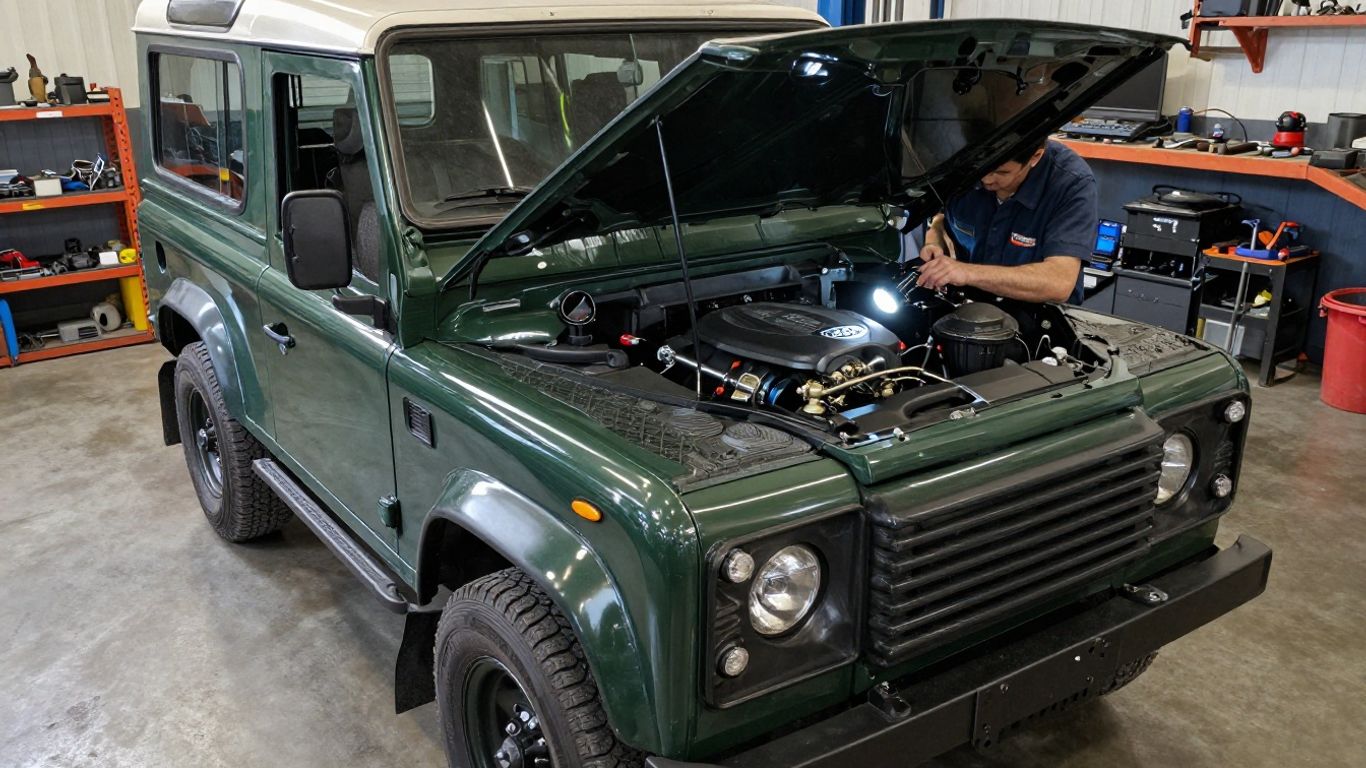
Some engine symptoms are inconvenient but manageable; others call for stopping the vehicle and arranging professional assistance. Warning lights, noises, smoke, fluid loss, and changes in performance should be considered together rather than treated as isolated annoyances. The speed of your response can affect both the repair bill and the options available. If the vehicle is overheating, losing oil pressure, or making a severe mechanical noise, continued driving may cause further damage.
Warning lights, unusual noises, and performance loss
An engine management light deserves attention even when the vehicle still feels normal. A flashing light, severe loss of power, knocking, deep tapping, or grinding is more urgent than a brief, isolated hesitation. Record when the symptom occurs, whether the engine is warm or cold, and whether it changes under acceleration.
Do not clear a warning light simply to see whether it returns. That can remove useful diagnostic information without addressing the cause. Instead, arrange a scan and inspection, especially if the vehicle enters a reduced-power mode or develops a new sound.
Oil consumption, overheating, and coolant leaks
Frequent oil top-ups may indicate an external leak, worn internal components, turbocharger-related trouble, or another system fault. Coolant loss can come from a hose, radiator, pump, thermostat housing, or internal leak, and an overheating event can quickly turn a modest repair into major engine work. The smell, location, and color of a fluid can help an initial assessment, but they do not replace pressure testing and inspection.
Check fluid levels only when it is safe to do so and never open a hot cooling system. A vehicle that repeatedly runs above its normal temperature should be treated as a priority, even if it seems to recover after cooling down.
Misfires, smoke, and starting difficulties
A misfire may feel like shaking, stumbling, or uneven acceleration. Blue smoke can suggest oil entering the combustion process, while white smoke may be associated with coolant or condensation depending on the circumstances; black smoke can indicate an overly rich mixture. Hard starting may involve the battery or fuel system, but it can also reveal compression or timing problems.
The pattern is valuable. A symptom only during cold starts points an investigation in a different direction from one that appears under load. Give the specialist a precise account of the conditions rather than describing the problem only as “running badly.”
When a minor repair may prevent engine failure
Small changes often deserve attention before they become dramatic. A new leak, intermittent misfire, gradual oil consumption, or recurring temperature increase can be an early warning rather than a harmless quirk. Prompt inspection may reveal a service item or peripheral component that is less costly to address than the damage caused by waiting.
Keep a short record of dates, mileage, fluid additions, warning lights, and recent repairs. This history can help the technician see progression and may shorten the diagnostic process. It also gives you a clearer basis for deciding whether the vehicle is safe to drive to the workshop.
Compare engine repair and replacement options
There is rarely one universally correct answer when an engine has failed. The right choice depends on the damage, vehicle condition, parts availability, budget, intended ownership period, and confidence in the workshop’s process. A low initial price can be misleading if it excludes necessary related work or provides little protection after completion. Compare the whole solution, not just the headline figure.
Repairing the existing engine
A targeted repair can make sense when the engine’s main structure is sound and the failed component is clearly identified. It may preserve the vehicle’s original unit and avoid the uncertainty of an unknown replacement. The specialist should explain what will be removed, measured, renewed, and tested.
This option is less attractive when damage is widespread or the engine has a history of repeated failures. Ask whether the repair includes an inspection for secondary damage and whether the workshop will contact you if the condition is worse than expected after disassembly.
Rebuilding or remanufacturing an engine
A rebuild is a more extensive process than replacing one external component. It generally involves dismantling the engine, inspecting critical surfaces, measuring tolerances, replacing or renewing worn parts, and assembling the unit to an agreed standard. The precise scope varies, so the written specification matters.
Ask for details about machining, replacement parts, balancing where relevant, testing, and the warranty. A reputable provider should be able to describe what was done to the engine rather than using “rebuilt” as a vague label.
Installing an OEM or used replacement engine
A replacement can reduce downtime when rebuilding is impractical or when a suitable unit is available. With an OEM unit, confirm the exact supply and warranty terms. With a used engine, ask about mileage, provenance, compression or running tests, included accessories, and what happens if the unit proves unsuitable after installation.
Compatibility involves more than the engine block. Ancillary equipment, wiring, control modules, software, emissions equipment, mounts, and accessories may need to match or be transferred. The installer should identify these requirements before ordering parts.
Weighing reliability, warranty, and long-term value
The cheapest option is not automatically the best value, particularly if it has a short warranty or leaves uncertain components in service. Consider how long you plan to keep the vehicle, its overall condition, and whether the proposed work addresses the reason the original engine failed. A higher initial cost may be reasonable when it buys clearer documentation and stronger coverage.
Use a simple comparison rather than relying on memory. These questions help separate a complete solution from an attractive but incomplete estimate:
- What exactly is being repaired or replaced?
- Which parts and fluids are included?
- What testing is completed before handover?
- How long does the warranty last, and what does it exclude?
After asking these questions, compare the answers alongside price and turnaround time. A quote that is slightly higher may be preferable if its scope is much clearer.
Evaluate a specialist’s expertise and equipment
Technical ability is only one part of choosing a workshop. You also need a process that produces reliable information, uses appropriate equipment, and records what was done. Ask to see examples of comparable work, not just general claims about experience. The best answers tend to be specific without promising that every repair will have the same outcome.
Land Rover and JLR-specific training
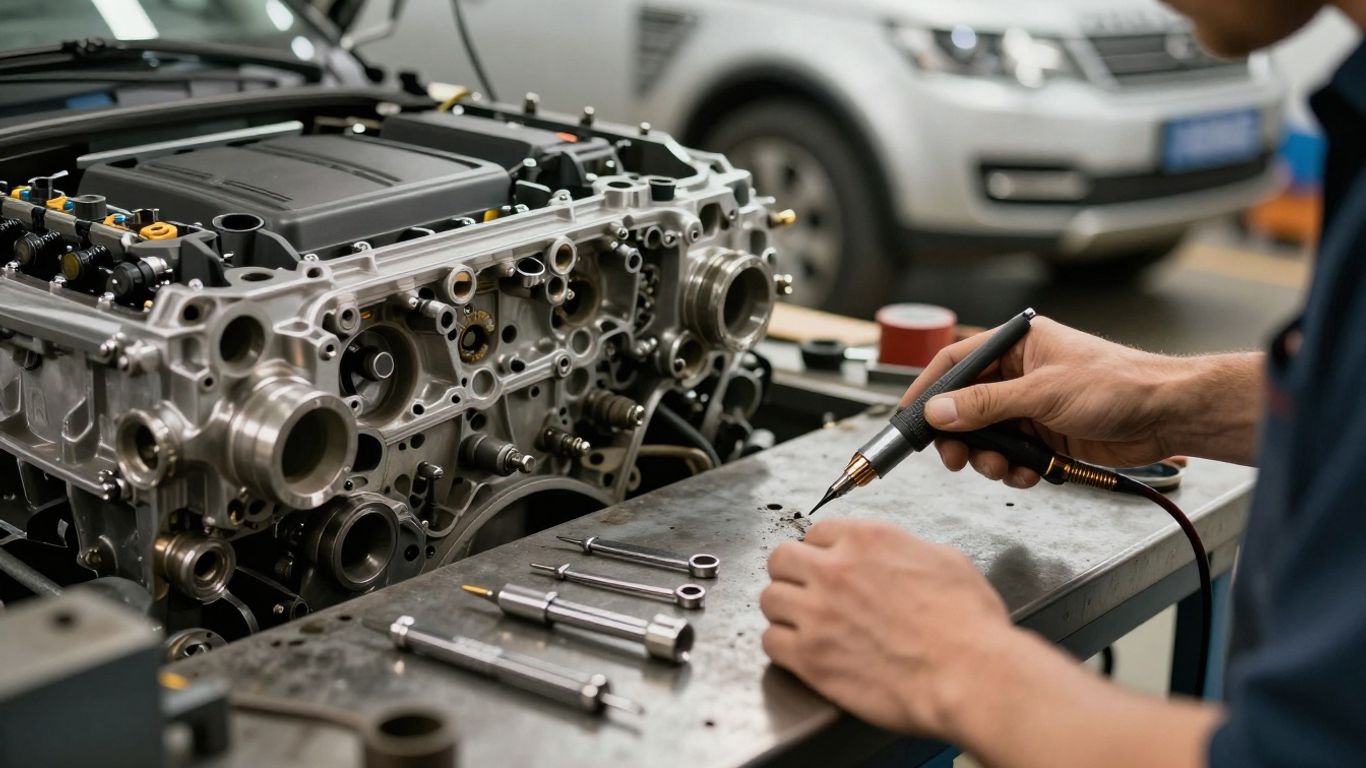
Ask whether the technicians have training or substantial practical experience with Land Rover and related JLR systems. Training alone does not guarantee a correct diagnosis, but it can indicate familiarity with the vehicle’s procedures and terminology. Look for a workshop that combines formal learning with documented hands-on work.
It is reasonable to ask who will perform the diagnosis, who will carry out the repair, and whether the same technician reviews the vehicle before release. Clear responsibility makes communication easier when a job becomes more complex than expected.
Diagnostic tools and technical data
Modern engine diagnosis requires more than a basic code reader. A capable workshop should have suitable scan equipment, test meters, pressure-testing tools, compression equipment, and access to relevant technical information. The equipment should be used to test a theory, not merely to produce a list of codes.
Ask whether diagnostic time is included in the repair estimate and whether you will receive test results. A specialist who can explain the evidence in plain language is usually easier to work with than one who relies on unexplained technical terms.
Experience with your model and engine type
Give priority to experience that matches your vehicle rather than a general claim of having worked on many cars. Ask how often the workshop sees your model and engine type, and whether it has completed similar repairs recently. This can reveal whether the proposed labor time and parts list are based on real familiarity.
A good conversation includes questions about mileage, modifications, previous engine work, and service history. Those details can change the diagnosis and may affect whether repair, rebuild, or replacement is the most sensible route.
Workshop standards, parts quality, and technician qualifications
The physical workshop can tell you something about its working habits. Look for organized storage, clean assembly practices, safe lifting equipment, and clear separation between removed components and new parts. Ask whether replacement parts are new, remanufactured, or used, and who approves substitutions if the original choice is unavailable.
The paperwork matters as well. A useful invoice identifies parts, labor, fluids, measurements, and warranty terms. Those records help with future servicing and make it easier to understand the vehicle’s condition if you later sell it or use another workshop.
Understand Land Rover engine repair costs
Engine repair pricing varies because the diagnosis may uncover anything from a peripheral component failure to extensive internal damage. Labor access, machining, parts availability, fluid contamination, programming, and post-repair testing can all affect the final figure. Comparing only hourly rates leaves out much of the real cost. Instead, compare what each workshop believes the vehicle needs and what its price includes.
Factors that influence labor and parts pricing
The same symptom can lead to very different repair paths. A leak from an accessible hose is not priced like an internal leak requiring disassembly, and a replacement engine may require additional seals, fluids, mounts, or electrical work. Vehicle age and previous modifications can also affect access and compatibility.
Ask for a breakdown of labor, parts, machining, diagnostic time, taxes, fluids, and disposal charges. If the workshop cannot know the final cost until disassembly, request a clear approval point before additional work begins.
How diagnostic fees and inspection charges work
A diagnostic fee pays for the technician’s time and equipment used to identify the fault. It may be separate from repair labor, credited toward approved work, or applied only to a defined inspection. None of these approaches is automatically wrong, but the arrangement should be explained before testing starts.
Ask what you will receive for the fee. A scan alone may produce codes, while a fuller inspection can include measurements, photographs, and a written recommendation. Knowing the deliverable helps you compare offers fairly.
Comparing fixed quotes with open-ended estimates
A fixed quote can provide confidence when the scope is known, but it may exclude hidden damage discovered during disassembly. An estimate allows for uncertainty, yet it should still state assumptions and limits. In either case, insist that additional work requires your approval.
The following comparison can help you read a quote more carefully:
| Quote element | What to check | Why it matters |
|---|---|---|
| Diagnosis | Tests already completed | Shows how the recommendation was reached |
| Parts | Brand, condition, and inclusions | Clarifies quality and compatibility |
| Labor | Hours and defined tasks | Helps identify omitted work |
| Warranty | Duration, coverage, and exclusions | Sets expectations after completion |
Once the estimate is itemized, ask the workshop to identify its biggest uncertainty. That answer is often more useful than a bare total because it tells you where the cost could change.
Questions to ask about warranties and unexpected costs
A warranty should be written in language you can understand. Ask whether it covers parts, labor, removal, reinstallation, towing, or diagnostic costs if the repaired component fails. Also ask whether servicing must be performed by the same workshop and what maintenance obligations apply.
Before approving work, confirm how you will be contacted if additional damage is found. Establish whether photographs, measurements, or a second inspection will be provided. A defined decision process protects both sides when an engine is already apart.
Follow the engine repair or replacement process
A major engine job should have visible stages from first inspection to final handover. You should know what the workshop has tested, what it recommends, what you have approved, and what remains to be checked. That does not mean every repair follows an identical script; it means communication should not disappear once the vehicle enters the bay.
Initial inspection and compression testing
The first stage usually combines a visual inspection with electronic and mechanical checks appropriate to the symptoms. Compression testing can help assess cylinder condition, while leak-down testing may provide further information about where pressure is escaping. Results should be interpreted alongside timing, fuel, ignition, and cooling-system evidence.
Ask whether the engine was tested cold, warm, or under another defined condition. The circumstances can affect readings, so the report should state what was done rather than presenting unexplained numbers.
Reviewing the diagnosis and recommended solution
Once the evidence is collected, the specialist should explain the fault in practical terms. You should understand what has been confirmed, what remains uncertain, and why a repair, rebuild, or replacement is being recommended. If the explanation is unclear, ask for the technician to show you the relevant measurement or failed component.
A second opinion can be sensible for a high-cost repair. Provide the next workshop with the original test results where possible, while remembering that an independent inspection may still be needed to verify the findings.
Approving the work and sourcing parts
Approval should identify the agreed scope, expected cost, parts condition, warranty, and estimated completion date. If a replacement engine is being sourced, confirm its identity and compatibility before installation. If the engine will be rebuilt, request the proposed specification and the point at which you will be updated about unexpected damage.
Keep written records of conversations and approvals. A short email confirming what was agreed can prevent confusion about whether related work was authorized or merely discussed.
Testing, documentation, and post-service support
After repair or installation, the vehicle should be checked for leaks, warning lights, abnormal noises, fluid levels, and correct operating temperature. The workshop may also need to carry out road testing, system scans, adaptation procedures, or other checks relevant to the vehicle. You should receive an invoice and enough technical information to understand the work completed.
Before leaving, ask about the running-in procedure, early fluid checks, return-visit schedule, and symptoms that require immediate contact. A careful handover gives you a practical way to protect the investment rather than treating collection day as the end of the process.
Choose a specialist for long-term Land Rover reliability
The best workshop choice is not always the one with the fastest promise or lowest estimate. Look for a specialist that communicates clearly, documents its reasoning, and is comfortable discussing uncertainty. Long-term reliability also depends on what happens after the immediate repair, including maintenance, record keeping, and early response to new symptoms.
Checking reviews, references, and previous work
Online reviews can reveal patterns in communication, timeliness, and how a workshop handles problems after payment. They are more useful when read alongside specific examples of similar engine work. Ask whether the business can provide references or anonymized details about comparable repairs without sharing private customer information.
Pay attention to how the workshop responds to critical feedback. A calm explanation and a clear process are more reassuring than a long list of vague praise.
Confirming service coverage and turnaround times
Before booking, confirm where the vehicle will be inspected, whether major engine work is completed on site, and who handles parts sourcing. Ask for a realistic timeframe with milestones rather than an optimistic single date. Delays can occur when an engine requires machining or a compatible component is difficult to obtain.
Also confirm communication arrangements. Knowing when you will receive updates, who can approve extra work, and how urgent issues are handled makes a long repair considerably less stressful.
Maintaining service records after major engine work
Keep the estimate, diagnostic report, invoices, test results, warranty documents, and parts information together. Record the mileage and date of the repair, along with any running-in instructions or follow-up checks. These documents help future technicians understand what has changed and what remains original.
Good records also support warranty discussions and can protect the vehicle’s value. If another fault appears later, the history may help distinguish a new issue from a related unresolved problem.
Planning preventive maintenance for future problems
A replacement or major repair does not remove the need for routine care. Follow the specialist’s recommendations for fluid inspections, filter replacement, cooling-system checks, and scheduled servicing. Pay attention to small changes in noise, temperature, starting behavior, and oil level.
Treat preventive maintenance as an ongoing conversation rather than a one-time package. A workshop that knows the vehicle’s repair history can often make more informed recommendations, while you remain in control of which work is approved and when.
Conclusion
Choosing the right Land Rover engine specialists comes down to evidence, communication, and fit. Seek a workshop that can explain the diagnosis, compare realistic repair and replacement paths, itemize costs, and stand behind its work. With careful questions and complete records, you can make a major engine decision with far less uncertainty.