
Key Takeaways
Choosing Mercedes engine parts Australia drivers can trust starts with identifying the exact engine and confirming fitment before purchase.
- Match the part to the engine code, model year, and VIN.
- Compare genuine, aftermarket, used, and reconditioned options carefully.
- Check supplier warranties, stock, delivery terms, and return policies.
- Price installation, diagnostics, deposits, and related parts—not just the component.
- Confirm part numbers and compatibility before placing the order.
Identify the Mercedes engine parts you need
The right replacement part depends on much more than the badge on the bonnet. Mercedes-Benz models can use different engines, revisions, and component designs across model years and markets. A careful identification process reduces the chance of ordering a part that looks correct but cannot be installed.
Start with the vehicle records, then confirm the information against the component and the supplier’s catalogue. That small amount of preparation can save freight costs, workshop time, and the frustration of a return.
Match parts to the engine code and model year
Find the engine code, model designation, build year, and transmission details before searching. Two vehicles from the same model range may have different timing systems, sensors, intake components, or cooling arrangements. The engine code is usually more useful than a broad description such as “Mercedes diesel” or “C-Class engine”.
If the part is being replaced because of a failure, photograph the old component and record any numbers stamped or moulded into it. Compare those details with the catalogue listing, but treat a visual match as a starting point rather than final proof.
Understand the difference between new, used, and reconditioned parts
A new part has not previously been installed, while a used part is removed from another vehicle and sold in its existing condition. A reconditioned component has generally been inspected, cleaned, and repaired or rebuilt, although the exact process varies between suppliers. Ask what was replaced, what was measured, and whether the work is supported by a written warranty.
The best choice depends on the component. A used cover or bracket may be sensible when it is sound and difficult to source, whereas an internal engine component may justify a new or professionally reconditioned option. Low purchase cost is not automatically low ownership cost.
Check compatibility by VIN and manufacturer specifications
The vehicle identification number gives a supplier a much more precise starting point than the model name alone. Provide the full VIN and, where relevant, the engine number, registration details, and the original part number. A supplier can then compare the request with manufacturer specifications and available supersessions.
Do not assume that a later replacement number fits every earlier vehicle. Manufacturers sometimes revise a component while retaining a similar appearance, and the replacement may require an additional seal, connector, bracket, or software procedure.
Recognize common Mercedes engine components and systems
A useful request describes the system as well as the part. Engine replacement work may involve the timing drive, lubrication system, cooling system, fuel delivery, forced induction, ignition, emissions controls, or electronic management. Naming the system helps the supplier understand whether you need one component or a related repair kit.
For a clearer conversation, gather these details before contacting a parts seller:
- The vehicle’s model, build year, and engine code.
- The VIN and any original component number.
- Symptoms, fault codes, or the mechanic’s diagnosis.
- Whether the vehicle is petrol, diesel, hybrid, or another configuration.
This information will not replace a proper inspection, but it gives the supplier enough context to ask useful follow-up questions instead of guessing.
Choose between genuine, aftermarket, and used parts
Parts quality is not a simple contest between expensive and inexpensive options. Genuine components, reputable aftermarket parts, used assemblies, and reconditioned units each suit different repairs and budgets. The important comparison is whether the option meets the vehicle’s specification and the expected service conditions.
Consider how critical the component is, how difficult it would be to access again, and how much damage a repeat failure could cause. For a daily vehicle, a dependable warranty may be worth more than a modest saving at checkout.
When genuine Mercedes-Benz parts make sense
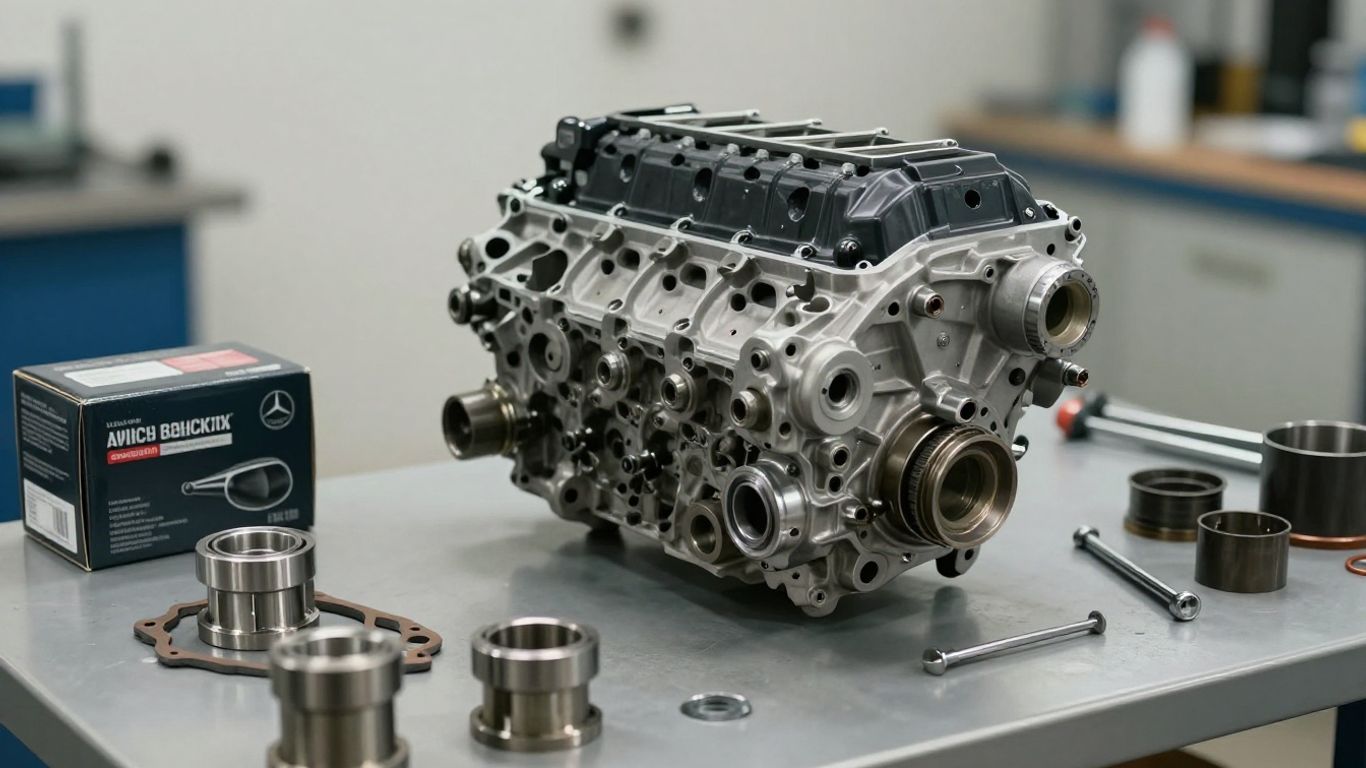
Genuine Mercedes-Benz parts can make sense when exact design, material specification, or electronic compatibility matters. They are also worth considering for components that are difficult to inspect after installation, or where a mismatch could affect several connected systems. Confirm that “genuine” means the item is supplied as an original manufacturer part, rather than simply being described as suitable for the vehicle.
For older vehicles, availability and price may change the calculation. Ask whether the original part has been superseded and whether the replacement requires associated hardware or a revised installation procedure.
Evaluating aftermarket brands and quality standards
Aftermarket parts can be a practical choice when the manufacturer is established and the specification is clearly documented. Look for precise fitment information, material details where relevant, test or quality information, and a warranty that explains what is covered. A catalogue entry with only a stock photograph and a broad model description deserves extra checking.
The supplier should be able to explain whether the part is a direct replacement, whether it replaces an earlier number, and whether it includes the seals, fasteners, sensors, or gaskets needed for installation. These details often reveal more than a low headline price.
Benefits and risks of used Mercedes engine parts
Used Mercedes engine parts may offer useful savings, particularly for non-wear items, discontinued components, or complete assemblies. A reputable dismantler should be able to provide the donor vehicle details, mileage where known, inspection information, and a clear warranty period. Ask whether the part was tested before removal or only checked visually.
Wear is the main uncertainty. Internal surfaces, seals, bearings, injectors, and electronic modules may have an unknown service history. A used part can be good value, but the buyer needs enough information to judge the risk rather than treating every removed component as equivalent.
When reconditioned components offer better value
Reconditioned components can bridge the gap between a new part and an untested used unit. They are most attractive when the underlying housing is serviceable and a specialist has the equipment to measure, repair, and test the working parts. Request a written description of the reconditioning process, not just the label “rebuilt”.
Check whether the warranty covers labour as well as the part, and whether the old unit must be returned. A core exchange may reduce the price, but it can also create a deposit or return deadline that needs to be understood before ordering.
Find reliable Mercedes engine parts suppliers in Australia
A reliable supplier does more than list a component online. They help narrow the fitment, explain what is included, and provide terms that remain clear after payment. This matters especially when parts are shipped between Australian states or when the vehicle is already off the road.
Look for a supplier that answers specific technical questions without making promises it cannot support. A short, accurate response is more useful than confident advice based only on the model badge.
Comparing local specialists, dealerships, and online retailers
Dealerships may be useful for original parts, current catalogue information, and difficult electronic or model-specific items. Independent specialists can bring practical experience with common failures and older vehicles. Online retailers may provide broader search tools and price comparisons, but the buyer must do more of the fitment checking.
These categories overlap, so judge the individual seller. Ask whether the part is physically in stock, whether the listing applies to your exact engine, and who will handle a technical query if the supplied item does not match.
Checking supplier stock, warranties, and return policies
“Available” can mean physically stocked, available from another warehouse, or obtainable after a special order. Confirm the expected dispatch date, delivery estimate, warranty duration, and exclusions. Also check whether opened packaging, installed parts, or electrical components are excluded from return.
A written quote should identify the part number and what comes in the box. It should also distinguish a manufacturer warranty from the seller’s own return policy, since those may involve different claims processes.
Assessing shipping options across Australian states
Freight planning matters when the part is heavy, fragile, or needed quickly. Compare standard and express services, packaging arrangements, tracking, insurance, and any regional or remote-area surcharge. An engine assembly or turbocharger may need different handling from a small sensor or gasket set.
Before paying, provide the complete delivery address and ask how the supplier handles transit damage. If the vehicle is at a workshop, make sure someone can receive the parcel and inspect the packaging promptly.
Verifying seller expertise and customer reviews
Reviews are most useful when they discuss the actual buying experience: accurate fitment, communication, packaging, delivery, and warranty handling. A large number of short ratings says less than detailed feedback that relates to the same type of part. Search for consistency rather than one glowing or negative comment.
You can also test technical knowledge with a focused question about the engine code or part number. A supplier that asks for the VIN and explains uncertainty openly is generally easier to work with than one that treats every listing as universally compatible.
Shop for common Mercedes engine replacement parts
Engine parts should be selected as part of a repair, not as isolated catalogue items. A failed component may have damaged related parts, and replacing only the visible failure can lead to duplicated labour. The mechanic’s inspection and the manufacturer’s service procedure should guide the final shopping list.
Some components are also affected by the cause of failure. For example, a new turbocharger may not last if an oil supply problem remains, and a replacement timing component may not solve an underlying lubrication issue.
Engine timing chains, belts, and tensioners
Timing chains, belts, guides, tensioners, and related sprockets should be considered together when wear is found in the timing drive. The correct kit depends on the engine version, and a repair may require specialised locking tools and a precise timing procedure. Ask whether the quoted part includes all recommended hardware.
If the chain or belt has failed, do not order parts from the symptom alone. Internal damage may have occurred, so the required work can extend beyond the original timing components.
Gaskets, seals, and cylinder head components
Gaskets and seals must match the engine design, surface condition, and required thickness. Cylinder head work may involve head bolts, valve-train parts, coolant seals, inlet and exhaust gaskets, and inspection or machining. The correct gasket is not always identified by the model name alone.
A workshop should confirm whether surfaces are flat and whether bolts are single-use. Reusing hardware or mixing gasket specifications can undermine an otherwise careful repair.
Turbochargers, injectors, and fuel system parts
Turbochargers and injectors require particular care because contamination, calibration, oil supply, and fuel-system condition can affect the replacement. Ask whether an injector requires coding or calibration and whether a turbocharger includes the actuator, gaskets, or oil lines. A component supplied without the necessary associated parts may not be ready to install.
For diesel systems, cleanliness is essential. A supplier or technician should be able to explain storage, sealing, testing, and any identification data that accompanies the component.
Sensors, ignition components, and engine electronics
Sensors, coils, glow plugs, control modules, and other electronic parts can share similar connectors while having different operating characteristics. Match the original number and confirm whether programming, adaptation, or fault-code clearing is required after installation. A new sensor will not necessarily fix a wiring fault or an incorrect air or fuel reading.
Keep diagnostic results with the order details. That record helps distinguish a failed component from a symptom caused elsewhere and makes a warranty conversation more straightforward.
Balance part quality, price, and installation costs
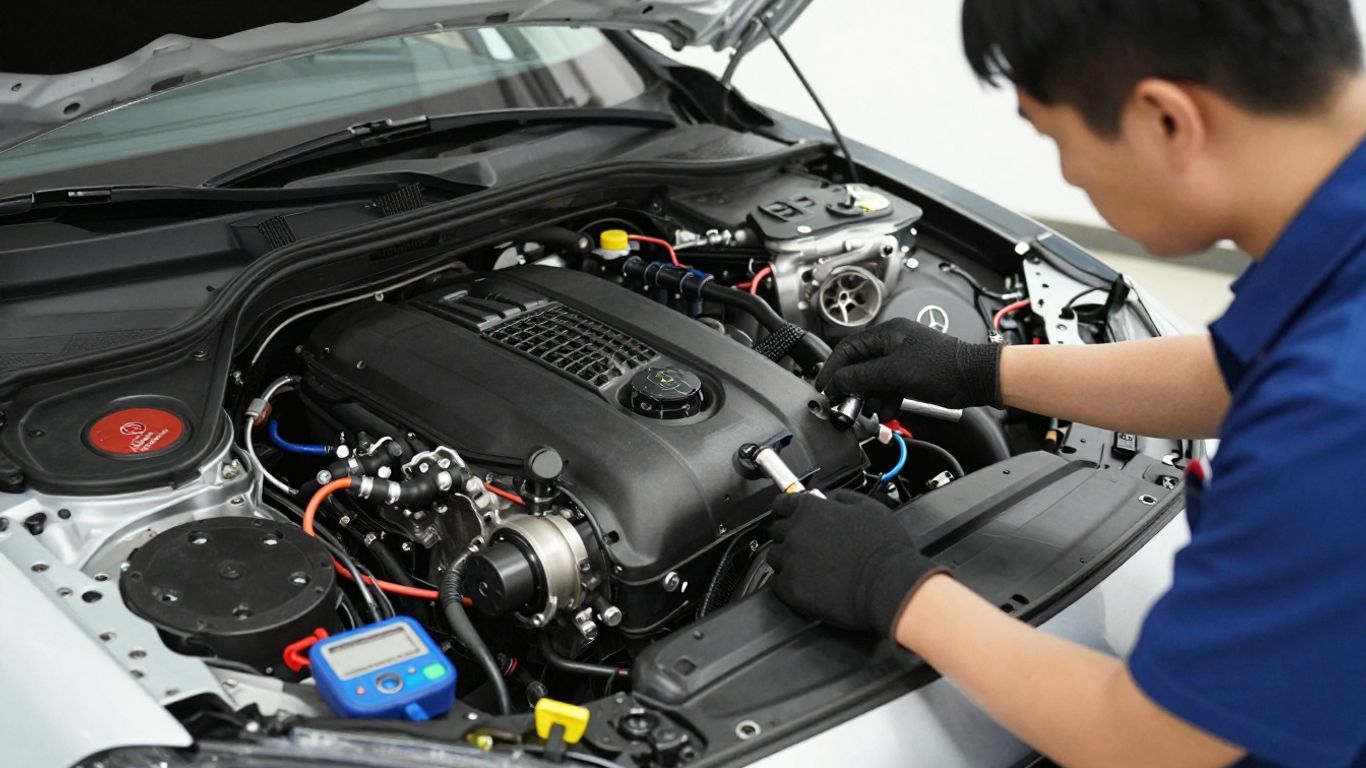
The cheapest listing is rarely the full cost of an engine repair. Freight, consumables, specialist tools, programming, machining, and extra labour can change the final figure. Compare complete repair scenarios rather than choosing a component by price alone.
This is also where quality becomes practical. A part that lasts longer or arrives with the correct hardware may cost less overall if it prevents another strip-down.
Comparing total costs beyond the listed part price
Ask the workshop or supplier to separate the part, freight, taxes where applicable, consumables, diagnostic time, and installation labour. For a major repair, include related items that are sensible to replace while access is available. The cheapest component can become expensive if it requires a second appointment.
A simple comparison can keep the decision grounded:
| Cost area | Questions to ask | Why it matters |
|---|---|---|
| Part | What exact number and specification is supplied? | Confirms the basic comparison is fair. |
| Freight | Is delivery tracked, insured, and time-specific? | Delays can extend workshop downtime. |
| Installation | What labour and special tools are required? | Some parts need model-specific procedures. |
| Related items | Are seals, bolts, fluids, or filters recommended? | Prevents avoidable repeat work. |
| Warranty | Does it cover the part, labour, or both? | Defines the real protection after fitting. |
Once these figures are visible, a higher-priced option may be reasonable, or a used component may prove suitable for a lower-risk repair. The decision should follow the repair’s consequences, not just the first number on the screen.
Avoiding counterfeit and poorly remanufactured components
Suspiciously low prices, vague packaging, missing identification, and pressure to pay quickly are warning signs. Counterfeit or poorly remanufactured parts may appear correct but fail to meet the required dimensions or materials. Buy through a seller that can identify the source and provide traceable warranty terms.
Do not rely on branding alone. Check the part number, packaging, finish, supplied documentation, and the seller’s willingness to answer technical questions before installation.
Deciding when professional installation is necessary
Professional installation is sensible for timing systems, cylinder head work, turbochargers, injectors, internal engine components, and electronic modules that require programming. These jobs may involve locking procedures, torque sequences, cleanliness controls, or post-repair adaptations. A qualified technician can also investigate why the original part failed.
For smaller external components, a capable owner may be comfortable doing the work, provided the service information and tools are appropriate. If a mistake could cause internal engine damage, paying for installation is usually the safer economy.
Planning for core charges, deposits, and diagnostic fees
Reconditioned and exchange parts may involve a core charge until the old unit is returned and accepted. Confirm the deposit amount, return packaging, deadline, and conditions for a refund. Damage, missing pieces, or an incorrect core can affect the amount returned.
Diagnostic fees should also be discussed before parts are ordered. Replacing a component without confirming the fault can turn a manageable repair into a sequence of expensive guesses.
Check fitment before ordering Mercedes engine parts
Fitment should be the final checkpoint, not an assumption made after payment. Use the VIN, original part number, engine code, and supplier confirmation together. If any detail conflicts, pause the order until the discrepancy is explained.
This is particularly important for imported vehicles, mid-year revisions, right-hand-drive configurations, and parts that have been superseded. A careful check is faster than arranging a return after the part has been opened or installed.
Using the VIN to confirm exact compatibility
Send the complete VIN to the supplier and ask for written confirmation of compatibility. If the vehicle has had an engine replacement or major modification, mention that as well, because the VIN may describe the original configuration rather than the engine currently fitted.
Keep the confirmation with the invoice. If the supplier needs additional photographs, measurements, or the original part number, provide them before dispatch rather than relying on a generic catalogue match.
Comparing OEM and aftermarket part numbers
Compare the original number, the manufacturer replacement or superseded number, and the aftermarket equivalent. Numbers can differ because of supplier packaging, revisions, or catalogue conventions, so a different number is not automatically wrong. It does mean the relationship should be explained.
Ask whether the aftermarket item is a direct replacement and whether the listed price includes all required installation hardware. This is especially useful for kits, seals, tensioners, and electronic components.
Checking left-hand-drive and right-hand-drive differences
Although engine parts are often shared across drive configurations, not every related component is. Wiring routes, brackets, auxiliary equipment, steering clearance, and surrounding systems can vary between left-hand-drive and right-hand-drive vehicles. Australian vehicles should therefore be identified by their actual configuration, not only by an overseas catalogue description.
Tell the supplier the vehicle’s market and drive layout when requesting a quote. If the part is close to the steering, exhaust, intake, or electrical harnesses, ask for a specific confirmation rather than assuming interchangeability.
Confirming returns, exchanges, and warranty coverage
Read the return terms before ordering, including who pays return freight and whether an item must be unused, unopened, or professionally installed. Ask how a faulty part is assessed and whether labour is excluded from the remedy. Electrical and special-order components often have different conditions.
Before installation, compare the delivered part with the invoice and inspect it for damage or missing accessories. If something does not match, photograph it and contact the supplier immediately. That preserves evidence and makes an exchange much more likely to proceed smoothly.
Conclusion
Finding the right Mercedes engine parts Australia drivers need is a process of identification, comparison, and confirmation. Match the component to the engine and VIN, weigh quality against the full repair cost, choose a supplier with clear terms, and let the repair’s technical demands determine whether professional installation is appropriate. A few careful checks before ordering can protect both the vehicle and the budget.