
Key Takeaways
A successful powertrain swap starts with compatibility, not headline horsepower. Treat the engine and gearbox as one system, then budget for the supporting parts, electronics, fabrication, and testing that make the package usable.
- Confirm the engine, gearbox, drivetrain layout, and mounting points suit the vehicle.
- Compare torque, gear ratios, mileage, service records, and included components.
- Allow for cooling, exhaust, fuel, wiring, tuning, and fabrication costs.
- Inspect used or rebuilt packages carefully and request complete documentation.
- Plan the installation before buying so missing parts do not stall the build.
What a car engine and gearbox package includes
A car engine and gearbox package can range from two major assemblies to a near-complete powertrain with electronics and accessories. The name alone does not tell you what is included, so the seller’s itemised description matters. A cheaper package may become expensive once missing brackets, controls, or sensors are added. Start by defining the level of completeness your build actually needs.
Engine, gearbox, and supporting components
The core package normally includes the engine and transmission, but the supporting components vary widely. Depending on the listing, you may also find the intake, exhaust manifolds, starter motor, alternator, clutch, flywheel, torque converter, engine mounts, wiring harness, computer, and transmission controller. Ask for photographs of every included component rather than assuming that a visible engine comes with its accessories.
A useful parts list should identify whether the engine is dressed or bare, whether the gearbox includes its shifter and controls, and whether the original sensors remain fitted. Those details affect both installation time and compatibility.
New, rebuilt, and used package differences
New packages generally offer the clearest specification and the least uncertainty, although they can cost more upfront. Rebuilt assemblies depend on the quality of the machining, replacement parts, clearances, and final testing. Used packages can be excellent value when the mileage and service history are credible, but condition is harder to judge from photographs alone.
Ask how the mileage was recorded, whether compression or leak-down testing was completed, and what work was performed during a rebuild. A written inspection report is more useful than a vague assurance that the package was running when removed.
Matched powertrain benefits
A matched engine and gearbox reduces the chance of mismatched bellhousing patterns, inadequate torque capacity, incompatible electronics, or unsuitable gearing. It does not remove the need to check the vehicle, because a factory-matched pair may still require custom mounts, a different driveshaft, or revised cooling. The benefit is a stronger starting point for the rest of the conversion.
Compatibility saves rework when the engine, transmission, controller, and accessories were designed to operate together. It can also make fault-finding simpler during the first start, particularly when the original sensors and control modules are retained.
Common package configurations
Packages are commonly sold as a long block with a separate gearbox, a complete engine and transmission set, or a larger pull-out assembly. A pull-out may include the wiring, computers, intake, exhaust, fuel system, radiator, and other parts removed from one vehicle. Crate-style packages tend to have a clearer specification, while used assemblies need a more careful inventory.
Before comparing prices, write down the configuration you are considering and the components still required. This prevents a bare engine from appearing cheaper than a complete package that includes the difficult-to-source parts.
How to match the package to your vehicle
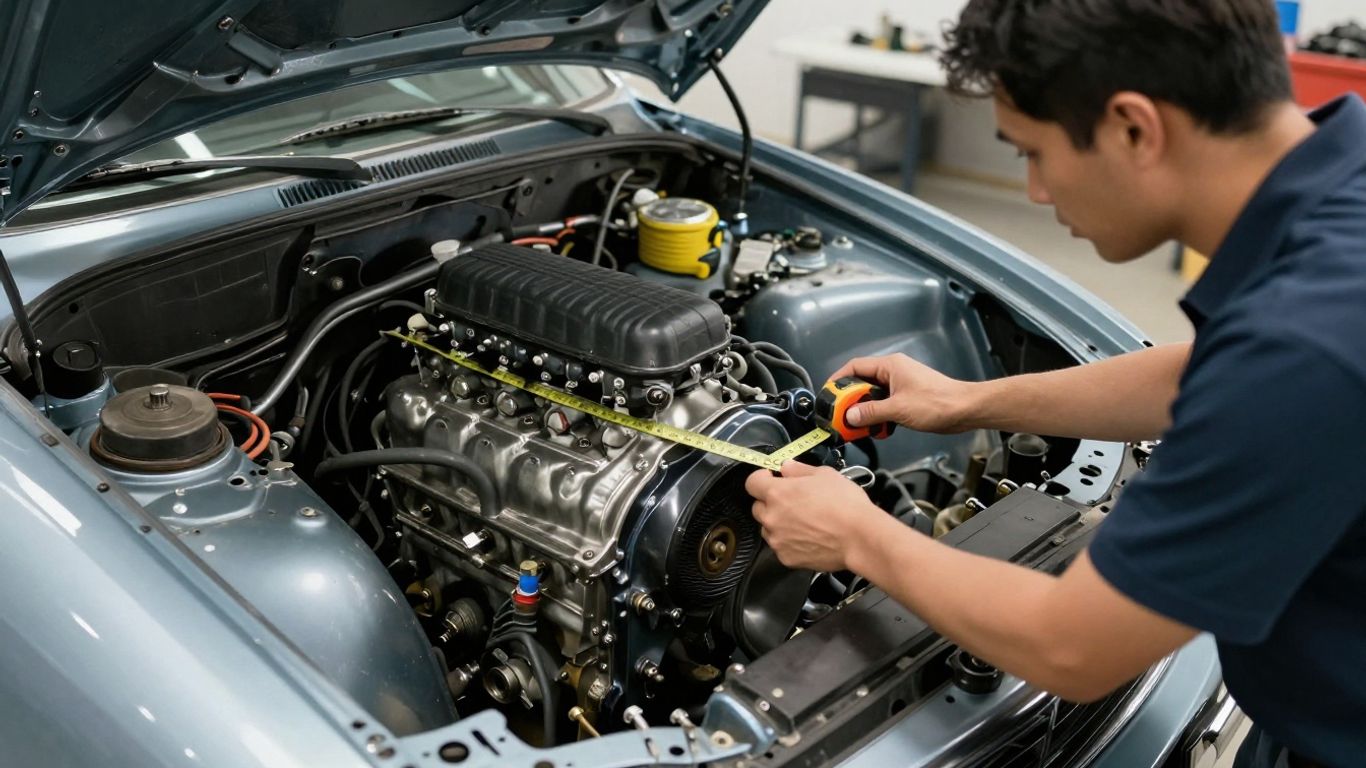
The vehicle sets the boundaries for the powertrain. The engine bay, chassis, suspension, drivetrain layout, brakes, fuel system, and electronics all influence whether a package is practical. Measure the car before shopping, and keep those measurements with the donor engine’s specifications. A car parts network can make sourcing faster across Melbourne, Sydney, Brisbane, and nationwide, but the correct part still depends on the build.
Chassis and engine bay compatibility
Check the bay’s length, width, height, bonnet clearance, steering clearance, and space around the firewall. Consider the position of the oil pan, exhaust outlets, intake, throttle body, and accessory drive as well. A package that fits between the rails may still interfere with steering or require changes to the bonnet and crossmember.
The chassis also needs to handle the engine’s weight and torque. Review suspension, brake, and structural requirements before committing to a substantially more powerful package.
Mounting points and physical dimensions
Factory mounting points are the easiest path, but an engine swap may require adapter plates, fabricated brackets, or a different crossmember. Record the engine mount locations, crankshaft centreline, sump depth, and gearbox mount position. Small differences in height or angle can create problems with bonnet clearance, driveline vibration, and oil drainage.
Whenever possible, obtain a dimensioned drawing or measure the actual assembly. Catalogue descriptions often omit the details that determine whether a mount can be reused.
Drivetrain layout and transmission position
Front-wheel-drive, rear-wheel-drive, all-wheel-drive, and mid-engine layouts place very different demands on the package. The transmission must sit in a workable position relative to the tunnel, shifter opening, firewall, and differential. Automatic gearboxes may also need room for cooler lines and an electronic control module.
Check whether the engine and gearbox were originally installed longitudinally or transversely. Changing orientation is possible in some builds, but it usually involves substantial fabrication and additional engineering work.
Differential, driveshaft, and axle requirements
The differential and axles must withstand the gearbox output and the intended use of the vehicle. Compare the differential ratio, flange or yoke style, axle spline, driveshaft length, and available tunnel clearance. A gearbox swap can change the output position enough to require a new driveshaft even when the engine mounts are straightforward.
Measure the working angles rather than relying only on visual alignment. Correct angles and secure mounts help prevent vibration, premature joint wear, and driveline noise.
Choosing the right engine and gearbox combination
The best combination is not necessarily the most powerful one. It should suit the vehicle’s weight, traction, intended use, budget, fuel availability, and legal requirements. Think about how the car will be driven most of the time, then choose a power curve and transmission that make sense in that setting. More output can also expose weaknesses in the differential, brakes, cooling system, and chassis.
Naturally aspirated, turbocharged, and supercharged options
Naturally aspirated engines usually deliver predictable throttle response and a simpler installation, though reaching a high output may require more displacement or internal work. Turbocharged engines can provide strong torque and tuning flexibility but add heat, plumbing, intercooling, and control demands. Supercharged combinations offer different packaging and response characteristics, while still requiring careful attention to belt drive, intake temperature, and fuel supply.
Choose the power delivery as carefully as the peak figure. A modest, tractable setup may be easier to drive and more durable in a light road car than a highly tuned engine with a narrow operating range.
Manual versus automatic gearboxes
A manual gearbox can offer direct driver control and a relatively familiar mechanical installation, but the clutch, pedal assembly, hydraulics, and shifter all need consideration. An automatic may be easier to use in traffic and can shift consistently, but it normally needs a cooler, suitable controller, wiring, and a compatible torque converter.
The decision should include the driver’s preferences and the intended use of the vehicle. Check the gearbox’s control strategy before buying; some modern automatics rely heavily on electronic communication with the engine computer and other vehicle modules.
Torque capacity and gearing considerations
Torque capacity should be based on the engine’s actual tune and the way the vehicle will be used, not just its advertised factory output. Repeated launches, towing, track use, and large tyres can place more load on the gearbox and differential than ordinary road driving. Leave a sensible margin rather than selecting a transmission that is only adequate on paper.
Gear ratios determine how the engine behaves away from peak power. A low first gear can improve launch performance, while a tall top gear may reduce cruising speed and noise. Compare the gearbox ratios with the final drive and tyre diameter together.
Fuel type, electronics, and emissions equipment
Fuel type affects the tank, pump, lines, injectors, regulator, and tuning requirements. Electronics may include an engine computer, body module, immobiliser, gearbox controller, sensors, and a matching key or security system. Emissions equipment can include catalytic converters, oxygen sensors, evaporative controls, and other components required for compliance.
Establish the rules that apply to the vehicle before purchasing. Removing equipment that appears unnecessary can create inspection, registration, or drivability problems later.
Key specifications to compare before buying
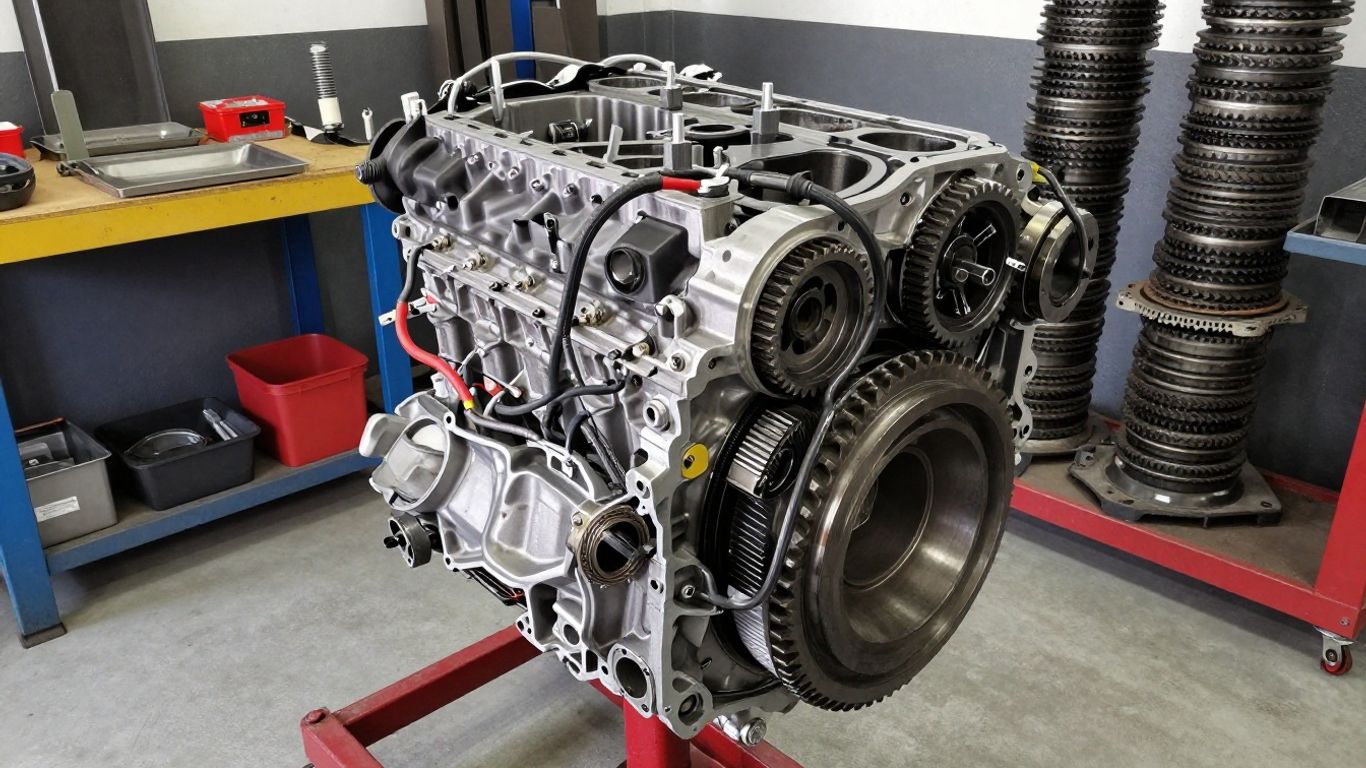
A useful comparison goes beyond horsepower. Look at the engine code, gearbox code, production year, torque curve, ratios, mileage, service history, accessories, and control modules. Record each package in the same format so differences are easy to see. This is also where a car parts network can help locate quality used, genuine, and aftermarket parts, provided the exact specification is verified.
Horsepower and torque ratings
Horsepower gives a broad indication of potential output, but torque and its delivery are often more relevant to a street car. Compare the rated figures with the engine’s original application, tune, fuel, and operating conditions. Factory ratings from different periods may use different testing standards, so avoid treating every number as directly comparable.
Ask whether the figures are factory ratings, dyno results, or estimates. A dyno sheet can be useful, but only when the test conditions and configuration are clear.
Gear ratios and final-drive compatibility
List every forward gear, reverse gear, and the final-drive ratio. Then calculate road speed at the engine’s likely cruising rpm using the planned tyre diameter. This reveals whether the car will be busy on the highway or sluggish away from a stop.
| Specification | Why it matters | What to verify |
|---|---|---|
| First-gear ratio | Influences launch and low-speed control | Ratio, torque multiplication, and traction |
| Top-gear ratio | Affects cruising rpm and noise | Highway speed at planned engine rpm |
| Final-drive ratio | Changes acceleration across all gears | Differential code and tooth count |
| Output arrangement | Determines driveline fitment | Flange, yoke, spline, and position |
After the calculations, compare the result with the vehicle’s tyre size and intended use. A package can have attractive individual ratios yet still be poorly suited to the final drive already in the car.
Mileage, service history, and rebuild quality
Mileage is useful, but it is only one condition indicator. Service intervals, oil-change records, overheating history, storage conditions, and the donor vehicle’s accident history can tell you more. For a rebuilt engine, request invoices, machine-shop measurements, parts brands, and the final inspection or dyno information.
For a used gearbox, ask about shift quality, bearing noise, clutch debris, fluid condition, and any known slipping or engagement faults. A specialist inspection before purchase can cost far less than replacing an uncertain transmission after installation.
Included accessories and missing components
Make an inventory before money changes hands. Identify the intake, throttle body, injectors, alternator, starter, power-steering hardware, air-conditioning compressor, exhaust parts, flywheel or flexplate, clutch or torque converter, sensors, harness, computer, and transmission controls.
The following questions are especially useful when reviewing a listing:
- Is the engine supplied with all sensors and its original harness?
- Are the engine computer, transmission controller, key, and immobiliser parts included?
- Does the gearbox include its shifter, torque converter, clutch, or hydraulic components?
- Are the sump, mounts, accessories, and exhaust parts suitable for the planned chassis?
Answers to these questions turn a broad listing into a workable parts plan. They also give you a clearer basis for comparing the real cost of two packages.
Understanding car engine and gearbox package costs
The purchase price is only the first line in a conversion budget. Shipping, fabrication, wiring, cooling, exhaust, fuel delivery, tuning, fluids, fasteners, and unexpected repairs can all become significant. Price the complete installation rather than comparing engine listings in isolation. A car parts network may help make parts sourcing fast and affordable, but affordability depends on buying the correct components the first time.
Purchase price and shipping expenses
Ask whether the quoted price includes the engine, gearbox, accessories, computers, and loading fees. Confirm the package’s weight, dimensions, insurance, delivery method, and whether it will arrive on a pallet. Freight damage can complicate a purchase, so photograph the package on arrival and report visible damage before unpacking it fully.
Local availability may reduce freight cost, while nationwide sourcing can open up more suitable specifications. Either way, include collection time and handling equipment in the budget.
Installation and fabrication costs
Installation cost depends on whether the package is a direct replacement or a custom conversion. Labour may include removal, cleaning, mount fabrication, crossmember changes, driveshaft work, exhaust fabrication, clutch hydraulics, cooling upgrades, and final alignment. Specialist fabrication is often where an apparently inexpensive package becomes expensive.
Get a written estimate that separates known work from allowances. It is easier to control a project when fabrication, parts, and troubleshooting are visible as separate costs.
Wiring, tuning, and control modules
Modern powertrains can require the engine computer, transmission controller, body module, immobiliser, matching key, and correctly integrated sensors. Wiring may involve adapting the donor harness, building a new interface, or retaining selected vehicle circuits. Tuning is not limited to chasing more power; it also affects idle quality, throttle response, cold starting, shift behaviour, and fault monitoring.
Find out whether the package includes the original control modules and whether their security systems can be integrated into the vehicle. Missing electronic parts can be difficult and costly to replace later.
Budgeting for cooling, exhaust, and fuel systems
An engine that fits physically may still overwhelm the original radiator, fuel pump, exhaust, or oil-cooling arrangement. Budget for hoses, fans, radiator capacity, fuel pressure control, filters, catalytic converters, oxygen-sensor locations, and heat shielding. Turbocharged and high-output combinations may need additional intercooling and more careful heat management.
Plan these systems before finalising mount locations. Their routing can affect the firewall, steering, bonnet, service access, and ground clearance.
Planning the installation
Good installation work begins before the old engine is removed. Create a drawing or photograph record, label every connector, and confirm which donor parts will be retained. Set aside time for cleaning and measuring because corrosion, seized fasteners, and damaged wiring rarely appear in the original shopping list. A clear sequence keeps the project moving when the first fit-up reveals an unexpected issue.
Required tools, parts, and workshop equipment
The work may require an engine crane, load leveller, transmission jack, axle stands, torque wrench, electrical test equipment, lifting accessories, fabrication tools, and safe fluid-handling equipment. The parts list may include mounts, fasteners, fluids, filters, belts, hoses, gaskets, clutch hardware, sensors, and heat protection.
Check that the workshop can safely support the vehicle and powertrain’s weight. Arrange specialist machining, driveshaft balancing, or electronic programming before the car is immobilised if those services have long lead times.
Engine and gearbox removal considerations
Photograph the original installation from several angles before disassembly. Mark hose and wiring routes, note the position of brackets, and keep fasteners with the components they secure. Inspect the old mounts, crossmember, tunnel, differential, and exhaust while access is available; these parts may reveal problems that influenced the original failure.
Support the engine and gearbox correctly during removal and avoid treating wiring or pipes as lifting points. A slow, documented removal usually saves time during installation.
Wiring, sensors, and electronic integration
Make a connector map that identifies every sensor, actuator, power feed, ground, relay, fuse, and communication circuit. Compare the donor wiring diagram with the vehicle’s original system before cutting anything. Pay special attention to crank and cam signals, throttle control, oxygen sensors, cooling fans, fuel-pump control, reverse lights, and transmission communication.
Keep grounds short, clean, and securely mounted. A poor ground or damaged shield can create symptoms that look like a failed sensor, so electrical discipline matters as much as mechanical fitment.
Testing, tuning, and first-start procedures
Prime the lubrication system, check fuel pressure, verify coolant circulation, inspect fluid levels, and rotate the engine by hand where appropriate before the first start. Confirm that the emergency shutoff is accessible and that there are no fuel, oil, coolant, or exhaust leaks. Initially, watch oil pressure, coolant temperature, charging voltage, and warning lights rather than immediately testing maximum output.
After the engine reaches operating temperature, inspect for leaks and recheck fasteners. A controlled road test should follow only after the vehicle has passed stationary checks, with tuning and transmission behaviour reviewed progressively.
Avoiding common powertrain package problems
Most expensive problems begin with assumptions: assuming the gearbox fits, assuming the electronics are included, or assuming the cooling system will cope. Slow down when a listing is vague or a measurement is missing. The best car parts network is useful for finding parts quickly, but it cannot replace checking the vehicle, package, and documentation together.
Incompatible engine and gearbox combinations
Compatibility includes the bellhousing pattern, crankshaft dimensions, starter position, clutch or torque-converter arrangement, input-shaft length, controller communication, and physical clearance. Two components can come from the same manufacturer and still require different adapters or electronics. Confirm the engine and gearbox codes, not just their general model family.
Also check the differential and axle compatibility before buying. A gearbox that bolts to the engine may still leave the vehicle with an unsuitable output arrangement or final-drive ratio.
Hidden damage and incomplete packages
Look for cracked housings, bent brackets, damaged connectors, water contamination, corrosion, missing sensors, and impact marks. Ask why the donor vehicle was dismantled and whether the engine was stored indoors. For an engine, compression, leak-down, oil-pressure, and borescope checks can provide useful evidence; for a gearbox, inspect fluid and request test information where available.
Treat missing accessories as real costs rather than minor inconveniences. A package without its computer, harness, intake, flywheel, or transmission controls may not be usable until several difficult parts are found.
Overlooking cooling and lubrication needs
Cooling and lubrication problems can damage a sound engine after installation. Confirm sump clearance, oil-pickup arrangement, radiator capacity, fan control, hose routing, oil-cooler requirements, and the correct fluid specifications. A modified installation can alter airflow and service access, so the original donor arrangement may not transfer unchanged.
Do not solve temperature problems by guessing at a larger radiator alone. Airflow, ducting, fan control, coolant bleeding, oil temperature, and exhaust heat can all contribute to the result.
Warranty, return policies, and documentation
Read the warranty conditions before purchase, including coverage limits, installation requirements, exclusions, return freight, inspection rights, and time limits. Keep the invoice, listing, photographs, serial numbers, inspection reports, and messages with the seller. Document damage as soon as the package arrives.
Good records protect both sides and make troubleshooting more efficient. They also help a workshop understand precisely what was supplied when the build changes hands.
Conclusion
Choosing a car engine and gearbox package is a process of matching systems, not simply buying the strongest engine available. Verify dimensions, drivetrain layout, torque capacity, electronics, condition, and the supporting parts before committing, then budget honestly for fabrication and testing. With careful measurements and complete documentation, the package becomes a practical foundation for a reliable build rather than a source of expensive surprises.