

Key Takeaways
A reconditioned engine can be a sensible replacement, but the warranty is only as useful as its wording and the records supporting a claim.
- Read the warranty before paying, not after a failure.
- Check whether labour, diagnosis, towing, fluids, and related damage are included.
- Confirm fitting, servicing, break-in, and notification requirements.
- Keep invoices, inspection reports, and maintenance records together.
- Australian Consumer Law may provide rights beyond the written warranty.
How reconditioned engine warranties work in Australia
A reconditioned engine warranty sets out what the supplier promises about the rebuilt unit and what the buyer must do to keep that promise available. The period may be expressed in months, kilometres, or both, and the document may separate engine parts from installation labour. Because terms differ widely, the phrase “warranty included” is not enough to compare two offers.
What a reconditioned engine warranty typically covers
Most written warranties focus on defects in materials or workmanship within the stated term. They may allow the supplier to repair a failed component, replace it, or arrange work through an authorised repairer. The exact covered components matter: an internal engine fault is a different question from a failed sensor, cooling component, clutch, turbocharger, or accessory attached during installation.
Ask for the warranty in full and look for the remedy offered when a covered defect appears. A promise to repair the defective part may not mean that every consequence of the failure is paid. The remedy is only as broad as the wording and any exclusions around it.
How warranty periods and mileage limits are set
Suppliers commonly limit cover by time, distance, or whichever threshold is reached first. The starting point may be the purchase date, installation date, or date of delivery, so record that event clearly. A vehicle used for long commutes can reach a kilometre limit well before a calendar limit expires.
Do not rely on a verbal estimate such as “about a year”. Have the term, mileage ceiling, and odometer reading at installation written on the invoice or warranty certificate. If the document is unclear, ask for a written answer before authorising the purchase.
The difference between parts and labour coverage
Parts coverage concerns the engine or specified components, while labour coverage concerns the cost of removing, inspecting, repairing, or refitting them. Some warranties cover replacement parts but limit labour to an amount approved by the supplier. Others require the vehicle to return to a nominated repairer.
That distinction can change the real value of the offer. A low-cost engine with narrow parts-only protection may leave the owner responsible for substantial workshop time if the unit must be removed again.
Why warranty terms vary by supplier and vehicle
Warranty terms reflect the rebuild standard, the engine’s application, the vehicle model, and the supplier’s claims process. A unit intended for a passenger car may have different conditions from one used in a commercial vehicle, modified vehicle, or demanding operating environment. Installation work can also affect the warranty because incorrect fluids, timing, cooling, or wiring may cause a later fault.
Compare the actual exclusions rather than assuming two reconditioned engines are covered in the same way. The engine code, vehicle identification, fuel system, and intended use should all appear correctly in the paperwork.
Your rights under Australian Consumer Law
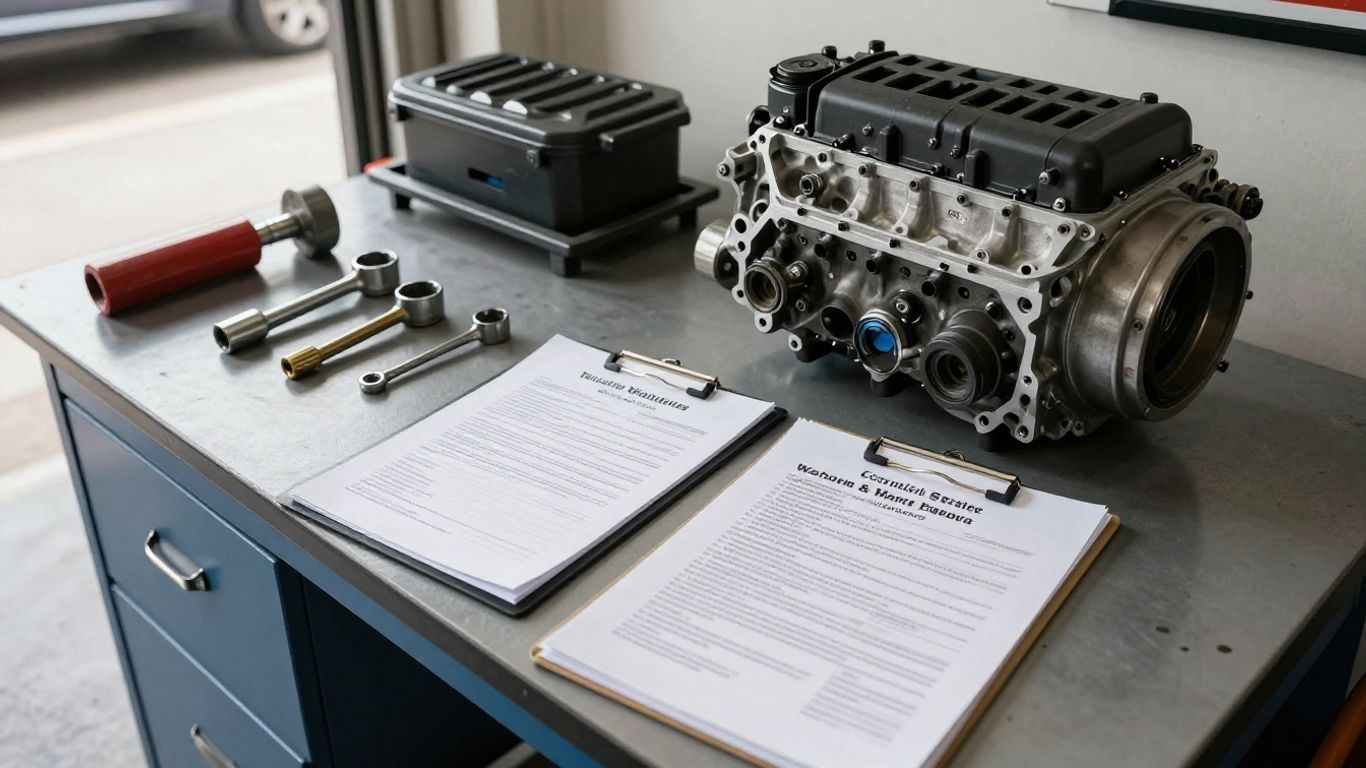
Australian Consumer Law applies to goods and services supplied to consumers, including many replacement-engine transactions. Written warranty conditions do not automatically remove consumer guarantees that cannot lawfully be excluded. The practical question is usually whether the engine and related service were acceptable, fit for the stated purpose, and supplied as described.
How consumer guarantees apply to replacement engines
Consumer guarantees can concern acceptable quality, fitness for a purpose made known to the supplier, correspondence with description, and the proper performance of services. Whether a guarantee applies and what remedy follows depends on the transaction, the vehicle, the failure, and the surrounding facts.
Keep the advertisement, quote, invoice, engine details, and installation documents. They help establish what was represented and whether the replacement was suitable for the vehicle and purpose discussed with the supplier.
When a written warranty adds extra protection
A written warranty can provide a clear process, a defined period, and specific remedies in addition to statutory rights. It may explain who must be contacted, which inspections are authorised, and what records are required. Those practical details can make a dispute easier to manage even where consumer guarantees also apply.
Read the warranty as an additional promise, not as a substitute for legal rights. A condition that appears to exclude every possible remedy should be treated cautiously and checked against current Australian Consumer Law guidance.
What counts as a major or minor failure
A major failure is generally more serious than a problem that can be fixed within a reasonable time. Relevant factors can include whether the engine is substantially unfit for its normal purpose, unsafe, significantly different from its description, or unlikely to be made suitable without major inconvenience. A smaller, repairable issue may be treated differently.
The label is not decided simply because a supplier calls a failure “minor”. Evidence about the symptoms, cause, repair options, cost, and disruption is useful when explaining why the problem is more serious than an ordinary adjustment.
How statutory rights interact with warranty conditions
Warranty conditions may require prompt notice, approved diagnosis, or particular maintenance. Those requirements can help determine whether the written warranty is available, but they do not necessarily erase consumer guarantees. Do not authorise extensive third-party repairs before understanding the process, yet do not assume a missed form or disputed service entry ends every possible right.
When the positions conflict, ask the supplier to identify the exact clause relied on and explain how it applies to the evidence. A calm written record is usually more useful than an argument at the workshop counter.
What to check in the warranty document
The warranty document should be specific enough for a buyer to understand the protection without guessing. Check the engine identification, vehicle details, start date, duration, kilometre limit, claim contact, and remedy. If the supplier will not provide the terms before payment, treat that as a reason to pause.
Covered components and included repairs
Look for a schedule of covered internal parts and any listed external components. Check whether the document covers inspection, replacement parts, machining, reassembly, and testing, or only the defective component itself. It should also say whether a supplier may choose repair, replacement, or another remedy.
A useful question is: if the engine develops the described fault, what will the supplier actually pay for? Ask the answer in writing, particularly where the quote uses broad phrases such as “complete warranty”.
Exclusions for installation, servicing, and wear
Exclusions often address incorrect installation, overheating, lack of lubrication, contamination, racing, modifications, towing, commercial use, or failure to follow the service schedule. Normal wear may also be treated differently from a defect in workmanship. These clauses are not interchangeable, so read the wording rather than assuming that every failure is covered.
If the original engine failed because of a cooling, fuel, electrical, or lubrication problem, ask whether that cause must be diagnosed and corrected before the replacement is installed. A replacement unit cannot reliably solve an unresolved vehicle fault.
Requirements for approved fitting and maintenance
Some warranties require installation by a qualified mechanic, use of specified fluids, replacement of related items, or completion of an initial inspection. The document may also set out an early oil change, break-in procedure, or service interval. Missing a requirement can give the supplier an argument that the warranty conditions were not met.
Before installation, turn those requirements into a practical job sheet for the mechanic. Confirm who supplies the parts, who records fluid specifications, and who is responsible for notifying the warranty provider if an abnormal noise or warning light appears.
Claims deadlines, paperwork, and notification rules
A claim process may require immediate notification, photographs, diagnostic reports, proof of servicing, or an opportunity for the supplier to inspect the engine. It may prohibit dismantling or third-party repairs without prior written approval. These rules are easiest to follow when the contact details and claim steps are saved before a breakdown occurs.
The basic claim file should be easy to assemble. Keep the following together rather than searching for documents after the vehicle stops:
- The purchase invoice and warranty certificate.
- Installation invoices and the mechanic’s diagnostic notes.
- Odometer readings, service records, and fluid receipts.
- Photographs, warning-light details, and correspondence with the supplier.
This record does not prove every claim automatically, but it gives the supplier a clear timeline and makes missing information easier to identify. Notify the relevant party promptly and describe symptoms without guessing at the final cause.
Costs and risks beyond the engine warranty
The headline warranty can conceal costs that arise before a supplier accepts a claim. Diagnosis, transport, removal, inspection, and storage may each be treated separately. A careful comparison therefore looks at the complete replacement risk, not only the price of the engine itself.
Who pays for diagnosis and removal
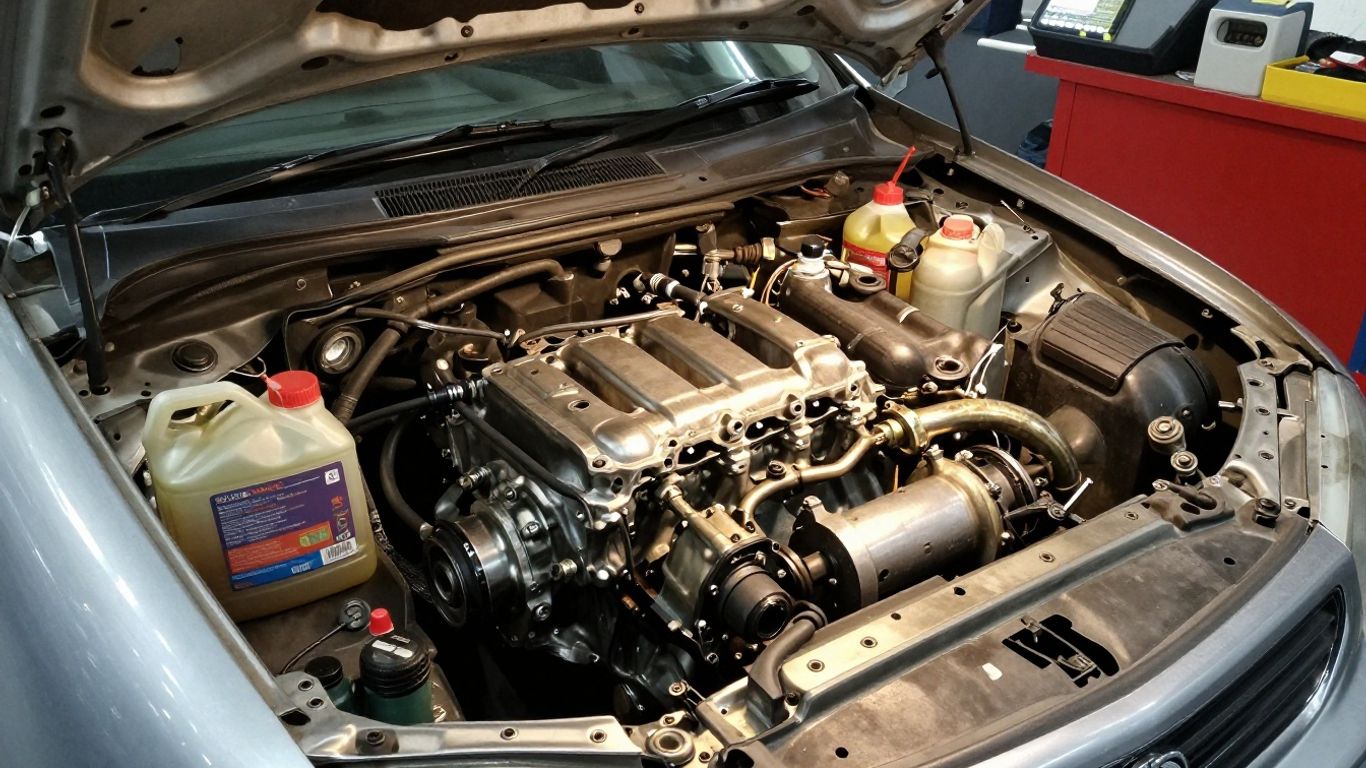
A supplier may want an inspection before approving repair or replacement, while the vehicle owner may first pay for diagnosis or engine removal. The document should say whether those costs are reimbursed and whether approval is required before work begins.
Ask what happens if testing finds that the failure is outside the warranty. The answer may affect your decision to proceed, especially when the engine is difficult to access or the vehicle has already been dismantled.
Whether labour, towing, fluids, and testing are included
Replacement work can involve more than the engine: oil, coolant, filters, seals, belts, hoses, refrigerant, testing, and programming may all appear on the final invoice. Towing can add another cost if the vehicle fails away from the original workshop. None of these items should be assumed to be included simply because the engine has a warranty.
A written estimate is more useful when it separates engine price, fitting labour, consumables, diagnostics, transport, and possible extras. It also shows which charges are payable even if the supplier later provides a replacement unit.
How consequential damage may be treated
A failed engine can damage or strain connected systems, and the vehicle may be unavailable while the dispute is assessed. The written warranty may exclude consequential loss or damage to unrelated components. The scope of any exclusion should be read alongside the facts and applicable consumer law rather than accepted as an automatic answer.
Document the symptoms and timing carefully. If a warning light appeared before the failure, or the vehicle continued operating after overheating, those details may affect the technical assessment and the discussion about cause.
Comparing warranty value with the purchase price
A longer term is not necessarily better if it excludes labour, imposes a narrow fitting rule, or covers only a small list of components. Conversely, a shorter warranty may be useful if the supplier offers a clear inspection process and meaningful repair support. Compare likely out-of-pocket exposure with the price difference between options.
The most practical comparison asks who carries the risk at each stage: delivery, installation, first running checks, routine servicing, diagnosis, removal, repair, and any second failure. That approach produces a more realistic budget than focusing on the warranty headline alone.
How to compare reconditioned engine suppliers
Supplier comparison should begin with traceability and technical detail, not just a search for the lowest quote. Confirm the business name, physical or postal details, invoice terms, engine identification, and the person responsible for warranty claims. A clear transaction record is valuable if a problem develops months later.
Checking the supplier’s reputation and business details
Look for consistent business details across the quote, invoice, payment request, and warranty certificate. Ask how complaints are handled and whether the supplier can explain its inspection and claim process before purchase. Reviews may provide context, but they should not replace direct questions about the particular engine being offered.
Be cautious when a seller will not identify the unit, explain the warranty, or provide a proper invoice. A low price is less attractive when the buyer cannot establish who supplied the engine or where a claim must be made.
Comparing testing, machining, and rebuild standards
“Reconditioned” can describe different levels of work. Ask what was measured, machined, replaced, tested, and recorded for the particular engine. Useful details may include inspection results, replaced wear components, pressure or running tests, and confirmation that the engine matches the vehicle’s specification.
The answer should be specific without promising more than the supplier has documented. If a technical term is unfamiliar, ask what it means for the engine’s condition and what evidence will be supplied with it.
Reviewing exchange-engine and deposit conditions
An exchange arrangement may require the buyer to return the original engine or pay a core deposit. Check the return deadline, acceptable condition, transport responsibility, and deductions for missing or damaged components. These conditions can affect the final price after installation.
Have the deposit terms printed on the quote. Clarify whether the old engine must be returned complete, drained, or packed in a particular way, and keep delivery evidence until the deposit is resolved.
Evaluating warranty support across Australia
For a vehicle that may travel between Melbourne, Sydney, Brisbane, or elsewhere, ask how a claim is handled when the selling supplier is not nearby. Confirm whether local diagnosis is allowed, who authorises work, and how parts or replacement engines are transported. Nationwide availability does not by itself answer those practical questions.
A supplier that connects customers with a broad car-parts network may make sourcing easier, but the warranty still depends on the written terms for the engine transaction. Keep the support promise and the actual warranty document as separate things to verify.
How to protect your warranty after installation
Warranty protection is partly created before the engine starts. The installation should follow the engine and vehicle requirements, and the first running checks should be recorded. A disciplined handover gives both the owner and supplier better evidence if a fault appears later.
Using a qualified mechanic for the replacement
Use a mechanic with the equipment and experience appropriate to the vehicle and engine. Confirm the mechanic’s details on the invoice and ask for a written description of work completed. If the warranty requires an approved or qualified installer, satisfy that condition before the job begins.
The mechanic should also investigate the cause of the original failure. Replacing an engine without addressing an overheating, lubrication, timing, fuel, or electrical problem can put the replacement at risk and complicate a later claim.
Recording installation and initial running checks
Record the installation date, engine number, vehicle identification, odometer reading, fluids used, and parts replaced. Ask for notes about start-up, leaks, warning lights, compression or diagnostic checks, and any road test. These details establish the condition of the vehicle when the warranty period began.
Take copies of the job card and invoices before leaving the workshop. If an unusual noise, smell, vibration, or warning light appears, stop using the vehicle when safe and report it rather than allowing a small symptom to become a larger failure.
Following servicing and break-in requirements
Follow the supplier’s service schedule and break-in instructions exactly where they are provided. Use the specified oil and coolant, observe any early inspection interval, and avoid operating conditions excluded by the warranty. If the instructions conflict with the vehicle manufacturer’s requirements, ask for clarification in writing.
Routine service records should show the date, odometer reading, work performed, and products used. A receipt alone may be less helpful if it does not identify the vehicle or the maintenance completed.
Keeping invoices, maintenance records, and inspection reports
Store the purchase invoice, warranty, installation record, service history, diagnostic reports, and messages in one digital and one physical location. Add photographs of the engine number and odometer where practical. This preparation reduces delay if the supplier asks for evidence.
Do not throw away replaced parts or authorise dismantling before understanding the claim process. The supplier may need to inspect the failed component, and preserving it can help establish what happened.
What to do when a warranty claim is rejected
A rejected claim is not necessarily the end of the matter. First establish whether the disagreement concerns the cause of failure, a warranty exclusion, missed maintenance, installation, timing, or the remedy offered. The strongest response is usually organised, technical, and supported by documents rather than a long emotional message.
Diagnosing the cause of the engine failure
Ask for a proper diagnosis that distinguishes symptoms from cause. A mechanic’s report should describe testing performed, observations, failed components, and the reason the failure is attributed to the engine or to another vehicle system. If the supplier has arranged an inspection, request a copy of the findings.
Where opinions differ, an independent report may help, although its cost should be discussed before commissioning it. Avoid dismantling the engine further without preserving photographs, measurements, and the removed parts.
Requesting the rejection and evidence in writing
Ask the supplier to identify the precise warranty clause relied on and provide the technical basis for rejection. Request the inspection report, photographs, test results, and any missing-document explanation. A written response creates a clear record and may reveal that the dispute is about a correctable paperwork issue.
Reply with a short timeline: purchase, installation, servicing, first symptom, notification, inspection, and rejection. Attach the relevant documents and ask what remedy the supplier proposes if the exclusion cannot be substantiated.
Negotiating a repair, replacement, or refund
A practical resolution may involve an authorised repair, replacement engine, contribution to labour, or refund, depending on the failure and applicable rights. Keep negotiations focused on the evidence and the remedy that would restore the vehicle to the condition promised. Do not agree to a settlement until its scope is written clearly.
You can propose staged steps, such as an inspection by an agreed mechanic followed by a decision within a set period. Any agreement should state who pays for transport, diagnosis, labour, parts, and the return of the failed engine.
Escalating unresolved disputes through Australian channels
If direct discussions fail, consider the relevant state or territory consumer protection agency, a fair trading body, an ombudsman where one applies, or a tribunal or court with jurisdiction. The appropriate pathway depends on the transaction, location, amount, and parties involved. Obtain current procedural guidance before filing.
Keep every quote, invoice, report, photograph, and message in date order. A concise evidence bundle helps an external body understand the dispute and shows that you gave the supplier a reasonable opportunity to respond.
Conclusion
A reconditioned engine warranty Australia buyers can rely on is not defined by its headline length alone. Read the covered parts, exclusions, installation rules, claim process, and likely costs before purchase, then protect the position with qualified fitting and careful records. Clear questions at the start can prevent an expensive disagreement when the engine is already out of the vehicle.