
Key Takeaways
The best powertrain is not always the largest or newest one. Choose by total ownership cost, driving conditions, practical workload, and the amount of complexity you are comfortable maintaining.
- Set a total ownership budget, not just a purchase price.
- Naturally aspirated four-cylinder engines remain sensible entry-level choices.
- Turbocharged, V6, V8, and hybrid systems each involve different trade-offs.
- Match output and drivetrain to passengers, roads, weather, and towing needs.
- Check service history, warranty coverage, repair costs, and likely resale value.
Define your budget beyond the purchase price
A car’s sticker price is only the first financial commitment. Fuel, insurance, taxes, scheduled service, tires, and repairs can change the cost difference between two otherwise similar vehicles. Before comparing car engine options for every budget, decide how much you can comfortably spend over the full period you expect to own the car.
Set a realistic upfront spending limit
Start with the amount you can pay without emptying your emergency savings. A lower-priced car may need immediate tires, fluids, brakes, or suspension work, while a newer vehicle may cost more upfront but require less attention during the first few years. Leave room for registration and the small expenses that appear immediately after a purchase.
The engine should be evaluated as part of the complete vehicle. A powerful engine often brings a stronger transmission, larger brakes, wider tires, or a more expensive trim, so the real price difference may extend beyond the engine bay.
Compare fuel, insurance, and registration costs
Fuel economy matters most when annual mileage is high, but fuel grade matters too. A vehicle that requires premium gasoline can cost noticeably more than its EPA rating suggests, especially for a long commute. Insurance can also rise with performance, replacement-part prices, and the vehicle’s theft or accident history.
Registration fees vary by location and may be linked to vehicle value, weight, or engine displacement. Ask for an insurance estimate and calculate fuel costs using your actual driving pattern rather than an optimistic guess.
Reserve money for maintenance and unexpected repairs
Every engine needs routine service, but the type and frequency of that work differ. Turbochargers, complex cooling systems, high-pressure fuel systems, and hybrid components can make certain repairs more involved. That does not automatically make them poor choices; it means the reserve fund should reflect their complexity.
A useful budget includes routine oil and filter changes, spark plugs, belts or chains where applicable, coolant, transmission service, and wear items. Keep a separate repair cushion so one unexpected problem does not force you into debt.
Account for financing, taxes, and ownership length
Loan interest can erase the apparent savings of a cheaper vehicle, particularly when a used car requires a high rate or a shorter term. Include sales tax, dealer or transfer fees, finance charges, and any warranty product in the calculation. Then compare that total with the expected time you will keep the vehicle.
The following simple framework helps separate the major ownership costs before you become attached to a particular model:
| Cost area | What to estimate | Why it matters |
|---|---|---|
| Purchase and financing | Price, taxes, fees, interest | Determines the initial cash and monthly burden |
| Fuel | Annual miles, efficiency, fuel grade | Often becomes the largest recurring cost |
| Scheduled service | Fluids, filters, plugs, belts, inspections | Keeps predictable maintenance from becoming a surprise |
| Repairs and wear | Tires, brakes, cooling, suspension | Covers costs that do not follow a fixed schedule |
Use conservative estimates rather than best-case numbers. If two engines are close in monthly cost, the one with a larger repair reserve may be the safer choice for your household.
Explore engine options for entry-level budgets
Entry-level buyers usually benefit from straightforward powertrains and broad parts availability. That does not mean settling for a dull or incapable car; it means prioritizing predictable running costs over impressive figures. Condition, service history, and vehicle fit can matter more than the engine’s peak output.
Evaluate reliable naturally aspirated four-cylinder engines
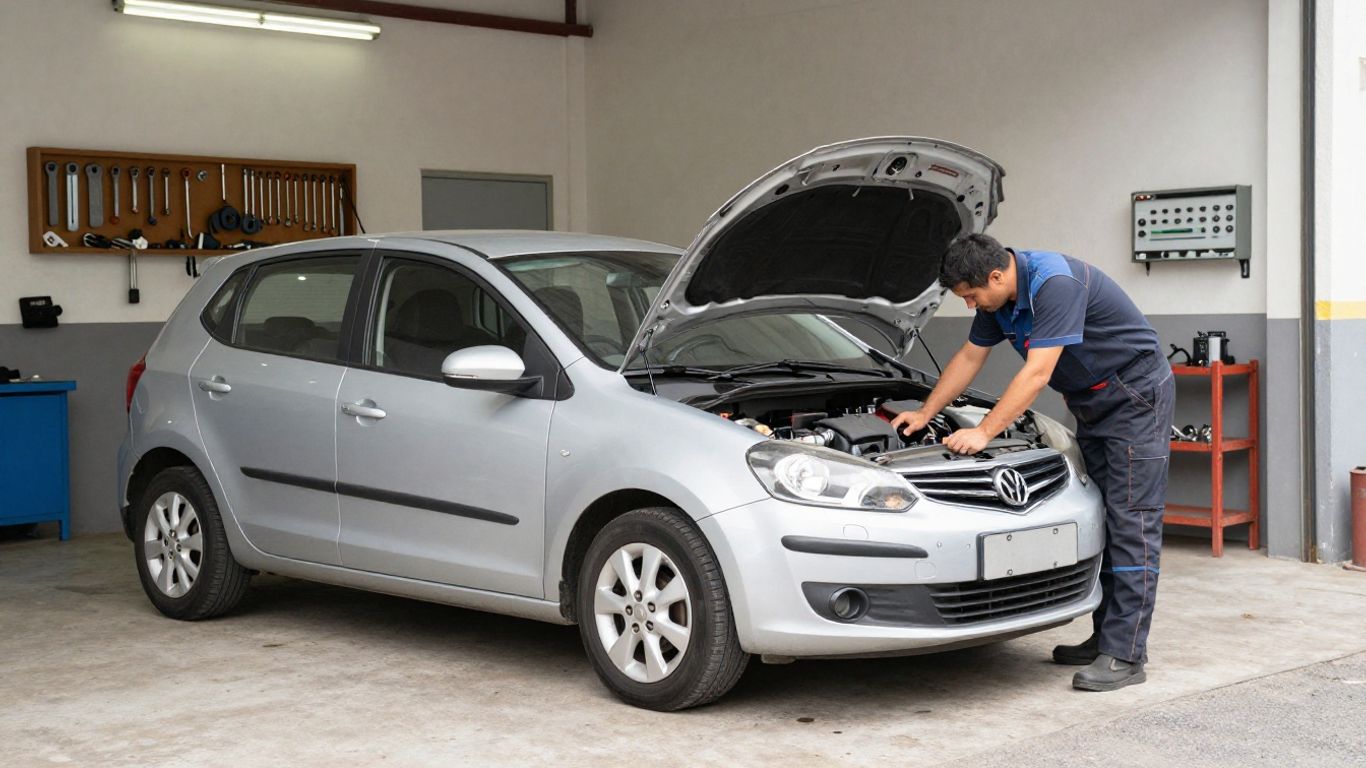
A naturally aspirated four-cylinder engine uses no turbocharger or supercharger to increase intake pressure. Its power delivery is often linear, and its hardware can be less complicated than that of a boosted engine. For commuting, errands, and moderate highway use, that balance can be appealing.
Look for consistent maintenance records and a clean inspection rather than assuming every four-cylinder is equally dependable. A simple engine in a neglected vehicle can be a worse purchase than a more complex engine that has been serviced carefully.
Consider efficient three-cylinder and hybrid powertrains
Three-cylinder engines can reduce friction and weight, while turbocharging may provide the low-speed response needed in a larger vehicle. Their character varies widely, so a test drive should include stop-and-go traffic, merging, and a sustained highway run. Pay attention to vibration, transmission behavior, and whether the engine feels strained with passengers aboard.
Hybrid powertrains can be especially attractive for drivers who spend much of their time in traffic. Their fuel-saving benefit depends on the vehicle, climate, route, and driving habits, so compare realistic estimates instead of assuming the highest advertised economy.
Identify affordable used engines with strong parts availability
A used engine family with many vehicles on the road is often easier and less expensive to repair. Independent shops are more likely to know its common service procedures, and used or remanufactured components may be easier to source. This can be valuable when the car is older and the original dealer network is no longer the practical option.
Ask a mechanic to inspect oil leaks, cooling-system condition, compression where appropriate, and signs of neglected maintenance. Parts availability helps, but it cannot compensate for severe corrosion or an engine that has already suffered internal damage.
Avoid low-cost engines with expensive known failures
A bargain vehicle deserves extra research before purchase. Search technical service information, owner forums, recall records, and repair estimates for the exact engine family and model year. Focus on patterns involving timing components, oil consumption, overheating, transmission interaction, and parts that require extensive labor to reach.
The cheapest listing is not necessarily the cheapest ownership choice. A pre-purchase inspection and a written estimate for likely near-term work can reveal whether the discount is real.
Compare mid-range engines for power and practicality
Mid-range vehicles often ask buyers to balance everyday efficiency with stronger acceleration and greater carrying ability. This is where turbocharged four-cylinders, V6 engines, and hybrids overlap in useful ways. The right choice depends less on a badge and more on how frequently you use the available performance.
Balance turbocharged performance with fuel economy
Turbocharged engines can deliver strong torque from a smaller displacement, making a vehicle feel responsive without using a larger engine. Under light loads, that may support good fuel economy; under sustained boost, fuel use can rise quickly. Maintenance quality matters because oil condition, cooling, and intake systems all affect long-term operation.
Drive the vehicle in the conditions you actually face. A turbo engine that feels effortless on a test route may consume more fuel or feel less relaxed when loaded with people, cargo, or a trailer.
Assess dependable V6 engines for larger vehicles
A V6 can suit a midsize SUV, pickup, or sedan that needs more reserve power than a basic four-cylinder provides. It may offer smoother acceleration and better performance when climbing or carrying a full passenger load. The trade-off is typically greater fuel use and, depending on the design, more room and labor required for service.
Review the engine’s history by model year rather than treating every V6 as identical. Cooling capacity, transmission calibration, and the vehicle’s curb weight all affect how well the combination works in daily use.
Consider hybrid systems for daily driving and commuting
A conventional hybrid can recover energy during deceleration and use electric assistance during portions of low-speed driving. That makes it a strong candidate for urban commutes, frequent stops, and drivers who keep their vehicles for many years. Battery age, warranty terms, and local repair support should be part of the evaluation.
A test drive should feel smooth when the engine starts, stops, and hands power back to the electric system. Noticeable hesitation or warning lights deserve professional diagnosis before purchase.
Match engine output to towing and passenger needs
Towing involves more than horsepower. Cooling, transmission durability, wheelbase, brakes, suspension, hitch equipment, and the manufacturer’s tow rating all matter. For regular towing, choose a vehicle that remains comfortably within its ratings instead of relying on maximum figures for occasional best-case conditions.
Passengers and cargo create a similar demand. If the vehicle is commonly full, a little extra torque can improve merging and hill climbing, but it should not encourage exceeding payload limits.
Examine premium engines for performance and refinement
Premium powertrains can deliver quiet operation, rapid acceleration, sophisticated traction systems, and a more polished driving experience. They also tend to place more expensive components in a tighter package. The purchase decision should therefore include the cost of keeping that refinement working well after the warranty period.

Choose high-output turbocharged four-cylinder engines
A high-output turbocharged four-cylinder can provide sports-car-like response in a relatively compact package. It may use specialized cooling, stronger internal components, advanced fuel delivery, and a more complex exhaust system. Those features support performance but add more items to inspect and maintain.
Check for evidence of careful warm-up, correct oil, and timely service. Modified examples deserve particular caution because tuning and track use can place additional stress on the engine and drivetrain.
Compare V6 and V8 options for stronger acceleration
V6 and V8 engines can deliver effortless acceleration and a distinctive character, especially in larger sedans, SUVs, and trucks. A V8 may provide substantial torque, but its fuel, tire, brake, and insurance costs can rise along with its output. A V6 may provide a more moderate compromise without meeting every buyer’s performance preference.
Consider how often you will use the extra power. If it is mostly for merging or passing, a smaller engine may be sufficient; if performance is central to the purchase, budget for the related maintenance rather than treating it as a free benefit.
Weigh luxury hybrid and plug-in hybrid powertrains
Luxury hybrids can combine smooth electric assistance with a gasoline engine, while plug-in hybrids add the ability to charge a larger battery for some trips. Their value depends on access to charging, daily distance, climate, and the price difference over a conventional model. The battery warranty and replacement policy deserve careful reading.
A plug-in system is most compelling when charging is convenient and a meaningful share of driving can use its electric range. If charging is rarely available, the added hardware may provide less practical value.
Understand the maintenance costs of performance engines
Performance engines often require specific oil, premium fuel, shorter service intervals, or more expensive tires and brakes. Even when the engine itself is healthy, cooling, suspension, driveline, and electronic systems may carry premium repair prices. Performance needs a maintenance budget as much as it needs a purchase budget.
Obtain service records and price common jobs before buying. A specialist inspection can identify leaks, worn mounts, cooling concerns, and signs of repeated hard use that a short test drive will not reveal.
Match the engine to your driving needs
A sensible engine on paper can be a poor match for the way you drive. City streets, long highway commutes, steep grades, heavy trailers, snow, and rough trails place different demands on a powertrain. Start with the route and workload, then narrow the engine choices.
Select an engine for city traffic and short trips
Frequent short trips can prevent the engine and exhaust system from reaching full operating temperature. They also increase the importance of smooth low-speed response, easy parking, quiet operation, and manageable fuel consumption. A compact naturally aspirated engine or well-integrated hybrid may suit this pattern better than a large performance engine.
Regular maintenance is especially important when the vehicle rarely takes longer drives. Follow the severe-service schedule if the manufacturer defines frequent short trips that way.
Choose efficient power for highway commuting
Highway drivers may value relaxed cruising, low cabin noise, stable passing power, and strong fuel economy at steady speed. An engine that is too small for the vehicle can work hard on hills or when overtaking, while a larger one may waste fuel if its extra output is rarely needed.
Compare gearing and vehicle aerodynamics along with engine size. A well-matched transmission can make a modest engine feel calm and capable on long journeys.
Find suitable options for towing and hauling
For towing, look beyond the engine label and verify the complete vehicle specification. Payload, tongue weight, cooling equipment, axle ratio, brakes, and trailer-sway control can determine whether the combination feels secure. Frequent hauling usually justifies choosing more capacity than the minimum requirement.
Before buying, write down the loaded trailer weight, passengers, tools, and cargo you expect to carry. That figure gives you a more useful basis for comparison than an empty-trailer estimate.
Consider off-road use and harsh weather
Off-road driving rewards predictable throttle control, useful low-speed torque, adequate cooling, ground clearance, and a drivetrain designed for the terrain. Cold weather adds demands on the battery, fluids, starting system, and cabin heating. Snow and mud can also expose weaknesses in tires and traction systems that engine power cannot solve.
Choose equipment as a complete package. A powerful engine without suitable tires, recovery points, protection, or drivetrain gearing may be less useful on a rough trail than a less powerful but better-equipped vehicle.
Match engine size to vehicle weight and drivetrain
Engine size should be considered alongside curb weight, transmission, front- or all-wheel drive, and final-drive gearing. A small engine can work well in a light car but feel inadequate in a heavy SUV. Conversely, a large engine in a compact vehicle may add cost and weight without improving the parts of driving you value.
Use a test drive to judge launch response, hill performance, highway merging, and loaded behavior. The goal is not the biggest number; it is a powertrain that feels unstrained in normal use.
To keep the comparison grounded, rank the needs that are hardest to compromise on:
- Low fuel cost for frequent commuting.
- Smooth response in traffic and on hills.
- Adequate payload or towing capacity.
- Traction and cooling for difficult weather or terrain.
That short list can eliminate attractive but unsuitable options quickly. It also makes the final choice easier to explain when every engine has some appealing feature.
Check reliability, ownership costs, and future value
Reliability is not a permanent label attached to an engine type. It can vary by model year, maintenance history, calibration, use, and the condition of supporting systems. A careful final review helps turn broad reputation into a decision based on the specific vehicle in front of you.
Research common problems by engine family
Search for the exact engine code or family, model year, and vehicle application. Look for repeated patterns rather than isolated complaints, and distinguish a service campaign from a confirmed defect or ordinary wear. Repair guides and independent inspection reports can help you understand whether a known issue is inexpensive prevention or a major ownership risk.
Do not ignore transmission, cooling, emissions, and electrical concerns simply because the engine itself has a good reputation. Powertrain reliability is a system question.
Compare repair complexity and replacement-part prices
Two engines may have similar service intervals but very different labor requirements. Ask for estimates on routine jobs and likely high-cost repairs, including cooling components, fuel systems, timing components, forced-induction hardware, hybrid batteries, and emissions equipment where relevant.
Parts prices should be considered with labor access. A reasonably priced component that requires many hours of disassembly can still create a substantial bill.
Review warranty coverage and service records
A remaining factory warranty can reduce risk, but confirm what is covered, when it expires, and whether the coverage transfers to a subsequent owner. For used vehicles, receipts and consistent intervals are more useful than a vague statement that the car was “well maintained.”
Check whether major service was completed on time and whether repairs were performed with the correct fluids and parts. Missing records do not prove neglect, but they should affect the price and your repair reserve.
Estimate resale value and long-term depreciation
Resale value is shaped by demand, condition, mileage, equipment, fuel prices, local preferences, and the vehicle’s reputation. Efficient powertrains may appeal to commuters, while towing capability or a larger engine may retain value in regions where trucks and SUVs are common. No forecast is certain, so use a range rather than a single resale number.
A vehicle that costs slightly more to buy may depreciate less, but only if its maintenance and condition support that advantage. Keep records and address small problems early to protect future value.
Decide when an electric vehicle makes more financial sense
An electric vehicle may be financially attractive when home charging is available, daily driving is predictable, and electricity costs less than the gasoline it replaces. Purchase price, incentives, insurance, winter efficiency, public-charging needs, and battery warranty all belong in the comparison. The result depends heavily on location and driving pattern.
Compare total cost over the years you expect to keep the vehicle. If charging is inconvenient or the purchase premium is large, an efficient gasoline or hybrid powertrain may remain the more practical financial choice.
Conclusion
Choosing among car engine options for every budget is really a matter of matching total cost and real-world use. Set a complete budget, inspect the specific vehicle, and compare complexity with the work you need the car to perform. The best engine is the one that delivers enough power, efficiency, and confidence without asking your finances to carry benefits you rarely use.