

Key Takeaways
A calm engine purchase starts well before you compare prices. Identify the failure, verify compatibility, inspect the unit, and plan for the costs and paperwork that follow.
- Diagnose the reason for replacement before shopping.
- Match the engine by vehicle details and engine code.
- Judge sellers by evidence, clarity, and warranty terms.
- Include labor, shipping, parts, and fees in the budget.
- Coordinate delivery, installation, records, and returns in advance.
Define your engine replacement needs
Replacing an engine is a major repair, but the buying process becomes far easier when the decision is based on evidence rather than urgency. Start by understanding what failed and what you expect the replacement to accomplish. A realistic plan protects your budget and helps a repair shop give you useful advice.
Identify the symptoms and reason for replacement
Smoke, overheating, low oil pressure, knocking, loss of compression, and persistent misfires can all point to serious engine trouble, but they do not automatically mean the entire engine must be replaced. Ask for diagnostic codes, test results, and a written explanation of the failure. A failed accessory, cooling-system problem, or cylinder-head issue may call for a different repair.
The repair shop should also explain whether the vehicle’s maintenance history or an external failure contributed to the damage. Knowing the cause matters because installing another engine without correcting the original problem can lead to another expensive failure.
Confirm whether rebuilding or replacing is the better option
A rebuild may make sense when the engine block and major internal components are usable and the shop can estimate the work with confidence. Replacement may be more practical when damage is extensive, parts are difficult to source, or labor would make rebuilding too expensive. Ask for both options in writing, including the parts, machining, labor, and expected warranty.
Do not compare only the headline price. The better choice is the one that offers a reasonable balance of condition, time, reliability, and total cost for the vehicle’s remaining useful life.
Choose between new, remanufactured, rebuilt, and used engines
These labels describe different levels of history and preparation. A new engine generally has not been previously operated, while a remanufactured engine has been restored to a defined standard by replacing or reconditioning components. A rebuilt engine may involve selected repairs, and a used engine usually comes from another vehicle with its condition tied closely to its history and testing.
Ask exactly what was replaced, what was measured, and what components are included. Terms can vary between sellers, so the written description matters more than the label alone.
Set performance, mileage, and longevity expectations
Decide whether the replacement should match the original factory specification or support a different long-term plan. For a daily driver, dependable fitment and service history may matter more than extra power. Mileage is useful context, but it should be considered alongside maintenance records, compression results, storage conditions, and the donor vehicle.
Write down your priorities before contacting sellers. A clear target reduces pressure when two engines look similar but carry different histories, warranties, or installation requirements.
Find the right engine for your vehicle
Compatibility is more than matching a make and model. Production changes can affect engine codes, wiring, sensors, emissions equipment, transmission connections, and computer systems. Gather the vehicle identification number, exact year, drivetrain details, and current engine information before requesting quotes.
A seller who receives precise information can confirm fitment more reliably than one working from a broad vehicle description.
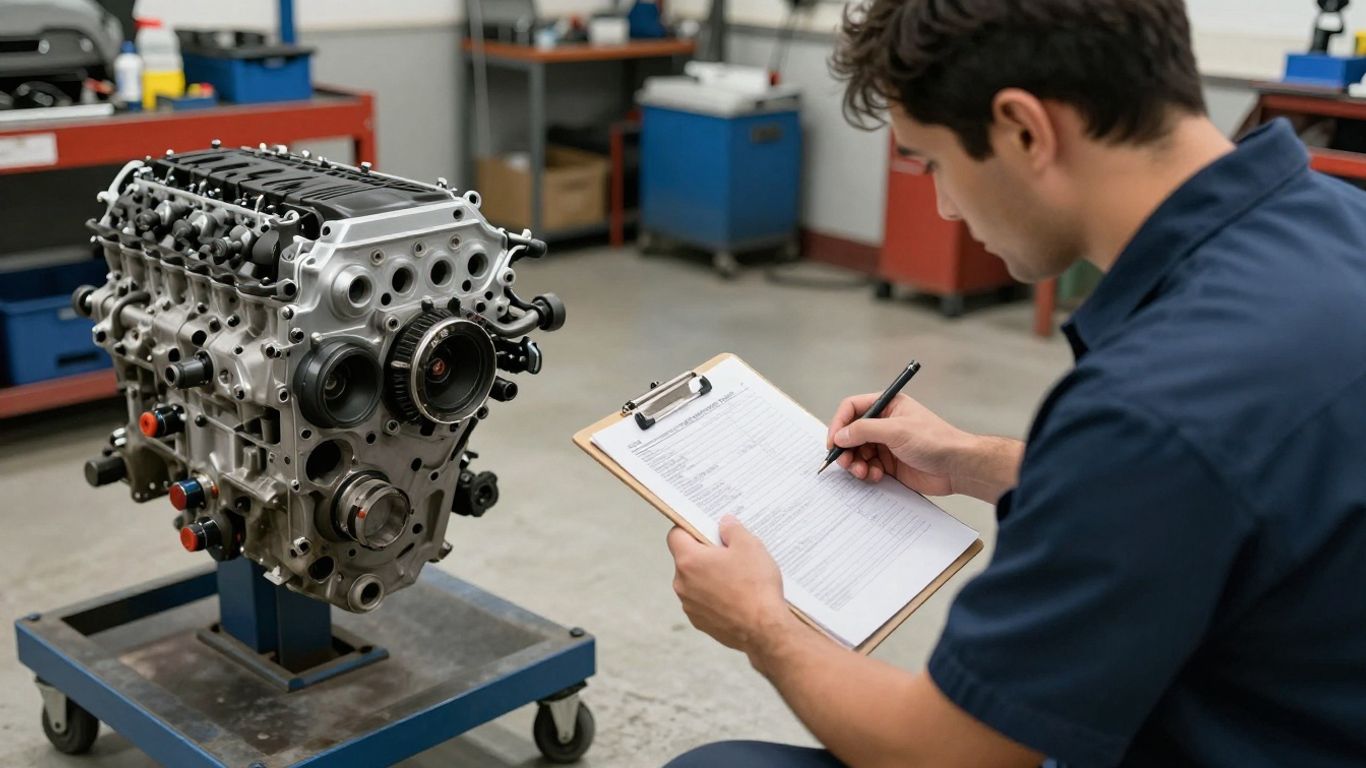
This information-gathering step may feel slow, but it prevents the most frustrating outcome: an engine that arrives looking correct yet requires unexpected modifications.
Match the engine to the make, model, and year
Confirm the vehicle’s exact model, production year, body configuration, drivetrain, and transmission. A model may use more than one engine during a single generation, and an engine from a related vehicle may not be a direct replacement. Provide the VIN when possible and ask the seller to document how the match was established.
Your repair shop can also check whether the replacement is compatible with the vehicle’s emissions configuration and electronic controls. Keep that confirmation with the quote before placing an order.
Verify engine codes, specifications, and compatibility
The engine code is often more useful than a general description such as “four-cylinder” or “V6.” Compare displacement, fuel system, mounting points, sensor locations, intake and exhaust arrangements, and transmission interface. Ask whether the listed engine is a complete assembly or a long block that requires parts from the original unit.
If the seller cannot provide the code or clear specifications, pause the purchase. Ambiguity at this stage usually becomes labor and return-cost trouble later.
Check mileage, maintenance history, and donor vehicle details
For a used engine, request the mileage and source vehicle when available. Useful details include whether the donor was running, why it was dismantled, how long the engine was stored, and whether maintenance records exist. A documented history does not guarantee condition, but it gives you a better basis for comparing options.
Treat unusually low mileage claims carefully if there is no supporting record. The more important question is whether the seller can explain the information and support it with inspection evidence.
Confirm whether the engine includes essential components
Before comparing prices, list the components you need: block, cylinder heads, intake, exhaust parts, fuel equipment, sensors, wiring, starter, alternator, and accessories. The exact list depends on the engine type and your installation plan. Clarify which parts are included, which are shown only for illustration, and which must be transferred from the original engine.
A written component list makes quotes comparable. It also lets the repair shop identify missing pieces before the engine is delivered rather than after the vehicle is already disassembled.
Evaluate engine sellers and suppliers
The seller influences more than the purchase price. A useful supplier provides enough information to assess fitment and condition, explains limitations, and offers a practical process when something goes wrong. Compare the quality of the transaction, not just the number displayed beside the engine.
A stress-free engine buying experience depends on reducing unanswered questions before payment changes hands.
Compare dealerships, salvage yards, remanufacturers, and online sellers
Different supplier types may offer different combinations of inventory, documentation, testing, warranty coverage, and support. A dealership may be useful for an exact replacement, while a salvage yard may have donor-vehicle information. A remanufacturer may provide a defined restoration process, and an online seller may offer broader access to inventory.
These categories are not guarantees of quality. Compare the specific listing, written terms, and answers you receive rather than assuming a supplier’s category tells you everything.
Look for transparent listings and accurate product information
A credible listing should identify the engine type, compatibility information, mileage or source details when known, included components, condition, testing, price, and warranty. Photos should show the actual unit or clearly say when representative images are used. Missing information is not automatically proof of a bad engine, but it is a reason to ask more questions.
Save the listing and any written messages. If the description changes later, those records can clarify what was offered at the time of purchase.
Review customer feedback, return policies, and business reputation
Read reviews for patterns rather than isolated praise or criticism. Pay attention to comments about fitment accuracy, delivery condition, communication, warranty handling, and return disputes. Then read the formal return policy yourself, including deadlines, restocking charges, labor exclusions, and requirements for authorization.
A strong reputation cannot replace inspection evidence, but repeated complaints about unclear terms or unresolved claims deserve serious weight before you commit.
Ask the questions that reveal a trustworthy supplier
Good questions invite specific answers. Ask how compatibility was verified, what tests were performed, what the warranty covers, and what happens if the engine is damaged in transit. Also ask who pays return freight, whether labor is covered, and whether the shop must follow particular installation procedures.
Keep the answers together with your quote. A supplier does not need to promise perfection; they should be able to explain the boundaries of the transaction plainly.
Inspect the engine before buying
Inspection is where an attractive listing becomes a reasoned purchase. Photos, measurements, test reports, and storage details each reveal part of the engine’s condition, while none should be treated as complete proof by itself. When the price is substantial, asking for more evidence is reasonable.
Have the repair shop review the material if you are not comfortable interpreting engine components.
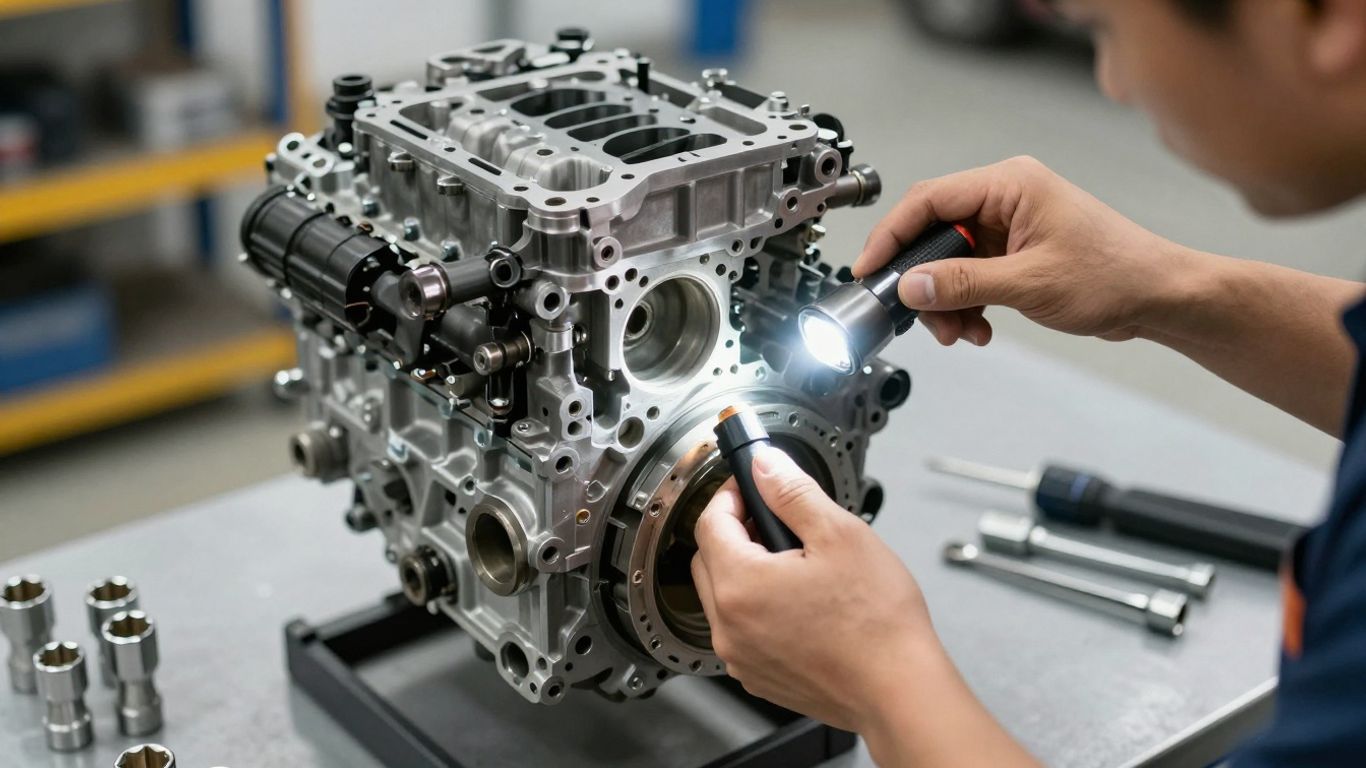
The goal is not to make a remote inspection sound certain. It is to identify avoidable risks and decide whether the available evidence is strong enough to proceed.
Review photos, inspection reports, and compression-test results
Look for clear images of the block, heads, mounting areas, oil pan, ports, connectors, and any visible accessories. Ask for an inspection report that identifies the tests performed and the results, not merely a statement that the engine was checked. Compression-test results are useful when the test method, readings, and engine condition are documented.
Compare the report with the actual photographs. A report that lacks measurements or appears unrelated to the listed unit should not carry much weight.
Check for leaks, corrosion, cracks, and damaged components
Inspect visible seals, mating surfaces, threaded holes, connectors, hoses, and mounting points. Look for oil or coolant residue, heavy corrosion, cracked housings, bent brackets, damaged wiring, and signs of impact. Surface grime is common on used components, but fresh leaks or structural damage call for an explanation.
Ask whether internal parts were inspected when the engine is sold as rebuilt or remanufactured. External appearance alone cannot establish internal condition.
Understand what testing and quality-control standards mean
Testing language is useful only when the seller defines it. “Tested” might refer to a visual check, a compression test, leak testing, rotation, or a broader inspection process. Ask which components were measured, what limits were used, and whether failed parts were replaced or simply noted.
A documented process helps you compare engines consistently. It does not eliminate risk, so pair it with fitment confirmation and warranty terms.
Know when to request an independent inspection
An independent inspection is especially sensible when the engine is expensive, the documentation is limited, or the warranty excludes labor. A qualified technician can check visible condition, identify missing components, and flag compatibility concerns before installation. The seller should know in advance if access or testing will be required.
If an independent inspection is not possible, reduce uncertainty in other ways: request more photos, obtain written answers, and choose a payment and return process you understand.
Calculate the total cost of the purchase
The engine price is only one line in the repair estimate. Installation can involve substantial labor, and related parts may be replaced while access is available. Building the full estimate before ordering is one of the simplest ways to avoid a purchase that strains the budget.
Ask the repair shop to separate known costs from allowances for unexpected issues. That distinction makes the estimate easier to evaluate.
Compare the engine price with installation and related labor
Request an estimate that separates the engine, removal, installation, fluids, diagnosis, programming, and related repairs. Labor may vary depending on the vehicle, engine type, corrosion, and whether accessories or wiring must be transferred. A lower-priced engine can become more expensive if it requires extra adaptation or repeated troubleshooting.
Use the same scope when comparing sellers. Otherwise, one quote may describe a complete assembly while another covers only the core engine.
Account for shipping, core charges, taxes, and shop supplies
Freight, residential delivery fees, liftgate charges, taxes, and shop supplies can materially change the final amount. A core charge may also apply if the original engine must be returned, and the refund may depend on its condition and delivery timing. Ask for these terms in writing before payment.
Delivery damage should be handled promptly, so understand who documents the shipment and how claims are started. Photograph the package and engine before accepting or moving it when the carrier’s process allows.
Budget for gaskets, fluids, belts, hoses, and other replacement parts
Many installations are a practical time to replace seals, gaskets, filters, fluids, belts, hoses, thermostat components, or other wear items. The exact list should come from the shop after inspecting the vehicle and comparing the replacement engine with the original. Budgeting for likely items is safer than assuming every old part can be reused.
A written parts allowance also helps explain why the final repair estimate may exceed the engine’s advertised price.
Compare warranty coverage with the upfront price
A longer or clearer warranty may justify a higher purchase price, particularly when it defines testing, replacement, and claim procedures. Check whether coverage applies to parts only or includes labor, shipping, diagnostic time, and related damage. A warranty with many exclusions may offer less practical protection than its headline duration suggests.
Compare coverage on equal terms. Price matters, but so do the effort and expense required if the engine does not perform as expected.
Complete the purchase with confidence
Once the engine, seller, inspection evidence, and budget align, the final step is careful coordination. Confirm every promise in writing and give the repair shop the same information used to make the purchase. This keeps the handoff orderly from checkout to installation.
A few minutes spent organizing records can prevent confusion weeks later.
Understand warranty terms, exclusions, and claim requirements
Read the warranty before buying, not after a problem appears. Note the coverage period, required installation steps, maintenance records, approved fluids, diagnostic requirements, exclusions, and claim deadlines. Some warranties require the buyer to contact the seller before disassembly or repair, so follow the stated process closely.
Ask how a claim is submitted and what evidence is required. Keep invoices, test results, photographs, and shop notes in one accessible file.
Confirm shipping timelines, delivery conditions, and return procedures
Get the expected ship date, carrier information, delivery location, packaging method, and inspection instructions. Ask what happens if the engine arrives late, damaged, or different from the listing. Confirm the return window and whether authorization is required before sending anything back.
Do not discard packaging until the engine has been checked. Photographing the shipment and documenting discrepancies immediately can make a return or freight claim much easier.
Prepare your repair shop and installation plan
Give the shop the engine code, listing, warranty, inspection material, delivery estimate, and component list. Discuss whether the original accessories will be transferred and which new parts should be installed. Confirm the shop’s schedule so the engine is not left waiting in storage or occupying a lift unexpectedly.
Before installation, ask the technician to compare the delivered unit with the order. Resolve differences before fluids are added or the engine is fitted.
Keep records for registration, warranty claims, and future maintenance
Store the invoice, engine identification, donor information, warranty, shipping documents, inspection report, installation invoice, and maintenance records. These documents can establish ownership, support a warranty claim, and help a future technician understand what was installed. Record the installation date and mileage as well.
Good records also make future maintenance less uncertain. The replacement engine becomes part of the vehicle’s service history rather than an unexplained event.
Conclusion
A stress-free engine buying experience comes from replacing guesswork with a clear process: diagnose the need, verify the match, inspect the evidence, calculate the complete cost, and coordinate the purchase with the shop that will install it. When the details are written down and the risks are understood, the decision becomes more manageable and much easier to defend.