
Key Takeaways
A sound engine purchase begins well before you contact a supplier. Define the application, verify the equipment, and compare the full cost so the final choice works in practice, not just on paper.
- Define power, torque, duty cycle, fit, and compliance needs before searching.
- Compare supplier types using documentation, references, and operating history.
- Verify specifications, identity, condition, support, and compatibility risks.
- Calculate delivered and installed cost rather than comparing unit prices alone.
- Use consistent scoring and contract terms to make sourcing repeatable.
Define your engine requirements before you search
Engine sourcing made simple starts with a precise description of the job. A supplier can only recommend a suitable unit when the operating conditions and installation constraints are clear. Gather the information with the people who operate, maintain, and install the equipment. This early discipline prevents an attractive price from distracting you from a poor fit.
Match power, torque, and duty-cycle needs
Start with the work the engine must perform, not with a familiar model name. Record required horsepower and torque, the speed range, expected loads, ambient conditions, and whether the engine will run continuously, intermittently, or through frequent starts and stops. Peak output matters, but sustained operating demand often tells you more about durability and fuel use.
Allow some practical margin without selecting an oversized engine by habit. Excess capacity can affect purchase price, installation, and operating efficiency, while too little capacity may create chronic overload. If the equipment drives a pump, generator, vehicle, or hydraulic system, document the driven component’s requirements and the operating profile that connects them.
Confirm dimensions, mounting points, and interfaces
A mechanically suitable engine can still fail the installation test. Measure the available length, width, height, service clearances, shaft or coupling position, mounting-hole pattern, and centerline. Also record intake, exhaust, cooling, fuel, electrical, control, and after-treatment connections.
Photographs and drawings are useful, but they should support measured dimensions rather than replace them. Ask for an installation drawing and compare it with the equipment in front of you. Small differences in mounting height, rotation, or connection locations can create expensive adaptation work.
Choose new, remanufactured, or used equipment
The condition category should reflect the application’s tolerance for uncertainty and downtime. New equipment generally offers the clearest history and current documentation; remanufactured equipment may offer a middle path when the rebuilder’s process and warranty are well documented; used equipment can make sense when inspection evidence and parts support are strong.
Do not treat these categories as interchangeable price labels. Compare expected service life, refurbishment scope, test evidence, warranty, delivery time, and the cost of bringing the engine into service. A lower purchase price is less persuasive when unknown condition shifts the risk to your maintenance team.
Document emissions, safety, and regulatory requirements
Write down the rules that apply at the installation site and in the engine’s intended use. Depending on the application and location, requirements may involve emissions classification, noise, ventilation, fuel handling, electrical safety, exhaust routing, or inspection records. Confirm which party is responsible for approvals and compliance documentation.
Ask suppliers to identify the exact model configuration and any limitations on where it can be operated. Keep certificates, manuals, labels, and conformity documents with the procurement file. Compliance is not a final administrative check; it can determine whether an otherwise capable engine may be installed at all.
Find reliable engine suppliers
Once the requirement is defined, search broadly enough to find realistic options but narrowly enough to compare like with like. Supplier quality is visible in the questions a business asks, the records it can produce, and the clarity of its answers. A polished listing is not a substitute for traceable information. Treat the first conversation as an information-gathering exercise rather than a commitment.
Compare manufacturers, distributors, and brokers
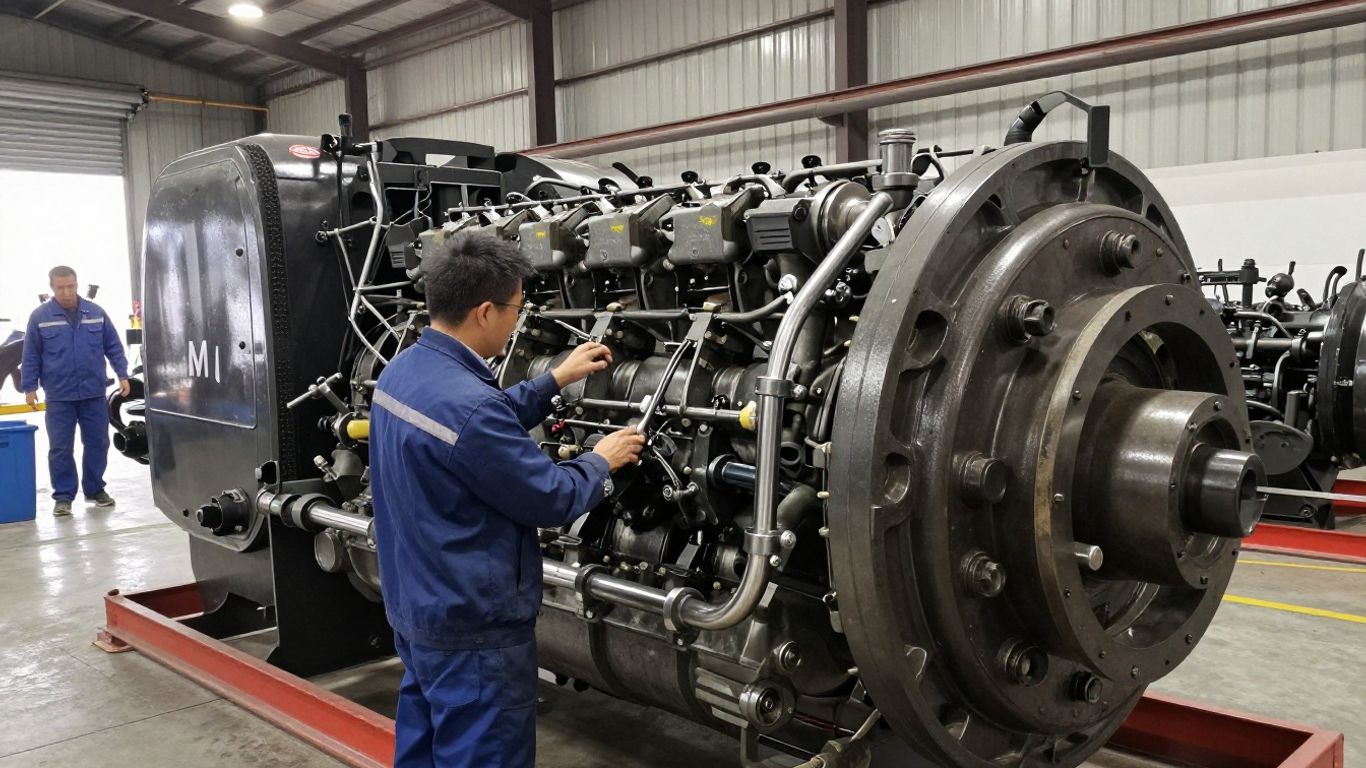
Manufacturers may provide original documentation and structured support, while distributors can offer local inventory, service coordination, or access to several configurations. Brokers may locate uncommon equipment or used stock, but the buyer should establish who owns the unit, who inspected it, and who will stand behind the sale.
Compare the commercial relationship as carefully as the engine. Ask whether the quoted party is the seller, an agent, or an intermediary, and identify the person responsible for technical questions. A clear chain of responsibility becomes especially valuable when a unit arrives with missing parts or an unexpected configuration.
Use industry directories and sourcing platforms
Directories, trade associations, and sourcing platforms can expand the initial pool of suppliers. Use them to find candidates, then move each candidate into a verification process. Search terms should include the engine’s application, output range, configuration, condition category, and location so that results are easier to compare.
Record where each lead came from and what information was available at first contact. Remove listings that cannot provide a model, serial number, condition statement, or business identity. The goal is not the longest list; it is a shortlist of suppliers willing to support due diligence.
Check certifications, references, and operating history
Ask for relevant certifications, quality procedures, business registration details, and references for comparable work. A reference is most useful when it relates to the same type of engine, installation, or duty cycle. Confirm that the reference describes an actual transaction and ask what happened after delivery, not only how the sale began.
Operating history also deserves context. A long-established business may still lack experience with your configuration, while a newer specialist may have useful technical expertise. Consider both the company’s stability and its specific record with the equipment you need.
Request complete product and business information
Make your request specific enough that every supplier responds to the same basic questions. Ask for the complete model designation, serial number, year, hours, condition, test results, included accessories, location, lead time, warranty, payment terms, and delivery basis. Request photographs that show identification plates, mounting points, major interfaces, and visible condition.
A complete response makes comparison easier and exposes gaps early. If a supplier avoids simple questions or changes the description between messages, pause before sharing a purchase order. Clear documentation is a practical sign that the transaction can be managed professionally.
Evaluate engine quality and compatibility
Supplier credibility does not prove that a particular engine is right for your equipment. Evaluate the individual unit, its history, and the evidence supporting its condition. Have a qualified technician review technical records when the purchase is significant or the installation is safety-critical. Evidence should lead the decision, not optimism about an attractive listing.
Review specifications, service records, and test data
Match the supplier’s specification sheet against your requirements line by line. Review rated output, speed, torque curve where available, cooling arrangement, fuel system, controls, emissions configuration, and accessory package. Service records should show what was done, when it was done, and at what operating hours.
Test data is more useful when it identifies the test conditions and measurements. Ask whether the engine was started, loaded, checked for leaks, or tested for compression and other relevant indicators. If a report is incomplete, treat the missing evidence as an open question rather than assuming the best outcome.
Verify serial numbers, model years, and operating hours
Confirm that the serial number in the quotation matches the identification plate, photographs, inspection report, and sales documentation. Model year and build configuration can affect controls, emissions equipment, parts, and installation requirements. Operating hours should be supported by meter photographs, maintenance records, or another credible record.
Inconsistencies do not automatically mean the engine is unusable, but they must be explained before purchase. Ask for corrections in writing and retain the original records. Traceability protects the buyer if the delivered unit differs from the one evaluated.
Check parts availability and technical support
A purchase decision should include the years after delivery. Ask how routine parts, seals, filters, sensors, control components, and major service items will be obtained. Confirm expected lead times, service locations, diagnostic support, and whether technical manuals are included.
Support may come from the seller, a local service organization, or another authorized channel. Identify that arrangement before committing, especially if downtime carries a high operational cost. A technically capable engine becomes harder to justify when basic support is uncertain.
Identify compatibility risks before purchase
List every interface that could require adaptation, including mounts, shaft direction, controls, wiring, cooling capacity, exhaust treatment, fuel supply, and physical access for maintenance. Ask an installer to review the list rather than relying only on a sales description. Compatibility work is easier to price when it is identified before the purchase order.
Use a written risk register for unresolved points. Assign each item an owner, a verification method, and a deadline. This creates a practical stop signal for issues that could otherwise surface only after the engine is delivered.
Compare the true cost of each option
The quoted engine price is only one part of the buying decision. Freight, preparation, adaptation, installation, taxes, duties, commissioning, and downtime can change the ranking of the options. Build the comparison around the cost of getting a working engine into service. That approach makes engine sourcing made simple a budgeting discipline as well as a search strategy.
Calculate the total cost of ownership
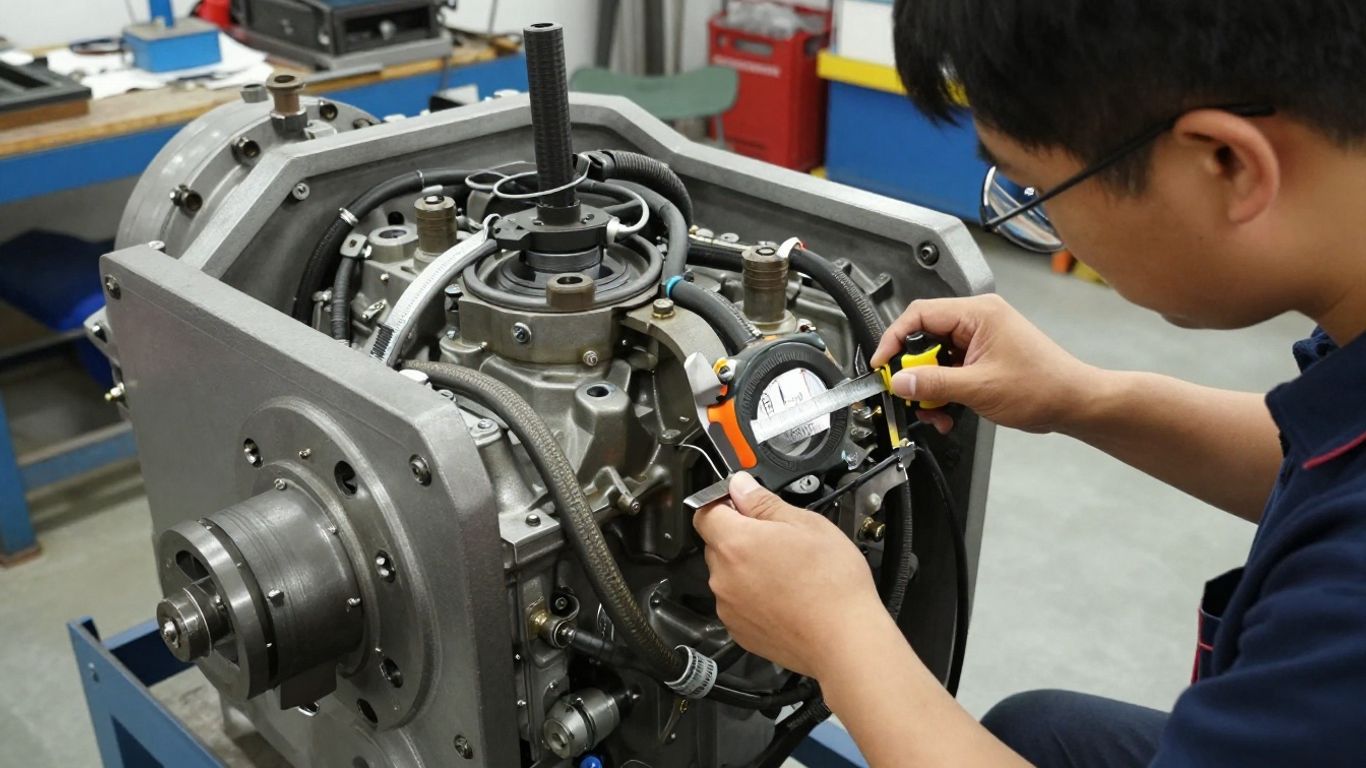
Estimate acquisition, installation, scheduled maintenance, consumables, fuel or energy use, repairs, and likely downtime over a useful planning period. The exact period depends on the application, but use the same assumptions for every candidate. Separate known costs from estimates so uncertainty remains visible.
A simple comparison table can prevent important categories from disappearing into a single total. Keep the figures in the same currency and state whether taxes are included.
| Cost category | Option A | Option B | Option C |
|---|---|---|---|
| Engine and included equipment | $— | $— | $— |
| Preparation and installation | $— | $— | $— |
| Freight, taxes, and duties | $— | $— | $— |
| Expected maintenance and downtime | $— | $— | $— |
After filling in the figures, investigate the largest differences rather than accepting the lowest total automatically. A higher initial cost may be reasonable when it buys stronger documentation, shorter installation work, or lower uncertainty. The table is a decision aid, not a promise that estimates will be exact.
Include shipping, taxes, duties, and installation
Request a delivered-cost view from each supplier, even when the quotation uses a different delivery term. Confirm who arranges loading, insurance, freight, customs clearance, duties, brokerage, unloading, and final transport. Heavy equipment may also require lifting plans, special trailers, storage, or site preparation.
Installation estimates should include adapters, hoses, wiring, fluids, commissioning, and changes to surrounding systems. Ask the installer to identify exclusions in writing. Those exclusions are often where a seemingly inexpensive purchase becomes expensive.
Assess warranty coverage and return terms
Read the warranty as an operating document, not just a headline duration. Check what components are covered, when coverage begins, where repairs occur, who pays freight and labor, and which maintenance or installation conditions apply. For used or remanufactured equipment, clarify whether the warranty covers only parts or also diagnosis and removal.
Return terms deserve the same attention. Establish the inspection window, acceptance criteria, notification process, and remedy if the engine fails inspection or does not match the agreed specification. A written process is more useful than a general assurance that problems will be handled fairly.
Compare financing, payment, and procurement conditions
Payment timing affects both risk and cash flow. Compare deposits, milestone payments, balance due dates, escrow or other protections where applicable, currency exposure, credit terms, and documentation required for internal approval. A lower price may not be preferable if it requires an unusually large advance payment without corresponding protection.
Align the commercial terms with verification milestones. For example, identification, inspection, and acceptance evidence can be tied to defined payment events when the parties agree. Have finance, legal, and operations review the terms before the technical team treats the quote as final.
Manage engine sourcing and logistics
Good sourcing continues after supplier selection. The request, negotiation, inspection, and delivery plan should all describe the same engine and the same acceptance expectations. Small ambiguities multiply when several teams handle purchasing, transport, customs, and installation. A shared file with controlled versions can keep the transaction coherent.
Create a clear request for quotation
An effective request for quotation includes the application, required output, duty cycle, dimensions, interfaces, condition preference, compliance requirements, delivery location, requested documents, and response deadline. Ask suppliers to state assumptions and exclusions rather than hiding them in a general quote.
Provide a response template when several suppliers are being compared. Require separate lines for the engine, accessories, preparation, freight, warranty, taxes, and optional work. Comparable responses make later evaluation faster and reduce clarification rounds.
Negotiate price, lead times, and delivery terms
Negotiate from documented requirements and identified risks, not from the unit price alone. Clarify what changes the lead time, whether the quoted engine is reserved, how long the price remains valid, and what happens if a promised date moves. Delivery terms should identify the point at which cost and risk transfer.
Keep negotiated changes in a revised quotation or contract. A phone agreement can be useful for discussion, but it is difficult to administer when the shipment is delayed or the scope changes. Written confirmation protects both sides from different memories of the deal.
Plan inspections, documentation, and acceptance testing
Decide who will inspect the engine and what evidence will be collected before shipment. The inspection can cover identity, visible condition, accessories, fluid leaks, service records, test results, packaging, and preservation. For a major purchase, consider an independent inspection or witnessed test.
Acceptance criteria should state what constitutes a match and what happens if it does not. Collect the final serial-number photographs, manuals, certificates, packing list, and test documents in one record. This makes installation and later maintenance less dependent on informal messages.
Coordinate shipping, customs, and receiving procedures
Assign responsibility for freight booking, export documents, import clearance, insurance, lifting, storage, and site delivery. Confirm packaging requirements and whether the engine must be preserved for a particular storage period. Share dimensions and weight with the logistics team before equipment is dispatched.
Prepare the receiving team with the purchase order, inspection checklist, and damage-reporting process. Photograph the crate and engine at arrival, record shortages or damage immediately, and avoid signing an unrestricted receipt when the shipment has not been properly checked. A calm receiving procedure can preserve remedies that are harder to recover later.
Make the final sourcing decision
The final choice should be explainable to someone who was not part of the search. Bring technical fit, evidence quality, total cost, supplier reliability, schedule, and operational risk into one comparison. Do not let a single strong feature hide several unresolved weaknesses. A disciplined decision is usually quicker than repeated reconsideration after the purchase.
Score suppliers against consistent criteria
Create a weighted scorecard before choosing a preferred supplier. Useful criteria can include technical compliance, condition evidence, compatibility, documentation, support, warranty, total cost, delivery confidence, and commercial terms. Keep scoring definitions concrete so that “good support” means the same thing to every reviewer.
Use a small review group with technical, procurement, finance, and operations input. Record both the score and the reason behind it. If a supplier receives a high score despite an unresolved critical risk, stop and address that risk rather than allowing the total to conceal it.
Balance price, performance, and long-term risk
Price is easiest to compare, but performance and risk determine whether the purchase remains economical. Consider the consequences of downtime, scarce parts, installation modifications, uncertain history, and weak warranty support. A modest price difference may be justified when it materially reduces one of those exposures.
Still, avoid paying for features the application does not need. The best choice is the one that meets the documented requirement with a level of certainty the business can accept. Make that trade-off explicit in the approval record.
Use contracts to protect quality and delivery
The contract or purchase order should identify the exact engine, serial number where available, configuration, included equipment, condition, documents, price, delivery point, inspection rights, acceptance criteria, warranty, and remedies. Include a process for approving substitutions or changes. Avoid language that allows a materially different unit to be delivered without written consent.
Have the responsible teams review the final terms before payment. Technical requirements, commercial protections, and logistics instructions should not contradict one another. Clear writing at this stage can prevent a dispute that no later inspection can fully resolve.
Build a repeatable engine sourcing process
Save the requirement sheet, supplier shortlist, quotations, inspection records, scorecard, approvals, contract, shipping documents, and receiving report. After commissioning, record actual installation cost, delivery performance, early issues, and supplier responsiveness. That history improves the next sourcing exercise.
A repeatable process does not need to be bureaucratic. It needs consistent questions, clear evidence, and a reliable record of what happened. Over time, those records help the team distinguish a genuinely dependable supplier from one that simply presents well during a single transaction.
Conclusion
The safest engine purchase comes from matching the application to verified equipment, a dependable supplier, and a realistic delivered cost. Define the requirement first, test every important assumption, and put the agreed details in writing. With that sequence, engine sourcing becomes a manageable process rather than a gamble built around a listing and a price.