
Key Takeaways
Choosing a tested engine is less about finding the lowest listed price and more about reducing uncertainty before installation.
- Testing provides evidence about an engine’s condition and operating performance.
- Verification is strongest when results, specifications, and history are documented.
- Compatibility checks can prevent costly installation delays and repeat labor.
- Warranty terms matter because no inspection can predict every future failure.
- The right choice depends on application, budget, risk tolerance, and available support.
What tested and verified engines actually mean
The phrase “tested and verified” should describe a process, not simply a sales label. A visual inspection may identify obvious damage, while mechanical testing can reveal how an engine performs under specific conditions. Verification connects those findings with records, specifications, and a clear explanation of what was checked. That distinction matters when considering why choose tested and verified engines for a repair or replacement.
The difference between inspection, testing, and verification
Inspection is the starting point. It usually involves looking for cracks, leaks, corrosion, missing parts, contamination, and other visible concerns. Testing goes further by measuring particular conditions, such as compression or oil pressure, while the engine is stationary or operating. Verification is the process of confirming that the test results belong to the correct engine and that they support the supplier’s stated description.
A useful report should make those stages understandable rather than blending them into one vague claim. “Inspected” does not necessarily mean an engine was run, and “tested” does not automatically mean every component was examined. Buyers should ask what was done, when it was done, and which results were recorded.
Which engine components and performance metrics are evaluated
The exact test plan depends on the engine and its intended application, but a careful evaluation may address the block, cylinder head, valvetrain, crankshaft, bearings, turbocharger, fuel system, cooling system, and electrical connections. Common performance checks include compression, oil pressure, leaks, unusual noise, starting behavior, temperature, and general operating response.
No single number tells the whole story. Even compression readings need context: the engine family, test method, temperature, and variation between cylinders can all affect interpretation. A credible supplier explains what was measured and avoids implying that one favorable result guarantees the condition of every internal part.
How documentation supports a credible verification claim
Documentation turns a conversation into something a buyer can review. Useful records may include an engine identification number, mileage or operating hours, test date, measured values, photographs, known service history, and a list of included components. The record should also identify exclusions or limitations, such as accessories that were not tested or conditions that could not be reproduced.
Clear documentation reduces guesswork when a buyer compares two engines that appear similar in a listing. It also gives an installer a reference point if questions arise during preparation. A report need not be complicated, but it should be specific enough for another person to understand what was evaluated.
Why testing standards matter when comparing suppliers
Suppliers may use the same words while following very different procedures. One may perform a brief visual check; another may run a broader diagnostic and mechanical test. Comparing the written scope, measurement methods, acceptance criteria, and reporting practices is more useful than comparing labels alone.
Standards also help define expectations. They do not eliminate uncertainty, especially with used equipment, but they make differences between suppliers easier to see. When a seller cannot explain the process behind a verification claim, the buyer has little evidence with which to judge the claim.
How verification improves engine reliability
Verification cannot make an older engine new, and it cannot predict every failure after installation. What it can do is identify known concerns before the engine is fitted and establish whether the unit behaves consistently during the tests performed. That earlier information gives the buyer a better basis for deciding whether the engine suits the repair.
Detecting hidden wear and internal damage
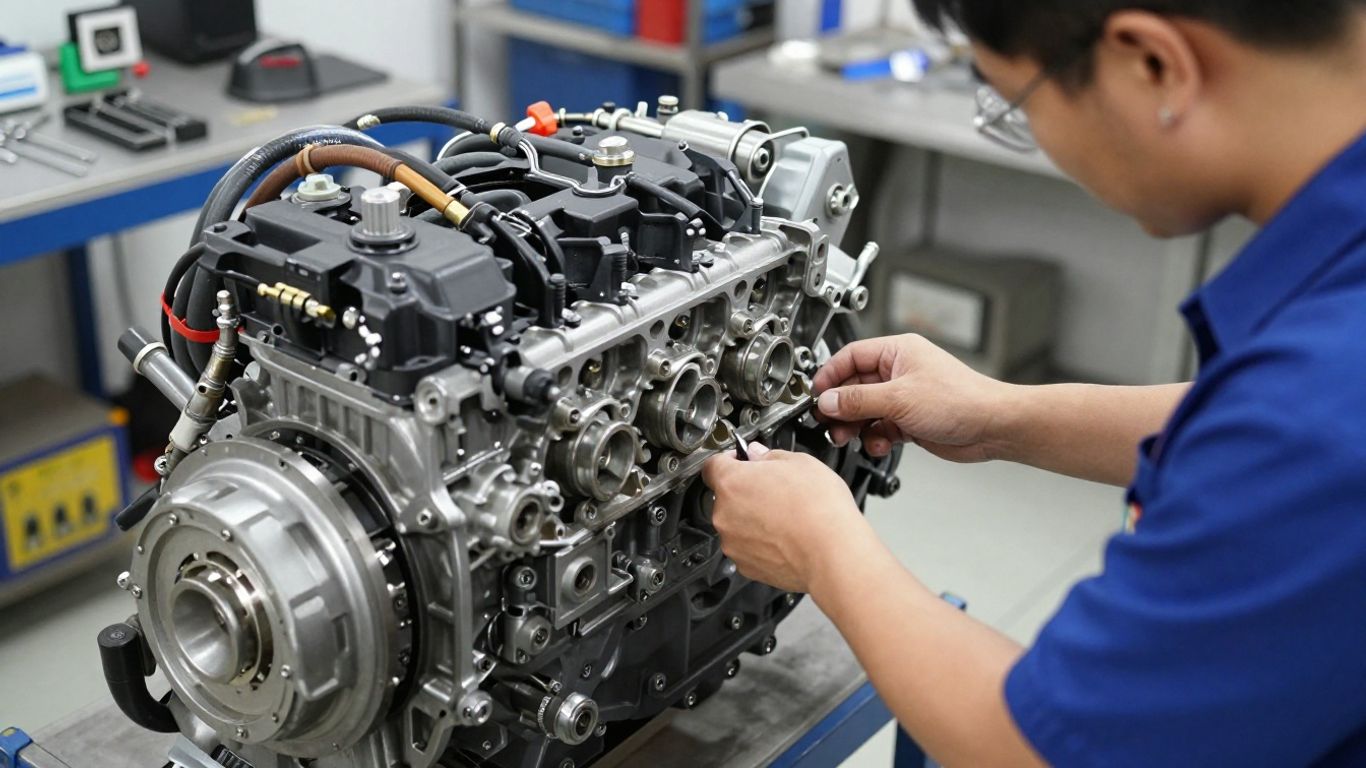
Some problems are easy to miss when an engine is viewed from the outside. Oil contamination, low compression, excessive blow-by, damaged mounts, abnormal sounds, or signs of overheating may point to deeper wear. Diagnostic tools and operating tests can expose clues that a photograph or short description cannot.
The findings still require judgment. A small leak may be repairable, while damaged cylinder walls or severe bearing wear may change the value of the engine entirely. Testing helps surface those questions while there is still time to select another unit or negotiate appropriate repairs.
Confirming compression, oil pressure, and operating performance
Compression and oil pressure are useful because they provide evidence about the engine’s mechanical condition and lubrication system. Operating performance can add information about starting, idle quality, temperature behavior, noise, and response. These checks should be interpreted against the engine’s specifications and the conditions under which they were recorded.
A buyer should request actual readings where available, not only a statement that the engine “passed.” Results from a cold test, a warm test, or a bench run may answer different questions. The more precise the report, the easier it is for a technician to decide whether the unit is appropriate.
Reducing the risk of premature failure
A tested engine can reduce risk by filtering out units with obvious or measurable problems before shipment. That may lower the chance of discovering a major defect only after removal of the old engine, preparation of the replacement, and completion of installation. The benefit is mainly better information and earlier decision-making.
It is still wise to plan for normal commissioning work. Fluids, seals, filters, belts, hoses, sensors, and other wear items may need attention, depending on the engine and the installer’s recommendations. A test report supports a sound starting point; it does not replace proper installation or maintenance.
Understanding the limits of any inspection or test
Tests are snapshots taken under defined conditions. They may not reveal intermittent electrical faults, future seal failure, damage caused during transport, or a problem in an accessory that was not included in the test. A bench test also cannot reproduce every load, temperature, vibration pattern, or duty cycle the engine will encounter.
That limitation is not a reason to dismiss testing. It is a reason to read the report carefully and pair it with a suitable warranty, compatibility review, and installation plan. A trustworthy claim describes both what was verified and what remains outside the test’s scope.
Why tested engines can reduce total ownership costs
The purchase price is only one part of an engine replacement. Labor, shipping, fluids, gaskets, programming, downtime, and possible rework can quickly outweigh a modest difference between two listings. A tested unit may cost more initially while still offering better value if it reduces uncertainty and avoids preventable work.
The calculation should be practical rather than optimistic. Consider the engine’s condition, the urgency of the repair, the cost of access and removal, and the consequences of another failure. A lower price is not a saving if the engine must be removed twice.
Comparing the purchase price with likely repair expenses
Start by separating known costs from estimates. The engine price is usually clear, but inspection by a local technician, replacement seals, shipping, labor, and disposal may not be included. If a cheaper engine has limited history, allow for the possibility of diagnostic work or repairs before it can be installed.
The comparison becomes clearer when the same assumptions are applied to every option. Ask whether accessories, testing, packaging, and warranty coverage are included. A slightly higher purchase price may be reasonable when it buys better records and a more defined condition.
Preventing installation delays and repeat labor
Compatibility and completeness have a direct effect on scheduling. A replacement that arrives without the required sensors, brackets, wiring, flywheel, or other application-specific parts may create a new sourcing problem. Even when those parts are reusable, the installer needs to know what will arrive and what must be transferred.
A short pre-installation review can prevent avoidable disruption. Confirm the engine code, mounting arrangement, transmission interface, emissions equipment, and accessory requirements before ordering. This is especially valuable when the vehicle or equipment is needed for daily operations.
Evaluating warranty coverage and return policies
A warranty should be read as a set of conditions, not as a general promise. Check its duration, covered parts, labor rules, exclusions, registration requirements, claim process, and responsibilities for diagnosis. Also confirm who pays shipping if the engine must be returned and whether the supplier offers a replacement or a refund.
The policy should fit the risk of the application. A lightly used personal vehicle, a commercial truck, and a continuously operating industrial machine may have very different downtime costs. Clear terms do not remove risk, but they make the financial exposure easier to estimate.
Estimating fuel efficiency and maintenance implications
Fuel economy depends on the complete vehicle or machine, operating conditions, calibration, load, and maintenance, so a tested engine should not be treated as a guaranteed fuel-saving measure. Still, an engine with documented operating behavior and appropriate specifications may be easier to evaluate than one with an unknown history.
Maintenance planning matters just as much. Ask what service was performed, what remains due, and which consumables should be replaced during installation. A realistic budget includes the routine work needed to put the engine into service, not only the amount on the invoice.
How tested engines compare with other engine options
“Tested” describes the evidence available about an engine; it does not by itself define whether the engine is used, rebuilt, remanufactured, or new. Those categories involve different histories, processes, prices, and expectations. The right comparison depends on how much predictability the application requires and how much uncertainty the buyer can accept.
Used engines with limited history
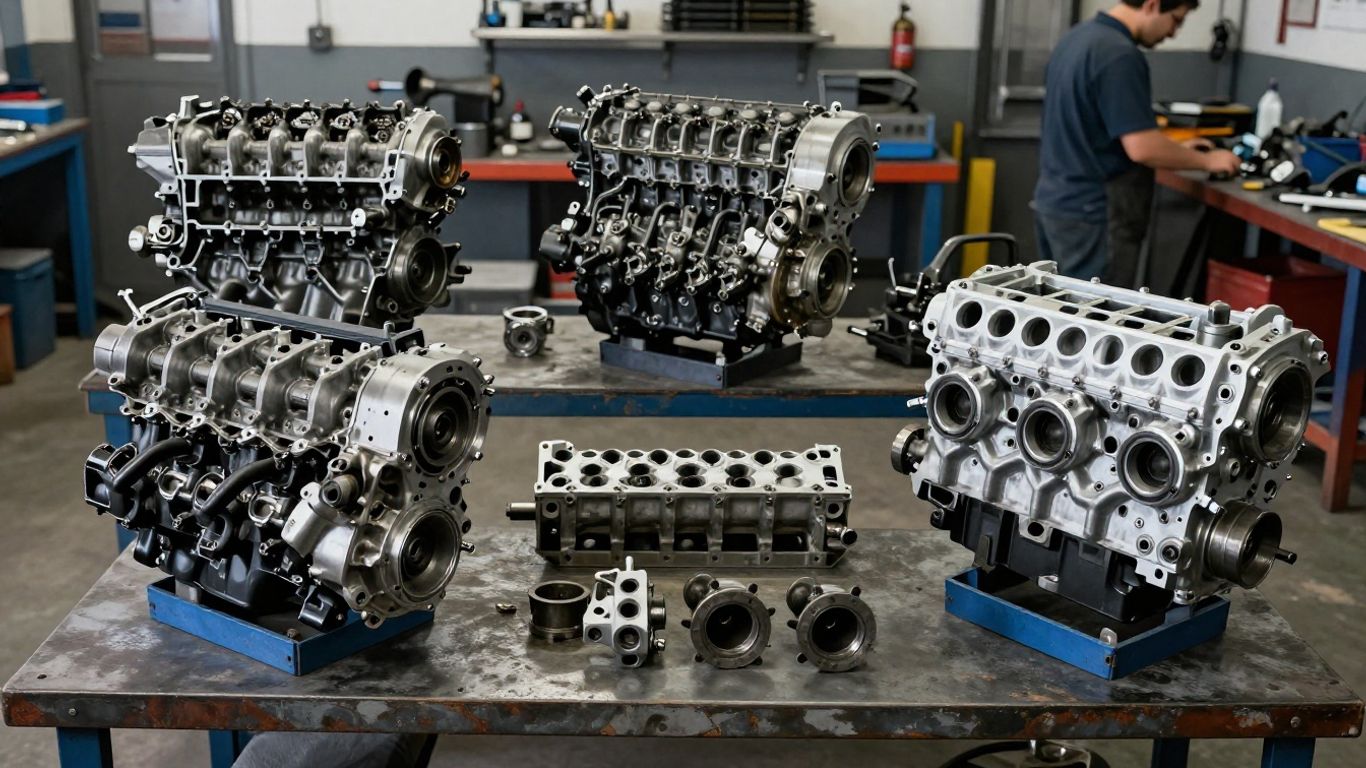
A used engine may be an economical replacement, especially when the application is older or the budget is constrained. Its condition can vary widely, however, and its prior operating environment may be difficult to reconstruct. Mileage, maintenance, storage conditions, and the cause of removal all influence the risk.
Testing and records make a used engine easier to judge, but they do not change its underlying history. Ask whether the engine was run before removal, what was measured afterward, and which parts are included. If the history is limited, the warranty and return policy become especially important.
Rebuilt engines and their replacement components
A rebuilt engine is generally disassembled to some extent, cleaned, inspected, and assembled again with selected replacement or repaired components. The scope can differ considerably from one supplier or rebuild to another. Some work may address a known failure without restoring every component to a common condition.
The key questions concern what was replaced, what was reused, and what measurements guided those decisions. Request a component-level description where possible. A rebuilt engine can be a sensible choice, but its value depends on the quality and completeness of the work rather than the word “rebuilt” alone.
Remanufactured engines restored to defined specifications
Remanufacturing typically follows a more defined process than a basic rebuild, with inspection, machining, replacement parts, and testing intended to restore the engine to stated specifications. The meaning of those specifications should still be confirmed in writing. Standards, core condition, replacement components, and warranty terms can vary.
For buyers who need greater consistency, a remanufactured option may offer a clearer process and more predictable documentation. It may also carry a higher price than a tested used engine. Compare the actual scope, included parts, lead time, and coverage rather than relying on category names.
New engines for maximum predictability
A new engine generally offers the clearest manufacturing history and the lowest uncertainty about prior use. It can be the strongest fit where downtime is extremely expensive, emissions requirements are strict, or long-term support is a priority. The trade-off is often a higher purchase price and, in some cases, longer availability constraints.
New does not remove the need for compatibility checks. The engine still has to match the vehicle or equipment, control systems, emissions configuration, transmission, and installation requirements. Predictability comes from combining a new unit with correct application information and proper installation.
How to verify an engine’s history and compatibility
A good test report answers questions about condition, but it does not answer every question about fit. The buyer must connect the engine’s identity and specifications to the vehicle, equipment, or operating application. Doing that before payment is usually easier than resolving a mismatch after delivery.
Compatibility is more than displacement or a model name. Small differences in electronics, mounts, emissions equipment, accessories, and transmission interfaces can make two apparently similar engines unsuitable for the same installation.
Matching the engine to the vehicle, equipment, or application
Begin with the exact year, make, model, engine family, transmission, drivetrain, and application. For equipment, include the duty cycle, operating environment, and required power range. For vehicles, confirm whether the replacement must match the original calibration or emissions configuration.
Share photographs and identification details with the supplier when there is uncertainty. A careful review can identify differences that a generic listing cannot. It is better to pause an order than to discover that a supposedly interchangeable engine requires extensive modification.
Reviewing mileage, operating hours, and service records
Mileage and operating hours provide context, but they are not complete measures of condition. Highway mileage may affect an engine differently from short trips, heavy towing, idling, or dusty industrial work. Service records can help explain those numbers by showing oil changes, cooling-system work, repairs, and periods of storage.
Look for consistency between the records, identification numbers, photographs, and test results. Gaps do not automatically disqualify an engine, but they should influence the price, warranty expectations, and level of pre-installation inspection.
Checking serial numbers, specifications, and emissions requirements
Record the serial number, casting numbers, engine code, horsepower or output rating, and any other identifiers relevant to the application. Compare them with the original engine and the manufacturer’s fitment information. Emissions requirements deserve particular care because a mechanically similar engine may not meet the legal or system requirements for a specific vehicle or machine.
Do not assume that a seller’s broad compatibility statement covers every configuration. Ask for confirmation of the exact application in writing. This creates a useful record and gives the installer a clear basis for checking the unit when it arrives.
Confirming installation accessories and included components
Listings may show an engine with accessories that are not included in the sale. Confirm the status of the alternator, starter, turbocharger, injectors, sensors, wiring, brackets, mounts, flywheel, intake, exhaust components, and control hardware. The required list will vary, so use the installation manual or technician’s parts checklist.
A complete quote should state what is included, what is optional, and what must be transferred from the original engine. That detail helps reveal the true cost and prevents a replacement from sitting idle while missing components are located.
What a trustworthy engine testing process looks like
A trustworthy process is organized, repeatable, and transparent about its boundaries. It begins by identifying the unit correctly, moves through appropriate physical and mechanical checks, and ends with a review before shipment. The exact sequence may vary, but the reasoning should remain easy to follow.
The process should also match the engine’s intended use. A test suitable for a passenger vehicle may not answer the questions raised by a generator, truck, marine application, or industrial machine. Specificity is a sign that the supplier understands the risk being evaluated.
Initial visual and diagnostic inspection
The first stage usually records the engine’s identity and visible condition. Technicians may look for cracks, damaged housings, corrosion, leaks, missing components, contamination, and signs of overheating. Diagnostic scanning, where applicable, can add information about stored faults and electronic systems.
Photographs taken during this stage help connect the report to the physical unit. They are most useful when they show identification marks, connectors, mounting points, and areas of concern rather than only polished exterior surfaces.
Mechanical and pressure testing
Mechanical testing may include compression, leak-down, oil pressure, cooling-system checks, and other measurements suited to the engine. The report should state the test conditions and provide readings when possible. That allows a technician to distinguish a measured result from a general description.
Pressure readings are indicators, not guarantees. A result can be within an expected range while another untested component remains worn. The value lies in combining several checks and interpreting them against the engine’s specifications and history.
Load testing and real-world performance checks
Where the facilities and engine type allow it, load testing can provide more useful evidence than a brief idle run. It may reveal temperature behavior, unusual vibration, smoke, noise, or loss of performance under demand. The test should reflect the intended application as closely as practical.
Not every replacement engine can be tested under every future condition. Even so, knowing whether the unit was started, run, or operated under load gives the buyer a clearer understanding of what the supplier actually verified.
Quality control before shipment
Before shipment, the engine should be matched to its documentation and checked for damage, missing parts, leaks, and packaging concerns. Identification marks should remain legible, and any agreed preparation work should be complete. Good quality control catches errors that may occur after the original test.
This final review also protects both sides. Clear photographs and a recorded condition at dispatch can help distinguish a pre-existing issue from transport damage. The buyer should inspect the shipment promptly and follow the supplier’s claim procedure.
Recording results for customer review
The final record should identify the engine, summarize the work performed, state the results, and explain limitations. It should be understandable to the buyer and useful to the installer. If a result was not obtained, the report should say so rather than implying that the item passed every possible test.
Ask for the documentation before committing when practical. Reviewing it early allows questions about fit, condition, accessories, and warranty coverage to be resolved while alternatives are still available.
How to choose a supplier with confidence
Supplier selection is an evidence exercise. Look for clear answers, consistent records, and a process that matches the engine being sold. A polished listing can be helpful, but it should not substitute for identification, test details, compatibility confirmation, and written terms.
The strongest supplier relationship is practical rather than promotional. You should know who answers technical questions, what happens if the engine arrives damaged or unsuitable, and which steps are required to preserve warranty coverage.
Questions to ask about testing procedures
Ask what tests were performed, whether the engine was run, which readings were taken, and whether the results will be supplied before or with shipment. Clarify the test date and whether the photographed engine is the exact unit being offered. Also ask what was not tested.
Useful questions include:
- Which components and systems were inspected?
- What were the compression and oil-pressure readings, if applicable?
- Was the engine tested cold, warm, under load, or in more than one condition?
- How are test results connected to the engine’s identification number?
The answers should be specific enough for a technician to evaluate. If the process is proprietary, the supplier can still describe its scope without hiding the basic evidence a buyer needs.
Certifications, facilities, and technician expertise
Ask about the facility, equipment, technician training, and quality-control steps relevant to the engine type. A certification may be meaningful, but its scope and issuing organization should be clear. Do not treat a generic badge or broad quality statement as proof that a particular engine was tested thoroughly.
The supplier should be comfortable explaining how it handles different engine families and applications. Practical expertise shows up in the questions it asks about fitment, duty cycle, emissions, and installation—not only in the language used to describe the inventory.
Warranty terms, support, and replacement options
Read the warranty before ordering and note the steps required for a claim. Determine whether labor, diagnostics, fluids, towing, shipping, and consequential costs are excluded. Find out how quickly the supplier responds and whether a replacement unit is available if the original fails or proves incompatible.
Support after delivery can be as important as the initial sale. A supplier that provides clear installation requirements and a defined escalation path gives the buyer more control when an issue appears.
Warning signs of vague or unverifiable claims
Be cautious when a listing uses “tested” without naming the test, shows only generic photographs, avoids identification details, or promises performance without conditions. Another concern is pressure to pay before compatibility and warranty questions are answered. Evasive responses are more revealing than a lack of elaborate marketing language.
A credible supplier can acknowledge uncertainty. It should be willing to distinguish observed facts, reported history, and estimates. That honesty is more valuable than an absolute assurance that no used engine can realistically provide.
A practical checklist for comparing quotes
When several quotes look similar, place them side by side and compare the details rather than the headline price. A simple worksheet can keep overlooked costs from distorting the decision.
Include these items in the comparison:
- Exact engine identity and confirmed application fit.
- Test scope, readings, photographs, and documentation supplied.
- Included accessories, transfer parts, shipping, and preparation work.
- Warranty duration, exclusions, claim process, and return responsibility.
- Expected lead time, technical support, and replacement arrangements.
Once the information is visible, the best choice is often easier to recognize. The goal is not to find a perfect engine with no uncertainty; it is to choose a documented, compatible option with risks you understand and can manage.
Conclusion
Tested and verified engines offer a more informed path between an unknown used unit and a higher-priced new replacement. Their value comes from the evidence behind the sale: identified components, relevant measurements, documented history, confirmed compatibility, and fair warranty terms. Compare the complete ownership cost, ask direct questions, and choose the option whose condition and support match the demands of the application.