
Key Takeaways
A used engine with peace of mind starts with careful matching, clear documentation, and realistic budgeting. The lowest advertised price is rarely the whole decision.
- Match the replacement engine to the vehicle’s exact specifications.
- Ask for mileage, history, inspection details, and identification photos.
- Read warranty and return terms before sending payment.
- Include shipping, labor, installation parts, taxes, and deposits in the budget.
- Keep every document needed for installation and warranty support.
Define the right replacement engine for your vehicle
Finding a suitable engine is more precise than searching by vehicle name alone. The same model may use different engines across years, trims, markets, and drivetrain configurations. Gather the vehicle identification number, original engine details, and transmission information before contacting sellers. That preparation reduces the chance of buying a part that looks right but cannot be installed without costly changes.
Match the engine to the year, make, model, and trim
Start with the vehicle’s year, make, model, trim, body style, and drivetrain. A base model and an upgraded trim can share a body while using different engine equipment or emissions components. The vehicle identification number and the original engine label are more reliable than a broad online listing title.
Ask the seller to confirm the fit in writing, especially if the vehicle changed engines during the model year. Save the listing and the seller’s response so you have a record of what was promised. If the seller asks for more information, that is usually a good sign: a careful match requires details.
Verify the engine code and configuration
The engine code identifies the family and configuration more accurately than displacement alone. Confirm whether the replacement has the same fuel system, aspiration, emissions equipment, sensors, and accessory arrangement as the original. A compatible engine may still require transferring components from the old unit.
Do not assume that two engines with the same displacement are interchangeable. Ask for the code stamped or shown on the engine, along with a clear photograph when possible. This simple check can prevent a mismatch discovered only after the engine has arrived.
Check compatibility with the transmission and electronics
An engine must work with the vehicle’s transmission, wiring, control modules, sensors, and immobilizer system. Differences in mounting points, flexplate or flywheel arrangements, harnesses, and software can turn an apparently suitable purchase into a complex conversion. Ask a mechanic or dealership parts department to review the proposed combination before ordering.
Also clarify which components are included. The engine may arrive without the intake, exhaust hardware, starter, alternator, compressor, wiring, or control modules. Knowing that in advance helps you separate a normal component transfer from an unexpected compatibility problem.
Confirm whether a complete or long-block engine is needed
A complete engine generally includes more external components, while a long-block typically centers on the main internal assembly and cylinder head components. Sellers define these terms differently, so request a written parts list rather than relying on the label. Compare that list with the damaged engine and the installer’s requirements.
If your existing accessories and intake components are usable, a long-block may be practical. If the failure involved overheating, contamination, or broken external parts, a more complete assembly could reduce complications. The correct choice depends on what can be safely reused, not just on the purchase price.
Choose a trustworthy used engine seller
The seller matters almost as much as the engine. A professional business should be willing to identify what it knows, what it tested, and what remains uncertain. Look for consistent answers, reachable support, and written terms rather than relying on polished photographs or a low price alone.
Compare salvage yards, recyclers, dealers, and marketplaces
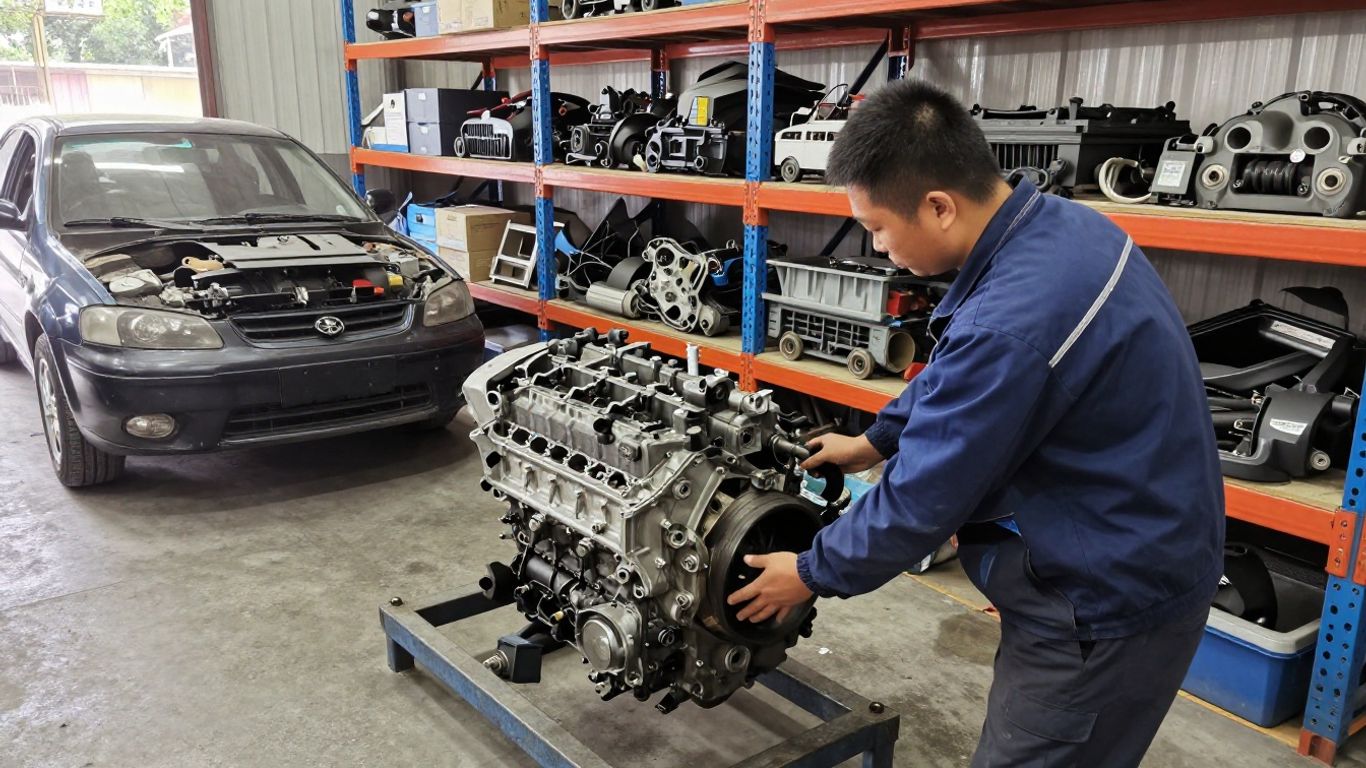
Different seller types offer different levels of information and support. Salvage yards and recyclers may have donor-vehicle details and broad inventory, while dealers or specialized suppliers may provide more structured ordering and warranty processes. Marketplaces can make comparisons easier, but the individual seller’s policies still control the transaction.
Compare like for like: included components, stated mileage, testing, warranty, shipping method, and return conditions. A cheaper listing may exclude necessary parts or shift shipping and return risks to the buyer. The best value is the offer with the clearest total obligation.
Look for testing standards, business credentials, and customer reviews
Ask what testing the business performs and whether its process is consistent across engines. Check how long the company has operated, whether its contact information is easy to verify, and whether reviews discuss actual transactions rather than only general customer service. Reviews are useful context, but they should not replace technical documentation.
Be cautious when a seller cannot explain its inspection process or avoids basic questions about mileage and removal. You want a business that can describe its limits plainly. Clear answers are valuable evidence before you commit money or schedule installation.
Evaluate how clearly the seller describes engine condition
A useful listing should state mileage when known, donor vehicle information, included components, visible damage, and any test results. Terms such as “good condition” mean little without supporting details. Ask whether the engine was stored indoors, drained of fluids, or exposed to weather after removal.
The seller should also distinguish known facts from estimates. If mileage is approximate or a test was not possible, that uncertainty should be disclosed. Transparency does not guarantee a perfect engine, but it gives you a fair basis for judging the risk.
Ask who pays for shipping, returns, and core exchanges
Before buying, confirm the delivery address requirements, freight access, packaging, and inspection window. Ask whether the buyer pays return freight, whether a restocking fee applies, and whether a refundable core deposit is charged. These terms can change the real price substantially.
Get the answers on the invoice or order confirmation. A phone conversation may be helpful, but written terms are easier to use if a shipment arrives damaged or the engine does not match the order.
Investigate the engine’s history and condition
A used engine carries a previous life, and its history can explain both its value and its risks. The donor vehicle, mileage, maintenance, accident damage, and removal method all provide clues. No document can predict every future failure, but several consistent details create a much more useful picture.
Request mileage, vehicle history, and removal details
Ask for the donor vehicle’s year, model, drivetrain, mileage, and reason for dismantling. An engine removed from a vehicle damaged elsewhere may have a different risk profile from one removed after a mechanical failure. Request any available service records, auction information, or dismantling notes.
Mileage should be treated as one data point, not a complete health report. A high-mileage engine with credible maintenance information may be easier to evaluate than a supposedly low-mileage engine with no supporting history. Ask how the mileage was recorded and whether it is verified or estimated.
Understand what a donor vehicle inspection can reveal
Inspection while the engine is still installed can reveal starting behavior, smoke, unusual noise, warning lights, leaks, and operating temperature. It may also allow the seller to observe oil pressure or compression under more realistic conditions. Once removed, some of those observations are no longer possible.
Ask exactly what the inspection involved and when it occurred. “Ran when removed” is less informative than a description of how the engine was started, how long it ran, and which symptoms were checked. The distinction helps you judge what the seller actually knows.
Check for signs of overheating, corrosion, and poor maintenance
Look for discolored metal, damaged gaskets, coolant residue, heavy sludge, rust in openings, cracked connectors, and corrosion around mounting points. These signs do not prove that an engine is unusable, but they justify more questions and perhaps an independent inspection. Pay particular attention to evidence that coolant or oil contamination was present.
Ask for photos of the oil pan area, cylinder head surfaces, coolant passages when visible, and external seals. A seller may not be able to expose every internal part, so combine photographs with test results and the warranty terms. The goal is a balanced assessment rather than false certainty.
Distinguish a used engine from a remanufactured or rebuilt engine
A used engine is generally an original assembly removed from another vehicle, with its previous wear and maintenance history. A rebuilt or remanufactured engine has undergone a more extensive disassembly and parts inspection process, but definitions vary by seller. Ask which components were replaced, machined, or measured.
Do not pay a premium based only on a description that sounds refurbished. Request a scope of work and documentation. Comparing the work performed, warranty, and total price will tell you more than the label itself.
Verify testing and inspection before buying
Testing cannot eliminate every risk, especially when an engine is out of the vehicle. It can, however, reveal important information about sealing, lubrication, and general condition. Ask for dated results tied to the specific engine rather than accepting a generic statement that all inventory is tested.
Ask which compression, leak-down, and pressure tests were completed
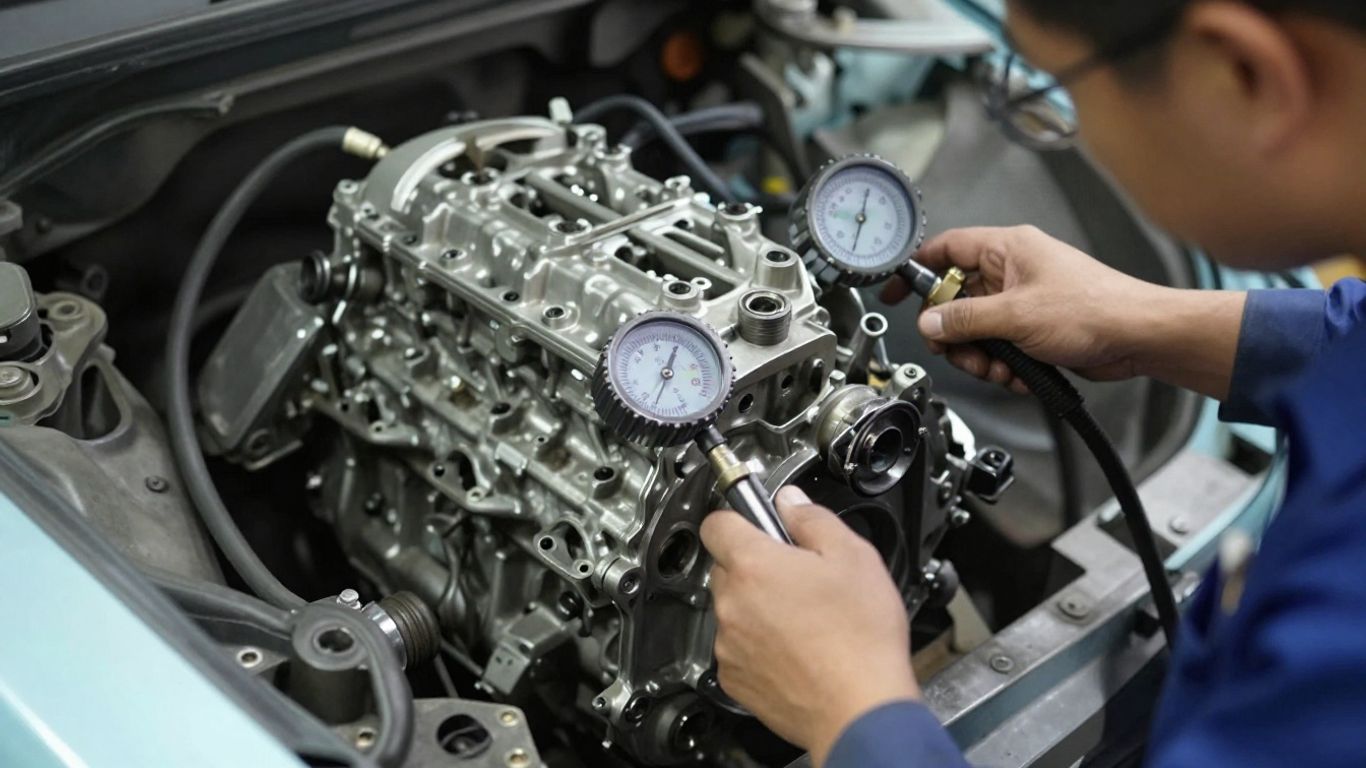
Compression testing can show differences between cylinders, while a leak-down test can help identify where pressure escapes. Oil pressure testing provides another useful piece of evidence when the engine can be operated or tested appropriately. Ask for the readings, test conditions, and the seller’s interpretation.
Results should be considered together rather than judged by a single number copied from an online forum. Engine design, temperature, battery condition, and test equipment can affect readings. If the seller cannot provide results, ask what alternative inspection was performed and record that limitation.
Review photos of the engine, identification numbers, and major components
Request current photographs of the exact engine, not only stock images. The identification number, block, cylinder heads, ports, accessory mounts, connectors, and oil pan area should be visible where practical. Photos can also reveal missing parts or damage that a short listing description leaves out.
Compare the images with the written parts list and your vehicle’s original engine. If the number is obscured or the photographs show another configuration, pause the order until the discrepancy is resolved. A few extra questions are cheaper than arranging a return after installation.
Confirm whether the engine was inspected while installed or after removal
The timing of inspection affects what the seller could observe. An installed test may provide information about starting, noise, smoke, and operating behavior, while a post-removal inspection may focus on visible condition and measured components. Neither approach answers every question.
Ask whether the engine was drained, rotated, opened, or stored before testing. Also find out whether accessories were attached during the test. These details help your mechanic plan an arrival inspection and identify which findings should be treated cautiously.
Know which parts may need replacement before installation
Many replacement engines need fresh wear items or seals before they go into a vehicle. Discuss the timing components, rear main seal, front seal, oil pan gasket, thermostat, spark plugs or glow plugs, fluids, and filters with the installer. The right list depends on the engine and its service history.
Replacing an inexpensive seal while the engine is accessible may prevent another removal later. Do not replace parts blindly, though. Use the inspection findings, manufacturer service information, and the mechanic’s judgment to prioritize work that is necessary or difficult to repeat.
Compare warranties and return policies carefully
A warranty is useful only when its conditions fit the installation and the likely failure points. Read the entire policy before purchase, including exclusions, deadlines, labor coverage, and required documentation. Treat a warranty as risk protection, not as proof that the engine is new or fully reconditioned.
Examine warranty length, mileage limits, and covered failures
Record the coverage period in both time and mileage, along with the date coverage begins. Check whether internal parts, seals, gaskets, labor, towing, diagnostics, and incidental damage are included or excluded. Some policies cover replacement parts but not the labor required to remove and install them.
Ask what counts as a covered failure and what evidence is required. A short warranty may still be worthwhile if the seller is transparent and the price reflects the risk, while a longer warranty may contain strict exclusions. Compare the practical protection, not just the headline duration.
Check installation requirements that could void coverage
Policies may require professional installation, proof of oil and filter changes, replacement of specified seals or maintenance parts, or use of particular fluids. They may also require the buyer to stop operating the vehicle when symptoms appear. Missing one condition can complicate a claim.
Give the warranty to the installer before work begins. Ask the shop to document the installation, fluid quantities, initial startup, and any required break-in procedure. This creates a record and gives you a chance to resolve unclear requirements early.
Understand the process for reporting a defective engine
Find out whom to contact, how quickly a problem must be reported, and whether the seller needs photographs, diagnostic codes, test results, or an inspection by an approved facility. Ask whether disassembly is prohibited until the seller authorizes it. Continuing to drive after a serious symptom may also affect coverage.
Write down the process with the warranty documents. If a problem occurs, stop, document the symptoms, and follow the policy instead of authorizing major repairs on your own. Prompt, organized communication generally makes the dispute easier to manage.
Review return shipping fees, restocking charges, and core requirements
A return policy should explain the inspection period, acceptable condition, packaging, and responsibility for freight damage. Determine whether the engine must be returned on the original pallet and whether a core exchange or deposit is involved. Ask what happens if the engine is incorrect rather than merely unwanted.
These details matter because freight can be expensive and a restocking charge may reduce the refund. Keep the packaging until the engine has been inspected and accepted. Do not send back the old core before confirming the seller’s procedure.
Calculate the true cost of a used engine replacement
The advertised engine price is only the starting point. Installation often exposes related parts that are worn, contaminated, or difficult to access later. Build the estimate with the mechanic before ordering so the decision reflects the complete repair rather than a single line item.
Add shipping, taxes, deposits, and installation labor
Include freight, residential or lift-gate charges, sales tax, refundable deposits, shop supplies, diagnostic time, and labor. Ask whether the labor estimate assumes a direct replacement or includes transferring accessories and resolving wiring or mounting differences. A written estimate should identify assumptions.
Use a simple comparison with at least three totals so the numbers remain visible:
| Cost category | Questions to answer | Why it matters |
|---|---|---|
| Engine purchase | What is included in the assembly? | Prevents paying twice for missing components |
| Delivery and fees | Are freight, tax, and deposits included? | Reveals the actual checkout cost |
| Installation | Is labor based on a direct fit? | Captures compatibility and transfer work |
| Warranty risk | Are labor and diagnostics covered? | Shows the protection’s practical value |
After adding these items, compare the estimate with the vehicle’s current value and your available repair budget. A modest difference in purchase price can disappear once freight or extra labor is included.
Budget for gaskets, fluids, belts, hoses, and seals
Set aside money for fluids, filters, gaskets, seals, belts, hoses, spark plugs, and other maintenance items recommended during installation. Some parts may be reusable, but replacement is sensible when they are inexpensive and buried behind the engine. Ask the mechanic to separate required work from optional preventive work.
This preparation also helps avoid delays. An engine sitting in a shop while a small seal or hose is ordered can increase labor time and inconvenience. A complete parts estimate gives you a more realistic delivery-to-road timeline.
Compare the total cost with a remanufactured or new engine
A remanufactured or new engine may cost more initially, but the difference should be compared against warranty length, included work, availability, and installation risk. A used unit may be the sensible choice when the vehicle is older or the donor history is strong. Neither option is automatically right for every repair.
Ask for side-by-side estimates using the same assumptions for labor and supporting parts. If one option includes accessories or a longer warranty while another does not, adjust the figures before deciding. A fair comparison is based on equivalent scope.
Account for vehicle value and possible future repairs
Consider the vehicle’s mileage, body and suspension condition, rust, tires, transmission, and recent maintenance. An engine replacement can be reasonable when the rest of the vehicle is sound, but it may be difficult to justify if several major systems are near failure. The decision is financial as well as mechanical.
Ask the mechanic for a candid assessment of likely near-term repairs. You do not need a perfect forecast; you need to know whether this engine purchase fits the vehicle’s remaining useful life and your plans for keeping it.
Make a confident purchase and plan the installation
Once the engine, seller, policy, and budget have been checked, place the order only when the details align. Confirm the exact unit being shipped and arrange a suitable inspection on arrival. Good planning protects both the repair and your ability to use the warranty if something is wrong.
Use a final compatibility checklist before ordering
Before payment, match the engine code, year range, drivetrain, transmission interface, emissions configuration, included parts, mileage, and shipping destination. Confirm the warranty start date, return window, core terms, and damage-reporting procedure. Ask the seller to correct any mismatch on the invoice.
A short final review can cover the essentials:
- Match the engine code and configuration to the vehicle.
- Confirm included components and parts that must be transferred.
- Save photos, test results, mileage, and donor information.
- Review warranty, return, freight, and core-exchange terms.
Once those points are documented, you can order with far less uncertainty. If one answer remains vague, delay the purchase rather than hoping the issue will resolve after delivery.
Prepare the vehicle and replacement engine for installation
Arrange a clean, dry place for inspection and keep the shipping materials until the engine has been checked. Photograph the package before opening it, then compare the engine number and visible condition with the order. Report freight damage or a mismatch promptly and follow the seller’s instructions.
The vehicle should be diagnosed carefully so the original failure did not damage related systems. Flush contaminated fluids when required, inspect mounts and wiring, and verify that the replacement is ready before the old engine is removed. This sequencing can prevent avoidable downtime.
Replace maintenance items that are difficult to access later
Use the installation opportunity to handle items that would require substantial labor afterward. Depending on the engine, these may include seals, timing components, thermostat, plugs, belts, hoses, and filters. Follow the engine maker’s service guidance and the warranty’s installation requirements.
Do not assume every suggested replacement is mandatory. Have the installer explain the condition of each part and the consequence of leaving it in place. Spending selectively now is better than paying for unnecessary work or repeating the installation later.
Keep invoices, test results, and warranty documents
Create one folder for the purchase invoice, engine identification, photographs, donor information, test results, shipping records, installation invoice, and maintenance receipts. Note the installation date, mileage, fluids used, and any startup observations. These records support warranty communication and future service.
After installation, follow the recommended break-in and inspection schedule. Watch for leaks, overheating, unusual noise, warning lights, or changes in fluid levels, and report serious symptoms immediately. Careful records turn a stressful repair into a manageable process.
Conclusion
Buying a used engine with peace of mind is less about finding a perfect promise and more about reducing unknowns. Verify the match, investigate the history, confirm testing, read the warranty, and calculate the complete repair cost before ordering. With those steps documented and the installation planned properly, a used engine can be a practical repair rather than an expensive gamble.