
Key Takeaways
A used Falcon engine can be a sensible repair, but compatibility matters more than a tempting price. Confirm the engine specification, inspect its condition, and calculate the complete installed cost before committing.
- Match the replacement engine to the Falcon generation, engine code, transmission, and fuel system.
- Compare used, reconditioned, and upgraded engines by condition, warranty, and intended use.
- Ask for donor-vehicle details, test results, included parts, and clear return terms.
- Inspect for leaks, damage, compression problems, and missing accessories before purchase.
- Allow for labor, fluids, seals, freight, programming, and unexpected installation work.
Understand Ford Falcon engine compatibility
A Falcon engine is not automatically interchangeable with every other Falcon engine. Model year, series, body configuration, fuel system, transmission, and wiring can all affect whether a replacement will fit and run correctly. Before contacting sellers, gather the vehicle identification number, build date, current engine details, and transmission type. That information turns a broad search into a specific parts enquiry.
Match the engine to the Falcon generation
Start with the exact series rather than relying on a general description such as “six-cylinder Falcon.” Changes between generations can affect mounting points, sensors, intake and exhaust arrangements, engine management, and accessory drives. A seller should be able to confirm the donor vehicle’s series and build period, not just provide a photograph of a similar-looking engine.
Check the body style as well, particularly if the vehicle is a ute or a long-wheelbase variant. The engine may be related, yet the surrounding brackets, sump, accessories, or wiring can differ. Comparing the identification marks on the old engine with the proposed replacement is safer than assuming that a visually similar unit will be a direct fit.
Compare engine codes and displacement
Displacement alone is not enough to identify a suitable replacement. The engine code, cylinder-head arrangement, fuel system, and management hardware may be more useful than the capacity listed in a sales advertisement. Ask for clear photographs of identification markings and compare them with workshop information for your specific Falcon.
If the replacement has a different code, ask what must be transferred from the original engine. A long motor may be compatible while the intake, throttle body, sensors, wiring, sump, or brackets are not. Exact identification saves money because it reduces the chance of buying an engine that later needs extensive parts swapping.
Check transmission and drivetrain compatibility
Confirm whether the vehicle uses a manual or automatic transmission and whether the replacement engine is supplied with the correct flexplate, flywheel, starter arrangement, and crank-position components. Small differences at the rear of the engine can create major installation problems, even when the block and head appear suitable.
Also check engine mounts, sump clearance, exhaust connections, cooling hoses, and accessory locations. A rear-wheel-drive replacement still needs to work with the vehicle’s existing drivetrain and surrounding hardware. Get any required changes in writing before the sale rather than treating them as workshop surprises.
Identify fuel, emissions, and wiring requirements
Petrol and gas configurations should not be treated as interchangeable without careful checking. Fuel rails, injectors, regulators, manifolds, sensors, and control systems may differ, while emissions equipment and evaporative controls can affect both installation and roadworthiness.
Ask whether the engine is supplied bare or with its original sensors and accessories. In many cases, transferring the vehicle’s compatible components is practical, but only after the mechanic confirms that the parts match. Wiring connectors and ECU requirements deserve particular attention because a mechanically fitting engine may still fail to start or run properly without the right electronic configuration.
Choose the right type of used Falcon engine
There is no single best type of replacement engine for every owner. A low-cost used unit may suit a short-term repair, while a reconditioned engine can make more sense for a vehicle that will remain in service for years. The right choice depends on budget, intended mileage, downtime, and the condition of the rest of the car.
Factory replacement engines
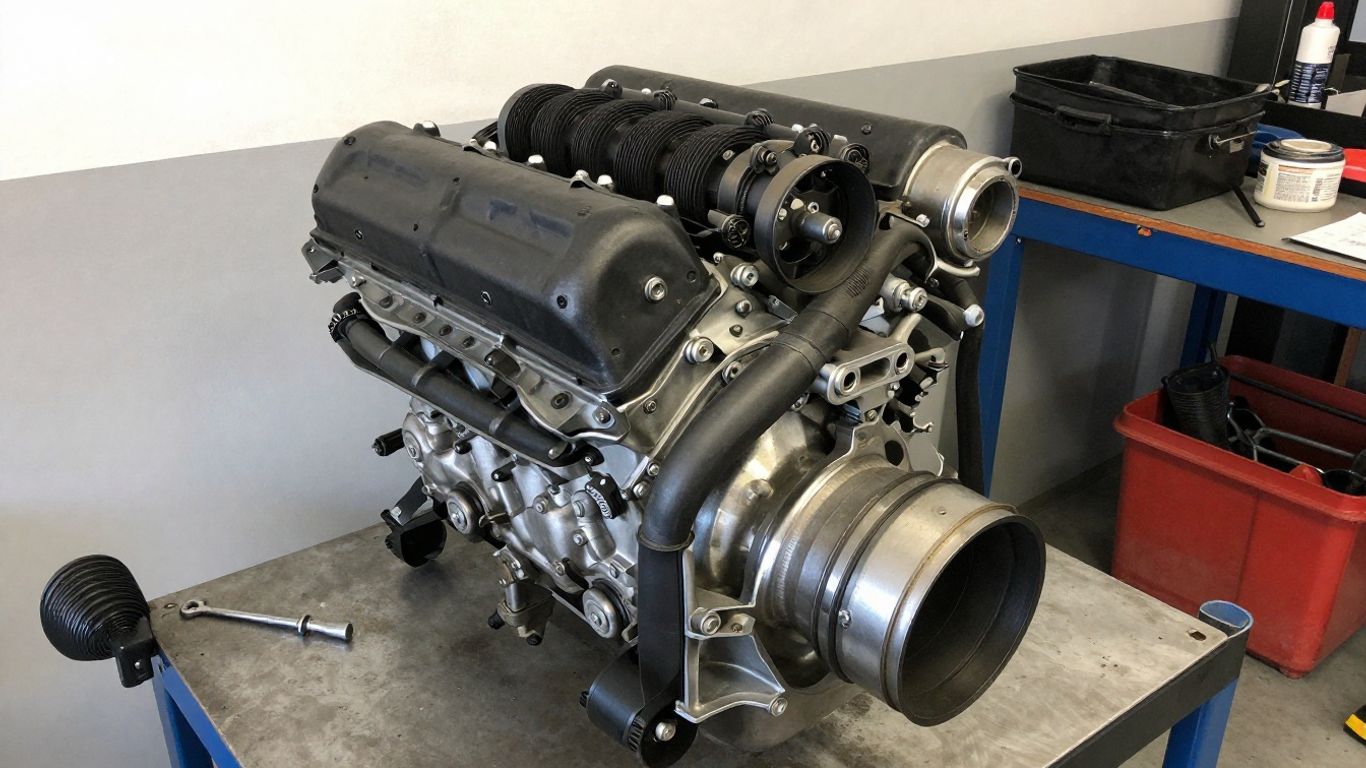
A factory-specification replacement aims to retain the vehicle’s original configuration and driving characteristics. That can simplify installation, parts selection, and fault-finding, especially when the replacement closely matches the original engine code and accessories.
Ask what “factory replacement” means in the particular listing. It may describe a used engine removed from a matching vehicle rather than a newly manufactured unit. Confirm mileage, donor details, included components, and warranty conditions so the label does not substitute for useful evidence.
Low-kilometer engines from wreckers
A low-kilometer engine can be attractive, but the odometer reading should be supported by donor-vehicle records, dismantling notes, or other credible information. Mileage does not reveal everything: a poorly maintained low-use engine may be less appealing than a higher-mileage unit with consistent servicing.
Ask how the engine was stored after removal and whether openings were sealed against moisture and contamination. Find out whether it was tested before dismantling and whether the seller can provide compression figures, oil-pressure information, or a running video. These details help separate a documented engine from one described mainly with optimistic wording.
Reconditioned and remanufactured engines
Reconditioned and remanufactured engines can offer a more predictable starting point, but the terms cover a wide range of work. One supplier may replace bearings, rings, seals, and gaskets; another may machine major surfaces and inspect or replace internal components to a defined specification.
Request a written description of the work performed, the parts used, and any components that were not rebuilt. A warranty is more meaningful when it explains exclusions, required installation procedures, servicing intervals, and claim documentation. The cheapest rebuilt option is not necessarily the lowest-cost option once installation and warranty limits are considered.
Performance and upgraded engine options
An upgraded engine should be considered only after confirming the vehicle’s drivetrain, cooling system, fuel delivery, exhaust, ECU, and brakes can support the change. More output may require additional tuning and supporting hardware, and it can introduce registration or insurance questions depending on the modification.
For a standard daily driver, an original-specification replacement is often easier to install and maintain. If performance is the priority, ask the workshop to list every required supporting change before buying the engine. A complete project budget is more useful than the advertised price of the long motor alone.
Find a reliable Ford Falcon used engine in Australia
The search for a Ford Falcon used engine Australia can produce many listings, but listing quality varies considerably. Treat the seller’s description as a starting point, then verify the engine identity, condition, source, and terms of sale. A few direct questions before payment can prevent a costly mismatch.
Compare wreckers, dealers, and private sellers
Wreckers may provide donor-vehicle information and a broad supply of used components, while specialist dealers may offer more structured testing or warranty administration. Private sellers can sometimes provide useful history, but the buyer may have less protection and fewer options if the engine proves unsuitable.
Compare like for like. A bare engine with limited cover should not be judged against a tested assembly that includes accessories and a written warranty. Ask whether the quoted price includes GST, delivery, a core charge, and any removable components shown in the photographs.
Review engine history and donor vehicle details
The donor vehicle can tell you more than the engine advertisement alone. Ask why the vehicle was dismantled, whether it arrived running, how long it was stored, and whether the engine had overheating, oil-pressure, or accident-related damage before removal.
Request the donor series, build date, engine code, reported mileage, and photographs taken before removal where available. If the seller cannot answer every question, that does not automatically make the engine unusable, but it should affect the price and the level of warranty you require.
Check warranty, returns, and delivery terms
Read the warranty before treating it as a safety net. Some warranties cover the engine assembly only, while others exclude labor, seals, accessories, overheating, incorrect installation, or faults caused by transferred parts. A return period may also require the buyer to notify the seller within a short timeframe.
Confirm who pays freight if the engine is faulty or incompatible, how a return is authorized, and what evidence is needed for a claim. Keep invoices, photographs, test results, and installation records. Clear paperwork makes a genuine problem easier to resolve.
Verify the seller’s testing and inspection process
Ask what testing actually occurred. “Checked” might mean a visual inspection, or it might include compression testing, leak checks, oil-pressure testing, and a running assessment. The distinction matters, so request the method and results rather than relying on a general quality statement.
A careful seller should also explain how the engine was drained, stored, protected, and identified after removal. If test results are unavailable, arrange an independent inspection or have the workshop assess the engine on arrival before installation. That creates an opportunity to identify obvious concerns while the unit is still accessible.
Inspect a used Ford Falcon engine before buying
An inspection cannot reveal every internal fault, but it can expose neglect, damage, and missing information. Ideally, inspect the engine in person with a mechanic or have an independent workshop examine it. If the purchase is remote, request detailed photographs and written test results before sending money.
Look for oil leaks and external damage
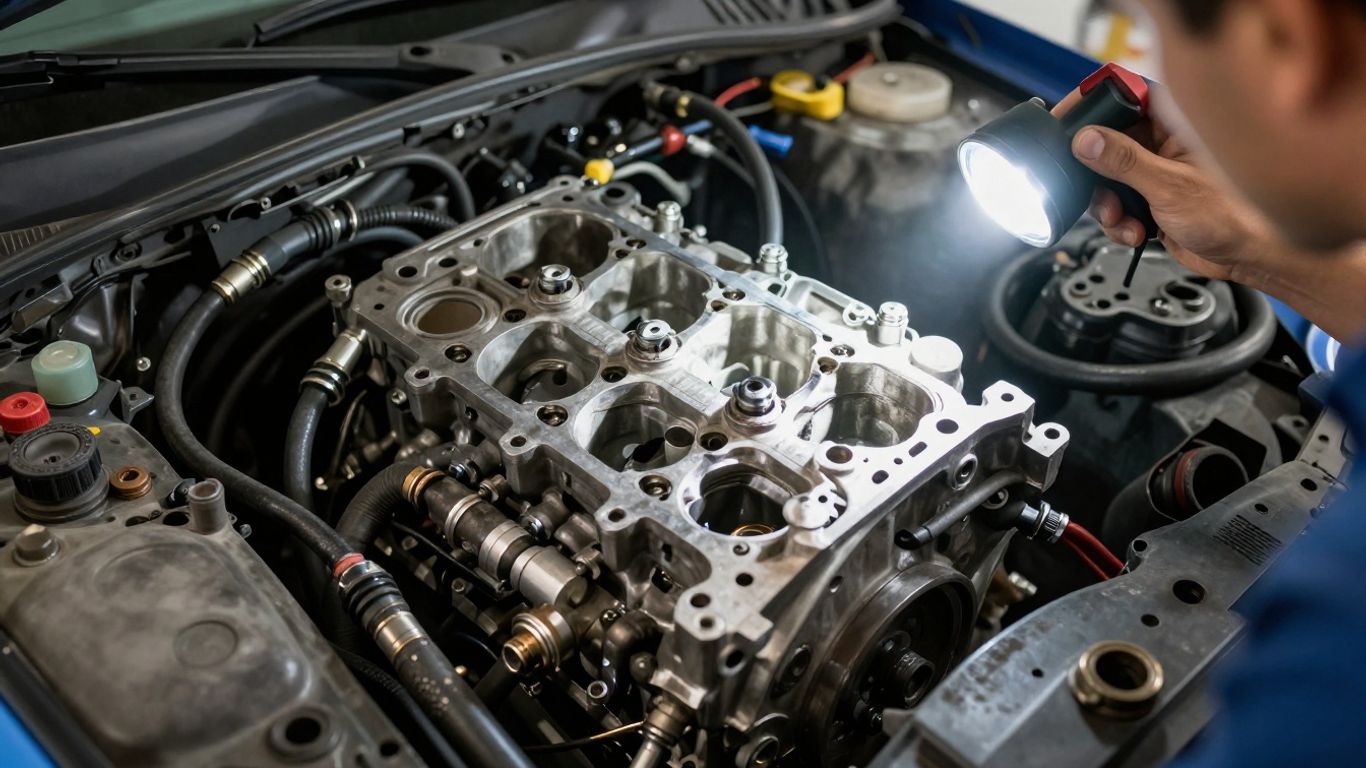
Examine the sump, rocker or valve covers, front cover, rear seal area, oil filter housing, and coolant passages for fresh or baked-on residue. A dirty engine is not automatically defective, but heavy deposits around a joint may indicate a persistent leak. Check the block, head, threaded holes, mounting points, and accessory brackets for cracks or impact damage.
Turn the engine by hand if the seller permits it and the assembly is suitable for that check. Resistance, damaged threads, missing plugs, or signs of water entry deserve an explanation. Photographs should include both sides, the front and rear, and the identification marks rather than only the cleanest angle.
Check compression and internal condition
Compression figures are useful when they are taken consistently across all cylinders and supplied with the test conditions. Uneven readings can point to valve, ring, gasket, or cylinder problems, although a compression test alone is not a complete diagnosis. A leak-down test may provide more information about where pressure is escaping.
Ask whether the engine was tested cold or warm and whether the battery, throttle, and test equipment were suitable. If no figures exist, build the cost of independent testing into the purchase decision. Internal inspection through accessible openings can also reveal sludge, scoring, corrosion, or unusual wear, but it should be done by someone who knows what those signs mean.
Assess cooling, fuel, and ignition components
Inspect the radiator connections, water outlet areas, thermostat housing, fuel rail, injectors, ignition components, and sensor plugs for corrosion or damage. These parts may be included, but they may also be sold separately or supplied only as convenient transport fittings.
Use a simple inspection sequence so important questions are not missed:
- Confirm the engine code and donor details.
- Photograph leaks, cracks, connectors, and missing brackets.
- Obtain compression, leak-down, or running-test information.
- Check which sensors, manifolds, and accessories are included.
After this check, compare the findings with the seller’s description and warranty. A small missing bracket may be easy to replace, while corrosion at a connector or evidence of overheating can change whether the engine is worth considering.
Confirm included parts and accessories
Clarify whether the sale includes the intake and exhaust manifolds, throttle body, alternator, starter, compressor, power-steering equipment, injectors, sensors, wiring, flywheel or flexplate, and engine mounts. The photographs may show parts that are not part of the advertised package.
Ask for a written parts list on the invoice. This prevents confusion when the engine arrives and helps the installer identify which original components should be transferred. It also makes a price comparison fairer: an engine supplied complete may cost less overall than a cheaper bare unit that requires many additional parts.
Estimate the total replacement cost
The purchase price is only one line in an engine replacement budget. Labor, fluids, seals, freight, programming, transferred accessories, and diagnosis can materially change the final amount. Before choosing an engine, ask the workshop for a written estimate based on the specific unit and vehicle.
Compare engine purchase prices
Compare engines by specification and included equipment, not by headline price alone. A seller offering a tested, warranted assembly may appear more expensive than a bare engine, yet the difference can shrink after buying missing accessories and paying for extra inspection work.
A simple comparison table can help organize quotations without pretending that one fixed price applies to every Falcon or Australian location.
| Replacement option | Main advantage | Cost questions to ask |
|---|---|---|
| Used matching engine | Often closest to the original setup | What are the mileage, test results, and warranty? |
| Low-kilometer donor engine | Potentially less wear | How is the mileage documented and how was it stored? |
| Reconditioned engine | Defined rebuilding work may reduce uncertainty | Which parts were machined, replaced, or excluded? |
| Performance or upgraded unit | May suit a planned modification | What supporting hardware, tuning, and approvals are required? |
Use the table as a prompt for better questions, not as a substitute for inspection. Two engines in the same category can differ greatly in condition and included parts.
Account for labor and installation charges
Labor may include diagnosis, draining fluids, removing the old engine, transferring accessories, fitting the replacement, filling systems, programming modules, and road testing. The workshop may also find worn mounts, damaged hoses, clutch components, or cooling-system problems once the engine bay is open.
Ask whether the quoted labor assumes a direct replacement and whether additional time is charged for seized fasteners, mismatched wiring, or parts transfer. Confirm who is responsible for diagnosing a fault after installation. A clear scope reduces disagreements when the actual job takes longer than expected.
Budget for seals, fluids, and replacement parts
Even a sound used engine may need new external seals, filters, coolant, engine oil, belts, hoses, spark plugs, or other service items before it goes into the car. Replacing inexpensive accessible parts during installation can be sensible if their condition is uncertain, but the decision should be based on inspection rather than an automatic parts list.
Ask the mechanic to separate necessary work from recommended preventative work. This gives you room to prioritize safety and reliability while postponing cosmetic or optional upgrades. It also makes the final invoice easier to understand.
Include freight, core charges, and unexpected repairs
Freight can vary with distance, delivery access, packaging, and whether the engine is shipped as a bare assembly or on a pallet. Confirm the delivery condition and inspect the package for impact damage before signing if the carrier’s process allows it. Photograph the engine immediately after arrival.
A core charge may be refundable when the old engine is returned, but check the conditions for acceptance. Set aside a contingency for damaged accessories, wiring faults, cooling issues, or additional diagnosis. That reserve is not a prediction of failure; it is a practical way to avoid stopping the repair halfway through.
Plan installation and post-installation checks
Good installation begins before the old engine leaves the vehicle. The workshop should have the replacement’s identification and parts list in hand, along with the warranty requirements. Planning also gives you a chance to service accessible components and resolve compatibility questions before the car is immobilized.
Prepare the vehicle before engine removal
Record fault codes, symptoms, fluid levels, and any unusual noises before dismantling. Photograph hose routing, wiring connections, brackets, and accessory positions, especially if the replacement is supplied as a bare engine. Confirm that the replacement has been inspected and that the required parts are available.
The mechanic should check the engine bay for worn mounts, damaged wiring, leaking hoses, and cooling-system concerns. If the original failure involved overheating or low oil pressure, identify the cause before installation. Otherwise, the replacement engine may be exposed to the same problem.
Transfer compatible sensors and accessories
Some original accessories may be better matched to the vehicle than those supplied with the donor engine. Sensors, manifolds, injectors, brackets, alternators, starters, compressors, and wiring should be transferred only after checking their compatibility and condition.
Clean mating surfaces, renew agreed seals, and label components during removal. Do not assume that every sensor from the old engine should be reused; a damaged or contaminated part can create a fault that is mistakenly blamed on the replacement engine. The workshop should document which components were retained and why.
Complete ECU programming and wiring checks
After mechanical installation, check every electrical connector, earth strap, hose, fuel connection, and vacuum line before attempting to start the vehicle. The engine may require ECU programming, relearning, or clearing of stored faults, depending on the vehicle and components used.
Confirm that the crank and cam signals, throttle system, injectors, ignition components, charging system, and temperature sensors are communicating correctly. If the engine cranks but will not start, return to the compatibility and wiring evidence rather than replacing parts at random. A diagnostic scan can make that process more orderly.
Run break-in, road testing, and maintenance inspections
Follow the rebuilder’s or workshop’s instructions for initial running and servicing. Monitor oil pressure, coolant temperature, charging voltage, warning lights, leaks, idle quality, and unusual noises during the first start and early road test. Do not treat a short successful idle as proof that every system is ready for normal driving.
Check fluid levels again after the engine cools, inspect for leaks, and complete any required early oil or filter change. Keep the invoice, test results, warranty documents, and service record together. Those records support future maintenance and provide useful evidence if a problem appears during the warranty period.
Conclusion
Buying a Ford Falcon used engine in Australia is less about finding the lowest advertised price and more about matching the right specification to a documented condition and a realistic installation budget. Verify the engine code, donor history, testing, included parts, warranty, and total workshop cost before paying. With those checks completed, a used replacement can be approached as a planned repair rather than a gamble.