
Key Takeaways
A Toyota Hilux reconditioned engine can be a sensible replacement, but only when its specification, condition, warranty, and installation requirements are clear.
- Match the replacement to the exact engine code, displacement, fuel system, and vehicle electronics.
- Understand whether the unit is used, reconditioned, remanufactured, or rebuilt from your original engine.
- Inspect machining, internal parts, timing components, seals, and included ancillary equipment.
- Compare the complete fitted cost rather than focusing only on the advertised engine price.
- Protect the replacement with careful installation, correct fluids, proper cooling, and regular servicing.
Understanding a Toyota Hilux reconditioned engine
Choosing a replacement engine involves more than finding a listing that says Hilux. The same model name can cover several generations, displacements, fuel systems, and electronic configurations. A Toyota Hilux reconditioned engine should therefore be treated as a specification-sensitive component, not a universal plug-in part. Understanding what has been done to the engine is just as useful as understanding what vehicle it came from.
What “reconditioned” means in practice
Reconditioning usually means an engine has been dismantled, cleaned, measured, and assessed before worn or damaged components are repaired or replaced. Machining may include cylinder honing, crankshaft work, or cylinder-head resurfacing, depending on the inspection findings. The exact scope varies between suppliers, so the word alone does not tell you which parts are new, reused, or remanufactured.
Ask for a written description of the work rather than relying on a broad sales label. Useful details include measured clearances, replaced bearings and seals, machining operations, pressure testing, and the checks performed after assembly. A documented process matters because it gives you something concrete to compare between otherwise similar engines.
How reconditioned engines differ from used and remanufactured units
A used engine is generally sold in the condition in which it was removed, with its previous mileage and service history sometimes uncertain. A reconditioned engine has undergone a defined inspection and repair process, although the extent of that process must still be confirmed. A remanufactured engine is usually rebuilt to a more formal standard, often using specified replacement parts and testing requirements, but terminology can differ by market.
These categories are not interchangeable. A low-mileage used engine may be attractive when the budget is tight, while a reconditioned unit may offer more inspection and preparation. The right choice depends on evidence, compatibility, warranty support, and the condition of the vehicle receiving it.
Common Toyota Hilux engine codes and variants
Hilux engines have been offered in different petrol and diesel families across generations and markets. Older vehicles may be identified by codes such as 2L, 3L, or 5L, while later models can use other diesel or petrol codes and different control systems. Even within one broad engine family, changes in turbocharging, injection, emissions equipment, and sensors can affect interchangeability.
Use the engine code stamped or recorded on the vehicle, then compare it with the supplier’s identification details. Displacement alone is not enough. A replacement with the same capacity can still require different manifolds, brackets, wiring, injectors, or control modules.
Why engine compatibility matters beyond vehicle model and year
The model year is a useful starting point, but it does not establish a complete match. Production changes, regional specifications, drivetrain combinations, and previous modifications can all alter what will fit. A careful buyer compares the original engine and proposed replacement at component level.
Before paying, request photographs of the engine-code marking and the major connection points. Check the sump, mounts, intake and exhaust arrangements, sensor locations, and accessory brackets. This approach reduces the risk of receiving an engine that is mechanically similar but expensive to adapt.
Deciding whether reconditioning is the right option
An engine replacement is a major decision, and the cheapest advertised unit is not always the least expensive route. Start by establishing whether the existing engine has suffered a failure that makes replacement sensible, or whether a targeted repair could restore it. Then compare the likely cost, downtime, and risk of each option. A clear diagnosis helps prevent spending money twice.
Signs that your Hilux engine needs replacement
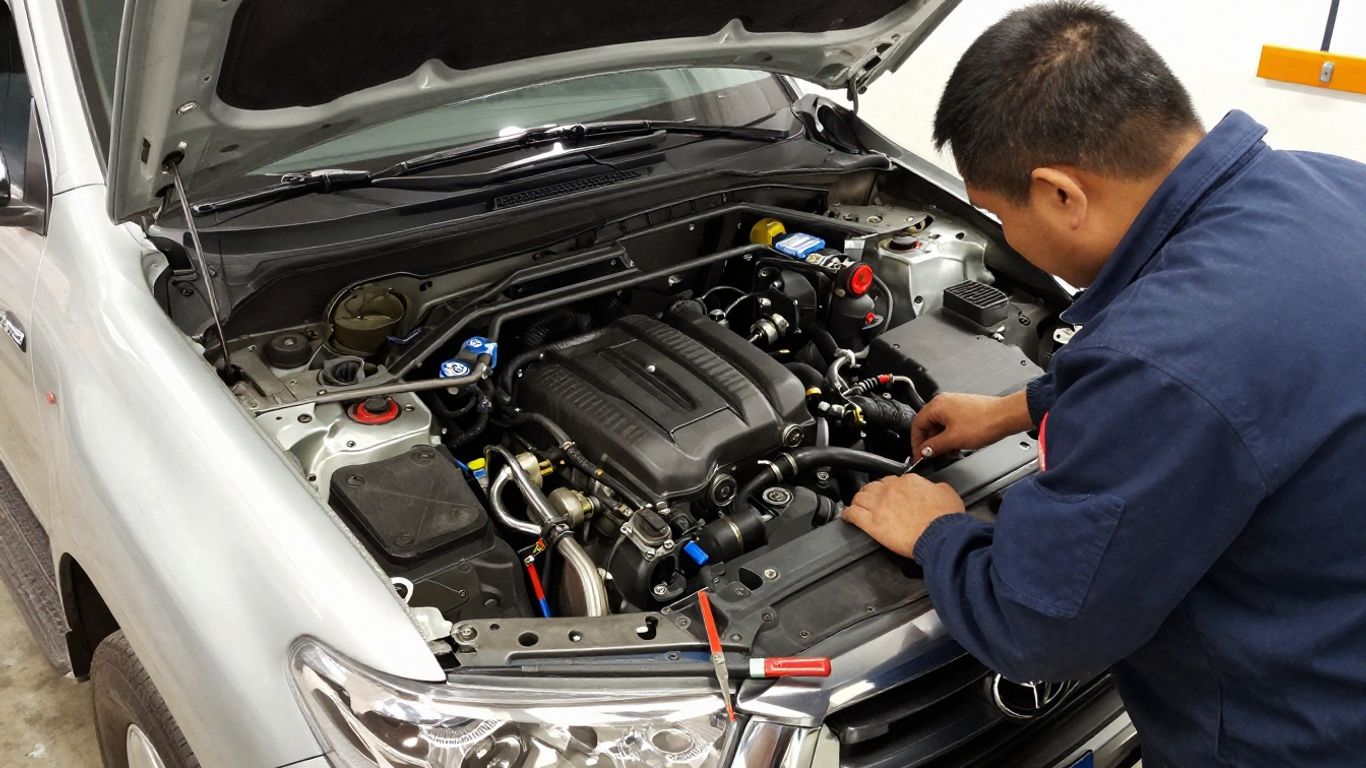
Severe internal damage, repeated low oil pressure, a cracked block, or badly damaged cylinder bores can make replacement more practical than repair. Persistent overheating may also have affected several major components, even if the first symptom appeared to be a failed head gasket. Metal in the oil, heavy knocking, or a seized crankshaft deserves prompt professional assessment.
Do not diagnose replacement from smoke colour or a single fault code alone. Compression testing, leak-down testing, oil-pressure testing, cooling-system checks, and inspection of the drained oil can reveal whether the problem is internal or caused by an external system.
When an engine rebuild may be more practical
Rebuilding the original engine can make sense when its block and crankshaft are serviceable, its specification is known, and a trusted machine shop is available. Keeping the original block may also avoid compatibility issues involving mounts, sensors, wiring, and emissions equipment. The decision becomes less attractive when machining, parts, and labour approach the cost of a properly documented replacement.
A rebuild can be tailored to the vehicle’s actual needs, but it requires a realistic estimate. Ask the workshop to separate inspection costs from machining, parts, assembly, and installation. That makes it easier to compare the rebuild with a reconditioned exchange unit on equal terms.
Comparing reconditioned, used, and new replacement engines
Each engine category carries a different balance of evidence, price, and risk. The comparison below is a starting point, not a substitute for checking the individual unit and its warranty.
| Option | Typical evidence | Main advantage | Main concern |
|---|---|---|---|
| Used engine | Removal source, mileage if known | Often the lowest purchase price | Internal wear and history may be uncertain |
| Reconditioned engine | Inspection and repair records | More preparation than an untested used unit | Scope of work varies by supplier |
| Remanufactured engine | Defined rebuilding and testing standard | Consistent documented process | May cost more and have specific requirements |
| New replacement engine | Manufacturer or authorised supply documentation | Minimal prior operating history | Purchase price can be substantially higher |
The table highlights why price alone is a weak comparison. A used engine may need seals, testing, or accessories, while a reconditioned unit may require an exchange core and installation conditions. Compare what is included, what must be transferred, and what happens if the engine fails.
Evaluating cost, reliability, and expected service life
Estimate the full project cost: engine, freight, fluids, seals, labour, machining or adaptation, and any related cooling or fuel-system work. Reliability is influenced by the replacement engine, but also by the cause of the original failure and the quality of the installation. A replacement fitted into a vehicle with a blocked radiator or contaminated fuel system may not last.
Expected service life should be discussed as an informed estimate, not a promise. Ask how the unit was tested, what parts were replaced, and which maintenance conditions apply to the warranty. A slightly higher initial cost can be reasonable when it buys clearer documentation and better support.
Checking engine compatibility before purchase
Compatibility checks should happen before a deposit is paid or an exchange engine is shipped. Gather the vehicle identification details, original engine code, transmission type, and photographs of the existing installation. Share that information with the supplier and ask for written confirmation of the proposed match. Verbal assurances are harder to resolve when the engine is already in transit.
Matching the engine code and displacement
The engine code is the strongest starting point because it identifies a particular family and configuration more precisely than the Hilux badge. Confirm the displacement as well, since a similar-looking engine may belong to a different series. Check whether the replacement is supplied as a long block, dressed engine, or complete assembly.
Compare the code on the paperwork with the code on the engine itself where possible. If the code is missing, unclear, or inconsistent with the listing, pause the purchase until the discrepancy is explained.
Confirming diesel or petrol specifications
Petrol and diesel engines differ in their fuel delivery, ignition, compression, wiring, and control systems. Even two diesel engines with the same displacement may use different injection equipment, turbochargers, or emissions controls. Confirm the fuel type, aspiration, injection arrangement, and market specification.
The vehicle’s existing components may be transferable, but that should never be assumed. Ask whether the quoted engine includes injectors, pump, intake equipment, exhaust components, sensors, and the appropriate brackets.
Checking turbochargers, fuel systems, and emissions equipment
Turbochargers and fuel systems are often major sources of cost when they are not included or when they caused the original failure. Find out whether the turbocharger is supplied, tested, or expected to be transferred from the old engine. Diesel fuel components may need specialist testing, cleaning, or calibration before installation.
Emissions equipment also affects fitment and legality. Compare exhaust-gas recirculation equipment, sensors, particulate equipment where fitted, and related pipework. A mechanically compatible engine may still create control or inspection problems if these systems do not match.
Verifying transmission, wiring, and ECU compatibility
The replacement must work with the transmission, engine mounts, starter, alternator, wiring harness, and engine control unit. Automatic and manual applications can use different flexplates, flywheels, sensors, or calibration requirements. Check connector locations and accessory arrangements before assuming the original harness will connect directly.
A supplier should be able to explain which parts are transferred from the original engine and which are included. If the ECU requires programming or a security-system procedure, include that work in the plan and budget rather than treating it as an afterthought.
What to inspect in a reconditioned engine
Inspection does not mean dismantling a sealed engine without agreement. It means asking for records, photographs, measurements, and a clear description of the assembly. A reputable supplier should be willing to explain the rebuild scope and identify components that remain the buyer’s responsibility. The more valuable the engine, the more useful written evidence becomes.
Cylinder block, crankshaft, and pistons
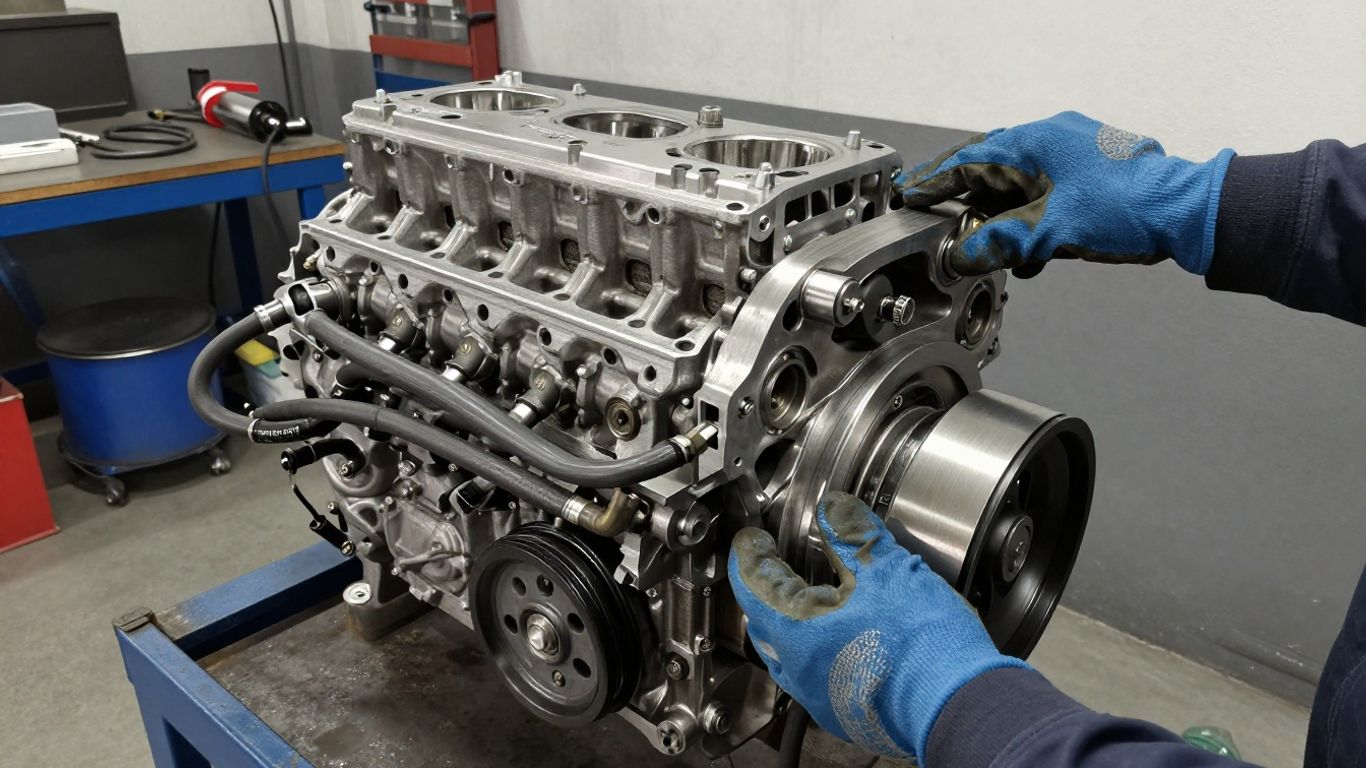
The block should have been checked for cracks, bore condition, deck flatness, and usable dimensions. Ask whether the bores were honed, bored, or sleeved, and whether replacement pistons were selected to match the finished measurements. The crankshaft should be inspected for scoring, cracks, journal dimensions, and correct bearing clearances.
These details matter because an engine can look clean externally while still containing significant internal wear. Request the inspection or machining report where available, including any undersize crankshaft or oversize piston specifications used during assembly.
Cylinder head, valves, and head gasket
The cylinder head should be checked for cracks, warping, valve-seat condition, guide wear, and sealing integrity. Pressure testing is particularly relevant when the original engine overheated. Confirm whether valves, guides, springs, and seals were inspected or replaced, rather than assuming that cleaning alone restored the head.
Head-gasket selection must match the finished engine dimensions and manufacturer requirements. Ask how the head and block surfaces were prepared and whether the fasteners are reusable or require replacement. Correct assembly practices are central to preventing a repeat of a coolant or compression failure.
Bearings, seals, timing components, and oil pump
Bearings and seals are common areas of attention during reconditioning, but the supplier should state exactly what was replaced. Timing belts, chains, tensioners, guides, and related seals may be new, reused after inspection, or excluded altogether. The oil pump also deserves specific attention because poor lubrication can quickly damage a rebuilt engine.
Before accepting the unit, clarify the timing-component brand or specification, the oil-pump inspection process, and whether the engine was primed or rotated after assembly. These questions help distinguish a documented rebuild from a cosmetic clean-up.
Ancillary parts that may not be included
A long block may exclude the turbocharger, injectors, fuel pump, intake and exhaust manifolds, starter, alternator, air-conditioning compressor, water pump, sensors, flywheel, or engine mounts. The phrase “complete engine” is not sufficiently precise unless the included parts are listed. Compare the quote with the components that will actually be removed from your Hilux.
Create a transfer-parts list before the old engine is discarded. It should cover:
- Intake and exhaust manifolds, gaskets, and connecting hardware.
- Turbocharger, oil lines, intercooler plumbing, and related clamps.
- Injectors, fuel-pump components, rails, and electrical connectors.
- Starter, alternator, brackets, mounts, flywheel, or flexplate.
This list makes omissions visible early, when sourcing a missing part is easier. It also helps the installer identify items that should be cleaned, tested, or replaced rather than transferred automatically.
How to assess suppliers, warranties, and pricing
Supplier quality is part of engine quality because support becomes valuable if the unit arrives damaged, does not match, or develops a fault. Look for precise descriptions, accessible technical answers, and paperwork that identifies the engine and work performed. A low price with vague terms can become expensive once freight, exchange charges, and rejected warranty claims are added.
Questions to ask an engine supplier
Ask for the exact engine code, displacement, fuel type, included components, inspection scope, and test results. Confirm whether the unit is a long block, dressed engine, or complete assembly, and ask what must be transferred from the original. Also request the warranty document before ordering, not after installation.
The supplier should explain packaging, delivery damage procedures, return arrangements, and any installation requirements. If the answers change between the listing, telephone call, and invoice, have the final terms corrected in writing.
Understanding exchange-engine requirements
An exchange arrangement usually means the buyer returns a qualifying old engine or pays a refundable core charge. The returned unit may need to be the same engine code or a matching type, and missing or damaged major components can affect the refund. Confirm the deadline, freight responsibility, packaging requirements, and inspection process.
Photograph the old engine before collection and keep the shipping receipt. If the core is not serviceable, ask how the supplier determines that condition and how any deduction is calculated. This is a commercial term, not a minor administrative detail.
Comparing warranty terms and exclusions
Warranty periods are only one part of the protection. Read what is covered, who pays labour and freight, what evidence is required, and which parts are excluded. Many warranties depend on documented installation, correct fluids, cooling-system condition, fuel-system testing, or scheduled servicing.
Pay close attention to exclusions for overheating, low oil pressure, contaminated fuel, failed ancillary components, racing, towing, or modifications. A warranty can be useful, but it does not remove the need to correct the cause of the original engine failure.
Identifying hidden costs in the total replacement price
A quote should be expanded until it reflects the vehicle running again, not merely an engine sitting on a pallet. Add freight, core charges, gaskets, fluids, filters, belts or chains, hoses, labour, programming, testing, and disposal. Include likely repairs to the cooling, fuel, or exhaust systems if the diagnosis points in that direction.
Compare suppliers using the same checklist and the same definition of “complete.” The installed total is the meaningful number, especially when a cheaper engine excludes accessories that are already worn or damaged.
Preparing for installation and long-term reliability
A replacement engine is only one part of the repair. The workshop must identify why the original engine failed and remove that cause before starting the new one. Clean installation practices, correct specifications, and careful commissioning are more valuable than rushing the vehicle back into service. Good preparation also creates useful evidence if a warranty issue later arises.
Parts to replace before fitting the engine
Replace routine service items that are difficult or expensive to reach once the engine is installed. Depending on the engine design and supplier instructions, this may include seals, filters, belts or chains, tensioners, thermostat, water pump, hoses, and accessible sensors. Do not replace parts blindly; use the engine’s condition and maintenance history to prioritise.
The clutch or flexplate area should also be inspected while access is available. Examine engine mounts, drive belts, vacuum lines, and exhaust connections before the replacement is lowered into position.
Installation checks for cooling and lubrication systems
Flush contamination from the cooling system and verify radiator condition, fan operation, thermostat function, and hose integrity. If the original engine overheated, simply refilling the system is not enough. Check for blocked passages, a faulty fan, a damaged water pump, or an incorrectly working pressure cap.
The lubrication system should receive equal care. Clean or replace the oil cooler and lines where contamination is possible, fit the correct filter, use the specified oil, and prime the system according to the engine builder’s procedure. Confirm oil pressure promptly during commissioning.
First-start and break-in procedures
Before the first start, verify fluid levels, fuel connections, electrical grounds, timing, belt routing, and sensor plugs. Crank or prime the engine as specified so lubrication reaches critical areas before sustained running. Once started, monitor oil pressure, coolant temperature, leaks, charging voltage, unusual noise, and exhaust behaviour.
Follow the supplier’s break-in instructions rather than applying a generic routine. Early inspection for leaks and fastener issues can prevent a small installation problem from becoming internal damage. Record the first-start date, mileage, fluids, and any readings requested by the warranty.
Maintenance practices that protect the replacement engine
Use the correct oil, filters, coolant, and service intervals for the exact engine specification. Check fluid levels regularly, respond quickly to temperature or oil-pressure warnings, and inspect for leaks during routine servicing. Turbocharged diesel engines in particular benefit from clean oil, sound intake plumbing, and properly maintained cooling systems.
Keep invoices and service records together with the rebuild and warranty documents. If the vehicle works hard, tows, travels in dust, or spends long periods idling, discuss whether its maintenance schedule should be more frequent than the standard interval.
Conclusion
A Toyota Hilux reconditioned engine can restore a valued vehicle without the uncertainty of an unexamined used unit, but the result depends on careful matching, transparent rebuild information, realistic pricing, and disciplined installation. Confirm the engine code and included parts, read the warranty, investigate the original failure, and budget for the supporting work that makes the replacement reliable. Taking those steps turns an engine purchase into a considered repair rather than a gamble.