
Key Takeaways
Choosing a replacement engine is less about finding the lowest advertised price and more about confirming that the engine fits the vehicle, budget, and intended use.
- Identify the Patrol generation, model year, engine code, and displacement.
- Compare used, rebuilt, and reconditioned engines by condition and warranty.
- Confirm mechanical, electrical, emissions, fuel-system, and transmission compatibility.
- Request testing records, service history, photos, and identifying numbers.
- Budget for shipping, installation, related parts, fluids, and post-installation checks.
Define your Nissan Patrol engine requirements
Before searching for a Nissan Patrol engine for sale, establish exactly what the vehicle needs. The same model name can cover multiple generations, engine families, drivetrains, and market specifications. A few minutes spent collecting the vehicle details can prevent an expensive mismatch later.
Identify the Patrol generation and model year
Start with the vehicle identification number, model year, body style, and original engine information. The generation matters because mounting arrangements, electronics, fuel systems, and accessory layouts can change between production periods. Do not rely on a seller’s use of “Patrol” alone; ask for documentation that ties the engine to a specific vehicle or application.
If the vehicle has already received modifications, record those too. An engine that suits an unmodified example may require additional work when paired with a different cooling system, exhaust arrangement, or wiring setup.
Match the engine code and displacement
The engine code is usually more useful than displacement by itself. Two engines with the same capacity may differ in sensors, intake and exhaust components, compression, emissions equipment, or control systems. Compare the code stamped on the replacement with the code recorded in the vehicle documents and service history.
Ask the seller whether the quoted engine is complete or supplied as a long block. A long block may leave you responsible for transferring the intake, alternator, starter, fuel equipment, sensors, manifolds, and other external parts.
Compare petrol and diesel engine options
Petrol and diesel versions bring different fuel-system, cooling, electrical, and exhaust requirements. They also deliver different driving characteristics and may have different availability in the used-parts market. Choose the type that matches the vehicle’s original specification unless a qualified workshop has designed and priced a complete conversion.
Fuel economy alone should not decide the purchase. Consider towing, off-road use, local fuel availability, maintenance support, registration requirements, and the condition of the engine you can actually source.
Confirm the vehicle’s transmission and drivetrain
Check whether the vehicle uses an automatic or manual transmission and whether it drives the rear wheels, all four wheels, or a system that can switch between them. The engine may need a particular bellhousing pattern, flexplate or flywheel, crank position sensor, transfer-case arrangement, and front accessory layout.
Confirm these details before paying a deposit. A seemingly suitable engine can become costly if the transmission interface or drivetrain hardware requires unplanned replacement.
Choose between used, rebuilt, and reconditioned engines
The right condition category depends on the vehicle’s value, repair urgency, expected mileage, and tolerance for risk. A used unit may be economical, while a rebuilt or reconditioned option can offer more documented work. Read the description carefully because sellers do not always use these terms consistently.
Assess the benefits of a used Nissan Patrol engine
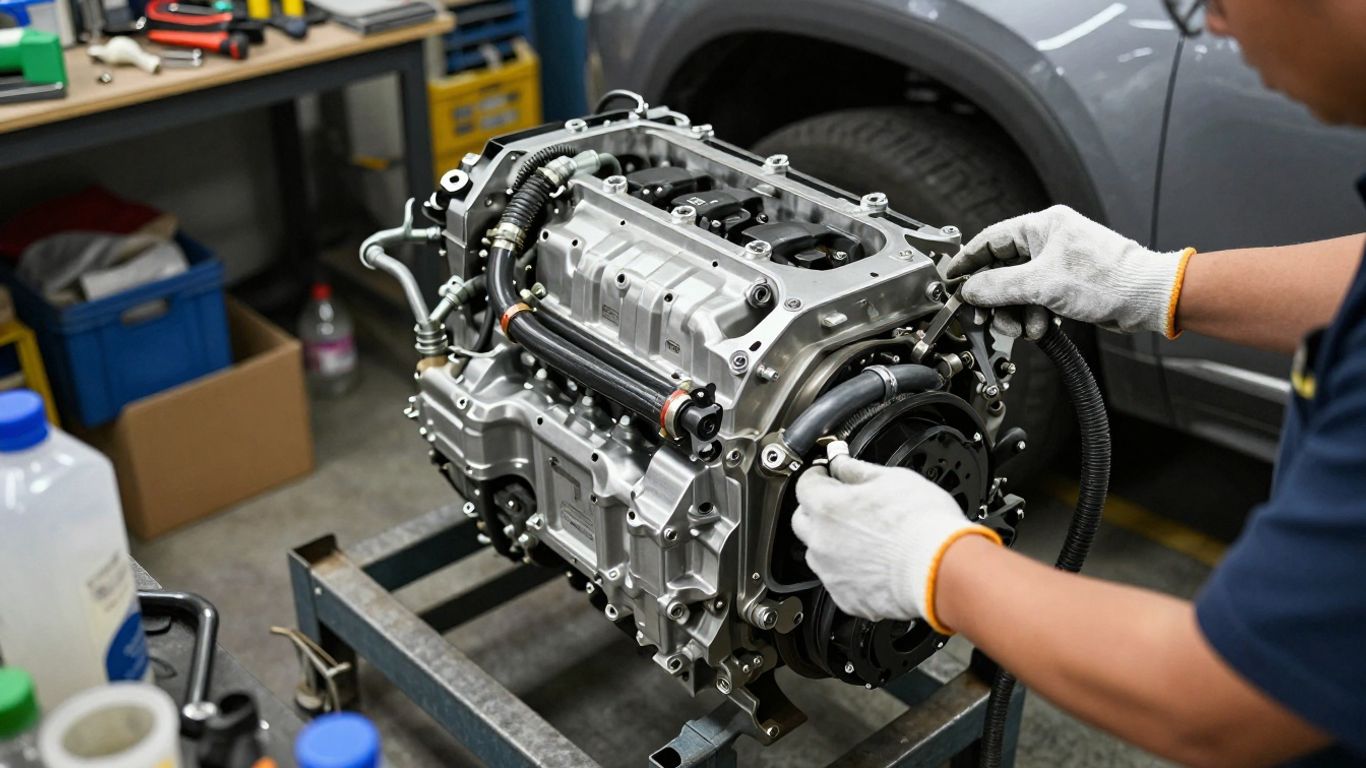
A used engine is typically removed from another vehicle and sold in its existing condition, aside from basic inspection or preparation. Its main attraction is often a lower purchase price and faster availability. It can be a sensible choice when the donor engine has verifiable mileage and the replacement is otherwise close to the original specification.
The risk is uncertainty about internal wear. Ask what testing was performed, whether the engine was running before removal, and which parts are included. A low price has less value if seals, cooling components, or internal parts soon require attention.
Understand what a rebuilt engine includes
A rebuilt engine has been disassembled and repaired using a defined scope of work. That scope may include machining, new bearings, seals, gaskets, or selected replacement parts, but the details vary widely. Request a written build sheet rather than accepting the word “rebuilt” as a complete description.
The build sheet should identify measurements, replaced components, machining operations, and any parts reused during assembly. It should also state whether ancillary components are included or whether you must transfer them from the failed engine.
Evaluate reconditioned engine quality
“Reconditioned” can describe an engine that has been cleaned, inspected, and fitted with selected replacement parts, but the standard is not universal. Ask which tolerances were checked and whether the cylinder head, crankshaft, pistons, and oil system were examined. The more specific the documentation, the easier it is to compare one offer with another.
A reconditioned engine may be appropriate when you want more assurance than a basic used unit without commissioning a complete custom rebuild. Make sure the work performed matches the vehicle’s intended workload and the seller’s warranty terms.
Compare warranty coverage and expected lifespan
Warranty length is only one part of the comparison. Check whether coverage begins at delivery or installation, who pays labor for a failed unit, and whether required installation procedures must be followed. Also ask whether the warranty covers the complete engine or only specified internal parts.
Expected lifespan should be discussed as an estimate, not a promise. It depends on the engine’s starting condition, installation quality, cooling system, oil changes, operating load, and maintenance after the swap.
Check engine compatibility before buying
Compatibility reaches beyond the engine block. A replacement can appear identical while differing in brackets, sensors, software, emissions equipment, or transmission interfaces. Treat the purchase as a system match and verify each connection that will affect installation and operation.
Verify mounting points and external components
Compare the block, engine mounts, oil pan, accessory brackets, intake, exhaust manifolds, and cooling connections with the parts already in the vehicle. Photographing the failed engine before removal can help identify components that need to be transferred. Confirm whether the replacement includes those external parts or only the core assembly.
Also check clearance around the radiator, steering equipment, chassis, and air-conditioning hardware. Small differences can turn a straightforward replacement into fabrication, parts sourcing, or additional labor.
Confirm ECU, wiring, and sensor compatibility
The engine must communicate correctly with the vehicle’s electronic control units and wiring harness. Compare crank and cam sensors, throttle equipment, injectors, oxygen or temperature sensors, connectors, and immobilizer-related components. Ask a technician to identify whether the original control system can be retained.
Do not assume that physically plugging in a harness makes the system compatible. A mismatch may create starting problems, warning lights, poor running, or a vehicle that requires additional programming and diagnostic work.
Match emissions and fuel-system requirements
Fuel delivery and emissions equipment should match the vehicle’s market specification and registration requirements. Check the fuel pump arrangement, injectors, rails, filters, evaporative controls, catalytic equipment, exhaust sensors, and any diesel-specific systems relevant to the vehicle.
A replacement that runs mechanically but does not meet local requirements may not be a practical repair. Confirm the rules with the workshop or inspection authority before importing or modifying an engine.
Check compatibility with automatic and manual transmissions
The transmission interface must be checked at the crankshaft and bellhousing, not just by engine family. Automatic applications may require a specific flexplate, torque-converter relationship, starter position, and transmission control arrangement. Manual applications may differ in flywheel, clutch, pilot bearing, and release hardware.
Have the installer confirm which original parts can be reused. This is also the point to identify damaged transmission components that may have contributed to the original failure.
Evaluate the condition of an engine for sale
A listing can provide a useful starting point, but it cannot replace evidence about condition. Look for consistent details about mileage, testing, storage, removal, and included parts. When the seller avoids basic questions, treat that as part of the risk calculation.
Review mileage and service history
Mileage is useful only when it is supported by records or a credible donor-vehicle history. Ask for service invoices, oil-change evidence, inspection notes, and the reason the engine was removed. A higher-mileage engine with clear maintenance records may be a safer proposition than a low-mileage unit with no history.
Check whether the mileage applies to the complete engine or only the donor vehicle. Replacement components may have been installed at different times, so request the history of major internal work as well.
Inspect compression and leak-down test results
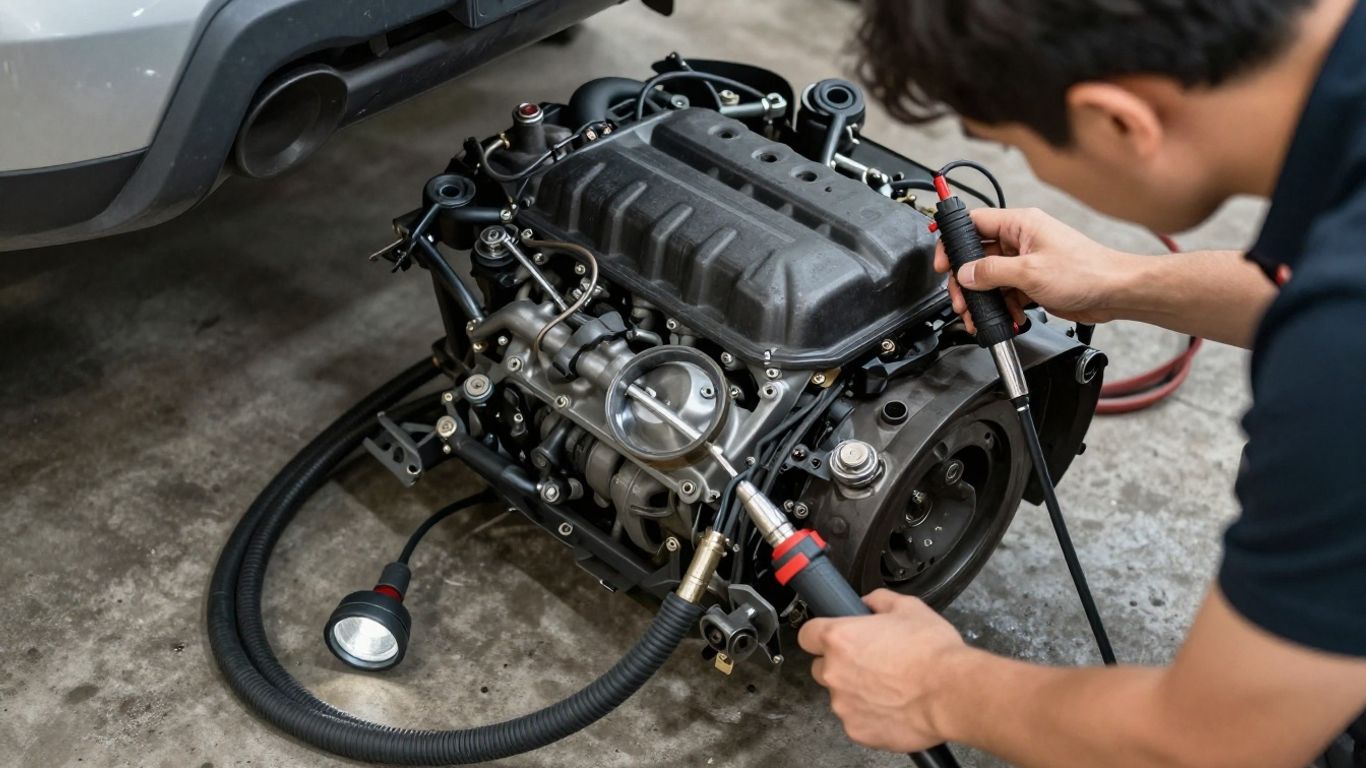
Compression testing can reveal differences between cylinders, while a leak-down test helps indicate where pressure is escaping. Request the readings for every cylinder, along with the test conditions and equipment used. Numbers without context are difficult to compare, particularly if the engine was tested cold or with the throttle closed.
Have a qualified technician interpret the results alongside oil pressure, noise, smoke, and starting information. A test report is valuable, but it is only one part of the assessment.
Look for signs of overheating or oil damage
Inspect for warped surfaces, discolored metal, coolant residue, sludge, metallic particles, damaged hoses, and evidence of repeated overheating. Ask whether the engine suffered a head-gasket failure, cooling-system blockage, low-oil event, or water entry. These incidents can leave damage that is not obvious in exterior photographs.
The oil filler area, drain plug, coolant passages, and cylinder head deserve particular attention. If inspection is possible, a borescope and fluid analysis can provide more information before purchase.
Request photos, inspection reports, and serial numbers
A serious seller should be able to provide clear photographs of the engine from multiple angles, including identifying marks and major connection points. Ask for inspection or test reports, the donor vehicle details where available, and the engine serial number. Keep copies of the listing and correspondence so the agreed condition is documented.
Use a short request list to keep the conversation practical:
- Engine code, serial number, and stated mileage
- Compression or leak-down readings for each cylinder
- Included accessories and external components
- Storage, removal, and inspection details
These answers will not eliminate every risk, but they make vague listings easier to separate from offers that can be evaluated. They also give the installer better information before the engine arrives.
Compare Nissan Patrol engine prices and seller terms
The advertised price is only the first figure in the replacement budget. A Nissan Patrol engine for sale may be quoted as a bare engine, a complete assembly, or an installed replacement, and those descriptions can represent very different totals. Compare offers on an equivalent basis before deciding which is cheapest.
Understand the factors that affect engine cost
Price is influenced by engine type, code, displacement, mileage, availability, testing, refurbishment work, included accessories, and warranty coverage. A complete, tested engine may cost more than a bare unit but reduce the number of parts and labor hours needed for installation.
Condition and documentation should be weighed alongside the price. A documented difference matters when two engines look similar in a short online listing but carry very different levels of evidence and support.
Calculate shipping, installation, and core charges
Add freight, packaging, insurance, taxes or import costs, workshop labor, fluids, filters, belts, seals, and diagnostic work. Some sellers also charge a refundable core fee or expect the failed engine to be returned within a defined period. Ask when each charge is payable and what condition the core must be in.
A written estimate from the installer is useful because it can identify transfer work, seized fasteners, damaged mounts, and likely calibration time. Build a contingency into the budget for findings that cannot be seen until removal.
Compare private sellers, specialists, and dealerships
Private sellers may offer attractive prices but limited records or support. Parts specialists may provide broader inventory, testing information, and defined shipping procedures. Dealership channels may offer stronger documentation for a particular specification, although the price and availability can differ.
The best seller is the one that can clearly state what is being sold, how it was checked, what it includes, and what happens if it fails. A polished listing is not a substitute for those answers.
Review return policies and warranty exclusions
Read the terms before paying, especially the requirements for professional installation, oil priming, fluid choice, break-in, and diagnostic documentation. Identify exclusions for overheating, contaminated fluids, modifications, racing, towing, or unrelated vehicle faults. Also check whether labor, freight, seals, and accessories are excluded.
Keep every invoice and installation record. If a problem develops, those documents may be required to establish that the engine was installed and maintained according to the agreement.
Plan the Nissan Patrol engine replacement
A replacement engine is a project with several stages, not simply a part delivered to a workshop. Planning helps coordinate diagnosis, purchasing, removal, installation, and testing. It also reduces the chance that the vehicle sits unfinished while a small missing component is sourced.
Prepare the vehicle before installation
Confirm the original failure before ordering the replacement. A seized engine may have been caused by a cooling, lubrication, fuel, electrical, or transmission problem that could damage the next unit. Inspect the radiator, hoses, oil cooler, wiring, mounts, exhaust, and transmission while access is available.
Clean the engine bay and label disconnected connectors and hoses during removal. Photographing routing and bracket positions can make reassembly faster and prevent avoidable errors.
Replace related components during the engine swap
Some parts are inexpensive to replace when the engine is already out but difficult to reach later. Discuss belts, hoses, seals, filters, spark plugs or glow plugs, clutch hardware, fluids, and accessible sensors with the installer. The exact list should reflect the engine type and the condition of the existing components.
Do not replace parts automatically without inspection. Instead, compare their cost and access time with the consequences of having to remove the engine again.
Budget for labor, fluids, and calibration
Labor can include diagnosis, removal, transferring accessories, installation, filling and bleeding systems, programming, road testing, and returning the failed engine. Include shop supplies and disposal charges as well. A low purchase price can lose its advantage if the replacement requires extensive transfer work or electronic calibration.
Ask the workshop for assumptions behind the estimate and for an approval process if additional work is discovered. This keeps the final bill easier to manage.
Complete post-installation testing and break-in procedures
Before driving normally, inspect for leaks, verify fluid levels, confirm warning-light behavior, and check temperature and oil pressure. Scan the vehicle for diagnostic codes and test the charging, cooling, fuel, transmission, and four-wheel-drive systems as applicable. The installer should also confirm that the engine starts, idles, and responds correctly under controlled conditions.
Follow the seller’s written break-in and maintenance instructions if the engine is rebuilt or reconditioned. For any replacement, schedule an early fluid and filter inspection and stop driving if overheating, unusual noise, smoke, or loss of pressure appears.
Conclusion
The safest way to buy a replacement engine is to match the exact vehicle specification, verify the engine’s condition, read the seller’s terms, and price the complete installation rather than the listing alone. With careful records and a workshop inspection, the search becomes a practical comparison instead of a gamble.