

Key Takeaways
A good parts purchase starts with clear vehicle details and a precise description of the job. Compare fit, condition, total cost, and support before committing.
- Identify the repair and decide what type of part suits it.
- Confirm fit using vehicle details, part numbers, and specifications.
- Check the part’s condition and exactly what is included.
- Compare warranty, return terms, availability, and total cost.
- Ask about delivery, pickup, and help if something does not fit.
Identify the parts and support you need
Choosing a Gold Coast car parts supplier is easier when you know what the repair requires before you start calling or browsing. A clear description helps narrow down the part and makes it easier to compare suitable options. Think about whether you also need guidance on fitment or installation, since those needs can affect your choice.
Match the part to your repair or maintenance job
Start with the symptom or maintenance task, then identify the component that needs attention. If a mechanic has diagnosed the problem, use their description and any part details they provide rather than guessing from a general symptom. For routine maintenance, note the service item and the interval or specification recommended for your vehicle.
Decide whether you need new, used, or aftermarket parts
The right condition depends on the component, your budget, and how you plan to use the vehicle. Genuine parts, aftermarket options, and used parts can differ in source, condition, and price, so ask what each option means for the particular item. The car parts network connects customers with quality used, genuine, and aftermarket parts, giving you categories to ask about rather than assuming every type suits every repair.
Note your vehicle’s make, model, year, and engine details
Gather the full vehicle details before requesting a quote. A model name alone may not be enough: engine, transmission, trim, and production year can all help distinguish versions. If you have the owner’s manual, service record, or previous invoice, check those documents for useful specifications.
Consider whether you need fitting advice or installation
Parts supply and installation are separate needs, so clarify which one you are looking for. Ask whether the supplier can help identify the correct item and whether fitting advice is available; do not assume that purchasing a part includes installation. Before you contact a supplier, it can help to have these details ready:
- The repair or maintenance task and any mechanic’s diagnosis
- Vehicle make, model, year, and engine information
- The part number, if you have it, and a photo of the existing part
- Whether you need collection, delivery, or installation arranged separately
This short preparation can make the conversation more focused. It also gives the supplier a clearer basis for checking what may suit your vehicle.
Check part compatibility before you buy
A part that looks right can still be wrong for a particular vehicle version. Confirming compatibility before payment can help avoid delays, extra freight, and the hassle of arranging a return. Use more than one identifier where possible, and keep a record of what the supplier checked.

Use your VIN or registration details to confirm fit
A vehicle identification number or registration details can help a supplier look up the vehicle configuration, but provide them accurately and ask what information was used to confirm the match. If you are ordering online or by phone, double-check the characters before submitting them. Treat a lookup as part of the confirmation process, not a reason to skip checking the part’s own specifications.
Compare part numbers and specifications
When a number is printed on the old component or listed in a service document, share it with the supplier and ask whether it matches the replacement being quoted. Numbers may change across revisions, so confirm the full reference and relevant specifications rather than relying on a partial match. A simple comparison can make the conversation more concrete:
| Detail to compare | What to check | Why it helps |
|---|---|---|
| Part number | Full number and any suffix | Distinguishes similar-looking versions |
| Dimensions | Measurements and connection points | Helps identify physical fit differences |
| Electrical details | Connector type and stated ratings | Flags variations in electrical components |
| Included items | Brackets, seals, or related pieces | Clarifies whether anything else is needed |
Use the table as a prompt for questions, not as a substitute for vehicle-specific confirmation. If a number differs, ask the supplier to explain whether it is a valid replacement for your exact application before you order.
Check compatibility for trims, engines, and model years
Vehicles can have different components within the same model range. Confirm the engine and trim, and be as precise as you can about the year or build period if the supplier asks. For parts affected by a mid-year change, a broad description such as “fits this model” may not settle the question; ask which versions are covered.
Ask about alternatives when the exact part is unavailable
If the specific part cannot be supplied, ask whether there is a verified replacement or another suitable option. Request the alternative’s part number and the basis for the compatibility check, then compare its condition, included components, and return terms. The car parts network is described as connecting customers with parts through a broad network; still, confirm availability and suitability for your particular vehicle directly.
Compare part condition and quality
Price is only one part of the decision. The item’s source, condition, and completeness can matter just as much, especially when comparing a new component with a used one. Ask specific questions and get clear answers about the individual part being offered.
Understand the differences between OEM, aftermarket, and used parts
Ask the supplier to explain whether a part is genuine, aftermarket, or used, and what that description means for the item you are considering. These labels do not, by themselves, tell you whether a part is the right fit or what condition it is in. Compare the actual specification, source information available, and price before deciding.
Ask how used parts are inspected and tested
Inspection practices can vary depending on the component. Ask what checks have been carried out, whether the part has been tested, and whether any limitations are known. The answer should be specific enough for you to judge whether the item is appropriate for the repair; if the details are unclear, request clarification before paying.
Check for damage, wear, or missing components
For a used part, request clear photos or inspect it in person if that is an option. Look for cracks, corrosion, worn contact points, damaged connectors, or signs that the component has been altered. A close inspection is especially useful where a small defect could affect installation or operation.
Confirm what is included with the part
Check whether the quote covers only the main component or includes associated pieces such as fasteners, seals, brackets, or wiring. Do not assume that an item shown in a photo is included unless the supplier confirms it. A complete list of included items helps you spot extra purchases before work begins.
Review warranties, returns, and consumer protections
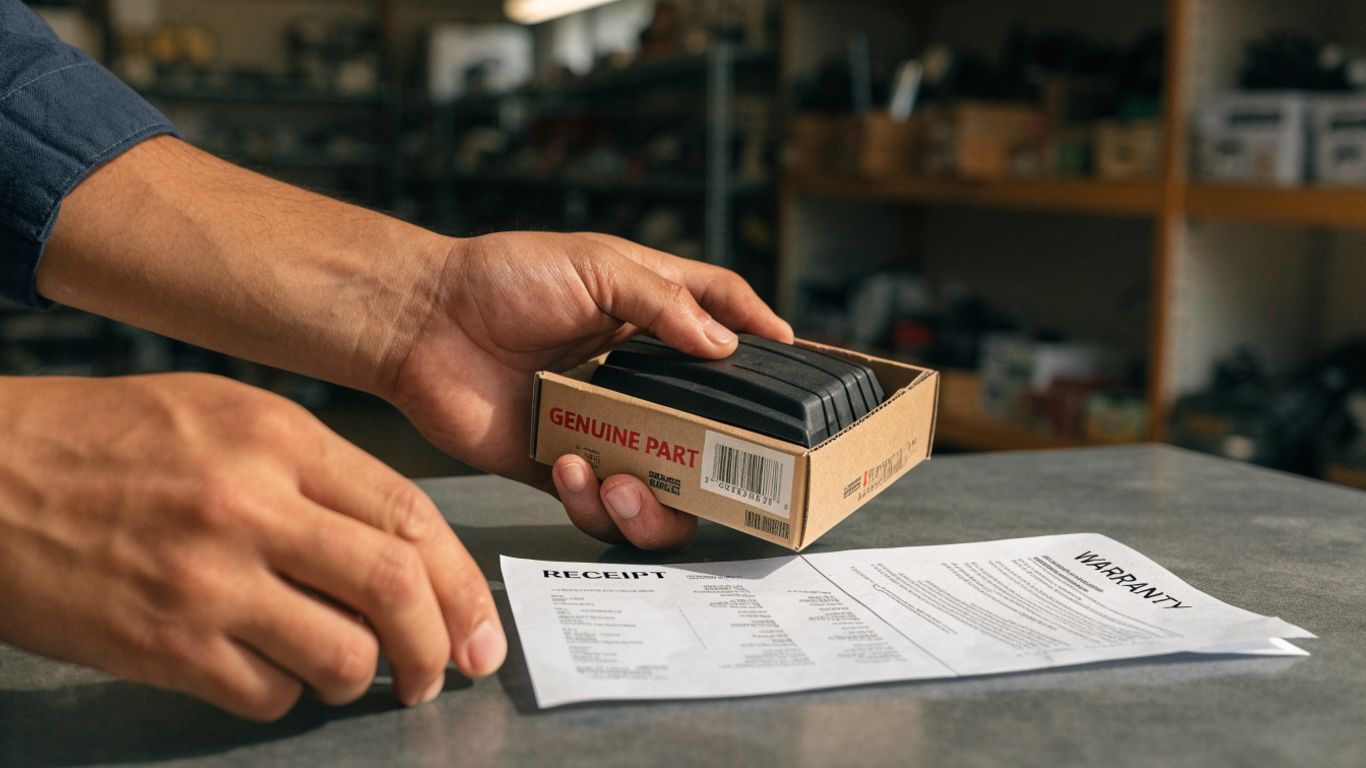
Before you pay, understand what happens if the part is faulty, does not fit, or is supplied incorrectly. Terms may differ by supplier and part type, so ask for the applicable policy rather than relying on a general assumption. Keep written records in case you need to refer back to what was agreed.
Check the warranty period and what it covers
Ask how long any warranty lasts and what conditions apply. Find out whether coverage differs for new, aftermarket, and used parts, and whether installation or diagnosis is relevant to a claim. A clear explanation helps you compare offers on more than the upfront price.
Confirm the return window and restocking conditions
Check the number of days allowed for a return and whether the item must remain unused or in its original packaging. Ask if a restocking fee, freight charge, or other condition applies. If you are ordering a special item, confirm the return terms before the order is placed.
Keep receipts and written compatibility advice
Save the invoice, order confirmation, part number, and any messages about fitment or condition. If a supplier confirms compatibility verbally, ask for that advice in writing or note the date and details of the conversation. These records make it easier to explain the situation if a problem arises.
Ask how faulty or incorrectly supplied parts are handled
Find out who to contact and what information they will need if the item is faulty or does not match the order. Ask whether you should stop installation and how inspection, replacement, or return arrangements are handled. Clear steps in advance can prevent confusion when a repair is already underway.
Compare prices and availability
A useful comparison looks beyond the first quoted figure. Check what the price includes, whether the item is actually available, and how long delivery or a special order may take. The best-value option is the one that meets the repair’s needs at a total cost and timeframe you can accept.
Request itemized quotes from multiple suppliers
Ask each supplier to separate the part price from delivery, tax, and any other charges that apply. Give them the same vehicle details and part specification so that you are comparing like with like. The car parts network aims to make finding parts fast and affordable, but confirm the specific price and option available for your request.
Check stock levels and special-order timeframes
Ask whether the item is on hand, held elsewhere, or needs to be ordered. Get an estimated timeframe and check whether it is confirmed or subject to change. If the repair is time-sensitive, a clear estimate matters as much as a low price.
Factor in delivery, collection, and fitting costs
Calculate the total cost from purchase through to installation. Collection may be practical for some buyers, while delivery can affect both cost and timing; fitting is a separate expense unless explicitly included. Ask what arrangements are available rather than assuming delivery coverage or installation service.
Weigh savings against condition and warranty coverage
A cheaper option may be worthwhile, but compare it with the part’s condition, return terms, and warranty. Consider how much time a delay or unsuitable part could add to the repair. Looking at the full picture helps you choose an option that fits both the job and your budget.
Assess service and fulfilment options
Once you have identified a suitable part, check how it will reach you and what support is available if questions come up. Service arrangements can influence whether a supplier works for your schedule, particularly when a vehicle is off the road. Confirm the details for your location and order instead of assuming a general service applies everywhere.
Ask about local pickup and delivery across the Gold Coast
Ask whether collection is available and whether delivery reaches your specific area on the Gold Coast. Confirm any fees, cut-off times, and what information is needed to coordinate an order. The business describes a network serving customers across Melbourne, Sydney, Brisbane, and nationwide, so check directly whether a particular Gold Coast delivery or pickup arrangement is available.
Confirm dispatch times for urgent repairs
If the repair is urgent, ask when the part can be dispatched or collected and whether that estimate depends on stock confirmation. Clarify the likely arrival time rather than relying only on a general dispatch window. This makes it easier to decide whether the option fits your repair schedule.
Check whether staff can help identify uncommon parts
For an unusual or hard-to-identify component, share the vehicle details, part number, and photos of the original item if available. Ask what information the staff member needs to search for a match and how they will confirm it. Accurate details can make the identification process more useful, even when the part is unfamiliar.
Clarify support if the part does not fit or perform as expected
Before ordering, ask who to contact if the part arrives and appears incorrect or does not work as expected. Confirm whether you should avoid installation until compatibility is checked and what documentation may be required. With those steps understood, you can choose a supplier based not only on the part itself but also on the clarity of the service around it.
Conclusion
Choosing the right supplier comes down to careful fitment checks, an honest comparison of condition and cost, and clear expectations about returns and fulfilment. Bring your vehicle details, ask direct questions, and get important advice in writing before ordering. That preparation can make finding the right part a more straightforward part of getting the repair done.