

Key Takeaways
A dependable rebuild starts with confirming the failure, then choosing a specialist who can explain the work clearly. The right shop will connect measurements, parts, costs, and warranty terms into one understandable plan.
- Confirm internal engine damage before authorizing a rebuild.
- Look for Subaru-specific experience and verifiable machining practices.
- Compare rebuild specifications, parts quality, and intended use.
- Get estimates that explain inspection findings and possible changes.
- Record measurements, components, break-in steps, and warranty coverage.
Determine whether your Subaru needs an engine rebuild
An engine rebuild is a substantial repair, so the diagnosis should come before the sales conversation. Some symptoms come from cooling, ignition, fuel, or accessory problems rather than internal damage. A careful technician separates those possibilities with testing instead of assuming the worst. That process helps you decide whether rebuilding, repairing, or replacing the engine makes practical sense.
Common symptoms of internal engine damage
Persistent blue smoke, low compression, heavy oil consumption, knocking, and metal in the oil can point toward internal wear. A Subaru that overheats repeatedly may also have damaged heads, cylinders, bearings, or sealing surfaces. None of these signs proves that a rebuild is necessary by itself, but several appearing together deserve prompt inspection.
Pay attention to changes in oil pressure, coolant level, exhaust color, and starting behavior. A rough idle or misfire may be caused by something relatively simple, while a deep knock that follows engine speed is more concerning. Continuing to drive with severe symptoms can turn a repairable problem into a larger parts and machining bill.
Rebuild versus replacement engine options
A rebuild keeps the existing engine’s main structure when its block, crankshaft, and other major components can be measured and restored within acceptable limits. A replacement engine may be more sensible when the core is badly damaged, unavailable for machining, or too expensive to return to service. The decision should account for the vehicle’s condition, mileage, purpose, and expected ownership period.
Ask whether a replacement is new, used, remanufactured, or rebuilt, and ask what testing supports that description. A lower initial price does not necessarily mean lower total cost if installation reveals compatibility issues or the unit has an uncertain history. Conversely, rebuilding may not be wise if the rest of the vehicle needs major work.
When a head gasket repair is not enough
A head gasket repair addresses the sealing failure, but it may not correct damage caused by overheating or long-term coolant contamination. Warped heads, cracked castings, eroded decks, worn bearings, and damaged cylinder walls can remain after the gasket is removed. The engine needs inspection before anyone promises that replacing the gasket alone will solve the problem.
The specialist should explain whether the heads will be checked for flatness and cracks and whether the block deck and cylinders require measurement. If the engine has lost compression or developed bearing noise, a gasket-only repair may leave the underlying wear untouched. A written diagnosis makes that distinction easier to evaluate.
How diagnostics confirm the root cause
Useful diagnostic work may include compression and leak-down testing, cooling-system pressure testing, oil inspection, scan-tool data, and a careful review of misfire patterns. The technician should connect each test result to a likely fault rather than handing you a list of codes without interpretation. Evidence before disassembly keeps the project focused.
Once the engine is opened, visual inspection is only the beginning. Measurements of clearances, journals, bores, and deck surfaces determine which components can be reused and which need machining or replacement. Request copies of the findings so later estimate changes have a clear basis.
Evaluate Subaru engine rebuild specialists
Choosing among Subaru engine rebuild specialists is largely an exercise in verifying process, not just listening to promises. A shop should be able to describe how it handles teardown, measurement, machining, assembly, and final testing. It should also be comfortable explaining what it does in-house and what it sends to a machine shop. Clear answers are often more useful than impressive wording.
Subaru-specific experience and training
Subaru engines have design details, service procedures, and recurring failure patterns that reward familiarity. Ask how often the shop works on the engine family in your vehicle and whether technicians use current service information for measurements and torque procedures. Experience should be specific enough to apply to your engine, not merely a general claim about working on imports.
A good specialist will ask about modifications, driving habits, maintenance history, and the intended use of the car. Those details affect clearances, parts choices, tuning requirements, and the level of inspection needed. The conversation should feel diagnostic rather than scripted.
Reviews, references, and completed builds
Reviews can reveal communication habits, estimate changes, and how a shop handles problems after delivery. Read for detailed accounts of completed rebuilds rather than relying on a star rating alone. If possible, ask for references involving similar engines, use cases, or performance expectations.
Photos and documentation from completed builds can also show whether the shop records measurements and identifies components. A specialist who protects customer privacy can still explain its process and provide anonymized examples. Be cautious of testimonials that promise universal results from one customer’s experience.
Machine shop capabilities and testing equipment
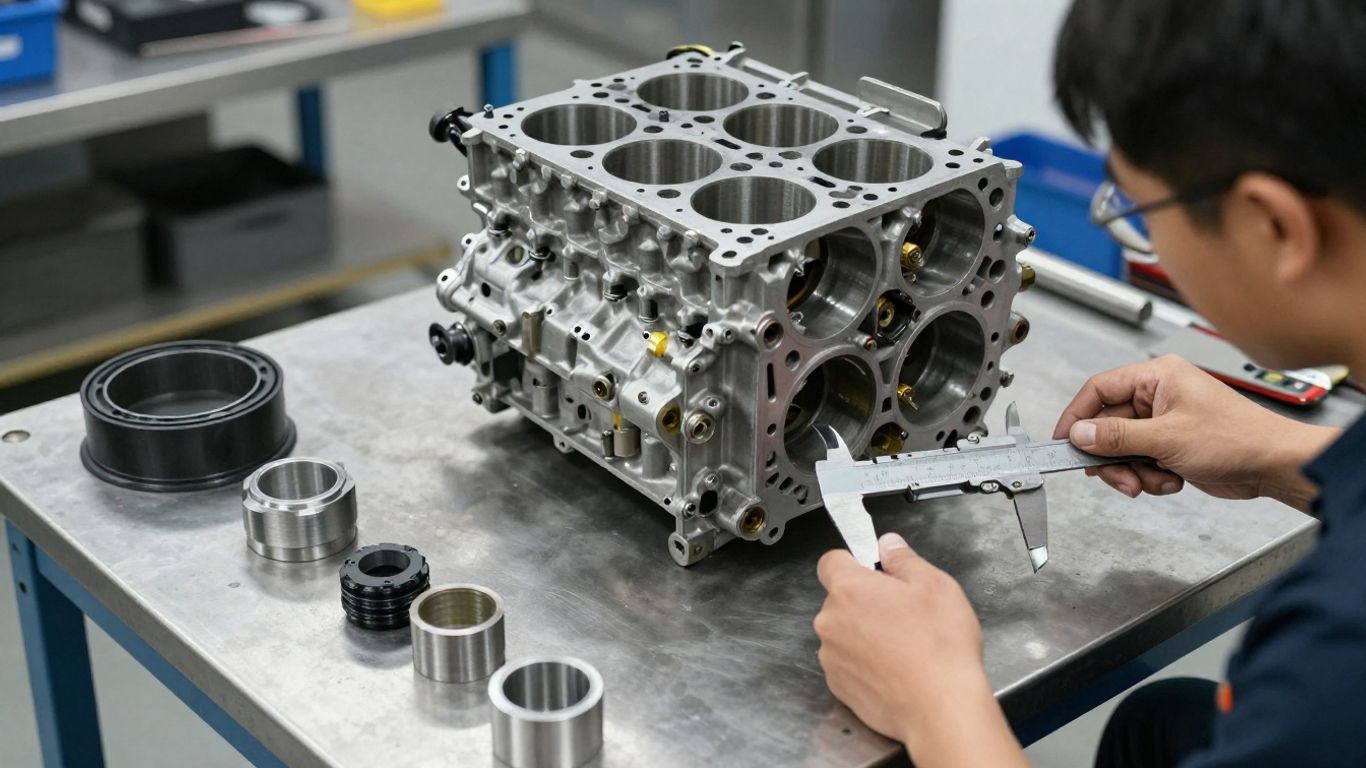
Find out whether machining is performed in-house or by a named partner, and ask how quality is checked at each stage. Relevant capabilities may include cylinder boring or honing, deck resurfacing, crankshaft inspection, and dimensional measurement. The important point is not having the longest equipment list; it is knowing who performs each operation and how the finished work is verified.
Ask what documentation accompanies the machining. Measurements should guide decisions about bore size, bearing clearances, surface finish, and reuse. A shop that cannot explain those links may still perform competent work, but you will have less visibility into the rebuild.
Certifications, insurance, and facility standards
A professional facility should be willing to discuss its business credentials, insurance, warranty process, and handling of customer vehicles. Clean work areas, organized parts storage, and labeled components suggest disciplined procedures, although appearances are not proof of technical quality. Verify that the written agreement identifies the responsible business and the person authorizing changes.
Do not treat a certificate or polished facility as a substitute for engine-specific answers. Those details support accountability, while measurements and assembly practices support mechanical reliability. Evaluate both sides before committing.
Understand the engine inspection and machining process
A rebuild is not simply a matter of replacing visible gaskets and installing fresh bearings. The engine must be disassembled, cleaned, measured, and assessed as a system. Machining decisions should follow those measurements, not a fixed package that assumes every core has the same wear. Understanding the sequence helps you recognize a thorough proposal.
Complete teardown and component measurement
The teardown should preserve useful evidence: bearing condition, wear patterns, deposits, damaged fasteners, and signs of previous repairs. Components should be cleaned before precise measurement because dirt and residue can distort readings. The builder then determines which parts meet specifications and which require corrective work.
Ask whether the inspection happens before the final price is set. A preliminary estimate can be reasonable, but the final scope should reflect the actual condition of the core. A responsible shop explains discoveries promptly and seeks approval before adding non-emergency work.
Crankshaft, cylinder, and connecting rod inspection
The crankshaft should be checked for journal condition, taper, out-of-round wear, and runout. Cylinders need inspection for scoring, taper, and diameter, while connecting rods require checks for alignment and bearing fit. These measurements influence whether parts can be reused, polished, machined, or replaced.
The builder should also consider how components work together. A crankshaft that looks acceptable may still require careful clearance checks with selected bearings. Reusing a part is appropriate only when its measured condition supports that choice.
Cylinder honing, boring, and deck resurfacing
Honing removes minor surface irregularities and establishes a suitable finish for ring seating. Boring removes more substantial cylinder wear and requires appropriately sized pistons. Deck resurfacing can restore a suitable sealing surface, but removing material may affect dimensions and assembly decisions.
The shop should explain why each operation is proposed and how much material will be removed. It should also clean the block thoroughly afterward, since abrasive residue can damage a fresh engine. A machining invoice without measurements tells only part of the story.
Parts selection and compatibility checks
Parts should be selected for the exact engine configuration, model year, intended use, and any modifications. The specialist needs to verify dimensions, compression considerations, oiling components, seals, fasteners, and compatibility with the existing systems. Turbocharged and naturally aspirated applications may require different choices even within a related engine family.
A clear parts list prevents assumptions. It should identify what is new, what is reused, what is machined, and what remains subject to inspection. That record becomes valuable during assembly and if warranty questions arise later.
Compare rebuild specifications and performance goals
The best rebuild specification is the one that matches how you actually use the Subaru. A commuter, a restored older car, and a modified turbo vehicle place different demands on the engine. More expensive parts do not automatically create a better result when they do not suit the rest of the vehicle. Discuss the goal in practical terms: quiet daily service, stock output, track use, towing, or future modifications.
Stock replacement rebuilds for daily driving
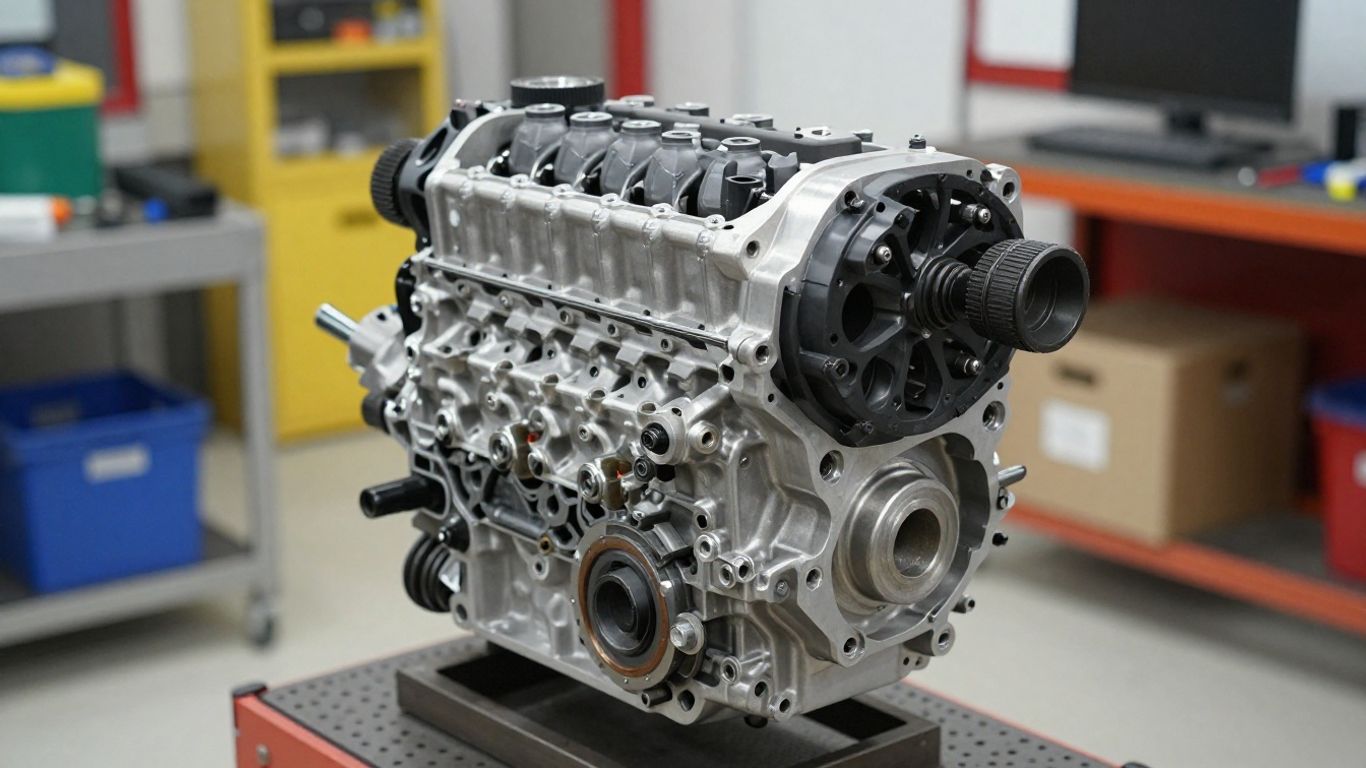
A stock-oriented rebuild generally prioritizes factory-style dimensions, dependable sealing, sensible clearances, and compatibility with the vehicle’s existing fuel, cooling, and engine-management systems. This approach can be appropriate when the car is used for commuting and the owner wants predictable behavior. It also limits unnecessary changes that can complicate tuning or installation.
Ask what “stock” means in the estimate. It should identify the intended specification, major components, machining operations, and any updates being made. A familiar configuration is not a reason to skip measurement or documentation.
Upgraded components for turbocharged Subarus
A modified turbo Subaru needs a conversation about boost, fuel delivery, calibration, cooling, exhaust flow, and intended power. Internal components should be chosen as part of that complete combination rather than added individually because they sound stronger. The builder should ask what supporting parts are already installed and what the engine-management plan will be.
Reliability also depends on assembly and operating conditions. A forged component or larger turbo does not remove the need for correct clearances, oil supply, tuning, and careful break-in. Be wary of a specification that lists performance parts without explaining the supporting system.
Balancing reliability, power, and budget
Every rebuild involves trade-offs. Spending more on machining or components may be worthwhile for a demanding application, while a stock daily driver may benefit more from careful inspection and correct assembly than from unnecessary upgrades. The useful comparison is total suitability, not the largest parts list.
A simple planning table can clarify the conversation before work begins:
| Goal | Typical priority | Question to ask |
|---|---|---|
| Daily driving | Factory compatibility and durability | What stock systems must remain unchanged? |
| Mild upgrade | Extra margin with manageable tuning | Which supporting parts are required? |
| High-output use | Strength, cooling, oiling, and calibration | What limits the current combination? |
| Long-term ownership | Documentation and serviceability | Which parts and measurements will be recorded? |
This framework does not replace a detailed specification, but it exposes mismatched expectations early. A specialist should be able to explain why the proposed parts fit the stated goal.
Choosing between OEM and aftermarket parts
OEM parts can offer familiar fit and specification, while aftermarket parts may provide different dimensions, materials, or intended uses. Neither label alone establishes quality or suitability. Ask who made the component, what specification it follows, and how it fits the measured engine.
The estimate should distinguish customer-requested upgrades from parts the builder considers necessary. That distinction prevents a performance package from being presented as the only responsible repair. It also makes future maintenance easier because the engine’s actual configuration is known.
Review estimates, warranties, and project timelines
A rebuild estimate should be detailed enough for two people to understand what is included and what remains uncertain. It should separate diagnosis, teardown, machining, parts, assembly, installation, fluids, and testing. The shop may not know every cost until the engine is opened, but it can explain the approval process for discoveries. That level of openness is more meaningful than a low initial number.
What a detailed rebuild estimate should include
Look for the engine identification, labor stages, machining operations, parts brands or specifications, taxes, installation charges, and expected ancillary work. The estimate should state whether balancing, cleaning, testing, and break-in support are included. It should also identify the assumptions behind the price.
Ask for a written change-order process. You should know who contacts you, what evidence is supplied, and whether work pauses until approval. A clear estimate protects both sides when the teardown changes the original scope.
Hidden costs caused by teardown discoveries
Cracked castings, damaged threads, worn oil pumps, unsuitable fasteners, and excessive cylinder wear can appear only after disassembly. Some findings are safety or reliability concerns that cannot reasonably be ignored. Others may be optional improvements, and the estimate should say which is which.
Set a decision limit before the work starts, but do not use it to pressure the builder into reusing unsafe parts. Ask for photographs, measurements, and the consequences of declining each recommended change. This keeps an unpleasant surprise from becoming an uninformed decision.
Warranty coverage and exclusions
Read the warranty for duration, covered components, labor responsibility, claim procedures, and geographic limitations. Pay close attention to exclusions involving overheating, low oil, tuning, modifications, missed maintenance, racing, or installation by another shop. A verbal promise is difficult to enforce when the engine develops a problem.
The warranty should also explain what happens if a covered failure occurs. Does the builder inspect the engine first? Is removal and shipping included? Understanding the procedure matters as much as the headline term.
Typical turnaround times and project delays
Turnaround depends on parts availability, machine-shop scheduling, teardown findings, and the builder’s existing workload. A shop that gives a precise date without inspecting the engine may be guessing. Instead, ask for milestones: inspection, approval, machining, assembly, installation, startup, and delivery.
Delays are easier to manage when communication is regular. Confirm how often you will receive updates and whether parts substitutions require approval. A realistic schedule with honest revision is preferable to an optimistic promise that repeatedly slips.
Prepare for the rebuild and installation
The owner has a role in making the rebuild efficient and successful. Supplying accurate history, making decisions promptly, and preparing the car for installation can reduce avoidable delays. Installation is also part of the repair, not an afterthought. Contaminated systems or unresolved causes can damage a freshly rebuilt engine.
Information to provide about the vehicle
Give the specialist the vehicle identification information, mileage, maintenance records, modification list, recent symptoms, warning lights, and details about overheating or oil loss. Mention any prior engine work, even if it seems unrelated. Accurate history helps the builder interpret wear patterns and choose compatible parts.
Describe how the vehicle is used and how long you intend to keep it. Daily commuting, seasonal storage, spirited driving, and track use create different priorities. Honest information produces a more useful specification.
Parts and accessories to replace during installation
The shop should inspect related components such as hoses, belts, filters, seals, sensors, mounts, clutch parts, cooling components, and oiling hardware. Replacement is not automatic; condition and access should guide the recommendation. Items that are difficult to reach once the engine is installed may be sensible to address during the project.
Ask which accessories are included and which are transferred from the old engine. The distinction matters for both compatibility and warranty coverage. A rebuilt long block cannot compensate for a failing cooling system or a contaminated oil circuit.
Break-in procedures for a rebuilt engine
Break-in instructions should be specific to the parts and assembly choices. They may cover initial fluids, startup checks, varying engine speed, avoiding prolonged idling, early fluid changes, and when the engine can be loaded normally. Follow the builder’s written procedure rather than combining advice from unrelated builds.
Before leaving the shop, confirm what sounds, temperatures, pressures, and warning indicators require immediate attention. Keep the first drive close to home and monitor fluid levels frequently. Early observation can identify installation issues before they become major damage.
Maintenance requirements after the first startup
Ask when the first oil and filter change is due, when fasteners or fluids need checking, and whether a follow-up inspection is included. Keep receipts and records for all service performed during the warranty period. Use the recommended oil and filters unless the builder documents a different requirement.
The first maintenance interval is not the end of the process. Continue watching for leaks, coolant loss, unusual smoke, misfires, and changes in oil pressure. Prompt communication gives the specialist the best chance to address a concern while the evidence is still fresh.
Make the final specialist selection
By this point, you should be comparing complete plans rather than isolated prices. The strongest candidate will explain the diagnosis, inspection standards, machining decisions, parts, installation, warranty, and communication process without becoming defensive. Trust matters, but it should be supported by written details. Choose the shop whose method you can understand and whose assumptions you can challenge.
Questions to ask before authorizing work
Ask who performs the teardown and machining, what measurements will be recorded, how changes are approved, and which parts are covered by the warranty. Clarify whether the quote includes installation, fluids, startup testing, and break-in guidance. Also ask what happens if the engine core cannot be economically rebuilt.
You can make the conversation efficient by bringing a short list:
- What failure has testing confirmed?
- Which components will be measured or machined?
- What parts are new, reused, or optional?
- How will estimate changes and warranty claims be handled?
These questions do not require technical expertise to ask. The quality of the answers, and the willingness to put them in writing, will tell you a great deal.
Warning signs of an unreliable engine builder
Be cautious when a shop promises a fixed result before inspection, avoids discussing measurements, or cannot identify who performs machining. Other concerns include pressure to authorize immediately, vague parts descriptions, unexplained cash-only changes, and a warranty that exists only verbally. One weakness may be an oversight; a pattern suggests poor accountability.
A specialist should also be willing to say that a rebuild is not the best choice. Refusing work that does not make financial or mechanical sense can be a sign of sound judgment. You are hiring reasoning as well as labor.
Comparing quotes on more than price
Place quotes side by side by scope, not just total. One may include machining, assembly, installation, and testing while another lists only a partially rebuilt engine. Differences in parts, inspection depth, warranty, and communication can explain a higher price.
Consider the likely total cost of ownership and the risk of repeating the job. A cheaper proposal may become expensive if it omits necessary machining or leaves the installation cause unresolved. The most useful quote is the one that makes comparison possible.
Documenting parts, measurements, and warranty terms
Before authorization, save the estimate, approval messages, parts list, warranty, and promised milestones. Ask for final measurements and a record of machining when the job is complete. Keep photographs of the engine and note any components transferred from the original assembly.
This documentation helps with future service and gives both parties a shared record if a question arises. It also confirms what engine was actually built, which parts were installed, and what maintenance is expected. A reliable rebuild ends with clear information, not just a running car.
Conclusion
Choosing Subaru engine rebuild specialists becomes much easier when you treat the project as a documented process: diagnose the failure, inspect and measure the core, match the specification to the vehicle, and compare complete estimates. The right specialist will explain uncertainty honestly, record important decisions, and provide practical support through installation and break-in. That preparation gives your rebuilt engine the best chance of delivering dependable service.