

Key Takeaways
A careful buying process can make affordable car engines and parts a sensible alternative to rushing into the first replacement you find.
- Confirm the exact engine, part number, vehicle details, and drivetrain before requesting prices.
- Compare repair, rebuilding, used, genuine, aftermarket, and remanufactured options against the vehicle’s value.
- Judge sellers by inspection information, business history, warranty terms, and return conditions.
- Add shipping, labor, fluids, hardware, taxes, deposits, and core charges to the advertised price.
- Prepare the vehicle properly and keep installation and maintenance records after the replacement.
Define your replacement needs and budget
A failed engine or damaged component does not automatically mean the cheapest replacement is the right one. Start by identifying what actually failed, then consider the vehicle’s age, condition, and expected service life. A clear diagnosis gives you a much better basis for comparing prices.
Identify the engine or part that needs replacement
Begin with the symptoms and the technician’s diagnosis rather than the part you assume is broken. A no-start condition, overheating, low compression, or unusual noise can have several causes, and replacing a complete engine may be unnecessary if a smaller component is responsible. Gather the vehicle identification number, engine code, model year, and any diagnostic report before contacting suppliers.
Also record whether the vehicle is front-wheel drive, rear-wheel drive, or all-wheel drive. Small specification differences can affect brackets, sensors, wiring, accessories, and transmission fitment. The more precise your starting information, the fewer unsuitable listings you will have to sort through.
Compare repair, rebuild, and replacement options
A repair may make sense when the original engine has one isolated fault and the rest of the vehicle is in good condition. A rebuild can be worthwhile when the block and major components are suitable for machining, while a used or remanufactured engine may reduce downtime. Compare each route by expected life, turnaround time, warranty, and the skill required for installation.
Do not compare only the invoice totals. A lower-cost replacement that arrives quickly and fits with fewer modifications may be more practical than a cheaper option that requires extensive accessory changes or repeated troubleshooting.
Set a realistic total project budget
Set the budget around the finished job, not just the component advertised online. Labor, fluids, seals, gaskets, filters, belts, hoses, delivery, and disposal can materially change the final amount. Leave room for small discoveries once the old engine is removed, because hidden wear is common in older vehicles.
A simple comparison can keep the decision grounded:
| Cost area | Questions to ask | Why it matters |
|---|---|---|
| Replacement part | What exactly is included? | Prevents gaps in the quote |
| Transport | Is delivery included or separate? | Heavy parts can carry substantial fees |
| Installation | What labor rate and hours apply? | Labor can exceed the part price |
| Supporting work | Are fluids, seals, and filters needed? | Helps avoid repeat visits |
Once these figures are visible, compare the project with the vehicle’s current value and likely future repairs. That makes a modestly higher-quality option easier to justify when it lowers uncertainty.
Decide between new, used, rebuilt, and remanufactured parts
New parts generally offer the clearest condition history, but they are not always economical for an older vehicle. Used parts can be a practical match when mileage, testing, and warranty information are available. Rebuilt and remanufactured components vary in process and coverage, so ask what was replaced, measured, or tested rather than relying on the label alone.
Think about how long you plan to keep the car. A dependable used engine with documented history may suit a short-term ownership plan, while a remanufactured or rebuilt option may be more appropriate for a vehicle you intend to drive for years.
Find affordable car engines and parts from reliable sources
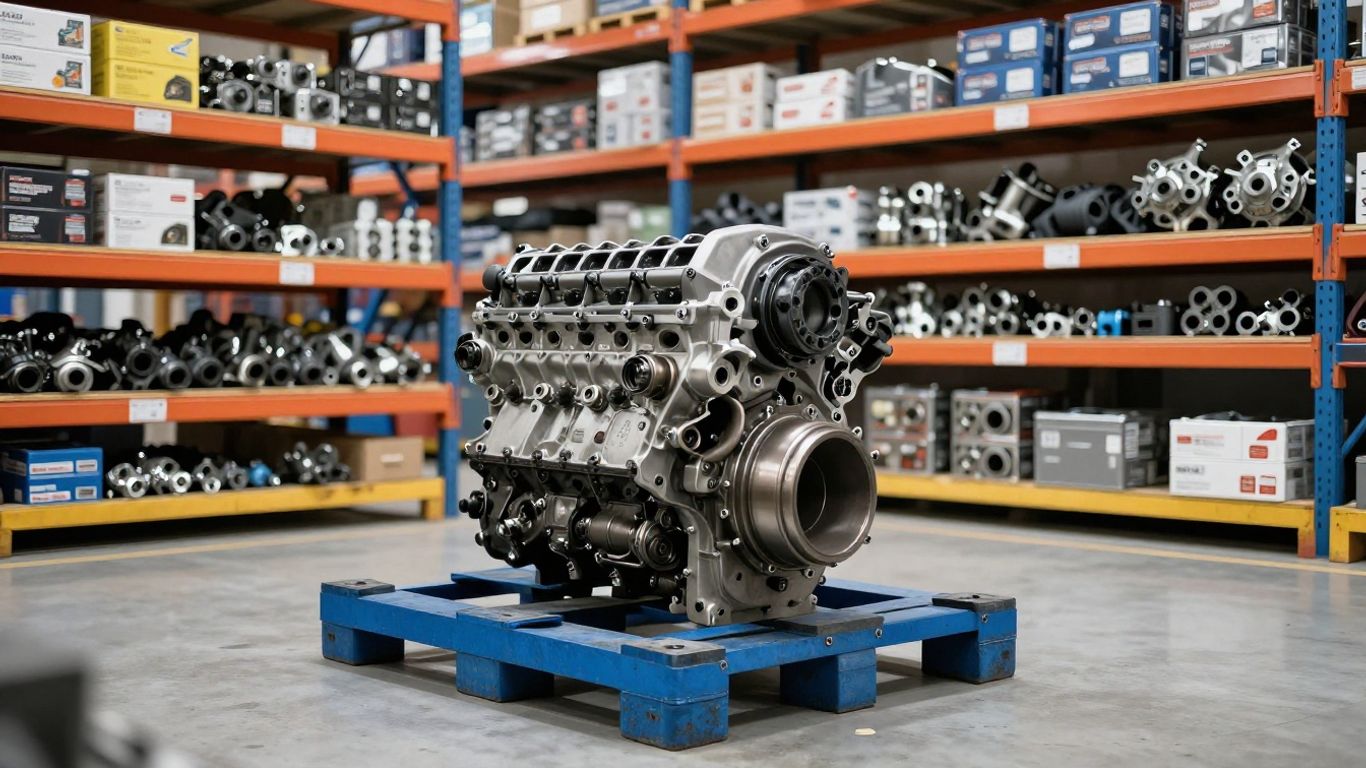
The source matters almost as much as the part. Salvage yards, auto recyclers, specialist suppliers, marketplaces, and dealerships may all carry suitable components, but they provide different levels of information and support. Australia’s trusted Car Parts Supplier connects customers with quality used, genuine, and aftermarket parts through a broad car parts network, helping shoppers compare practical options across Melbourne, Sydney, Brisbane, and nationwide.
Compare salvage yards, auto recyclers, and specialty suppliers
Salvage yards and auto recyclers can offer useful value, particularly when a compatible used engine or body component is available locally. Specialty suppliers may provide more detailed fitment information or access to genuine and aftermarket alternatives. Ask how the part was removed, whether its mileage is known, and what inspection was completed before it was listed.
Local availability can also reduce delivery time and make collection or follow-up easier. For a heavy engine, the cheapest advertised price may not remain the cheapest once freight and handling are added.
Evaluate online marketplaces and local dealerships
Online marketplaces make it easier to compare stock, prices, and seller locations, but listings can vary widely in detail. A dealership may offer clearer vehicle records or manufacturer-specific ordering, while an independent supplier may have a broader selection of used and aftermarket parts. In either case, request written confirmation of the exact part and its condition.
Car Parts Supplier is positioned to make finding the right part fast and affordable across Melbourne, Sydney, Brisbane, and nationwide. Treat that convenience as a starting point for verification: confirm the listing, delivery terms, and coverage before paying.
Check seller ratings, inventory details, and business history
Ratings are useful, but they should not replace direct questions. Read recent feedback for patterns around fitment accuracy, communication, delivery, and warranty handling. A detailed listing should identify the engine or part number, condition, mileage where relevant, included accessories, and any limitations.
Before placing an order, check these practical details:
- The seller’s physical location and contact information.
- The exact stock number, engine code, or manufacturer part number.
- The testing or inspection information supplied with the part.
- The warranty period, exclusions, and return process.
The answers should be consistent across the listing, invoice, and written correspondence. If key details remain vague, keep comparing rather than filling in the gaps with assumptions.
Understand the differences between JDM, domestic, and imported engines
JDM, domestic, and other imported engines may share a family designation while differing in sensors, emissions equipment, wiring, accessories, or calibration. An engine that appears similar in photographs may still require parts from the original vehicle or professional modifications. Ask whether the unit is supplied as a complete assembly or as a long block.
Import status also affects delivery time, documentation, and returns. Compatibility should be confirmed by code and vehicle specifications, not by broad descriptions such as “fits many models.”
Confirm fitment and compatibility before buying
Fitment is where many apparently good bargains become expensive mistakes. The vehicle’s badge and engine size are only the beginning; production changes can alter connectors, mounts, software, and transmission interfaces. Give the supplier complete information and ask for confirmation in writing before the order is finalized.
Match the engine code and vehicle specifications
Locate the engine code on the vehicle or in reliable service documentation, then compare it with the code on the proposed replacement. Check displacement, fuel type, cylinder configuration, emissions equipment, and accessory layout. If the supplier proposes an alternative code, ask exactly what additional parts or modifications would be required.
A matching code does not always mean every external component will transfer directly. Confirm whether the replacement is supplied as a complete engine, a long block, or a bare assembly.
Verify the model year, drivetrain, and transmission type
Model-year changes can affect mounting points, engine management, cooling systems, and exhaust arrangements. Drivetrain and transmission type are equally important because mounting hardware and control systems may differ between front-wheel-drive, rear-wheel-drive, and all-wheel-drive applications. Include automatic or manual transmission details in every request for pricing.
When the vehicle has been modified, mention those changes too. Aftermarket equipment, an engine swap, or a non-original transmission can make catalog matching less reliable.
Use the vehicle identification number for accurate parts matching
The VIN gives a supplier a stronger starting point than a model name alone. It can help distinguish production variants and confirm the vehicle’s original specification, although it should still be checked against the engine code and the physical vehicle. Share the VIN through an appropriate, trusted channel and retain the matching confirmation.
Ask the supplier to list the information used for the match. That creates a useful record if the delivered part differs from what was discussed.
Check whether supporting components require replacement
An engine replacement often brings related maintenance into the conversation. Inspect mounts, hoses, belts, sensors, cooling components, gaskets, filters, and wiring while access is available. Reusing every old peripheral may save money initially but can create a second repair soon after installation.
Have the installer separate essential replacement items from sensible preventive work. This keeps the budget honest without turning every possible upgrade into a requirement.
Inspect used and remanufactured engines for quality
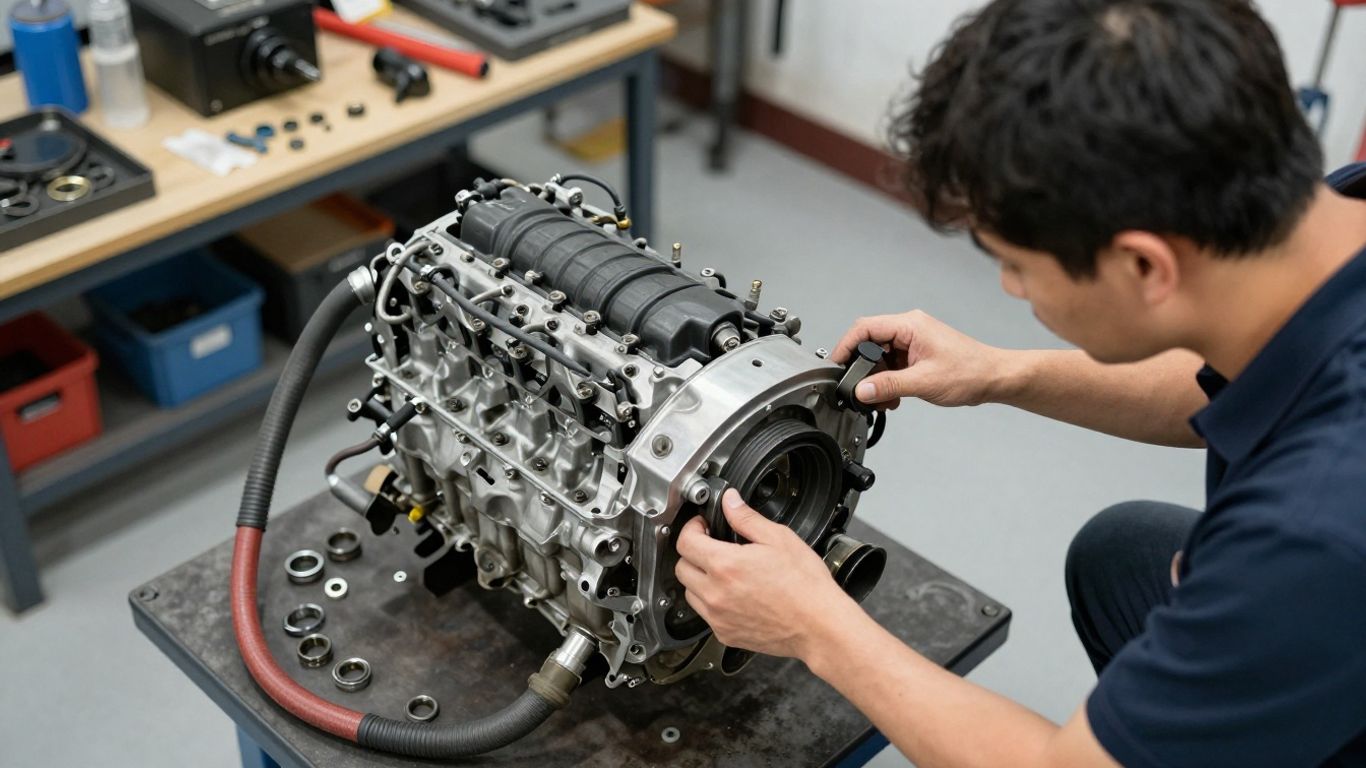
Condition evidence is more valuable than a low number on a listing. Used and remanufactured engines should be evaluated through records, testing information, photographs, and clear answers about what is included. A careful inspection cannot eliminate every risk, but it can reduce avoidable surprises.
Review mileage, service records, and operating history
Ask for the recorded mileage, donor vehicle information, service history, and reason for removal when those details are available. A lower-mileage engine is not automatically better if it was poorly maintained or stored in unsuitable conditions. Look for consistent records rather than a single unsupported mileage claim.
The operating environment can matter as well. Flood exposure, severe corrosion, commercial use, and long-term outdoor storage all deserve further questions before purchase.
Look for compression tests and inspection reports
Compression results, leak-down information, pressure tests, and written inspection reports provide more useful evidence than polished photographs alone. Ask when the tests were performed and whether the report identifies the individual cylinders or relevant components. For remanufactured units, request a description of the machining, replacement, and testing process.
Read the report alongside the warranty terms. A test result may describe the condition at inspection, while the warranty explains what happens if a covered fault appears later.
Examine signs of leaks, corrosion, and internal damage
Inspect visible seals, covers, oil passages, mounting points, and electrical connectors for leaks, impact marks, heavy corrosion, or contamination. Photographs should show enough of the assembly to assess its condition, not just its cleanest angle. If the engine is already at a workshop, ask the technician to identify anything that should be addressed before installation.
Some surface grime is normal on a used component, but unexplained coolant residue, milky oil, damaged threads, or cracked housings deserve a clear explanation. Do not let urgency replace basic inspection.
Confirm included components and required core returns
Clarify whether the price includes the intake, exhaust components, injectors, alternator, starter, sensors, mounts, flywheel, or other accessories. Many replacement engines are supplied without every external component, and transferring parts from the old engine may add labor. Also ask whether the seller requires the old unit as a core return and how that return must be packaged.
Written inclusion and core-return details prevent disputes after delivery. They also help the installer prepare the correct tools and replacement items before the vehicle is dismantled.
Calculate the real cost of an engine or parts purchase
A fair comparison needs one total figure for each option. The advertised part price is only one line, especially when the component is heavy or comes from another state. Build a simple estimate before deciding, then update it when the supplier confirms freight, taxes, and included items.
Compare the part price with shipping and delivery fees
Request a delivered price rather than comparing product prices in isolation. Ask whether freight includes lift-gate service, residential delivery, collection arrangements, or insurance for damage in transit. A local option may be more attractive even when its listed price is slightly higher.
Check the delivery timeframe too. A vehicle sitting at a workshop can create storage charges or lost income while you wait for an uncertain shipment.
Account for labor, fluids, gaskets, and installation hardware
Ask the installer for a written labor estimate and a list of consumables. Fluids, filters, seals, gaskets, belts, hoses, fasteners, and programming may all be relevant, depending on the vehicle and replacement assembly. Include diagnostic time and disposal of the old component where applicable.
The estimate should distinguish required work from recommended maintenance. That makes it easier to choose where to spend and where to postpone without compromising the installation.
Review taxes, deposits, and core charges
Taxes, refundable deposits, and core charges can change the amount due at checkout. Confirm whether the core charge is refunded only after the old part passes inspection and whether return freight is your responsibility. Keep invoices and receipts together, particularly when different businesses supply the part and perform the installation.
A written payment schedule also helps prevent confusion over the balance due before delivery, at installation, or after the core is returned.
Weigh low upfront prices against long-term reliability
A low initial price is useful only if the part fits, performs acceptably, and remains covered for a reasonable period. Compare the warranty, inspection evidence, likely installation effort, and access to support. The cheapest quote is not always the lowest cost once a failed replacement requires another round of labor.
Choose the option that gives you a defensible balance of price, evidence, and expected service. That is usually a better measure of affordability than the first number in a search result.
Protect your purchase and complete the installation
The final stage is about preserving the value of the decision. A suitable engine can still disappoint if the warranty is misunderstood or the vehicle is not prepared properly. Coordinate the supplier and installer so everyone agrees on fitment, included parts, and the steps required after delivery.
Compare warranties, return policies, and coverage limits
Read whether the warranty covers parts only, parts and labor, or specific internal failures. Check exclusions for overheating, low oil, improper installation, modifications, and commercial use. Also confirm the claim deadline, approval process, return freight responsibility, and whether the seller requires installation by a qualified workshop.
Keep the listing, invoice, test report, correspondence, and installation receipt. These documents may be essential if a problem needs to be assessed under the stated coverage.
Ask about testing procedures and technical support
A supplier should be able to explain what testing or inspection was performed and what information is available to the installer. Ask whom to contact if a connector, mount, or accessory does not match the confirmed specification. Clear technical support can prevent a small uncertainty from becoming a stalled installation.
Car Parts Supplier connects customers with used, genuine, and aftermarket parts through its car parts network. When using any supplier, make sure the support offered is specific enough to help with the part you are actually ordering.
Prepare the vehicle before installing the replacement
Confirm that the workshop has the replacement part, required hardware, fluids, seals, and any programming equipment before removing the old engine. Inspect the cooling system, fuel system, wiring, mounts, and transmission interface while access is available. Clean mating surfaces and follow the vehicle’s service procedures rather than improvising torque or fluid specifications.
Photograph the old installation if useful, label disconnected wiring, and keep removed components until the replacement has been checked. Those simple habits make troubleshooting easier if something does not operate as expected.
Break in the engine and document maintenance after installation
Follow the supplier’s and vehicle manufacturer’s guidance for initial operation, fluid checks, and early servicing. Watch for warning lights, leaks, unusual noises, overheating, and changes in oil or coolant level during the first drives. Avoid treating a successful start as the end of the inspection.
Record the installation date, mileage, part details, fluids used, and follow-up checks. Good records support future maintenance and give you a clear history if warranty questions arise.
Conclusion
Finding affordable car engines and parts without sacrificing quality comes down to disciplined comparison: identify the correct component, verify fitment, inspect the evidence, calculate the complete cost, and protect the purchase with clear documentation. A little patience before ordering can save far more time and money after installation.