
Key Takeaways
A replacement engine is a major purchase, but a careful process makes the decision much less uncertain.
- Ask how the engine was tested and request the results in writing.
- Match the engine code, specifications, electronics, and transmission requirements.
- Compare used, reconditioned, and crate engines by total installed cost.
- Check warranty terms, freight arrangements, return conditions, and stock status.
- Keep installation invoices and service records to protect your warranty.
Understanding what “quality tested” means for replacement engines
The phrase “quality tested” should describe a process, not simply appear in a listing. For a buyer searching for quality tested engines Australia, the useful questions are what was checked, when it was checked, and whether the supplier can explain the result. Testing cannot remove every risk from a used or rebuilt component, but it can make the condition easier to assess. A sensible supplier should be comfortable discussing the engine’s history and the limits of its inspection.
Testing methods used by reputable suppliers
Testing may begin with a visual inspection for cracked housings, damaged connectors, oil contamination, missing fittings, or signs of overheating. Depending on the engine type and its condition, a supplier may also rotate the assembly, run it, or assess key systems before dispatch. The exact procedure varies between a used engine, a reconditioned assembly, and a new crate engine, so ask for a plain explanation rather than assuming every listing follows the same standard.
A useful report identifies the engine supplied, the checks performed, and any defects or exclusions. That detail is more valuable than a vague promise that an engine has been “checked”.
Compression, leak-down, and pressure checks
Compression testing compares the pressure produced by the cylinders during cranking. Results that are relatively even can be reassuring, while a large difference may point to valve, ring, or head-gasket concerns. A leak-down test takes the diagnosis further by indicating where pressure is escaping, although not every supplier performs both tests on every engine.
Oil pressure and cooling-system checks can also reveal problems that are not obvious from a visual inspection. Ask whether figures were recorded, whether the engine was tested cold or warm, and which parts of the test are covered by the warranty. Written test evidence matters because it gives you something specific to query before installation.
Reconditioned, rebuilt, and used engine standards
These descriptions are not interchangeable. A used engine may be removed from a vehicle and inspected for sale, while a reconditioned or rebuilt engine may have selected components measured, repaired, or replaced. The scope of the work should be stated clearly; “reconditioned” does not automatically mean every internal component is new.
Ask which parts were renewed, whether machining was required, and whether the assembly is supplied complete or as a long motor. A lower-mileage used engine can be a practical choice when its history and test records are clear. A reconditioned unit may make more sense when the original engine failed through a known weakness or when a longer service life justifies the additional cost.
Why documented test results matter
A verbal assurance is difficult to evaluate after the engine has been fitted. A dated inspection sheet, compression record, or dispatch report creates a shared reference for the buyer, installer, and supplier. It also helps distinguish a genuine testing process from a listing built mainly around broad language.
Keep those records with the invoice and warranty terms. If a problem appears, precise documentation can make the conversation more practical and reduce arguments about what was promised.
Choosing the right engine for your vehicle
The correct replacement is not determined by make and model alone. Model years can contain several engine codes, outputs, emissions systems, and transmission combinations, even within one body shape. Before comparing prices, gather the vehicle identification number, engine code, build date, drivetrain details, and the reason the original engine failed.
A photograph of the identification plate or the damaged engine can help a parts adviser, but it should support—not replace—written specifications. All Good Parts describes its used engines as available for different makes and models and says its engines are inspected before sale, so buyers should still confirm the exact assembly rather than rely on a broad vehicle search.
Matching engine codes and specifications
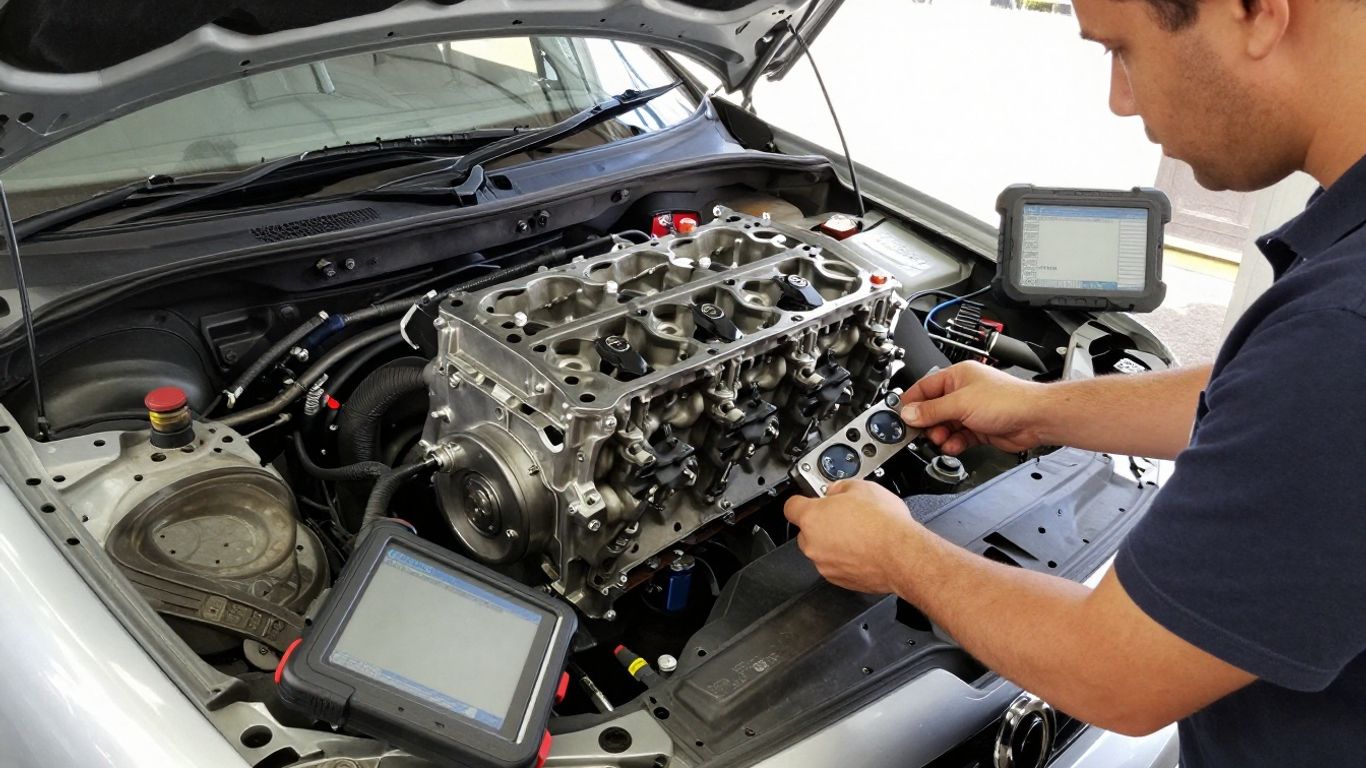
An engine code is usually more dependable than a marketing name such as “2.0-litre turbo”. Check the code stamped on the engine, the vehicle’s compliance information, and the supplier’s listing. Also compare powertrain details such as turbocharger arrangement, fuel system, emissions equipment, sump shape, accessory brackets, and sensor locations.
If the replacement is supplied as a bare engine, you may need to transfer manifolds, sensors, mounts, or ancillaries from the original. Confirm what is included before paying, because a seemingly cheaper assembly may require several parts from the failed unit.
Checking petrol, diesel, hybrid, and performance requirements
Petrol and diesel engines differ in fuel delivery, compression, cooling, and emissions equipment. Hybrid vehicles add high-voltage safety procedures and control systems, while performance variants may use different pistons, injectors, turbos, cooling packages, or engine management software. The replacement must match the vehicle’s intended specification, not merely fit in the engine bay.
Give the supplier the full vehicle details and explain any modifications. A changed turbo, exhaust, fuel system, or engine-management calibration can affect compatibility and warranty assessment. If the vehicle is used for towing, track work, or heavy loads, discuss that use before selecting an engine.
Confirming compatibility with transmissions and electronics
Physical fit is only one part of a successful installation. The engine must communicate with the vehicle’s control modules, sensors, immobiliser, throttle system, and transmission. Differences in flywheel, flexplate, crank sensors, wiring, or software can turn an apparently suitable engine into a costly project.
Ask whether the supplied unit is intended to work with your transmission and whether programming, coding, or accessory transfers will be required. The installer should identify these issues before the old engine is removed, when changes are easier to plan.
Avoiding problems with imported or modified vehicles
Imported vehicles may use different emissions equipment, wiring, calibrations, or engine variants from locally delivered models. Modified vehicles create similar uncertainty, particularly when the original engine has been swapped or the chassis has been altered. Photos, the VIN, and clear information about previous work are especially useful in these cases.
Do not assume that a matching displacement guarantees a straightforward fit. If the history is unclear, ask for a written compatibility check and a list of parts that must be retained from the original vehicle.
Comparing used, reconditioned, and crate engines in Australia
The best engine category depends on budget, urgency, risk tolerance, and how long you intend to keep the vehicle. A used engine can reduce the initial purchase price, while reconditioning may offer more control over wear components. A crate engine generally offers a clearer specification, but its price and included equipment need careful checking.
Compare like with like. One listing may include a complete assembly, while another may be a long motor without manifolds, injectors, wiring, or accessories. The purchase price is only the first line in the replacement budget.
Advantages and limitations of used engines
Used engines can be sensible when the donor vehicle is known, the mileage is credible, and the supplier has completed meaningful checks. They may also be easier to source for older vehicles with established parts networks. Their limitation is that internal wear and previous maintenance may not be fully visible, even when the engine runs correctly during testing.
Ask for the recorded mileage where available, the donor vehicle details, what is included, and the warranty exclusions. A used engine should be assessed as a component with a history, not treated as equivalent to a factory-new replacement.
When a reconditioned engine is the better option
Reconditioning can be attractive when the vehicle is valuable, the engine is difficult to source, or the known failure points justify a more comprehensive repair. The term still needs definition. Find out whether the work included measurement, machining, replacement of bearings and seals, head inspection, or only selected repairs.
A reconditioned engine may cost more upfront, but that difference can be worthwhile if it reduces the chance of repeating the same failure. Compare the scope of work and warranty conditions rather than choosing solely by the label.
What to expect from crate engines
A crate engine is typically supplied as a packaged replacement, but the contents vary widely. Some are complete assemblies; others require the buyer to transfer fuel, ignition, cooling, exhaust, or electronic components. Confirm whether accessories, sensors, sump, flywheel, and engine-management equipment are included.
New does not automatically mean ready to bolt in. You still need to confirm vehicle compatibility, installation requirements, fluids, programming, and any break-in procedure. A clear specification sheet is the starting point for a fair comparison.
Balancing price, mileage, condition, and availability
A simple comparison table can expose why two apparently similar listings are priced differently. Use the supplier’s written information, then add the costs that apply to your vehicle and location.
| Option | Typical strength | Main uncertainty | Best comparison point |
|---|---|---|---|
| Used engine | Lower initial purchase price | Prior wear and incomplete history | Test records and warranty |
| Reconditioned engine | Work completed on selected components | Scope of reconditioning | Parts replaced and machining |
| Crate engine | Clear packaged specification | Included equipment and fitment | Completeness and compatibility |
| Existing engine repair | Retains the original unit | Hidden damage after failure | Inspection findings and quote |
The table is a starting framework, not a guarantee of value. A higher-priced option can be cheaper overall if it arrives with the required ancillaries and avoids repeat labour, while a low-priced engine can become expensive after freight, parts, and troubleshooting are added.
Evaluating Australian engine suppliers
Supplier quality is shown through the questions they can answer before the sale. Look for clear descriptions, realistic availability, written warranty terms, and a process for resolving a problem. The strongest buying experience is not necessarily the one with the most confident advertising; it is the one where the limits are visible.
For nationwide buyers, location matters less than communication, packaging, freight arrangements, and after-sales support. All Good Parts positions itself as an Australian car-parts supplier connecting customers with used, genuine, and aftermarket parts through a nationwide network, which is relevant when a buyer needs help locating a suitable component rather than browsing one local shelf.
Reviewing warranties and return policies
Read the warranty before ordering, especially the requirements for installation, servicing, fluids, overheating, modifications, and labour. Many warranties cover the engine assembly but not associated parts or the cost of removing and refitting it. A return policy may also require prompt notification, inspection, or approval before the engine is sent back.
Ask what happens if the engine is incorrect, damaged in transit, or found to be unsuitable before installation. Save the listing, quote, invoice, and written answers so the agreed terms are easy to establish.
Checking supplier experience and reputation
Experience is useful when it produces better identification and clearer advice. A supplier should be able to discuss engine codes, donor information, included parts, common fitment issues, and the difference between a complete assembly and a long motor. Reviews can reveal communication and delivery patterns, but they should be considered alongside the actual warranty and sales documentation.
All Good Parts says it helps customers find engines for a broad range of makes and models. That may be useful for an uncommon vehicle, but the buyer should still provide exact specifications and obtain confirmation of the proposed engine.
Verifying stock, sourcing, and testing records
Ask whether the engine is physically in stock, held by a network partner, or available only after sourcing. Confirm the estimated dispatch window and whether the pictured unit is the one you will receive. For a used engine, request whatever information is available about mileage, donor vehicle, testing, and condition.
If a supplier cannot provide a particular record, that does not automatically make the engine unsuitable. It does mean the missing information should be reflected in your risk assessment, price comparison, and warranty discussion.
Understanding delivery options across Australia
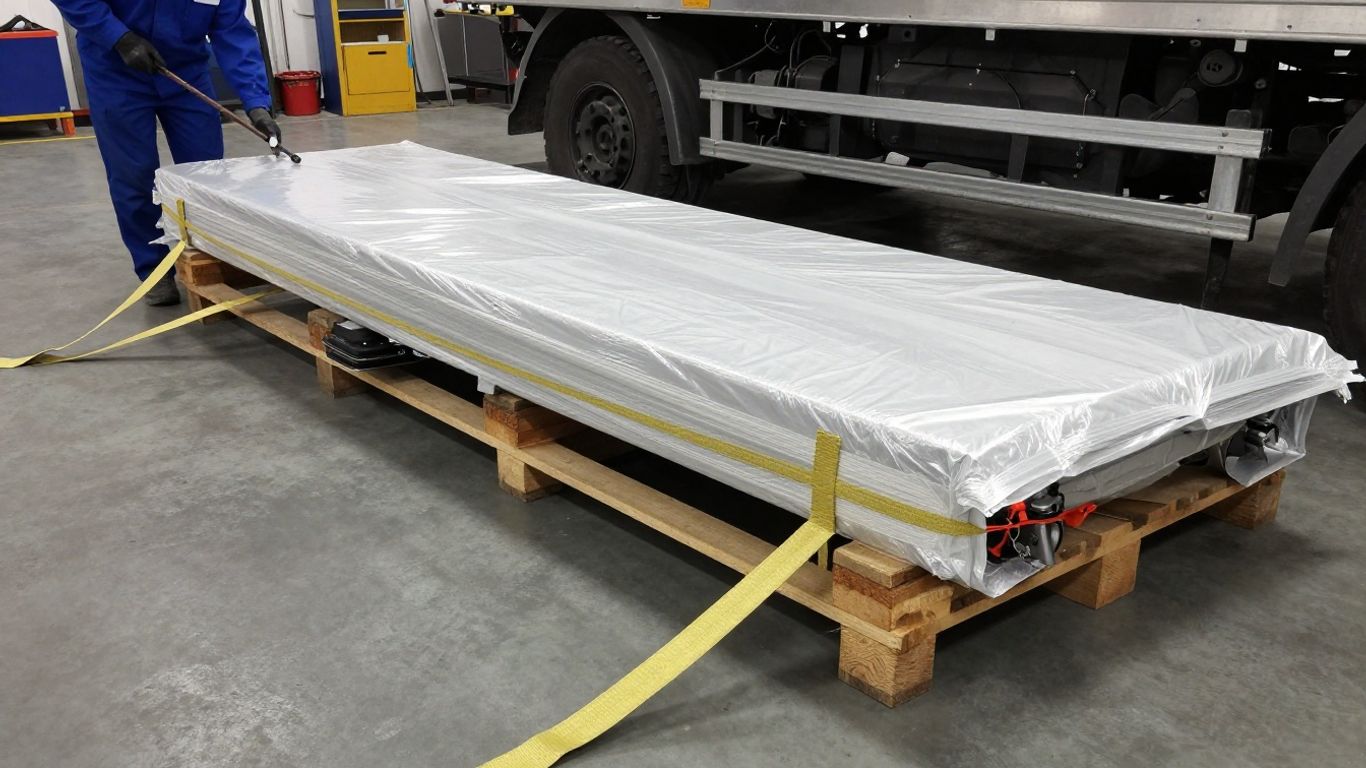
Engines are heavy, awkward freight items, so delivery arrangements deserve attention. Confirm the freight charge, delivery address requirements, tail-lift access, packaging, transit insurance, and what to do if the crate or pallet arrives damaged. Remote and residential deliveries may have different conditions from workshop deliveries.
Inspect the shipment before signing where possible and photograph visible damage. If the engine is delayed or the packaging is compromised, notify the supplier promptly and keep the freight paperwork.
Calculating the real cost of an engine replacement
The advertised engine price rarely equals the final bill. Labour, fluids, filters, seals, freight, diagnostic work, programming, and unexpected fittings can all affect the result. A useful quote separates the engine from the work required to make the vehicle reliable and roadworthy again.
Ask the installer to identify assumptions. If the estimate depends on reusing the original turbocharger, wiring, mounts, or clutch, you should know what happens if those parts fail inspection once the engine is out.
Comparing the purchase price with installation costs
Installation time varies with access, vehicle design, engine completeness, and the amount of component transfer required. A low-cost long motor may take longer to assemble than a complete replacement. Conversely, a more expensive unit may reduce workshop time if it includes the correct ancillaries.
Request a written labour estimate and ask whether it includes removal, cleaning, transfer of parts, fluids, diagnostics, road testing, and disposal. Separating those items makes supplier and workshop quotes easier to compare.
Factoring in freight, core charges, and required parts
Freight may be charged separately or included in the listed price. Some exchange arrangements also require the old engine, or core, to be returned in an acceptable condition. Before ordering, confirm the deadline, packaging, collection method, and any charge if the core is missing or damaged.
Make a parts list with the installer. It may include:
- Gaskets, seals, filters, belts, and fresh fluids.
- Mounts, hoses, clamps, sensors, or wiring repairs.
- Clutch, flywheel, flexplate, or torque-converter checks.
- Cooling-system cleaning and replacement of damaged components.
These items are not automatically required for every vehicle, but considering them early prevents a purchase price from disguising the likely installed cost. The installer can then mark each item as required, recommended, or reusable after inspection.
Identifying hidden costs before ordering
Hidden costs often arise from uncertainty rather than bad faith. An engine may arrive without an accessory, require coding, need a different sump, or expose damage to the transmission or cooling system during installation. Imported and modified vehicles carry additional fitment risks.
Ask for the exclusions in writing and set aside a contingency for genuinely unknown work. It is better to delay a purchase for one clarification than to discover after installation that the engine cannot communicate with the vehicle’s electronics.
Estimating long-term value and reliability
Long-term value includes fuel-system condition, service history, warranty support, parts availability, and the quality of the installation. Mileage is useful, but it should be weighed against maintenance evidence and test results. A well-documented engine with a sensible warranty can be a better purchase than a lower-mileage unit with no supporting information.
Consider the vehicle’s remaining value and expected ownership period as well. Spending more on a reliable replacement may be reasonable for a sound vehicle, while an older car with several unrelated faults may call for a stricter budget.
Preparing for installation and protecting your investment
A quality engine can still fail early if the cause of the original failure remains unresolved. Before installation, the workshop should understand why the old engine failed and check the systems that could damage its replacement. This is especially important after overheating, oil starvation, contamination, or timing-related damage.
Good preparation also creates a clean record. Keep the supplier’s documents, workshop invoice, test results, and service receipts together from the day the engine arrives.
Inspecting the engine when it arrives
Check the engine against the order before it is fitted. Confirm the engine code, visible condition, included components, plugs, brackets, and any agreed mileage or identification details. Look for impact damage, cracked housings, exposed openings, missing caps, fluid leaks, and damaged freight packaging.
Photograph the engine and packaging before unpacking it fully. If something is wrong, contact the supplier promptly and follow the warranty or return procedure rather than altering the engine first.
Replacing seals, fluids, and wear components
The installer should assess accessible seals, gaskets, belts, hoses, filters, and tensioners before the engine disappears into the vehicle. Fresh oil and coolant are normally part of responsible installation, while contaminated systems may need flushing. The correct specification matters more than choosing the cheapest fluid.
Wear components that are difficult to reach later deserve particular attention. Replacing a seal or belt during installation may be far less expensive than repeating the labour after a leak or failure.
Following correct installation and break-in procedures
Follow the engine supplier’s and vehicle manufacturer’s instructions for priming, starting, checking pressures, bleeding cooling systems, and running in the replacement. The correct procedure may differ between a used, reconditioned, and crate engine. Do not treat a quiet first start as proof that every installation issue has been resolved.
The workshop should check for leaks, warning lights, unusual noises, overheating, charging faults, and diagnostic codes before releasing the vehicle. A cautious road test and early follow-up inspection can catch small problems before they become expensive ones.
Maintaining warranty and service documentation
Warranty protection often depends on following specific installation and service requirements. Keep the invoice, engine identification, test documents, fluid specifications, labour details, and scheduled service records. Note the date, mileage, and any symptoms after the installation.
If a concern develops, stop using the vehicle when continued driving could cause damage and contact the supplier or installer promptly. Complete documentation will not prevent every mechanical problem, but it makes eligibility and responsibility much easier to assess.
Conclusion
Buying quality tested engines Australia-wide is less about finding the lowest advertised price and more about reducing uncertainty at each stage. Match the exact engine, ask how it was tested, compare the complete installed cost, and choose a supplier that explains its warranty and delivery process clearly. With careful installation and good records, a replacement engine can give a sound vehicle many more useful kilometres.