
Key Takeaways
Choosing a Jeep Wrangler engine in Australia depends on more than peak output. Model year, fuel type, usage, modifications, maintenance history, and local compliance all matter.
- Check the engine and transmission combination for the exact model year.
- Compare torque delivery, not just horsepower, for towing and trail work.
- Allow for fuel, servicing, tyres, cooling, and modification costs.
- Treat a used Wrangler’s history and current condition as equally important.
- Confirm that performance changes remain legal, insurable, and dependable.
Understanding Jeep Wrangler engine options in Australia
The right Jeep Wrangler engine Australia buyers choose will vary according to generation, body style, trim, and delivery market. A Wrangler used mainly for commuting has different priorities from one carrying touring equipment into remote areas. Official specifications provide a useful starting point, but they do not describe every ownership experience. Before comparing engines, identify the vehicle’s exact year, specification, and intended work.
How engine choices vary by model year and generation
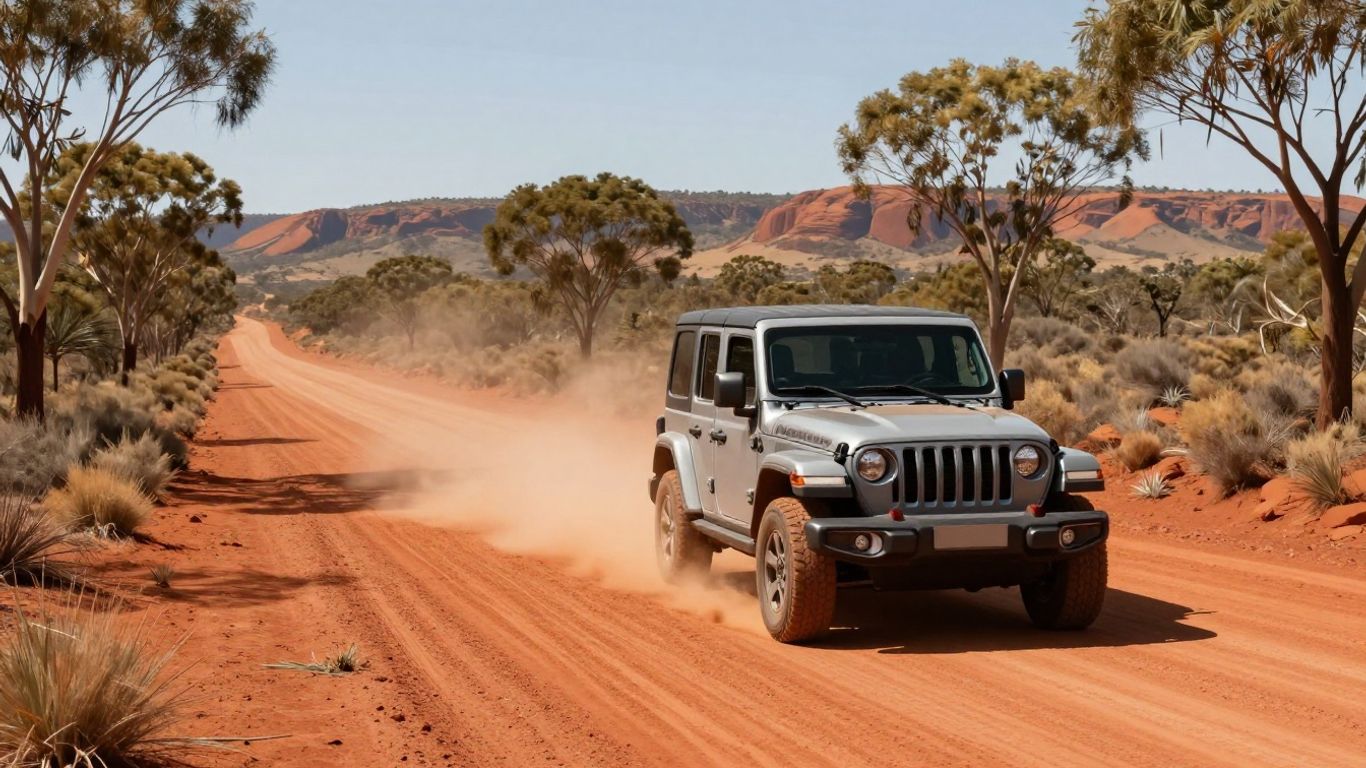
Wrangler engines have changed across generations, and availability has not remained constant in every market. Older vehicles may be found with naturally aspirated petrol engines or diesel options, while newer examples can use different petrol or electrified arrangements depending on the Australian release. The engine code, transmission, emissions equipment, and calibration should be verified from the vehicle identification number and factory documentation rather than inferred from appearance.
A generation change can also alter the way an engine feels, even when the advertised outputs seem similar. Gear ratios, vehicle weight, automatic-transmission programming, and electronic controls all influence acceleration and low-speed response. That is why a direct comparison between two used Wranglers needs more than a simple displacement figure.
Petrol, diesel, and electrified powertrain differences
Petrol engines generally offer a familiar, smooth response and may suit drivers who cover mixed urban and recreational kilometres. Diesel engines can provide strong low-speed pulling power, but their fuel system and emissions equipment may require careful servicing. Electrified powertrains add another layer of consideration, including battery condition, charging access, system warranty, and the way electric assistance interacts with trail driving.
Fuel type should follow the job rather than fashion. A diesel may make sense for sustained towing or touring, while a petrol engine can be the simpler fit for shorter trips and occasional off-road use. For an electrified model, examine the complete system, not only the combustion engine, before deciding whether it suits remote travel.
Key specifications that affect everyday driving
Peak power matters when merging or climbing a fast road, but torque characteristics often matter more in traffic and on steep tracks. Kerb weight, transmission type, axle gearing, towing rating, fuel capacity, and payload can change the practical result. The same engine may feel lively in a short-wheelbase vehicle and more deliberate in a heavier four-door model.
Use the specification sheet as a comparison tool, then relate each number to your routine. A useful question is whether the vehicle will spend more time idling in traffic, cruising at highway speed, towing, or crawling over uneven ground. Those patterns reveal which specifications deserve the most attention.
Why Australian-market engines may differ from overseas models
An overseas review is not automatically a guide to an Australian vehicle. Local fuel requirements, emissions rules, safety equipment, available transmissions, trim levels, and importer decisions can all change the combination sold here. Even an apparently identical engine may have different software, accessories, cooling equipment, or service requirements.
This is especially relevant when researching imported Wranglers or ordering replacement components. Match part numbers and calibration information to the Australian vehicle, and ask a qualified technician to confirm compatibility. Treat overseas specifications as background information until they are checked against local documentation.
Comparing Jeep Wrangler engines for Australian driving
Engine comparisons become clearer when they are tied to real routes. City traffic rewards smooth throttle control and predictable automatic shifting, while highway travel exposes noise, gearing, and cooling performance. Towing adds sustained load, and off-road work magnifies small differences in response. No single engine is best for every Australian driving pattern.
The most useful comparison combines official data with a careful test drive. Drive from a cold start, allow the transmission to shift through its range, and pay attention to vibration, hesitation, temperature behaviour, and braking stability. A short loop around a dealership cannot reveal everything, but it can uncover obvious problems.
Performance in city traffic and on highways
In town, low-speed smoothness is often more valuable than dramatic acceleration. A responsive engine should pull away cleanly, hold a steady speed, and work predictably with the transmission in stop-start conditions. On highways, reserve power helps with overtaking, while gearing and aerodynamics influence how relaxed the engine feels at cruising speed.
A larger engine is not automatically more comfortable or economical. Vehicle mass, tyre size, roof racks, suspension changes, and driving style can offset the benefit of extra output. During a test drive, assess how often the transmission changes gear and whether the engine feels strained on inclines.
Torque delivery for towing and off-road driving
Towing and technical trails place emphasis on controllable torque at low and medium engine speeds. Smooth delivery helps the driver modulate progress without sudden surges, especially when a trailer is attached or the surface is loose. Transmission behaviour, first-gear reduction, four-wheel-drive gearing, and traction systems are part of this experience too.
The published towing figure is only one boundary. Payload, tow-ball mass, trailer brakes, cooling capacity, tyre condition, and road regulations also shape a safe setup. A vehicle that feels strong in a brief acceleration run may still be tiring or unsuitable under a long, hot load.
Fuel economy and running-cost considerations
Fuel consumption depends heavily on speed, tyre choice, load, traffic, terrain, and accessory fitment. Off-road tyres and roof equipment can increase resistance, while frequent short trips may prevent an engine from operating at its most efficient temperature. Compare realistic fuel use from owners and records, but treat informal figures as context rather than a promise.
A simple running-cost comparison can keep the decision grounded:
| Cost area | What to compare | Why it matters |
|---|---|---|
| Fuel | Fuel type, consumption, and annual distance | Shows the likely day-to-day expense |
| Servicing | Scheduled work and specialist labour | Reveals predictable ownership costs |
| Tyres | Size, tread, and replacement price | Affects economy, grip, and ride comfort |
| Cooling | Hoses, fluids, and heat-management work | Matters when towing or travelling remotely |
These costs should be considered together. An engine with attractive consumption may lose that advantage if it requires expensive specialist work or if the chosen modifications add substantial weight and rolling resistance.
Noise, refinement, and long-distance comfort
A Wrangler’s upright shape and removable-roof design can produce more wind and road noise than a conventional passenger vehicle. Engine character still matters, however. Listen for harshness under load, droning at highway speed, excessive vibration at idle, and noises that change when the air conditioning is engaged.
Long-distance comfort also depends on seat position, gearing, tyre pressure, suspension condition, and cabin insulation. A healthy engine should feel consistent after several hours, not merely quiet during a cold test drive. If possible, inspect the vehicle after a highway run and look for leaks, unusual smells, or signs of heat stress.
Choosing an engine for off-road capability
Off-road performance is a system outcome. Engine response works alongside gearing, traction, suspension articulation, ground clearance, tyre grip, and driver judgement. More power can help in sand or on a climb, but it cannot compensate for poor line choice or an unsuitable setup. The most useful engine is one that remains controllable when conditions become difficult.
Australian trails also bring heat, dust, corrugations, water crossings, and long distances between towns. Those conditions reward conservative preparation. Before modifying an engine or drivetrain, consider how the complete vehicle will behave when heavily loaded and far from assistance.
How power and torque affect low-speed control
At low speed, predictable torque delivery allows the driver to maintain momentum without excessive throttle input. This can reduce wheelspin on loose surfaces and make steep descents or climbs easier to manage. An engine that responds abruptly may feel powerful on paper but require more careful pedal control on rocks and ruts.
The automatic transmission, low-range gearing, engine braking, and idle behaviour all contribute to control. Test the vehicle gently in a safe area before assuming that peak figures describe its trail manners. A calm, linear response is often more useful than a sharp burst of acceleration.
Matching the engine to tyres, lifts, and accessories
Larger tyres, added underbody protection, winches, roof loads, and touring equipment increase the work the engine must do. They can also alter gearing, steering effort, braking demand, and fuel consumption. A modest engine that feels adequate in standard form may feel less relaxed after several heavy accessories are fitted.
Before choosing parts, establish the intended load and tyre size. Then check whether gearing, suspension, brakes, cooling, and legal clearances remain appropriate. Modifications should be treated as a connected package, not a series of isolated purchases.
Cooling requirements in hot Australian conditions
High ambient temperatures, slow technical driving, deep sand, towing, and restricted airflow can all raise thermal load. Clean radiators, correct coolant, healthy fans, sound hoses, and an unobstructed grille are basic safeguards. Temperature gauges and warning systems should be taken seriously, particularly when a vehicle is working hard at low speed.
A cooling upgrade may be sensible for a specific use, but it should not hide an underlying fault. Inspect the original system first and confirm that any replacement components are compatible with the engine and its controls. Heat management is most effective when maintenance, airflow, load, and driving technique are addressed together.
Balancing capability with reliability and drivability
An engine choice should leave some margin for the way the vehicle will actually be used. Constantly operating at the edge of its payload, towing, or temperature limits can make a capable four-wheel drive tiring and expensive. Reliability is not only about avoiding breakdowns; it also includes easy starting, consistent response, and predictable behaviour on the way home.
A well-maintained standard vehicle can be a better foundation than a heavily modified one with uncertain history. Choose capability that matches the routes, equipment, and recovery support available to you. That usually produces a more enjoyable Wrangler than chasing the largest possible output.
Jeep Wrangler engine maintenance in Australia
Maintenance history is central to engine buying and ownership. A Wrangler may encounter dust, mud, water, heat, short trips, and long highway runs, sometimes in the same month. Those conditions can accelerate contamination and wear when servicing is delayed. Keep detailed records, use the correct fluids and filters, and investigate changes in sound or performance early.
A clean engine bay is not proof of mechanical health. Inspection should cover the engine, cooling system, intake, exhaust, electrical connections, transmission, and underside. The aim is to understand present condition, not simply to find a tidy vehicle.
Recommended servicing and inspection points
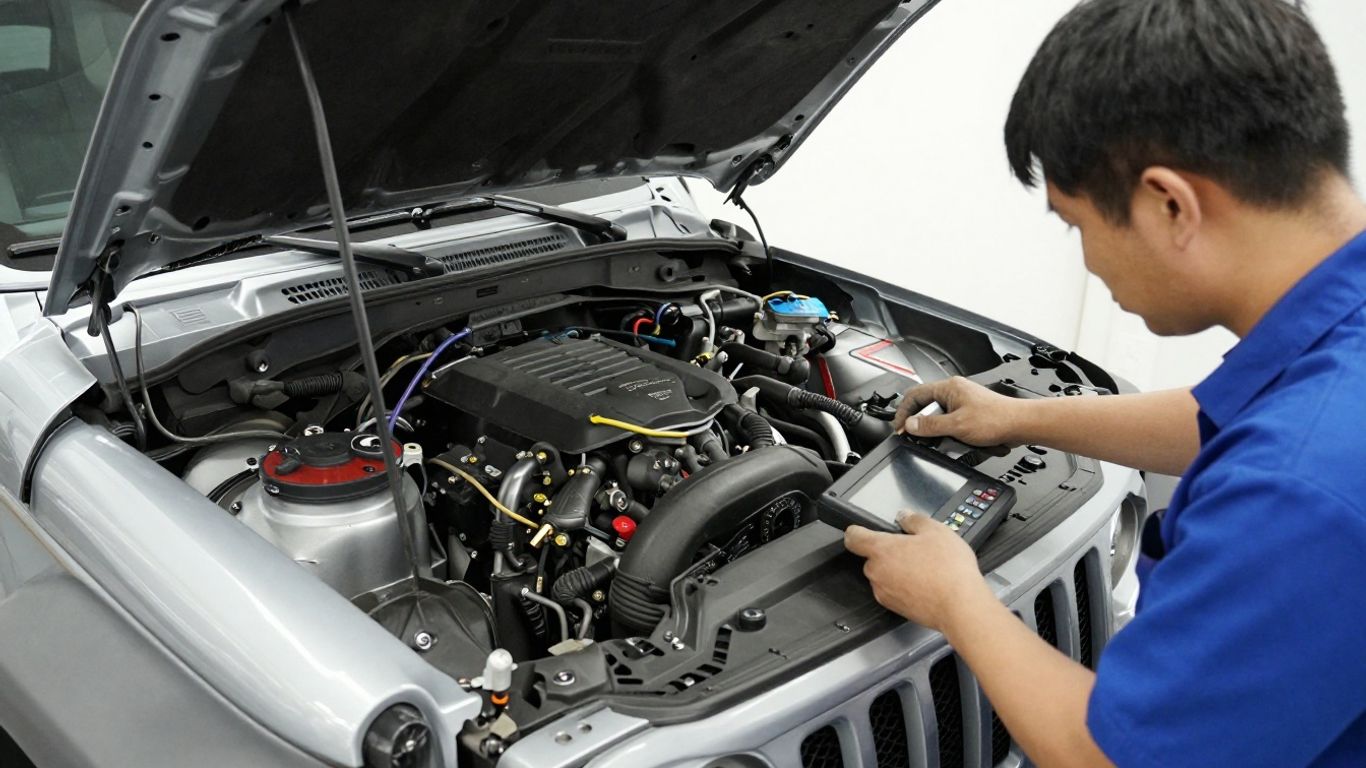
Follow the service schedule for the exact engine and model year, including oil, filters, spark plugs or diesel-system requirements, belts, cooling fluid, and transmission-related checks where specified. Inspect for oil or coolant leaks, damaged wiring, loose intake connections, and signs of water or dust entry. A scan for stored fault codes can add useful context, but it is not a substitute for mechanical inspection.
Record the date, distance, parts used, and any symptoms reported. This creates a practical baseline for future work. It also helps a buyer distinguish routine maintenance from repairs that may have been postponed.
Common wear items and potential warning signs
Warning signs can be subtle at first. A rough idle, hard starting, smoke, unusual exhaust odour, rising temperature, oil loss, or a new tapping noise deserves attention. Slipping, delayed engagement, and repeated warning lights may point to problems beyond the engine itself.
Do not diagnose a fault from one symptom alone. A weak battery can mimic other issues, while a vacuum leak, sensor fault, cooling problem, or transmission concern may produce similar drivability complaints. Proper testing is cheaper than replacing unrelated parts.
Finding qualified Jeep specialists and genuine parts
A workshop should understand the engine family, diagnostic equipment, service procedures, and common operating conditions of the vehicle being inspected. Ask how the technician handles software updates, fault-code diagnosis, cooling-system testing, and parts sourcing. Clear written estimates are useful when work involves several linked systems.
Parts should be matched by vehicle identification number and specification. Genuine or reputable equivalent components are preferable to unknown items, particularly for sensors, filters, cooling components, and timing-related parts. Keep replaced components and invoices where practical; they help document the vehicle’s history.
How driving conditions influence service intervals
The standard schedule may need closer attention when a vehicle sees severe dust, repeated water crossings, deep sand, heavy towing, or many short journeys. Air filters can load quickly in dusty country, while fluids and electrical connectors may need inspection after water exposure. Frequent low-speed work also places a different demand on cooling than open-road travel.
Use the schedule as a starting point, then discuss actual conditions with a qualified technician. Extra inspections do not necessarily mean unnecessary replacement. They provide a chance to catch contamination, leaks, and loosened hardware before a small issue becomes a remote-area failure.
Buying a new or used Jeep Wrangler engine
Buying an engine can mean selecting a complete vehicle, sourcing a replacement assembly, or assessing a Wrangler that has already been modified. Each path has different risks. A new vehicle offers clearer specification and warranty terms, while a used vehicle can offer value but requires stronger verification. A replacement engine may solve a problem, yet its provenance and compatibility still matter.
Set a budget that includes inspection, transport, registration, insurance, servicing, and likely wear items. The cheapest purchase price rarely describes the full cost of getting a four-wheel drive ready for dependable use.
Comparing official specifications with real-world condition
Official figures allow fair comparisons between model years, but they do not measure compression, oil consumption, cooling health, or maintenance quality. For a used Wrangler, condition can outweigh a small difference in advertised power. A road test should include cold starting, idle quality, acceleration, braking, gear changes, and operation at normal temperature.
Have an independent inspection completed before committing. Ask for a written report that separates urgent repairs from normal ageing. This makes it easier to negotiate sensibly and prevents cosmetic presentation from dominating the decision.
What to check in a used Wrangler’s service history
Look for consistent dates and kilometre readings, scheduled servicing, fluid changes, cooling work, recalls or campaigns where applicable, and records of modifications. Gaps do not prove neglect, but they increase uncertainty. Compare the paperwork with the vehicle’s wear: pedal surfaces, steering wheel, seats, tyres, and underbody can reveal whether the stated use seems plausible.
Also ask about towing, flood exposure, beach or mud driving, accident repairs, and extended storage. A vehicle used gently on sealed roads has different risks from one that has worked hard in remote conditions. Honest answers and complete invoices are valuable signs, though neither replaces inspection.
Evaluating imported, modified, and replacement engines
Imported vehicles and engines can differ in wiring, emissions equipment, software, accessories, and parts availability. Modified vehicles deserve an especially careful inspection because changes may affect cooling, gearing, suspension load, and driveline stress. For a replacement engine, confirm its source, identification, mileage evidence, included components, and warranty in writing.
Compatibility should be established before installation, not after a fault appears. Ask whether the engine matches the vehicle’s control modules and emissions requirements, and whether supporting systems such as the exhaust, intake, sensors, and transmission are suitable. A reputable installer should be willing to explain the complete scope of work.
Understanding warranty, registration, and compliance concerns
Warranty terms depend on the seller, vehicle age, component, and nature of the repair or modification. Read exclusions carefully and keep invoices for authorised work. An engine change or major modification may also require engineering certification, inspection, updated registration details, or notification to the relevant state or territory authority.
Rules differ across Australia, so confirm requirements locally before buying or fitting anything. Insurance should be told about material modifications and replacement components. If a change is not declared or does not comply, the financial and legal consequences can extend well beyond the repair bill.
Improving Jeep Wrangler engine performance responsibly
Performance work should begin with a healthy standard engine. Diagnostic faults, overdue maintenance, restricted airflow, weak cooling, and worn ignition components can all make a vehicle feel slow. Fixing those issues usually delivers a better result than adding parts to compensate for them.
The goal should be dependable performance for a defined use, whether that is towing, touring, sand driving, or daily commuting. Every modification adds cost and may alter noise, economy, service needs, warranty coverage, and compliance.
Practical upgrades for airflow, exhaust, and cooling
A clean air filter, sealed intake, sound hoses, and an unobstructed cooling system are sensible foundations. Exhaust changes may alter sound and flow, but they should be selected for compatibility rather than volume. Cooling improvements can be useful for sustained load, provided the original system has first been checked and the replacement is correctly installed.
Avoid parts that make unsupported claims about large gains. Check clearance, heat shielding, water exposure, dust sealing, and service access before installation. An upgrade that works on a workshop hoist may be inconvenient or vulnerable on a corrugated track.
Tuning considerations for Australian fuel and conditions
Any calibration should suit the fuel available for the vehicle and the conditions in which it will operate. Towing, high temperatures, dust, altitude, and added weight can change the engine’s demands. A tune that feels strong during a short test may increase heat or driveline stress when the vehicle is loaded for a long trip.
Use a qualified tuner who can document the changes and retain the original calibration where possible. Confirm that emissions equipment, warning systems, cold starting, and idle quality remain functional. Smooth, repeatable operation is a better target than a peak dyno number.
Effects of modifications on reliability and warranty
Power increases can affect temperatures, transmission load, clutch or torque-converter demand, and drivetrain durability. Even non-engine parts such as tyres and lifts can change the load placed on the powertrain. Maintenance may need to become more frequent, particularly when the vehicle is used for towing or demanding off-road work.
Warranty decisions depend on the provider and the relationship between the modification and the fault. Keep records of parts, installation, tuning, and follow-up checks. Discuss planned changes before fitting them rather than assuming a warranty will cover every unrelated or related failure.
Legal and insurance implications of engine changes
Engine swaps, forced-induction systems, exhaust alterations, emissions changes, and other significant modifications may be regulated. Requirements can include an approved engineer’s report, inspection, noise or emissions testing, and registration updates. The details vary by state and territory, so generic online advice is not enough.
Contact the relevant authority and insurer before the work begins. Ask for written confirmation of what must be declared and retained. A legally compliant modification is easier to insure, sell, and maintain than one whose history is uncertain.
Conclusion
The best Jeep Wrangler engine for Australian ownership is the one that matches the vehicle’s generation, driving pattern, load, terrain, budget, and maintenance support. Compare torque and gearing alongside headline power, inspect used examples independently, and allow for cooling, tyres, fuel, servicing, compliance, and insurance. A thoughtful, well-documented choice will usually matter more than chasing the most impressive specification sheet.