
Key Takeaways
Choosing among performance engines for sale starts with the vehicle, the way it will be driven, and the power it genuinely needs. A careful comparison of specifications, fitment, documentation, and total cost can prevent an expensive mismatch.
- Define the vehicle’s use before choosing horsepower or engine type.
- Match displacement, compression, induction, and supporting parts as a complete system.
- Confirm mounts, drivetrain, wiring, cooling, exhaust, and emissions requirements early.
- Compare documented specifications, warranty terms, and delivered cost rather than price alone.
- Inspect, break in, tune, and maintain the engine according to its intended use.
Define your build goals before comparing engines
A performance engine is only useful when it suits the vehicle and the driver’s priorities. A street car, competition build, trail vehicle, and weekend cruiser place very different demands on an engine. Before browsing listings, write down how the car will be used, how often it will be driven, and what compromises you are willing to accept.
The right choice is rarely the engine with the biggest advertised number. It is the one that delivers the required response, fits the rest of the build, and remains enjoyable after the initial excitement has passed.
Street, track, drag racing, and off-road applications
Street cars usually need smooth starting, manageable heat, predictable throttle response, and enough low-speed torque for traffic. A track car may trade some comfort for sustained high-rpm operation, while a drag build can prioritize launch performance and peak power over broad drivability. Off-road vehicles often benefit from controllable torque and durability under changing loads.
Think beyond the engine itself. Tire choice, gearing, vehicle weight, suspension, and the length of each driving session all affect whether a particular engine feels strong or difficult to use.
Power, torque, and drivability targets
Horsepower describes potential at higher engine speed, but torque and its delivery shape how the car feels leaving a corner or pulling away from a stop. Set a realistic power range and decide where in the rev band you want the engine to work. A moderate target that the drivetrain can reliably handle is often more satisfying than a maximum figure that demands constant tuning.
Drivability also depends on idle quality, throttle response, gearing, and calibration. A usable power curve should be part of the specification, not an afterthought once the engine is installed.
Naturally aspirated, turbocharged, and supercharged setups
Naturally aspirated engines tend to offer direct throttle response and a simpler supporting system, although achieving high output may require more displacement or rpm. Turbocharged combinations can produce substantial power from a smaller engine but add heat, plumbing, control, and calibration requirements. Supercharged setups provide a mechanically driven route to additional airflow and may deliver a distinctive response.
Choose induction together with the compression ratio, camshaft, fuel system, cooling system, and intended fuel. An engine advertised without those supporting details is difficult to compare fairly with a complete combination.
Reliability, maintenance, and expected mileage
Ask how many miles or operating hours you expect to cover each year, then choose parts and tolerances that suit that use. A competition-oriented engine may need frequent inspection, while a road car needs dependable cold starts, sensible service intervals, and reasonable behavior in traffic.
Maintenance should be part of the buying decision. Consider access to replacement parts, the availability of knowledgeable support, oil and coolant requirements, and whether the engine’s construction matches your ability and willingness to service it.
Choose the right engine type and specifications
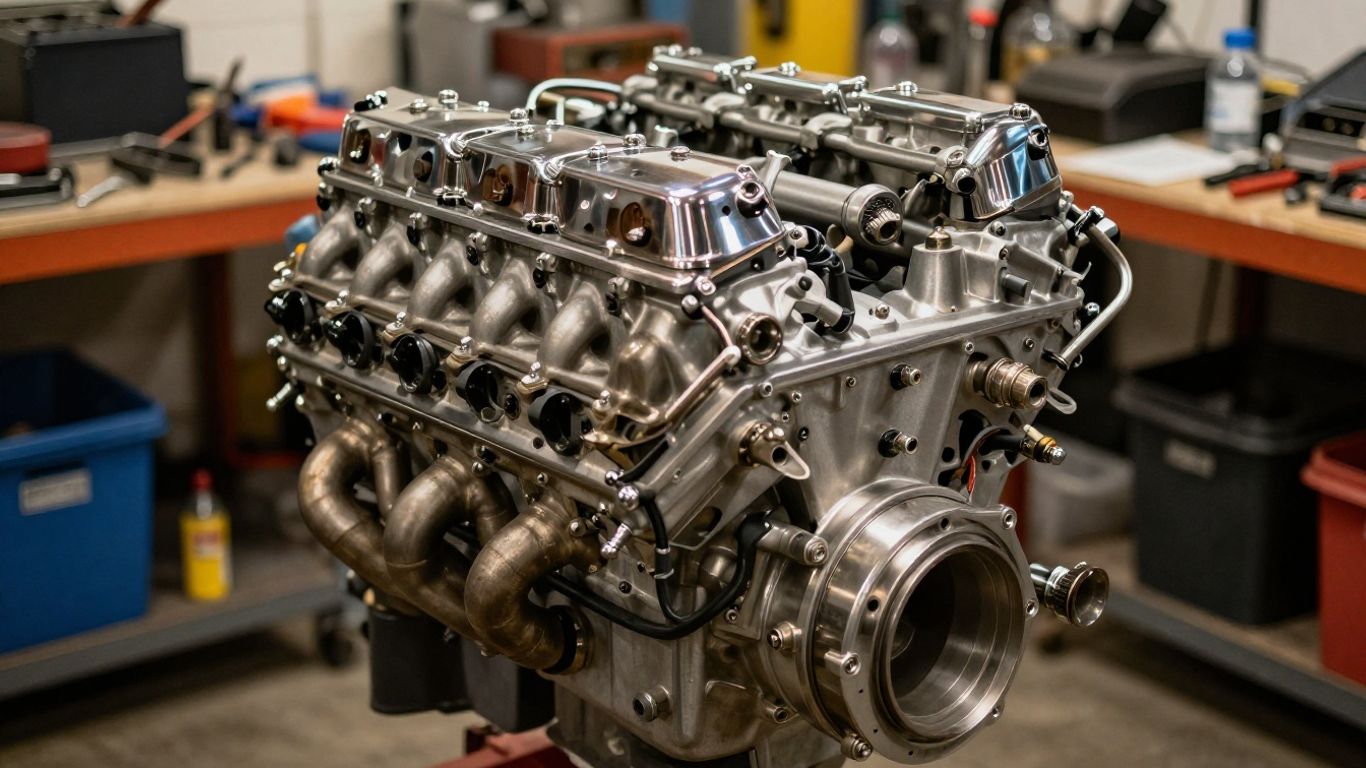
Once the build goal is clear, compare engines by their complete specifications rather than by displacement or advertised horsepower alone. The short block, cylinder heads, camshaft, induction system, and fuel control must work together. A strong engine choice is one whose parts and calibration support the same operating range.
Pay close attention to what is included. A long block may require a different set of accessories and controls than a more complete crate assembly, and those differences affect both fitment and budget.
Crate engines versus rebuilt and custom-built engines
A crate engine can simplify purchasing when its specification and intended use are clearly documented. A rebuilt engine may offer a familiar platform at a lower entry price, but its value depends heavily on the quality of machining, parts selection, and assembly records. A custom-built engine allows closer control over the combination, though it generally requires more decisions and coordination.
Ask whether the quoted engine is a long block, a dressed assembly, or a complete package. Confirm which components are new, which are remanufactured, and which parts must be transferred from the old engine.
Engine displacement, cylinder configuration, and compression ratio
Displacement influences torque potential, packaging, fuel demand, and sometimes registration or class eligibility. Cylinder configuration affects dimensions, balance, firing character, and accessory placement. Compression ratio must be considered with fuel octane, induction, camshaft timing, and operating temperature rather than viewed as an isolated performance number.
A larger engine is not automatically the best answer. Compare the usable torque range and installation consequences with the vehicle’s gearing and intended driving conditions.
Aluminum versus iron blocks and cylinder heads
Aluminum components can reduce weight and may change how the engine manages heat, while iron components are often selected for their stiffness and durability in demanding applications. The practical choice depends on the complete design, power level, intended use, and available support parts.
Also check threaded-hole condition, deck and head compatibility, fastener requirements, and accessory fitment. Material alone does not establish whether an engine is suitable for a particular build.
Matching camshafts, intake manifolds, and fuel systems
The camshaft, intake manifold, throttle body or carburetor, injectors, pump, and exhaust should be selected as a coordinated group. Their combined behavior determines airflow, idle quality, response, and the engine speed where power arrives. Mixing parts chosen for unrelated operating ranges can produce a disappointing result even when each part is well made.
Use the engine’s documented power range to guide supporting hardware. Before ordering, verify these four details with the seller or builder:
- The intended operating rpm range.
- The recommended fuel type and octane.
- The required injector, pump, or carburetor capacity.
- The compatible ignition and engine-control strategy.
That information turns a parts list into a workable system. It also makes later tuning more predictable because the calibration is not compensating for an incompatible combination.
Confirm vehicle compatibility and installation requirements
Fitment problems can turn an attractive engine purchase into a long and expensive project. Compatibility includes physical dimensions, mounting points, drivetrain connections, electronic controls, accessories, and legal equipment. Check these items before paying a deposit, particularly when the engine is intended for a swap.
The safest approach is to compare the engine’s documented requirements with the exact vehicle, transmission, year, and existing equipment. General platform familiarity is useful, but it does not replace measurements and part numbers.
Engine mounts, dimensions, and accessory placement
Measure available length, width, height, sump clearance, and bonnet clearance, then compare them with the proposed engine and accessories installed. Engine mounts may require replacement or fabrication, while the oil pan, headers, steering components, and radiator can compete for the same space.
Accessory placement deserves special attention. Alternator, power-steering, air-conditioning, and belt locations can affect frame rails, hoses, wiring, and service access even when the bare block appears to fit.
Transmission, bellhousing, and drivetrain compatibility
Confirm the bellhousing pattern, crankshaft configuration, flexplate or flywheel requirements, starter position, clutch dimensions, and transmission capacity. Automatic and manual installations may need different parts, and an adapter does not automatically resolve every alignment or clearance issue.
Review driveshaft length, differential strength, gearing, and crossmember placement as well. More engine torque can expose weaknesses elsewhere in the drivetrain, especially in an older vehicle.
Wiring, ECU, sensors, and emissions equipment
Electronic integration may involve the engine control unit, wiring harness, crank and cam sensors, throttle control, oxygen sensors, immobilizer systems, and dashboard communication. Establish which components are supplied and which must be retained, replaced, or calibrated separately.
Emissions equipment and inspection requirements also vary by vehicle and location. Confirm the rules that apply to the completed vehicle before choosing a configuration that cannot be registered or legally operated where you live.
Cooling, exhaust, and fuel-system requirements
A higher-output engine usually needs a carefully matched radiator, fan arrangement, hoses, fuel supply, and exhaust system. Check coolant outlet locations, thermostat housing, fuel pressure requirements, return-line needs, header clearance, oxygen-sensor placement, and exhaust diameter.
Do not treat these items as minor finishing work. Cooling and fuel problems can damage an otherwise well-built engine, while restrictive exhaust or inadequate airflow can prevent it from reaching its documented potential.
Evaluate manufacturers and performance engine sellers
Seller evaluation is about evidence, not just polished photography or a large horsepower figure. Look for a clear specification, identifiable parts, realistic operating limits, and documentation that explains what the buyer receives. A seller who answers fitment questions directly is easier to work with when the installation becomes specific.
Keep records of the listing, quoted inclusions, conversations, and promised delivery details. That information gives you something concrete to compare when several performance engines for sale appear similar.
Comparing crate engine brands and builders
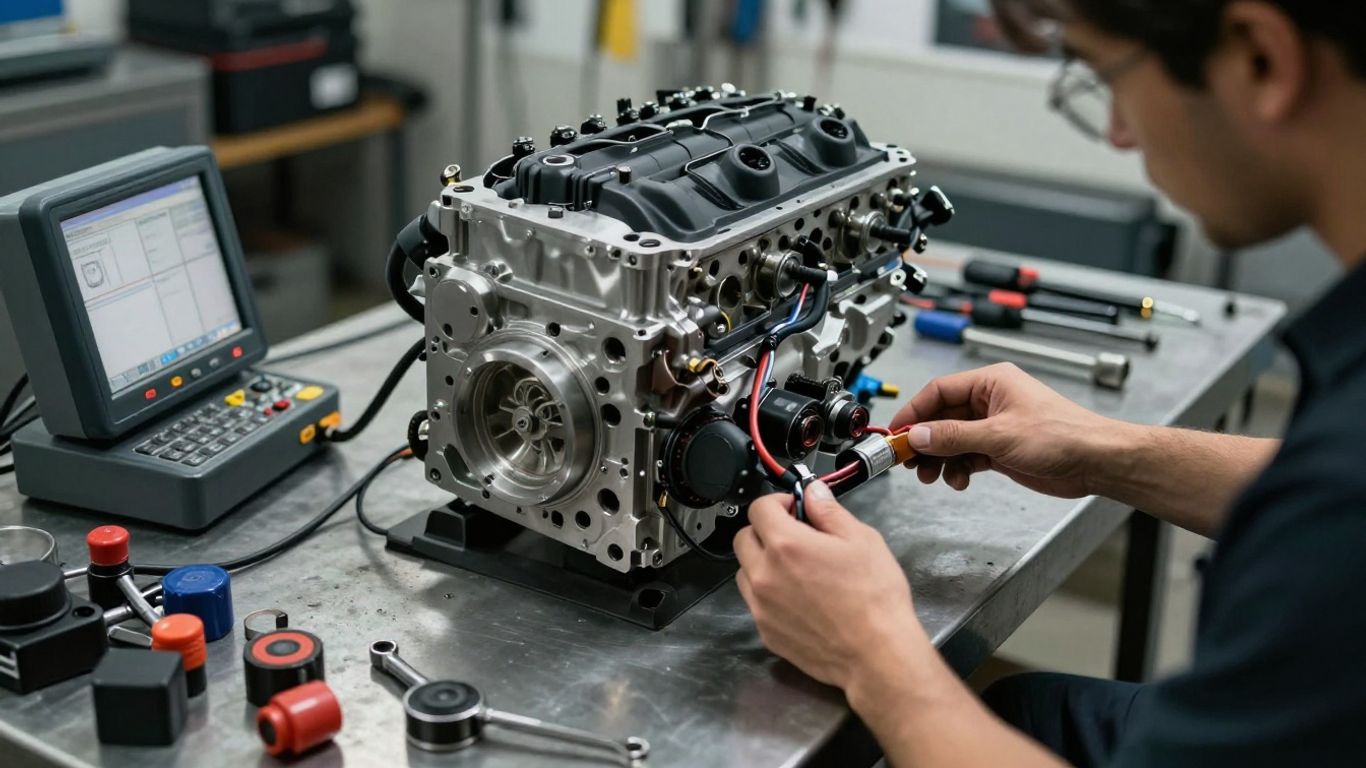
Compare builders by the information they provide about machining, assembly, testing, intended use, and included components. A familiar name can be useful, but it should not replace checking the exact engine specification. Two engines with similar displacement may have very different compression ratios, camshafts, cylinder heads, or operating limits.
Ask whether the listed output is measured at the crankshaft or wheels, and whether the engine is intended for street use, competition, or another defined application. Those distinctions make side-by-side comparisons more honest.
Reviewing dyno results, specifications, and documentation
Dyno information is most useful when it explains the test conditions and provides more than one peak figure. Look for the tested fuel, induction system, exhaust arrangement, rpm range, and whether the published result applies to the exact configuration being sold.
A useful specification sheet should also identify displacement, compression ratio, camshaft details, cylinder heads, ignition, fuel requirements, oil capacity, and recommended break-in procedure. Missing information is a reason to ask questions, not to assume the most favorable answer.
Understanding warranties, support, and return policies
Read the warranty before purchase, including its duration, exclusions, installation requirements, and process for making a claim. Some terms may depend on approved fluids, documented break-in, professional installation, or proof of regular maintenance. Clarify whether labor, shipping, diagnostic work, and consequential damage are excluded.
Return policies matter when an engine arrives damaged, differs from the order, or cannot be installed as described. Get the resolution process in writing and understand who pays for inspection or freight.
Checking seller reputation and customer reviews
Reviews can reveal patterns involving packaging, communication, delivery, and how problems were handled. Give more weight to detailed accounts that identify the engine specification and vehicle application than to brief comments with no technical context.
Use reviews as one input alongside documentation and direct answers. A seller’s willingness to discuss limitations may tell you more than a collection of broad marketing claims.
Calculate the complete cost of your engine purchase
The listed engine price is only the starting point. Installation often requires accessories, controls, mounts, exhaust work, cooling upgrades, fluids, tuning, and unexpected fabrication. Building a complete budget before ordering helps separate an affordable project from a low-priced engine that creates expensive follow-on work.
Make the estimate specific to your vehicle. Reusing suitable components can reduce the total, but only after their condition and compatibility have been confirmed.
Comparing advertised prices with delivered costs
Compare like with like: long block against long block, complete assembly against complete assembly, and tested configuration against tested configuration. Identify whether the price includes intake, throttle body or carburetor, ignition, injectors, water pump, front accessories, oil pan, and sensors.
A simple comparison table can prevent omissions when several listings use different terminology:
| Cost area | Questions to ask | Why it matters |
|---|---|---|
| Engine assembly | What is included in the quoted configuration? | Reveals missing hardware and controls |
| Fitment parts | Are mounts, sump, headers, or adapters required? | Estimates swap-specific work |
| Engine management | Is the ECU, harness, and calibration included? | Prevents unexpected electronic costs |
| Installation | What labor, fabrication, and fluids are likely? | Reflects the real project total |
After filling in the table, compare the delivered and installed figures rather than the headline prices. That is the number that should guide the buying decision.
Budgeting for accessories, upgrades, and installation
List every component that connects the engine to the vehicle, then separate must-have items from optional upgrades. A staged plan can make the project manageable, but delaying a required cooling, fuel, or control component will not make the engine ready to run.
Include labor for removal, installation, wiring, exhaust, fabrication, fluids, startup checks, and tuning. If you are doing the work yourself, allow for tools, machine-shop services, and time spent solving fitment issues.
Factoring in shipping, core charges, and taxes
Ask how the engine will be packaged, insured, and delivered, and whether the quoted freight includes residential or tailgate fees. A refundable core charge may be added to the order, while taxes, duties, and regional fees can change the final amount.
Confirm the condition and deadline for returning a core. Photograph the shipment on arrival and report visible damage promptly, following the seller’s stated procedure.
Balancing horsepower gains with long-term value
Value includes reliability, serviceability, fuel use, replacement-part access, warranty support, and the cost of adapting the vehicle. An engine that produces less peak power but works with the existing transmission and electronics may deliver more useful value than a larger engine requiring a complete rebuild of the car.
Consider how often the vehicle will be driven and what failure would cost in time and transport. The strongest purchase is usually the one that meets the target without forcing every surrounding system beyond its sensible limits.
Inspect and prepare a performance engine before installation
Even a well-documented engine deserves a careful pre-installation review. Confirm that the delivered parts match the order, inspect for shipping damage, and preserve all paperwork, tags, and test records. If anything is unclear, resolve it before filling fluids or connecting the battery.
Preparation is not distrust; it is a practical handover between the seller, installer, and vehicle. A few checks can identify a missing sensor or damaged connector before the engine is difficult to access.
Questions to ask about mileage, machining, and previous use
For a rebuilt or previously operated engine, ask for mileage or operating hours, the reason it was removed, machining performed, clearances checked, and parts replaced. Request measurements or records where available, including bore work, crankshaft preparation, balancing, and cylinder-head service.
For a new or crate assembly, confirm the build date, test status, included accessories, recommended oil, break-in instructions, and any storage requirements. The answers should align with the written specification.
Compression tests, leak-down tests, and visual inspections
A compression test can identify differences between cylinders, while a leak-down test helps indicate whether pressure is escaping through the rings, intake valves, exhaust valves, or head gasket area. These checks are especially useful for used or rebuilt engines, provided they are performed with the correct procedure and equipment.
Inspect the oil, coolant passages, fasteners, seals, connectors, and external surfaces for contamination, damage, or signs of leakage. Rotate the engine as appropriate and verify that accessories and timing components move correctly before installation.
Break-in procedures and recommended fluids
Follow the builder’s break-in procedure rather than relying on a generic routine. The correct initial oil, filter, coolant, rpm variation, load, and service interval depend on the engine’s rings, camshaft, bearings, and intended design.
Prime the lubrication system where required, verify oil pressure during startup, monitor coolant temperature, and inspect for leaks. Use the specified fuel and avoid extended idling if the instructions call for varied engine speed and load.
Tuning, dyno testing, and initial maintenance needs
Tuning should begin with a safe base calibration and verified sensor readings. Check fuel pressure, ignition timing, air-fuel behavior, coolant temperature, and oil pressure before pursuing maximum output. A dyno session can help establish a repeatable baseline, but it cannot correct a mechanical or installation fault.
Schedule the first fluid change, fastener inspection, filter check, and diagnostic review in advance. Keep a log of temperatures, pressures, adjustments, and unusual noises so small changes are easier to diagnose.
Conclusion
The best performance engine is the one that fits the vehicle, matches its real use, and remains supportable after installation. Define the target, compare complete specifications, verify compatibility, budget for the whole project, and inspect the engine before it goes into the car. With that method, browsing performance engines for sale becomes a careful engineering decision rather than a gamble on the biggest number.